Running the way it should
This is a boiler doing its job. The pumps move hot water through the copper lines, the pressure gauge sits steady, and the flue carries exhaust out and up without trouble. Nothing about it needs attention.
 Send it today
After this form, you can stop searching for a boiler pro.
A boiler is unusual in a Texas house. Most homes here heat with electricity, so when yours won't fire up on a cold morning, you may not have anyone close by who deals with this equipment often.
That's the part worth knowing first. The problem itself is probably ordinary: a pilot that won't stay lit, an ignitor that's failed, low water pressure, a pressure switch, a thermostat that isn't calling for heat the way it should. Boilers are simple machines and most no-heat calls come down to one of a short list of causes. The hard part isn't the boiler. It's finding someone in your area who actually works on them.
That's usually where the morning gets lost. You start calling HVAC companies, and some don't touch boilers at all. The ones that do ask you to describe what's wrong, then can't say when they'd get to you, so you call the next one and explain it all again. An hour in, you've made four calls and you still don't have a time on the calendar.
This page skips that part. Send the form and the job of finding someone who works on boilers in Texas stops being yours. No more calling around, no more repeating the same description of what's not working to three different people, no more guessing which company actually knows this equipment. That work moves off your plate the moment you submit it.
It doesn't make the repair itself faster. A boiler that won't turn on still needs someone to open it up and find the actual cause, and that takes whatever time it takes. But the search for that someone, the part that's been eating your morning, ends here.
A cold snap hits and the boiler just sits there, no heat, no sound of it trying. You've checked the thermostat and it's set right, so the next question is what's actually stopping it from firing. In a Texas house, where most people around you have never dealt with a boiler at all, it helps to know what's actually going on before you call someone.
Cold weather doesn't cause the problem, it just exposes it. A boiler that's been sitting unused for most of the year can develop a pilot light that won't stay lit, an ignition control that's failed, or water pressure that's dropped below what the system needs to run. Any one of those will stop the boiler from firing, and a Texas cold snap is often the first time the system has been asked to work hard enough for the problem to show. The fix depends on which one it is. A low pressure gauge points to a leak or a bled radiator. A pilot that won't hold points to a thermocouple. Neither one is something to guess at before someone who works on boilers regularly takes a look.
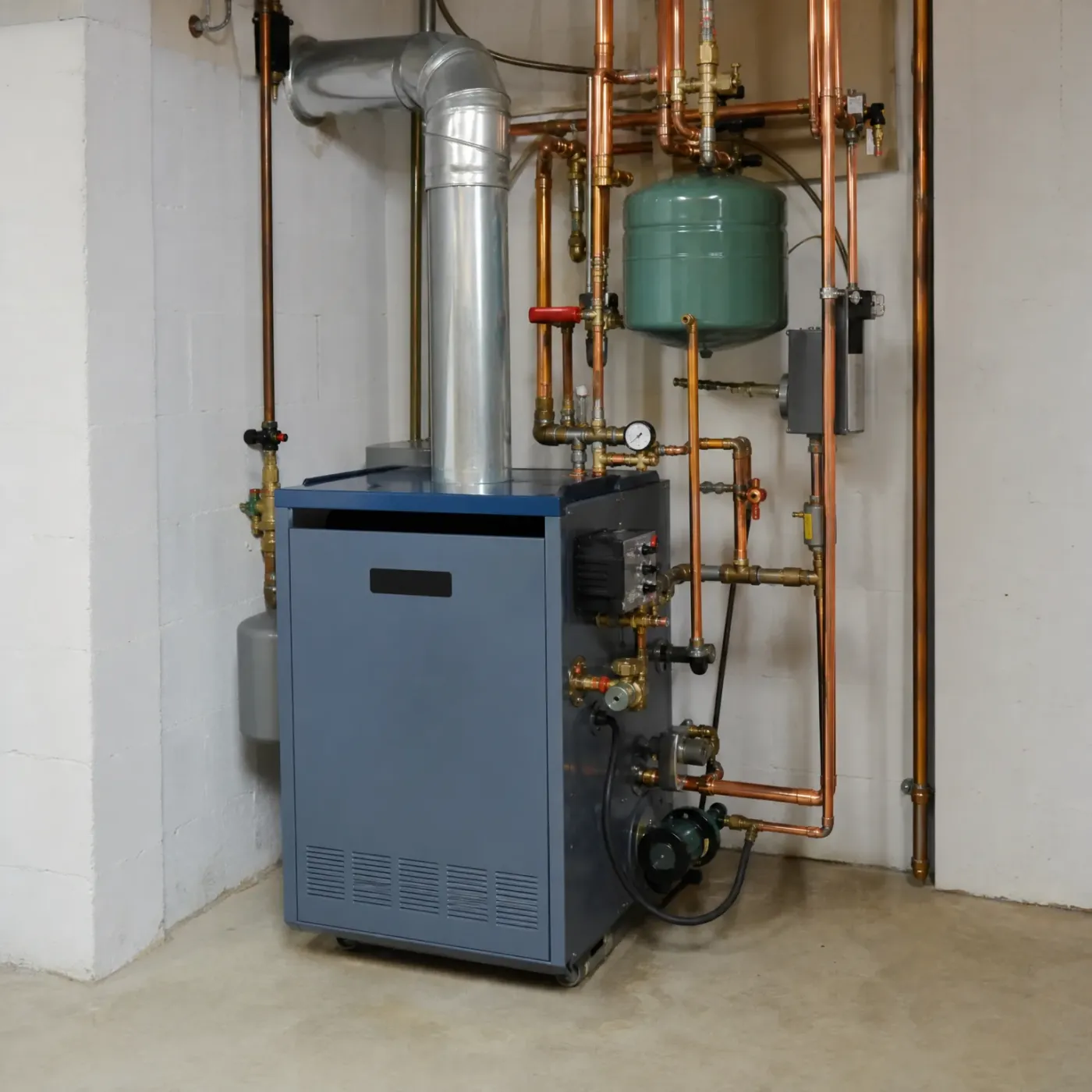
This is a boiler doing its job. The pumps move hot water through the copper lines, the pressure gauge sits steady, and the flue carries exhaust out and up without trouble. Nothing about it needs attention.
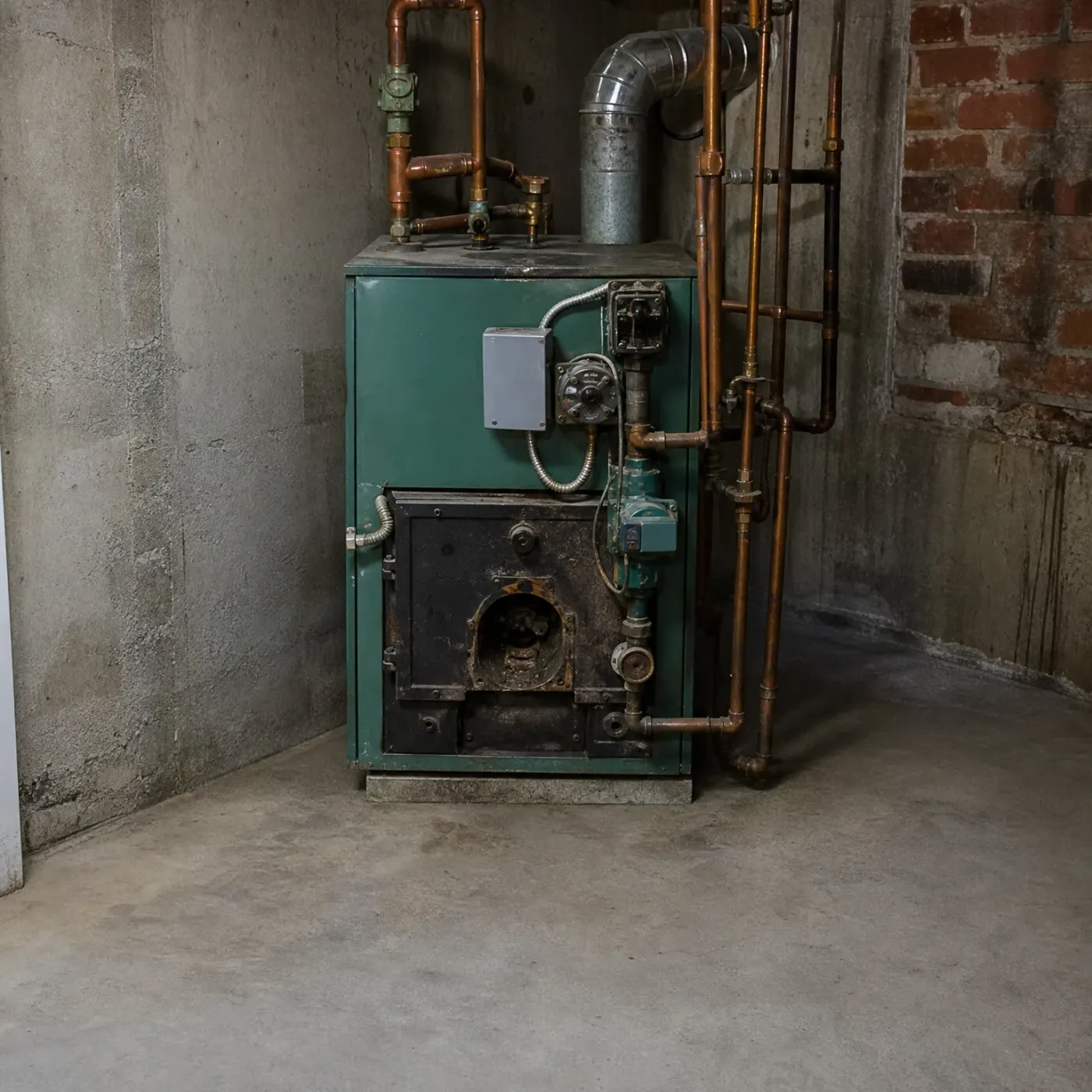
Corrosion like this in the firebox is years in the making, not something a cold morning causes. But cold is when it shows up, because that's when the boiler has to work and a part this far gone can't.




Fill out one short form instead of calling around.
It costs nothing to send, and you don't have to hire anyone.
A boiler needs water pressure to fire. Most run safely between 12 and 15 psi when the system is cold. Drop below about 8 and the low water cutoff does its job and stops the burner before it lights, because firing a boiler without enough water in the loop can crack the heat exchanger. A cold snap makes this worse. Contracting metal and a house that's lost heat overnight both pull pressure down a notch further. If the gauge reads low, that alone can be the whole reason the boiler sits there cold. It's a fix in minutes once someone's there to do it, but the system won't guess at that for you. It just stops.
Gas boilers light with either a pilot or an electronic igniter, and a flame sensor checks that it actually caught. No signal from that sensor and the control board shuts the gas valve again, even if the igniter sparked fine. This happens on its own timer, usually within seconds. It's the board protecting the house from gas with no flame to burn it. A sensor coated with residue reads the same as no flame at all, so the boiler can look like it's trying and still never fire. From the thermostat you can't tell the difference between that and a bad igniter. Someone has to open the cabinet and check both.
Below that, the low water cutoff keeps the burner from lighting at all. That's not a fault in the boiler, it's the boiler refusing to run unsafe.
A Texas home built around a boiler usually doesn't have a second heat source. When it won't fire, you're waiting on cold mornings until it's fixed.


41°F is a mild number next to a hard freeze, but it's still well below where a boiler's water lines and vent runs want to sit all night. A string of those nights is enough to expose a pressure drop or a stuck igniter you haven't noticed yet.
NOAA nClimDiv 1991-2020 county normals weighted by homes
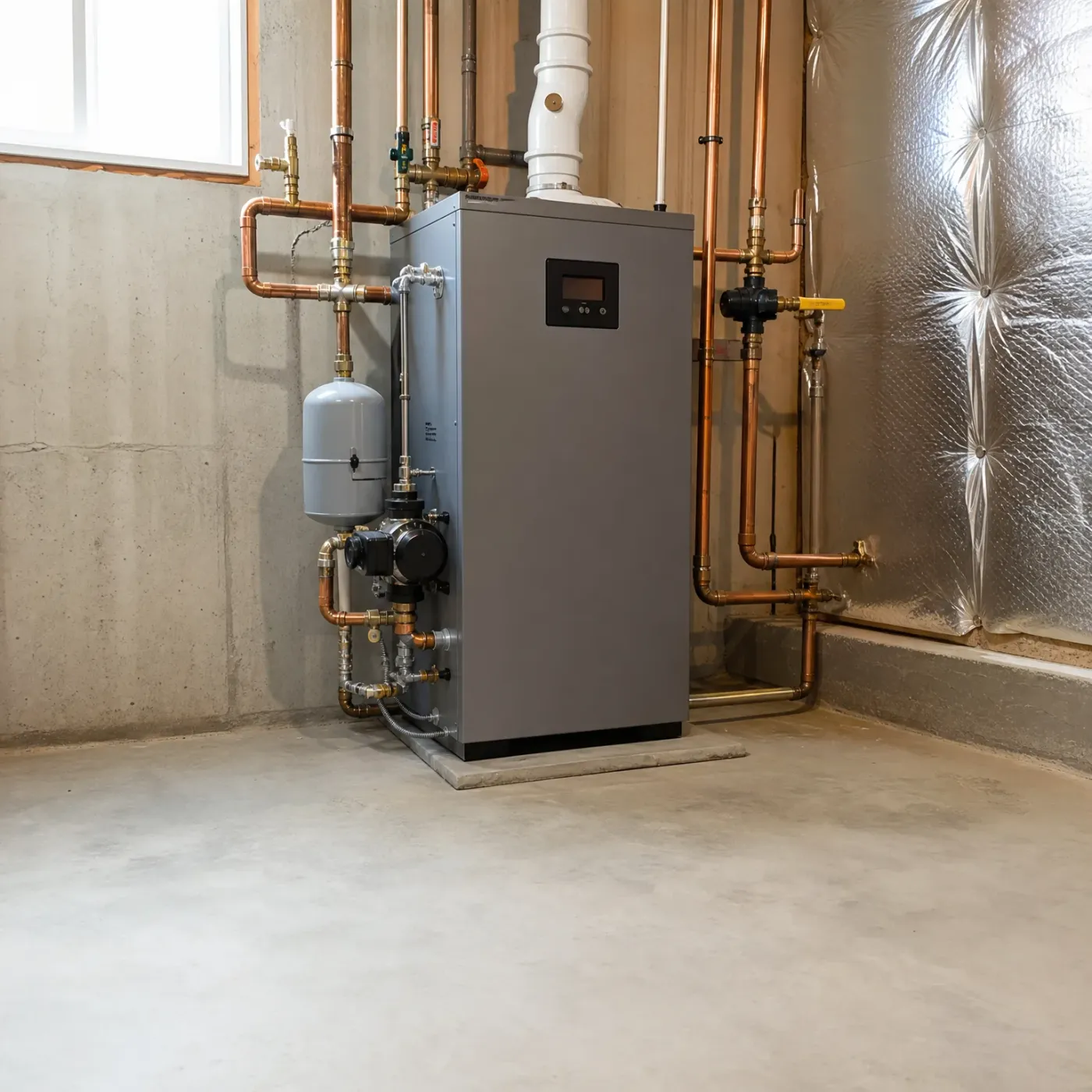
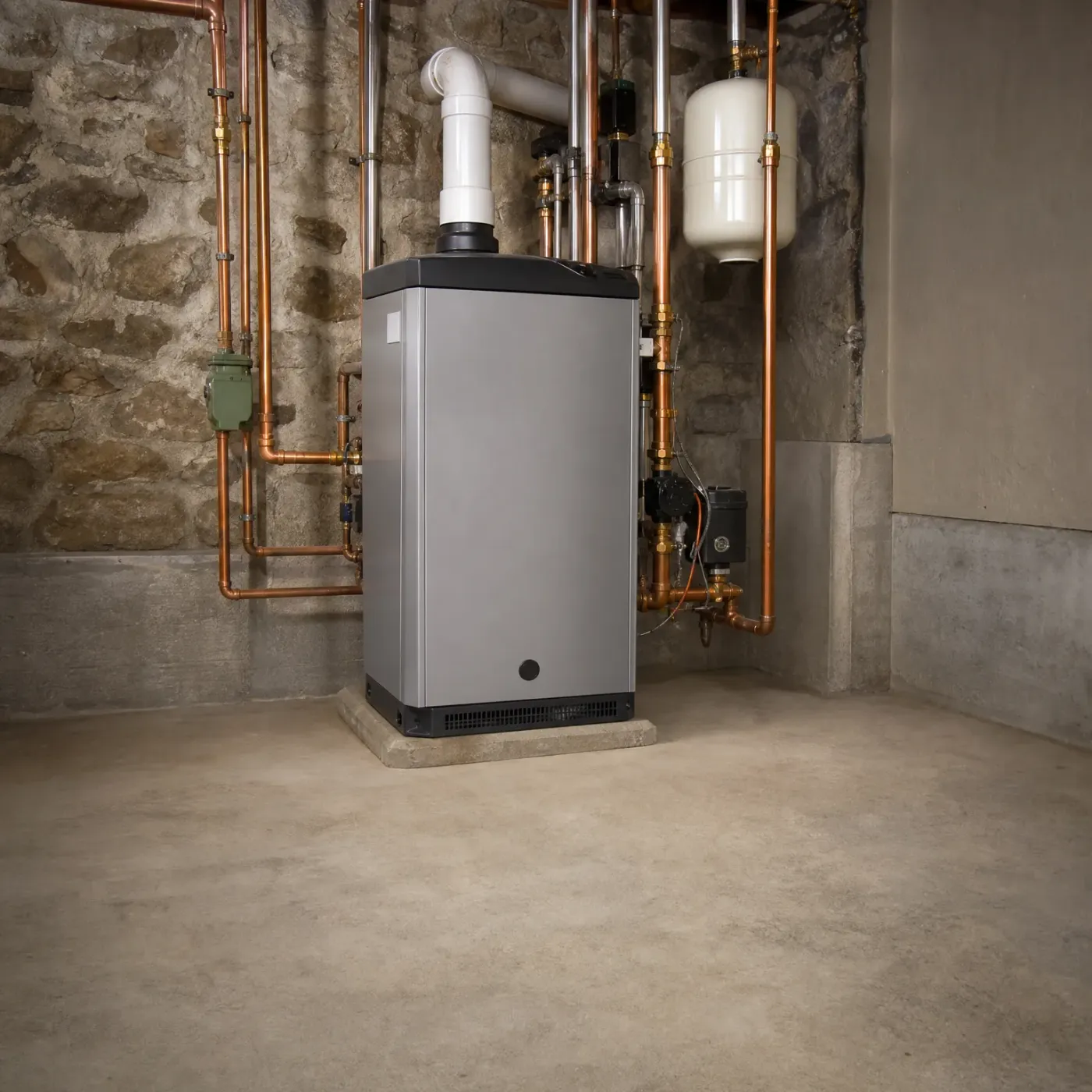
This is what a working boiler looks like. The pump moves water through the copper lines, the expansion tank holds steady, and the flue vents straight out without resistance. Nothing here is asking for attention yet.
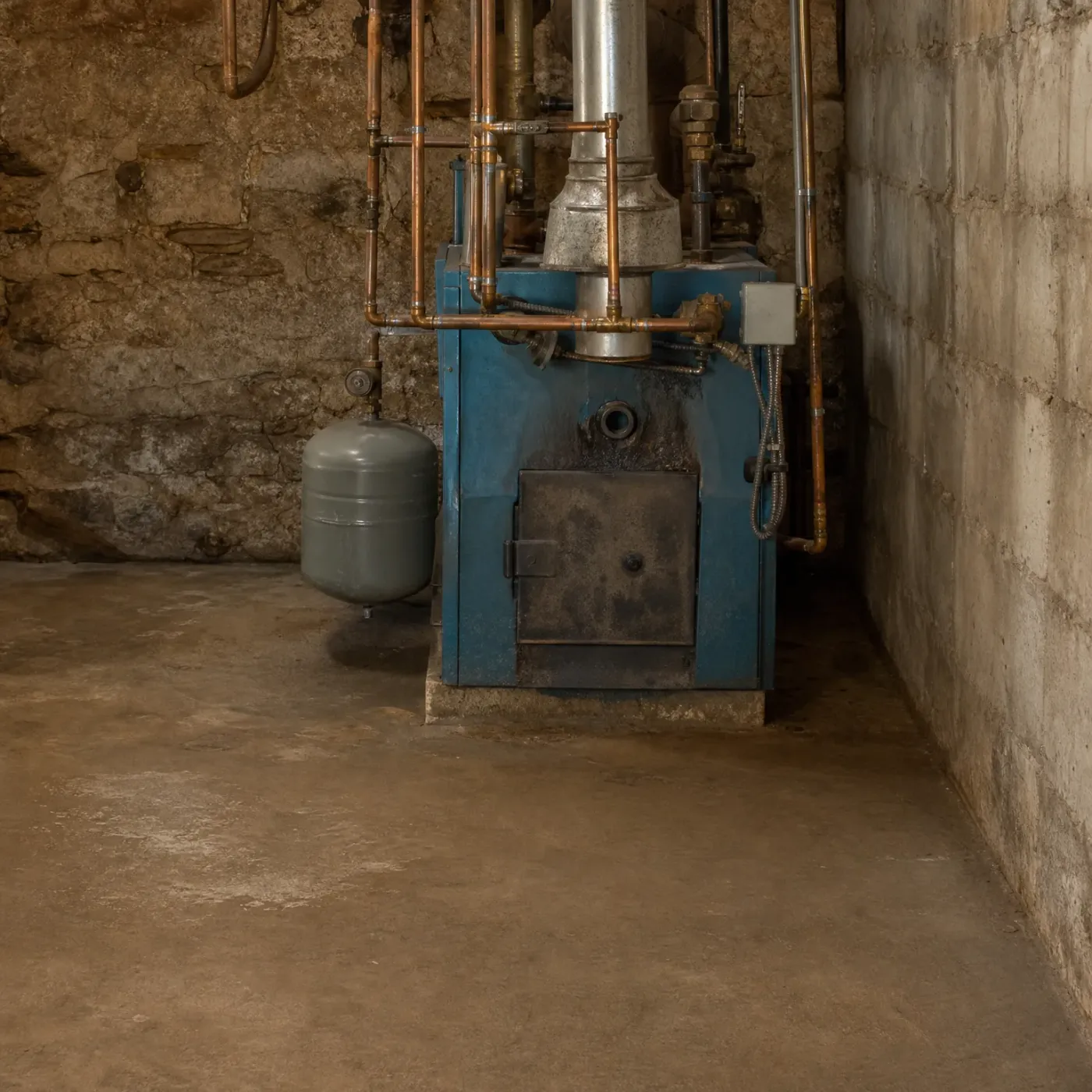
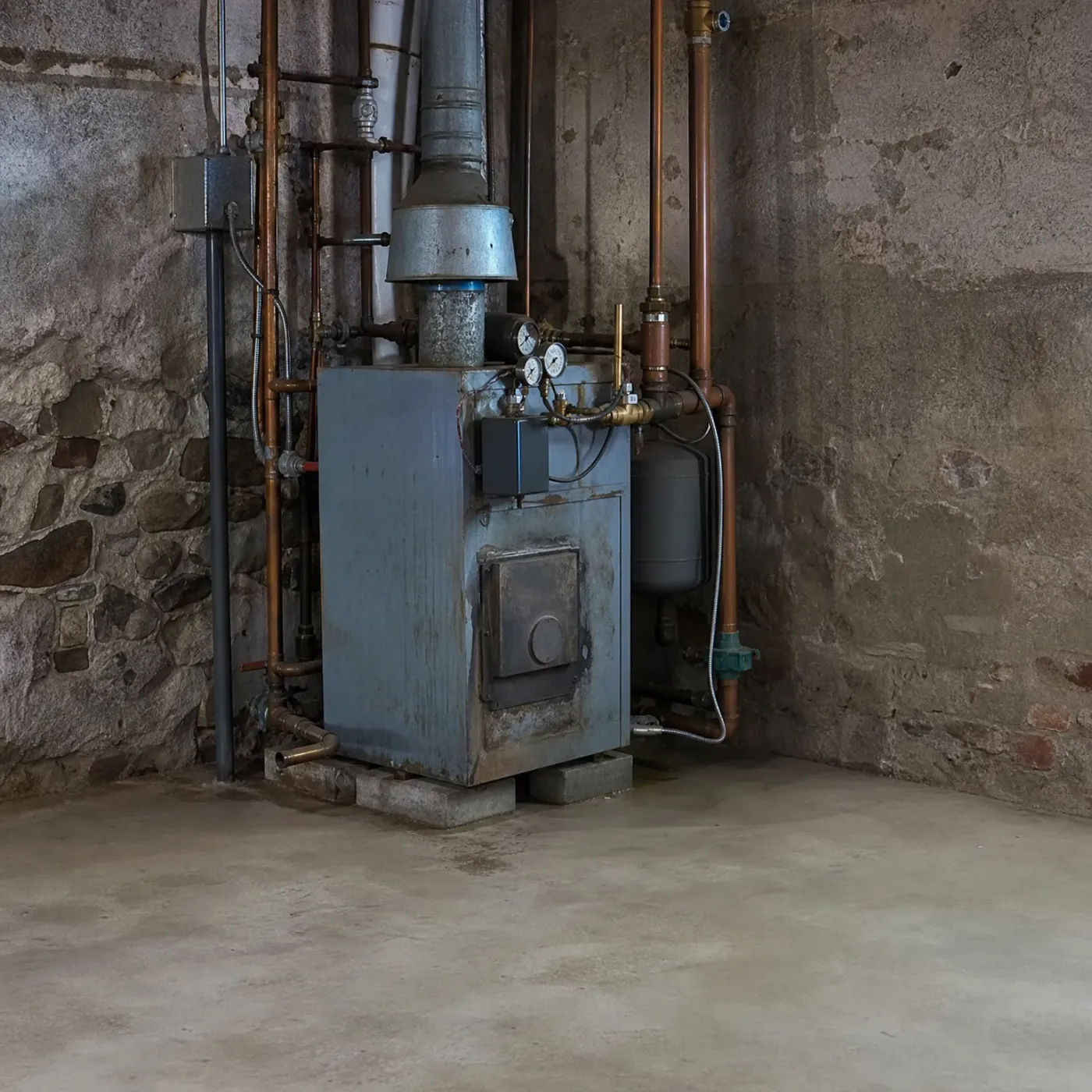
Cast iron like this has been through a lot of winters. The access door shows wear, the flue is old-style metal, and that expansion tank sitting loose on the floor is worth a second look before the next cold snap finds the weak spot first.
A boiler that won't fire on a cold morning usually comes down to one thing: low pressure, a stuck igniter, or a vent that isn't drafting right. None of those fix themselves, and in a Texas house, where a boiler is already the exception and not the rule, waiting it out just means a colder house tomorrow. You already know how this normally goes. Searching around for someone who actually services boilers in this area, calling a few numbers, explaining the same problem two or three times, then sitting with quotes trying to guess who's worth calling back. Sending the form here skips that part. You're not left hunting through a list of HVAC companies hoping one of them still works on boilers. Someone who knows this equipment gets the details of your situation and takes it from there. The boiler itself still needs a real look, the pressure checked, the ignition tested, the vent confirmed clear, but finding the person to do that stops being something you have to manage.
Skip searching for a boiler pro and answer a few questions instead.