Texas Boiler Works

Why your boiler makes a banging noise in Texas

Step 1 of 3: Equipment

Why does my boiler make a banging noise?

A boiler that bangs or kettles usually gets noisier over a few weeks, and it tends to happen right when the burner fires or right after it shuts off. It's loud enough that you've probably checked whether something's loose or about to break. Catching it early, before it turns into a bigger repair, is exactly the instinct worth following here.

It's usually scale or sediment built up on the heat exchanger

That bang or pop you hear is water flashing to steam against a layer of mineral scale or sediment sitting on the heat exchanger. The buildup traps heat right at the surface, so the water touching it boils before the rest of the tank catches up, and the steam bubbles collapsing make that knocking sound. It can also mean trapped air in the lines rather than scale, which sounds similar but comes from a different cause. Either way, the noise itself isn't dangerous today, but a heat exchanger working against a layer of buildup runs hotter than it should, and that shortens its life. A boiler making this noise needs a look before the banging turns into a bigger repair.

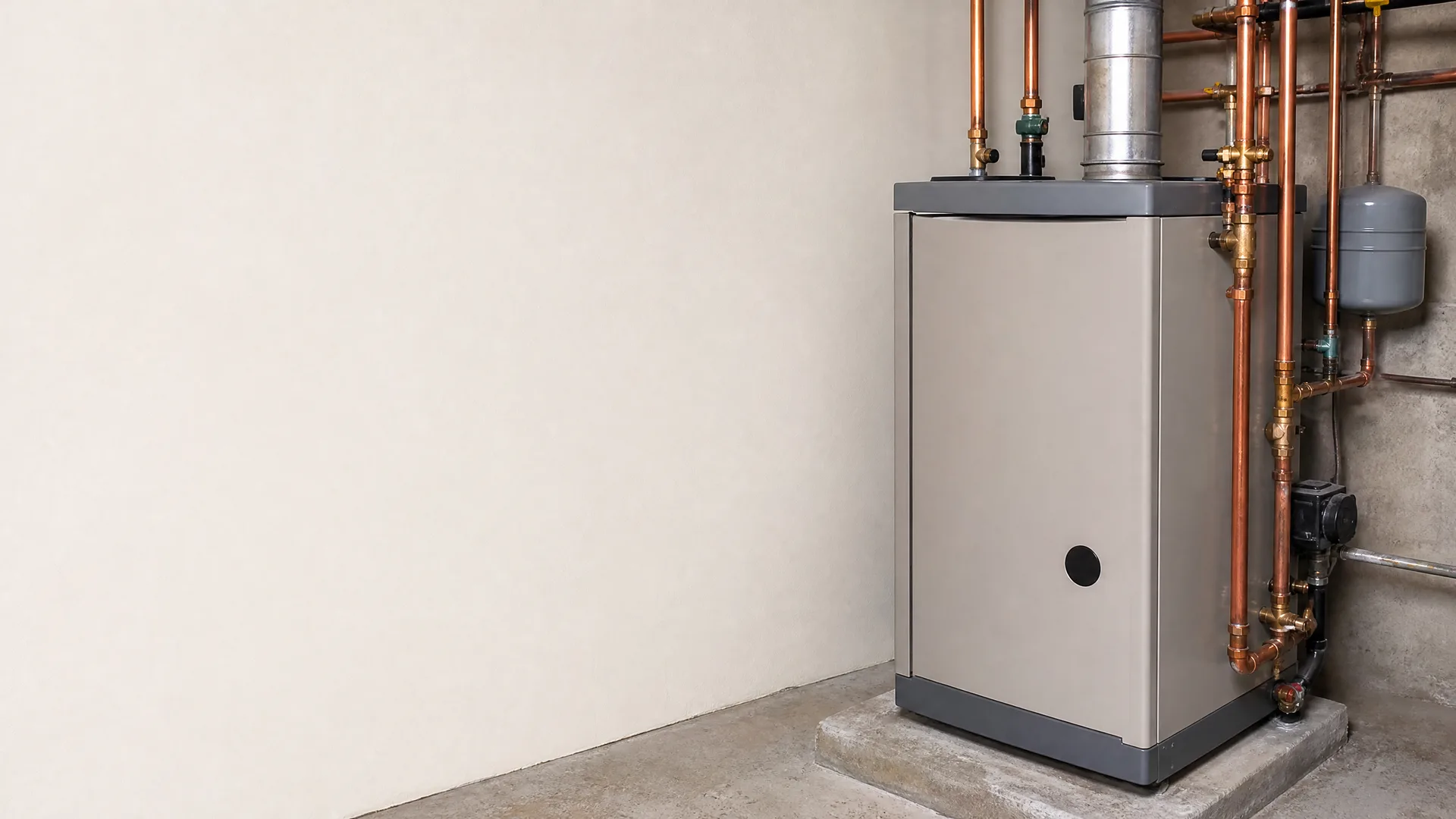
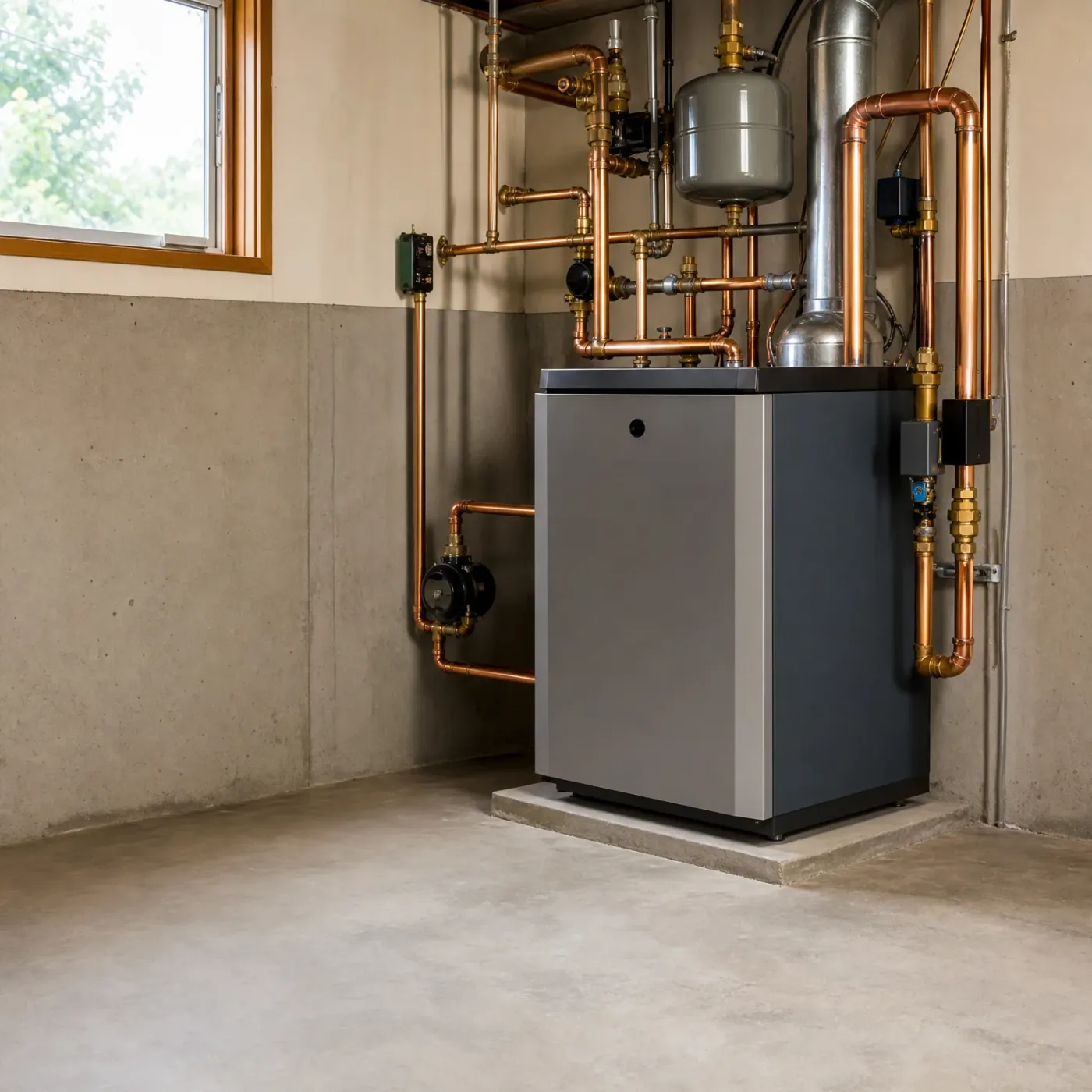
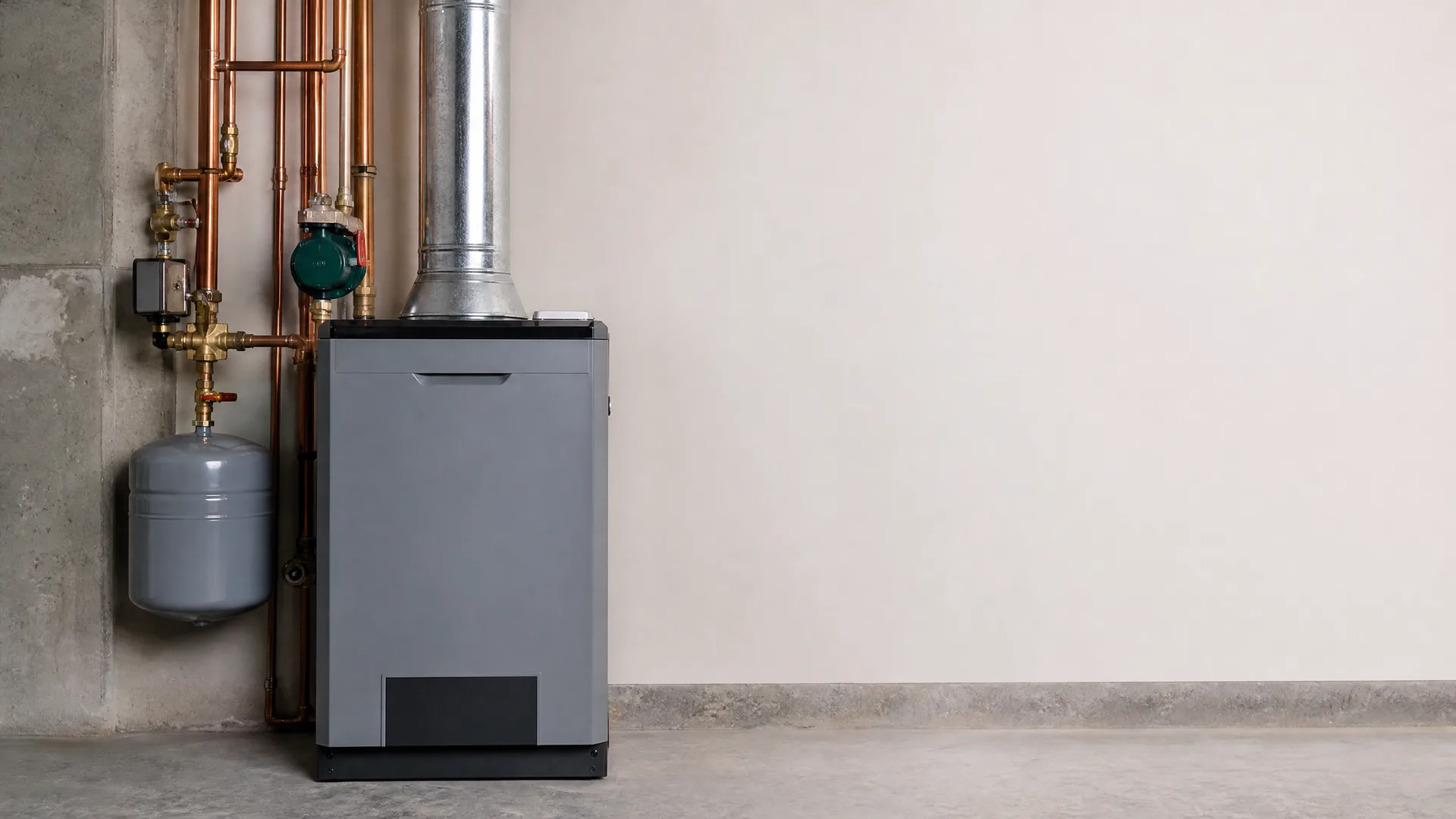
A gray floor-standing boiler with a metal flue pipe, copper piping, a circulator pump and a gray expansion tank, installed against a concrete wall.

Why the banging happens

Scale builds up on the bottom of the heat exchanger where the burner heats water fastest. That layer traps water against hot metal, so it flashes to steam pockets instead of heating evenly. The pockets collapse as they hit cooler water around them, and that collapse is the bang. The more scale builds, the harder the burner has to work to move heat through it, and the louder the noise gets.

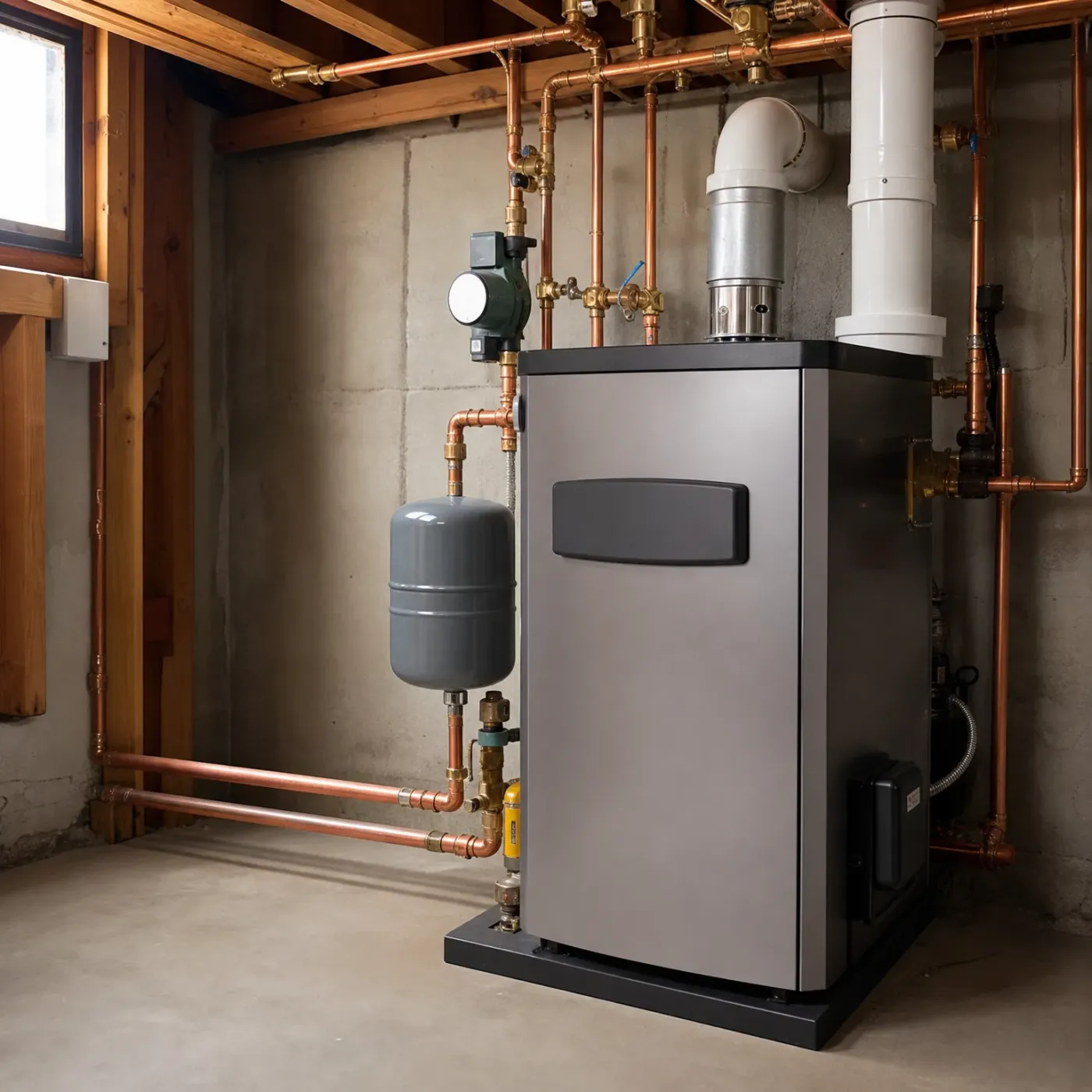
A tall grey floor-standing boiler on a concrete plinth in a corner of a room, with copper pipework, a flue, a circulator pump and an expansion vessel to its right, beside a plain cream wall.

What gets worse if it waits

A boiler banging from scale is already running less efficiently than it was built to, since the burner is pushing heat through a layer that slows it down. Left alone, the scale thickens and the heat exchanger has to absorb more direct heat without water moving it away fast enough. That's the kind of stress that cracks a heat exchanger over time, which is a far bigger repair than clearing scale early.

Is this something you can wait on, or not?

You'll hear it most in the evening, when the burner kicks on to catch up with the house. A knock or a pop from inside the cabinet, sometimes loud enough to notice from another room. Check the floor around the boiler and the fittings above it for any dampness, since scale buildup puts more strain on the heat exchanger and the joints around it. Left alone, that strain is what turns into a cracked exchanger or a leak, and either one is a bigger repair than the noise by itself. Texas runs most homes on electric heat, so a boiler here is already doing a specific job in your house. A noise that's new or getting louder is worth dealing with before it changes what the burner has to push against.

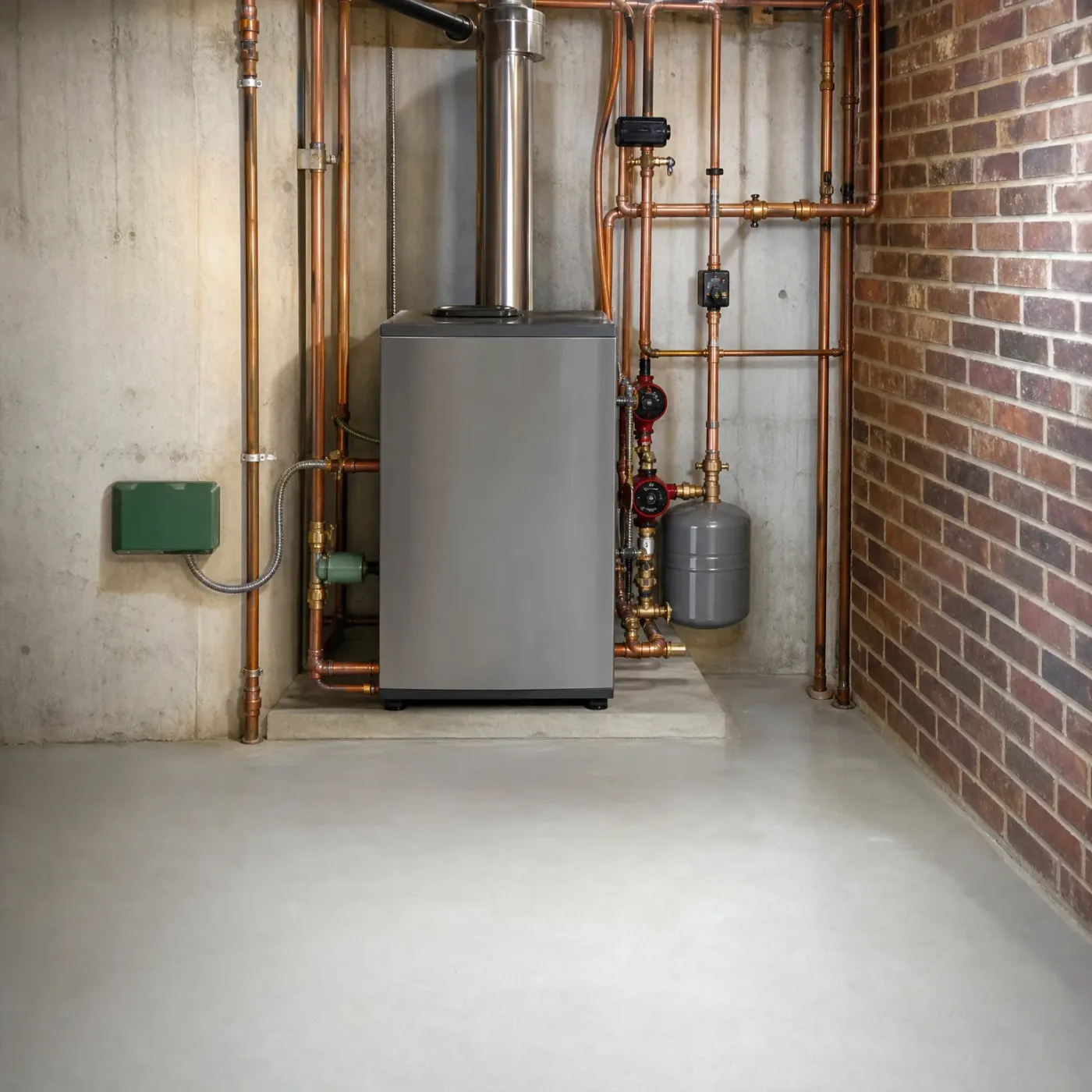
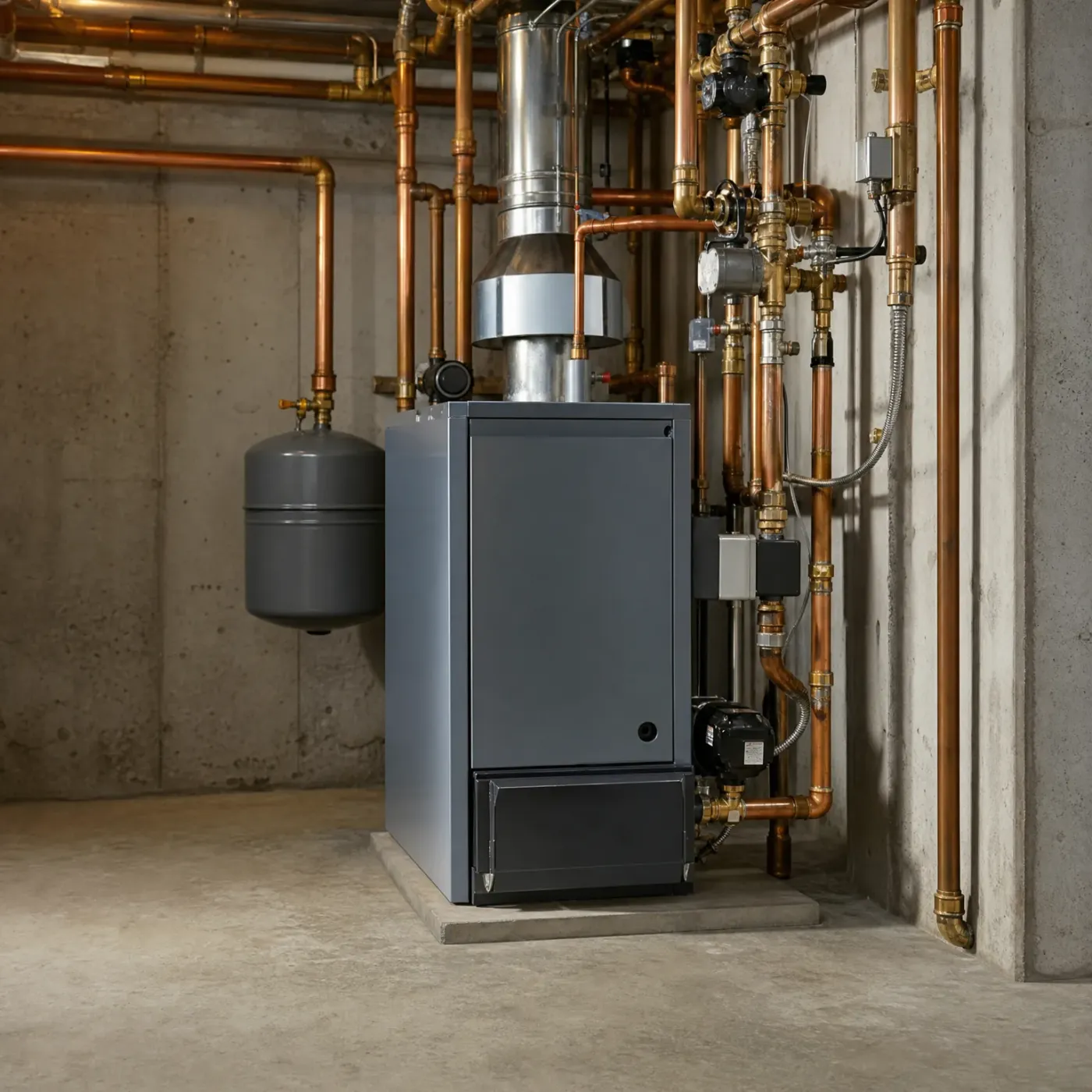
A gray boiler on a concrete pad in a basement, connected to copper piping, valves, pumps and a gray expansion tank, with a concrete wall on the left and a brick wall on the right.

Running quiet

This is what a boiler sounds like without scale on the heat exchanger. Water moves through the copper piping and circulation pumps evenly, the burner fires, and the only sound is a low hum. No knocking when it starts, no pop when it shuts off.

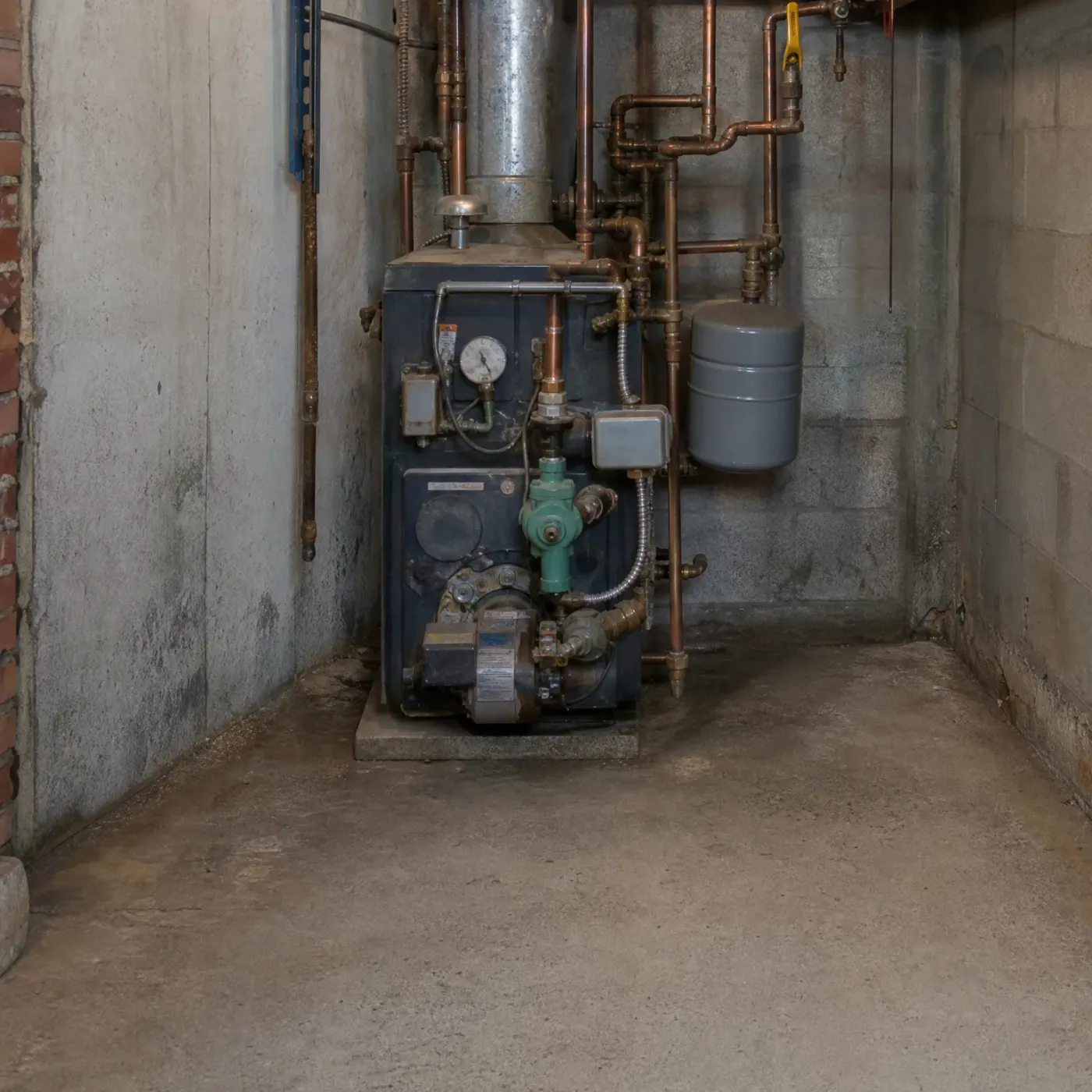
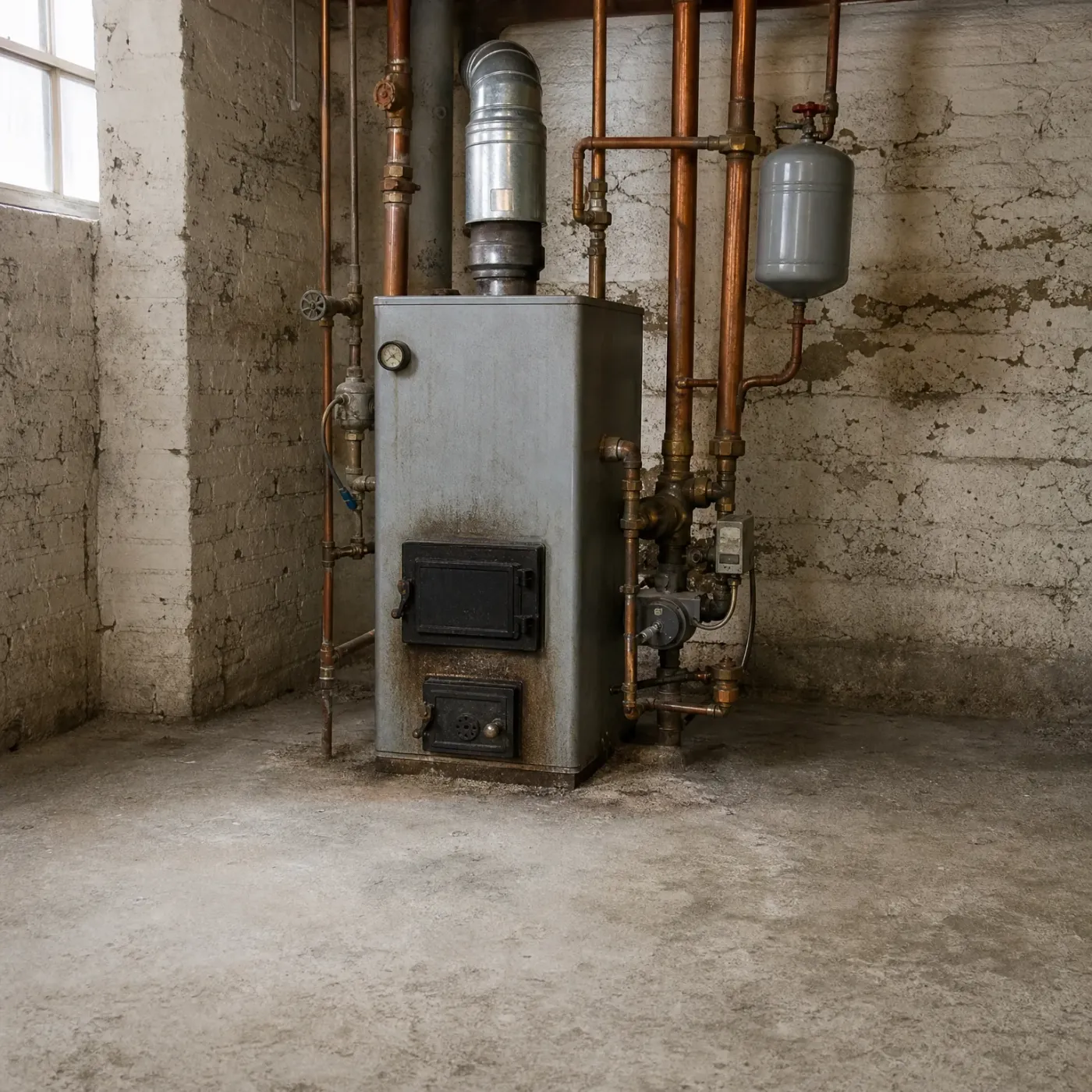
A dark cast-iron boiler with copper piping, pressure gauge, and a gray expansion tank sits on a concrete pad in a basement corner with concrete block and brick walls.

Running rough

This older boiler has had time for scale to build up at the bottom of the heat exchanger. The banging you hear is steam pockets collapsing against pipe walls. Left alone, that noise tends to get louder, not quieter, over the following weeks.

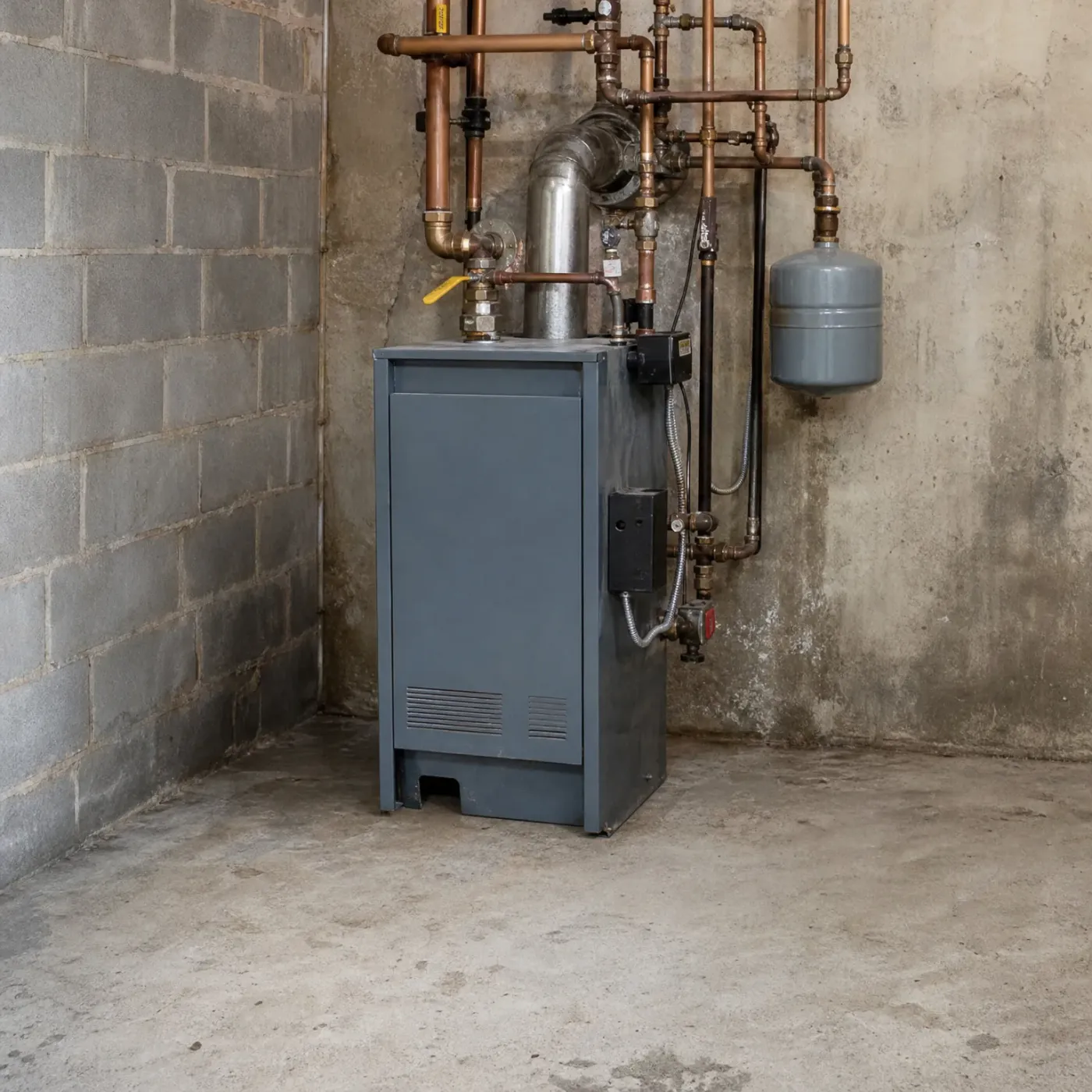
A gray floor-standing boiler in a basement corner with copper and black piping above it, a flue vent, and a gray expansion tank mounted on the concrete wall beside a concrete block wall.
Before you get your boiler repair
A gray floor-standing boiler on a concrete pad in a basement corner, connected to copper piping, brass valves, a circulator pump, an expansion tank, and a metal flue, with a window at upper left.
After you get your boiler repair
A gray boiler on a black base in a basement with concrete walls, connected to copper piping, a circulator pump, a gray expansion tank, and white and metal flue vent pipes.

Finding a pro stops being your job

Fill out one short form instead of calling around.

Send it once and finding someone is no longer on you.

Skip the calls

Asking costs nothing, and the choice to hire stays yours.

A smiling man with dark curly hair in a navy t-shirt sits on a gray couch indoors, with a large-leafed plant and a window in the background.
A bearded man in a plaid flannel shirt stands in a kitchen looking out a window toward snow-covered shrubs, with a steaming mug on the windowsill and potted plants on a shelf behind him.

Minerals in the water settle on the heat exchanger over time, right where the burner puts out the most heat. That layer sits between the metal and the water it's supposed to be heating. Instead of warming evenly, the water trapped under the scale flashes into little pockets of steam. Those pockets collapse the moment they hit the cooler water above them, and the force of that has to go somewhere. It travels through the copper piping and shows up as a knock or a bang you can hear from the cabinet. None of this means the boiler is failing. It's still heating your house, just with the burner working harder than it should to get the same result. The scale doesn't go away on its own, and it won't stop building just because the noise is already there. A contractor can flush the heat exchanger and clear it out, though if your water is what's laying the scale down in the first place, it's worth asking what keeps it from coming back.

What's actually happening inside

  • Kettling comes from mineral scale baked onto the heat exchanger, not from air trapped in the lines.
  • The noise grades worse over time because each firing cycle bakes the scale layer a little harder.
  • Steam pockets collapse with enough force to transmit a knock through the copper piping to the cabinet walls.
  • A boiler that bangs is still heating water, so it can run weeks or months before anything fails outright.
  • The same scale that causes the noise also makes the burner work harder to move heat into the water.
  • Flushing the heat exchanger removes the scale layer, but it builds back if the water chemistry doesn't change.
A gray boiler on a concrete pad in a basement, connected to copper piping, valves, circulator pumps, a metal flue, and a wall-mounted expansion tank.
Water moves through the copper piping and fittings without a fight, so the burner fires and settles into a steady hum.
An old gray boiler with copper piping, a flue duct, pressure gauge and an expansion tank stands in the corner of a basement with painted masonry walls and a bare concrete floor.
Scale has built up thick enough on the heat exchanger that every firing cycle ends in a knock or a pop.
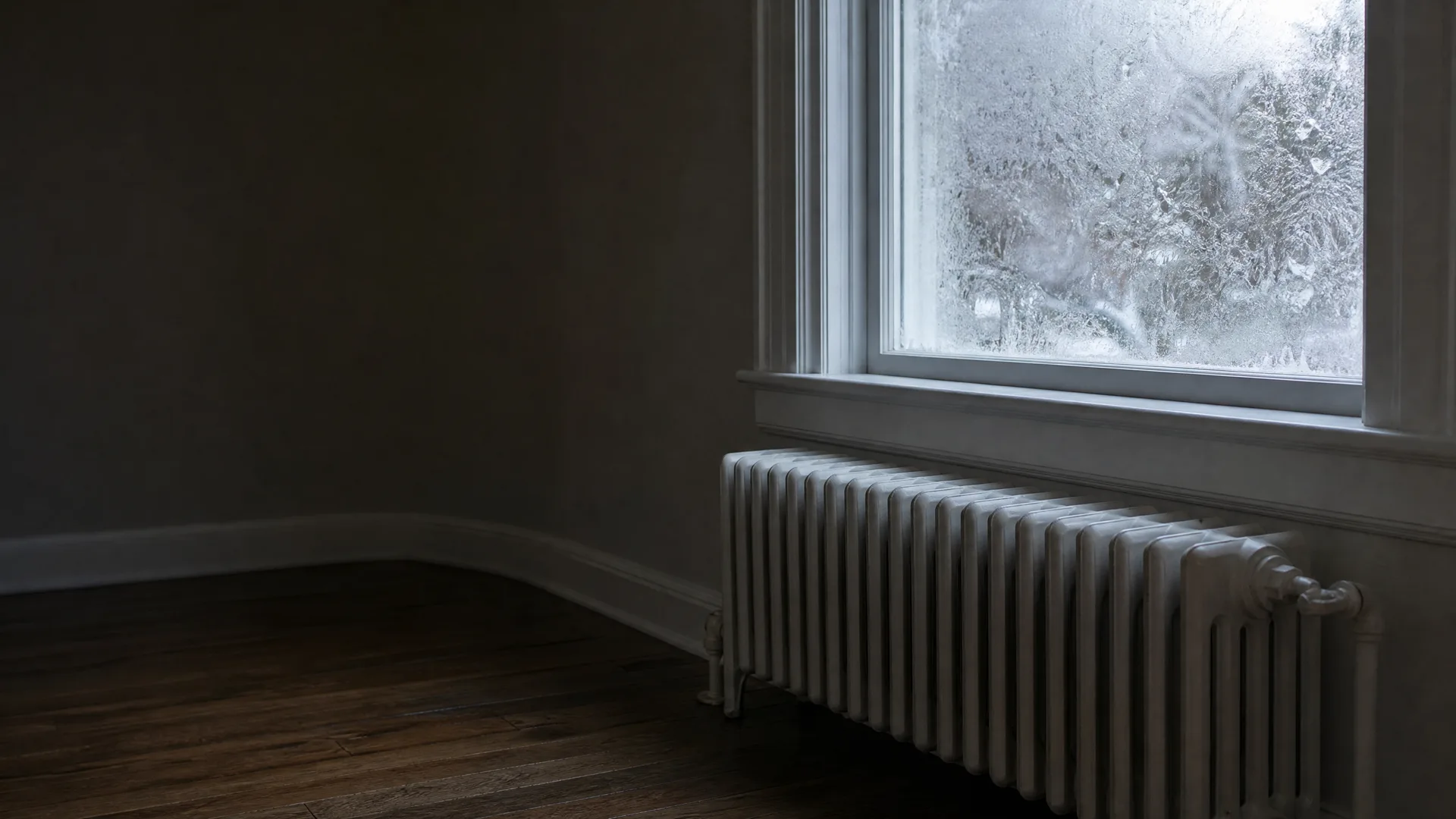
A white cast-iron column radiator under a frosted window in a dim empty room with dark walls and a wood floor, with snowy trees visible outside.

You're up before the rest of the house, coffee going, and the boiler fires in the next room. That knock again, two or three hard pops before it settles. You stand at the window a second and there's ice feathered across the inside of the glass, which still catches you off guard here, even in a hard Texas cold snap. The radiator under the sill is working, ticking as it heats, and you rest a hand on the cast iron waiting for the bang to come again. It does, right as the metal gets warm. Outside the yard is white with frost. You go find your socks and leave the sound alone for now.

Winter nights average 41°F statewide

Boilers around here run light by most states' standards, since 41°F overnight lows mean short, frequent firing instead of long steady runs. That's more cycles over a season for scale to build on the heat exchanger, and more chances for the bang to show up.

NOAA nClimDiv 1991-2020 county normals weighted by homes

The banging comes from scale on the heat exchanger, and it doesn't fix itself. Left alone, it keeps baking harder with every cycle, and the knock gets louder, not quieter. That's the plain answer, and it points to one next step: getting a contractor to clean or descale the heat exchanger before it stresses the metal further. You don't have to spend an evening searching for who does boiler work in your area, calling a few numbers, explaining the same knocking sound three different times, then sitting on quotes trying to guess which one is fair. Send the form once and that part is off your plate. Someone qualified gets in touch, already knowing what you're dealing with, and you go from a boiler that bangs every time it fires to one you can stand next to without flinching.

A dark wood cabinet with a paneled door and a ceramic pot of green foliage on top stands in a beige-walled room with white baseboard, a window at left, hardwood floor, and a patterned area rug.
A dark wood glass-front cabinet holding folded towels, woven baskets and a ceramic vase stands in a bathroom corner beside a window, with a potted fern and stacked towels on top and a freestanding tub partly visible at left.
A woven basket holding a green cushion and a cream fringed knit throw sits on a wood floor in a room corner beside a window and a dark wooden cabinet.
Corner of a room with a dark wood cabinet topped by a round vase, a linen curtain at a window, white baseboard, oak plank flooring with sunlight patches, and a woven jute rug in the foreground.
A dark wood sideboard against a pale wall holds a shallow stone bowl and a round ceramic vase with leafy branches, with sunlight from a curtained window falling across the wall, wood floor and woven rug.

Let someone else find the pro

Explain the job once and skip repeating it on every call.

Answer a few questions

No fee to send it, and nothing to sign.