Profile view of a bearded man wearing a dark baseball cap and a dark gray T-shirt against a plain off-white background.

Why your boiler keeps turning off in Texas

Step 1 of 3: Equipment

Why does my boiler keep shutting off in Texas?

A boiler that shuts off on its own, over and over, usually means it's tripping a safety switch rather than failing outright. That's a good thing in one sense: the boiler is doing what it's built to do when something downstream isn't right. But it still leaves you without heat, and it's worth catching early before the part causing it wears out something bigger, like the heat exchanger.

A safety switch is cutting power because of low water pressure, a bad flame sensor, or a blocked vent

Most boilers shut off mid-cycle because a safety device has tripped, not because the boiler itself has quit. Low water pressure is the most common cause, since the pressure switch won't let the burner run if the system can't move water through it safely. A dirty flame sensor or failing igniter can also make the boiler light, then cut out seconds later. A blocked flue or vent does the same thing from the other direction, by tripping a pressure switch meant to catch exhaust that isn't venting properly. Since most homes in Texas heat with electric systems, a gas or oil boiler shutting off here often means a part that's been overlooked rather than a system under heavy seasonal strain.

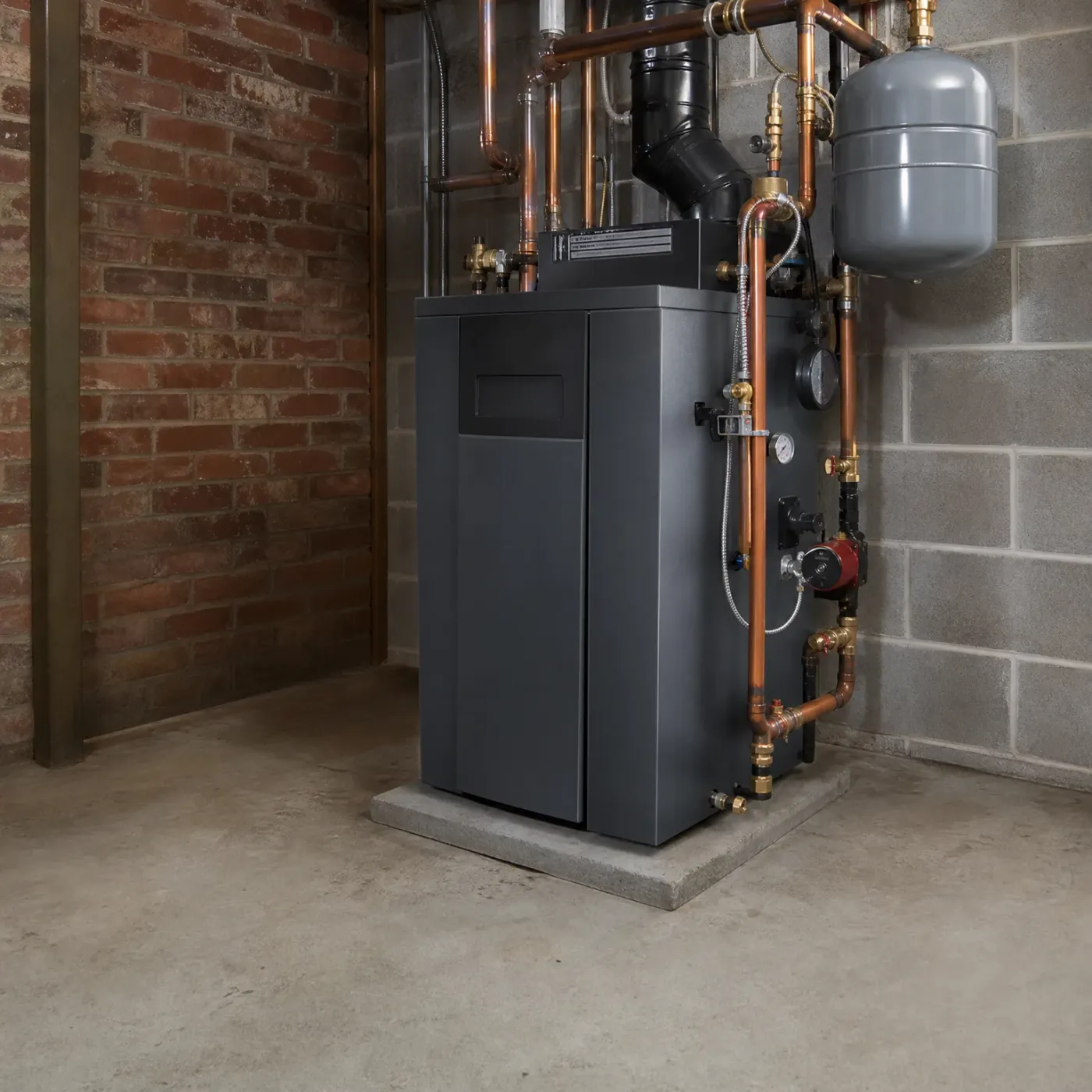
A dark gray floor-standing boiler on a concrete pad in a basement, connected to copper piping, valves, a circulator pump, a gauge, a black flue pipe, and a gray expansion tank, with a brick wall on the left and concrete block wall behind.

Running the way it should

Pressure holds steady, the burner lights, and heat moves through the pipes without the boiler stopping on its own. Gauges read where they should and the expansion tank is doing its job. It runs a full cycle and shuts off only when the thermostat is satisfied.

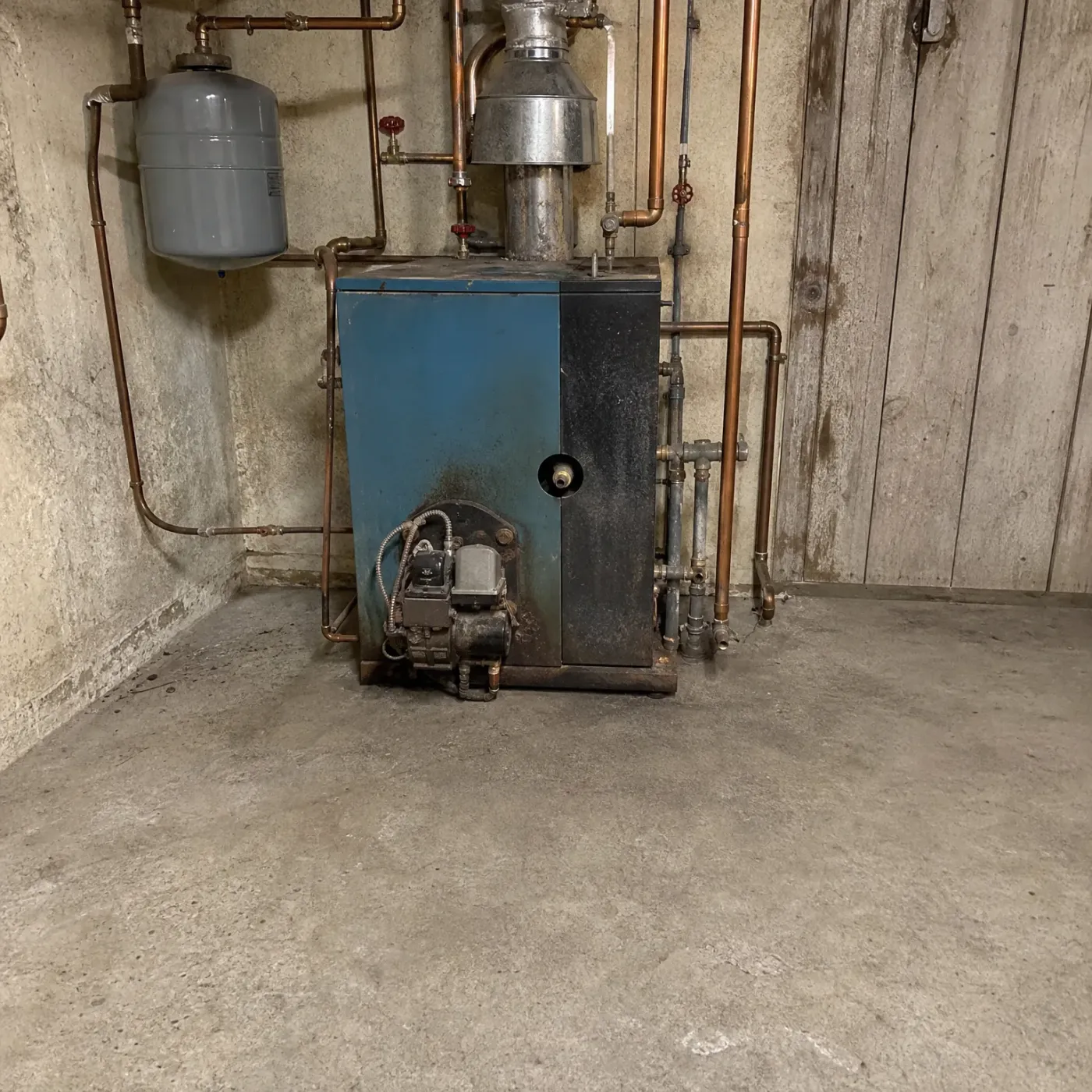
A blue and black boiler with a burner unit, flue, expansion tank and copper and steel piping stands on a concrete basement floor against a concrete wall and wooden plank partition.

Shutting off early

The burner kicks on, runs a few minutes, then cuts out before the house gets warm. Pipes and valves look the same, but a worn or older unit like this one is more likely to trip its safety switches. Left alone, it keeps happening.

A woman in a gray turtleneck sweater stands by a window looking outside at snowy ground, with a dimly lit living room containing a sofa, shelves, lamp and a lit candle behind her.
A woman in a cream cable-knit turtleneck sweater stands in a warmly lit living room with a fireplace and shelves behind her, looking out a window toward snow-covered trees and a railed deck.
A woman in a cream knit turtleneck sweater stands by a window looking out at snow, with a lit fireplace, sofa and lamp in the room behind her.
A woman in a gray knit sweater sits by a window looking out at falling snow, with a dimly lit living room containing a sectional sofa, pillows, a lamp and houseplants behind her.

What the lockout is checking

A boiler has a few points where it checks itself before it will keep running. Low water pressure is one. A flame that doesn't prove itself to the sensor is another. A blocked vent or a draft problem that lets exhaust linger is a third. Any of these trips a switch, and the switch shuts the whole unit down rather than letting it run unsafe. That's why a boiler can cut off mid-cycle with no warning and no obvious cause from the outside. The part doing the shutting off usually isn't broken. It's reading something downstream of it, in the water, the flame, or the vent, and reacting the way it's supposed to.

Why it keeps coming back

A boiler that resets and runs fine for a day, then trips again, usually has the same cause finding the same limit each time. Low pressure that isn't topped off will trip the same switch next cycle. A flame sensor coated with residue will fail to prove the flame the same way it did an hour ago. Nothing about the shutoff changes until whatever it's reacting to changes. That's different from a part failing outright, where the boiler would stop working and stay stopped. Repeated short cycles point at a condition the boiler keeps finding, not a random fault, which is why the same trip tends to repeat until it's addressed.

A bearded man in a plaid flannel shirt stands indoors looking out a frost-covered window, with a steaming dark blue mug on the wooden sill and snow-covered trees outside.
A smiling man in a dark blue T-shirt sits on a light gray sofa in a living room with a wooden shelf and window behind him, with a laptop edge visible in the foreground.

The right pro for this job

Answer a few questions instead of calling shop after shop.

Asking costs nothing, and the choice to hire stays yours.

What you'll notice first

Most Texas homes heat with electricity, so a gas or oil boiler shutting off tends to show up fast, usually in a house that uses it for hot water or a specific zone. You'll catch it mid-cycle: the burner was running, then it wasn't, and the thermostat still calls for heat. Water that was warm turns lukewarm. If you check the boiler itself, the display or reset light often tells you it tripped rather than just stopped. Catching it this early, before it happens every single cycle, is usually easier to sort out than waiting until it won't restart at all.

What keeps happening if it's ignored

A boiler that keeps tripping its safety switch isn't resting between shutoffs, it's repeating whatever triggered the lockout, and that doesn't fix itself. Each reset asks the same components, the pressure switch, the flame sensor, the igniter, to do their job again under the same bad condition. Left alone, the cycling gets more frequent, and whatever part is struggling, a sensor reading just out of range or pressure that keeps drifting low, tends to wear out faster under repeated strain. At some point the boiler stops resetting at all and you're without heat or hot water until someone looks at it.

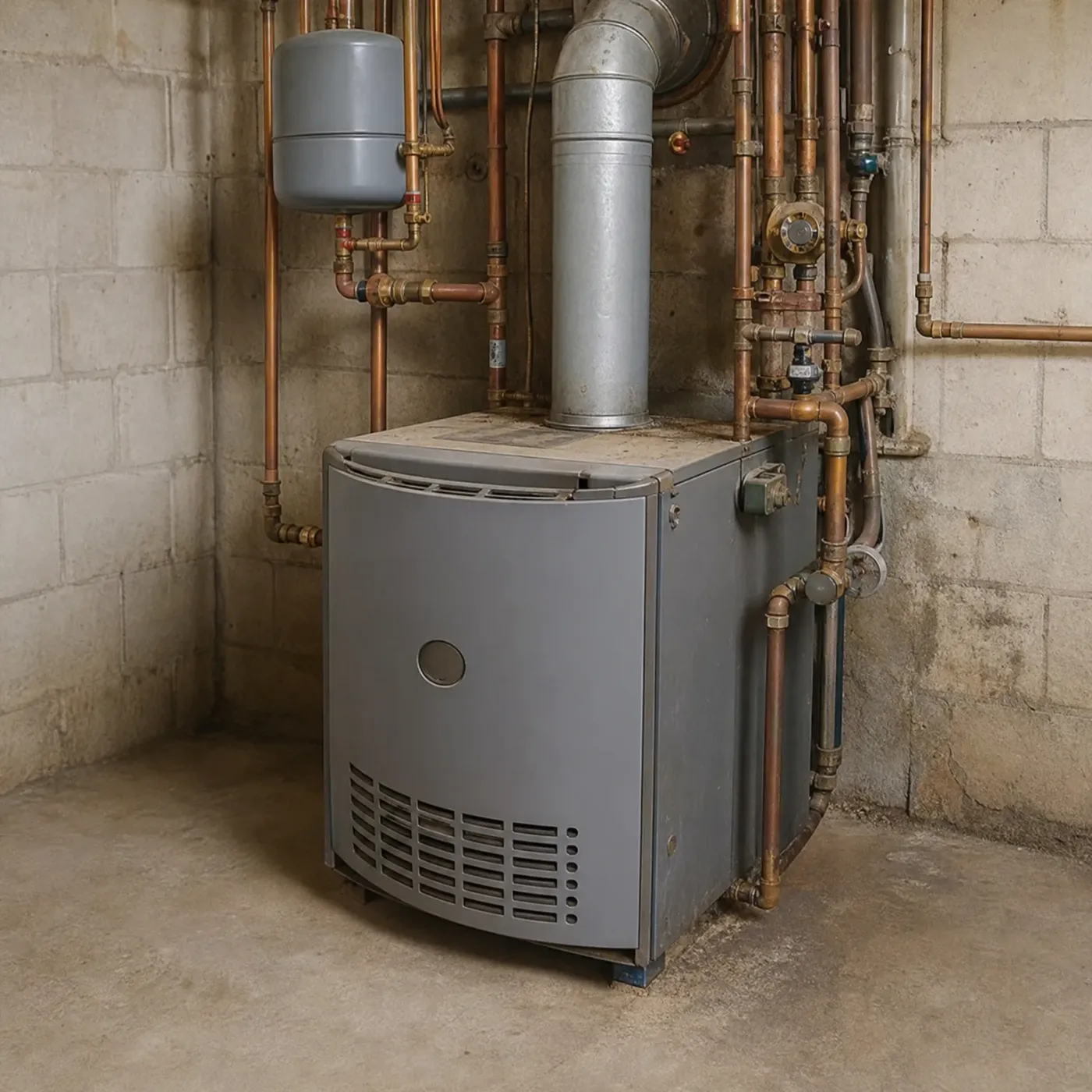
A gray residential boiler with a metal flue pipe stands in a concrete-block basement corner, surrounded by copper piping, valves and a gray expansion tank.
Before you get your boiler repair
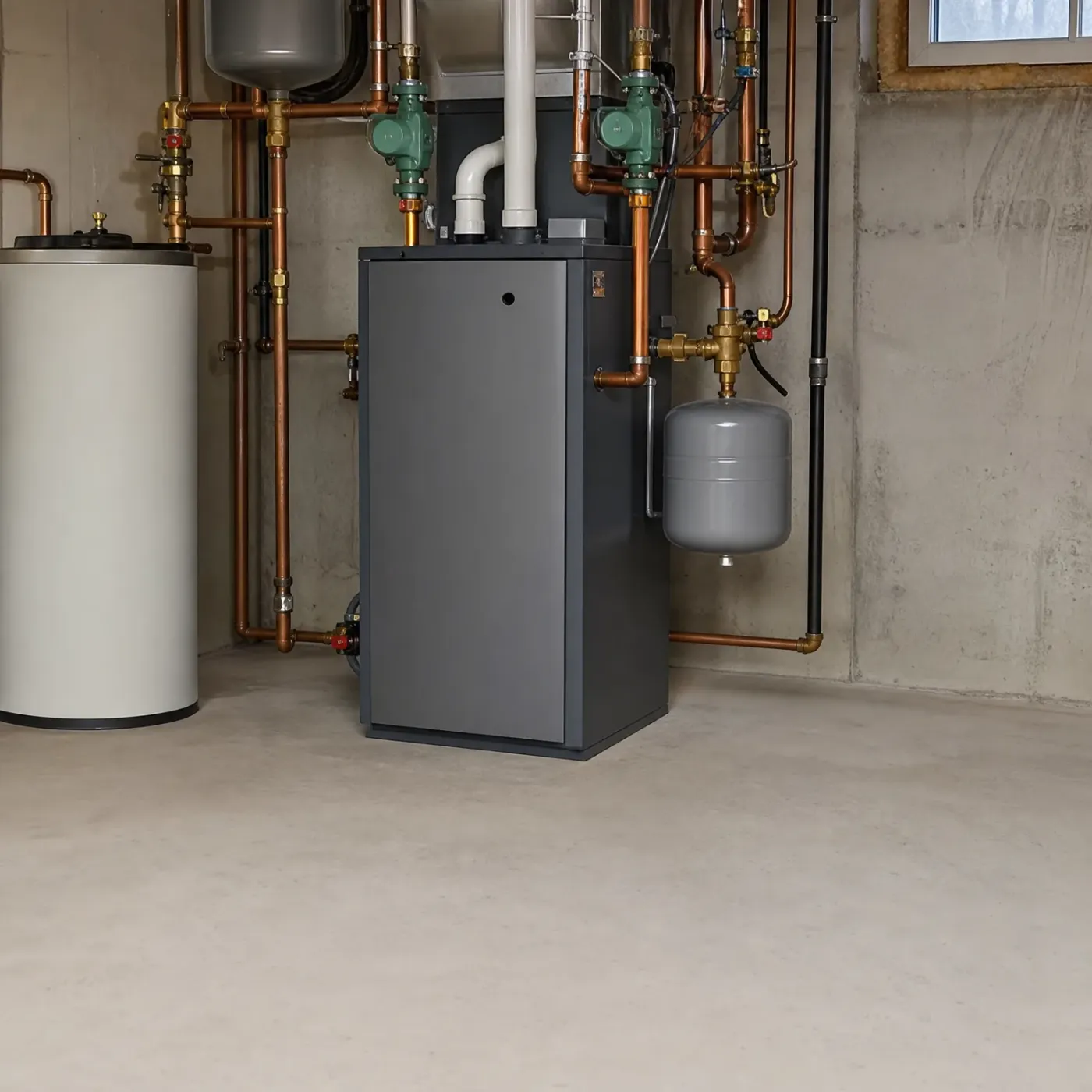
A dark gray floor-standing boiler in a concrete-walled basement, connected to copper piping, circulator pumps, a gray expansion tank, and a cream-colored storage tank to the left.
After you get your boiler repair

How the shutdown actually happens

  • Every safety shutdown follows a sequence: the control senses a fault, cuts power to the gas valve, and locks out before the burner can relight.
  • The igniter has to prove flame to the flame sensor within a few seconds or the control shuts the valve and won't try again until it's reset.
  • A low water cutoff reads pressure at the boiler itself, so a drop anywhere in the loop can trip it even if the gauge looked fine yesterday.
  • Soft lockouts clear on their own after a short wait, but hard lockouts need the reset button pressed at the boiler.
  • The circulator pump has its own switch that can trip from a seized bearing, and the control reads that as a failure to circulate rather than a pump problem.
  • Repeated lockouts rewrite the control board's fault memory, so the next call to the home starts with a record of what's been failing and how often.

A boiler doesn't just quit. It follows a sequence, the same one every time. Something crosses a line the control is watching, and the control cuts power to the gas valve before the burner can do anything else. That's the lockout.

Flame proving is where a lot of these start. The igniter lights the burner, and the flame sensor has a few seconds to confirm it's burning. If it doesn't get that confirmation, the valve closes and stays closed. No second try. Someone has to reset it at the boiler.

Water pressure works differently. The low water cutoff is reading pressure right at the boiler, not at a gauge somewhere else in the house, so a loop that lost pressure overnight can trip the cutoff even though yesterday's reading looked normal.

Not every lockout needs a hand. Soft lockouts are the control waiting out a short fault on its own, and they clear without anyone touching the reset button. Hard lockouts don't. Those sit until someone presses reset at the unit.

The circulator pump adds another layer. It has its own switch, and if the bearing seizes, the control doesn't know it's a pump problem. It just sees that water isn't circulating and treats that as its own kind of fault.

Every time this happens, the control board keeps a record. A boiler with repeated lockouts isn't a mystery by the time someone gets to it. The fault memory already shows what's been tripping and how often.

Winter nights average 41°F statewide

A 41°F night is enough for your boiler to run long stretches to hold a zone or keep hot water ready. Short cycles under that kind of steady demand are what wear a pressure switch or igniter down faster, and that's often when the lockouts start.

NOAA nClimDiv 1991-2020 county normals weighted by homes

A boiler that keeps shutting off is locking out on a safety check it's failing, whether that's pressure, flame proof, or a blocked vent, and it will keep doing that until the actual fault gets fixed. Repeated lockouts don't clear on their own, and resetting the switch each time just delays the same shutdown. You already know not to let a small problem like this sit. What you don't have to do is spend a weekend calling boiler companies around your part of Texas, explaining the same symptoms over and over, and weighing quotes against each other with no way to tell who's actually right about what's wrong. Answer a few questions about what the boiler is doing and you'll be matched with a contractor who handles this kind of lockout, and they'll reach out to you directly. The boiler itself still needs a hand on it. But the part where you track down who that hand belongs to is done.

Interior room corner with sunlight from a window, showing peeling paint and damaged plaster on the wall above a white baseboard, a wooden cabinet with a pale bowl on top, hardwood floor and a patterned rug.
Interior corner of a room with tan walls, white profiled baseboard and window trim, a wood-plank floor in sunlight, and green foliage visible through the window.
An empty room corner with cream walls, white baseboard, two windows with deep sills showing green foliage outside, and a wood plank floor lit by sunlight.
Empty room corner with beige walls, white beadboard wainscoting, chair rail and baseboard, a window with green foliage outside, and sunlight casting leaf shadows on the wall above a wood floor.
Sunlit room corner with a multi-pane window, beige walls, white baseboard, wood floor with a woven rug, and a dark wooden cabinet holding a ceramic table lamp below a framed picture.

Matched to your boiler job

Describe your boiler job once, to one pro.

Skip the search

No fee to send it, and nothing to sign.