
30 psi
That's the pressure where your relief valve is built to open. Once it's released water past that point, the valve itself is usually worn and won't reseal, even after pressure drops.
Skip calling around
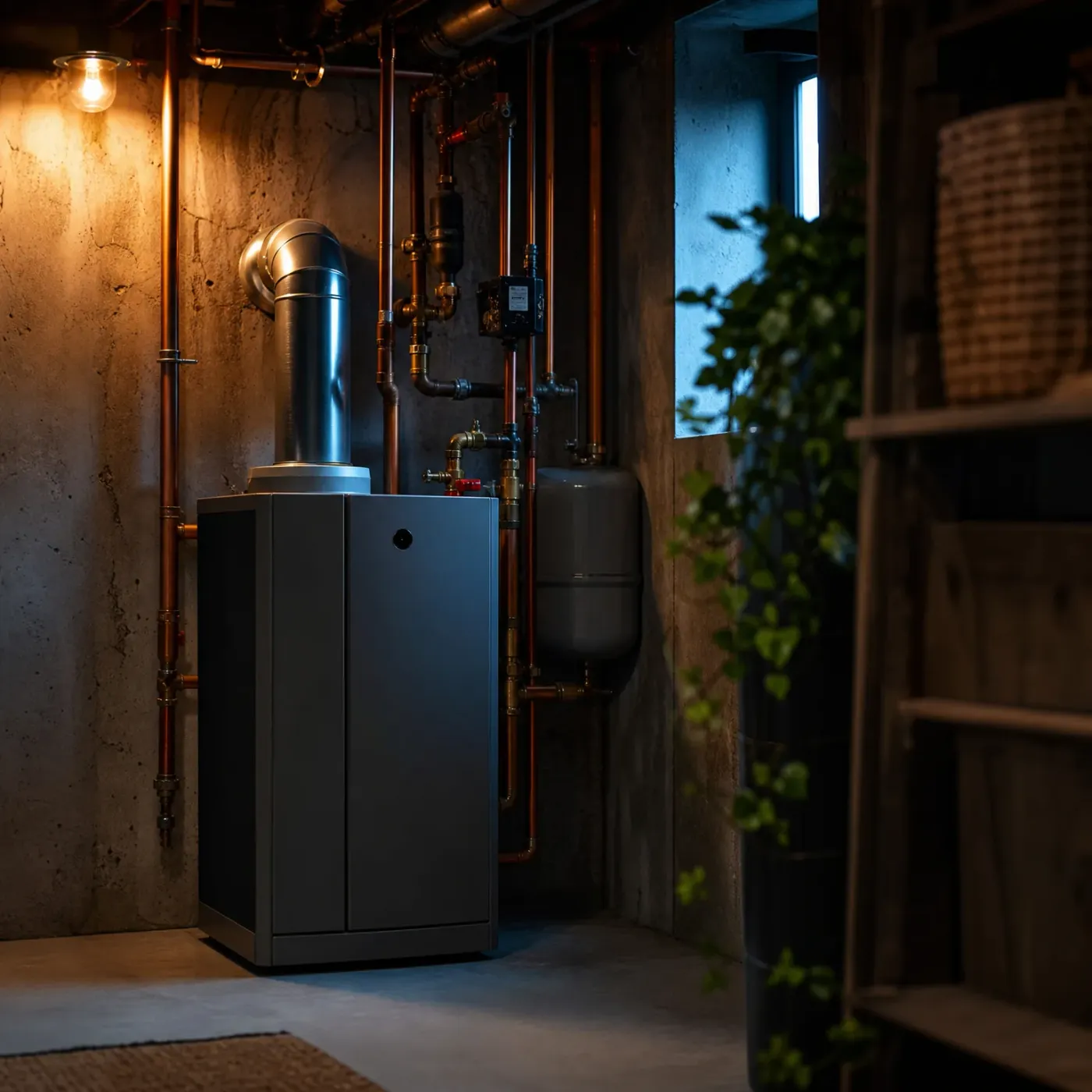
A boiler leaking water usually comes down to a failed valve, a cracked pipe fitting, or pressure building where it shouldn't. This page walks through what causes each kind of leak and what it means for your system. Skip calling around to a handful of companies and explaining the same problem twice. A licensed Texas plumber who works on boilers all year can take a look and tell you what's actually going on.
Describe it onceA leaking boiler is almost always one of three things: a worn pressure relief valve letting water out because pressure inside has climbed too high, a pipe fitting or seal that has corroded or loosened enough to seep, or the expansion tank losing its charge so the system has nowhere to send excess pressure except out through the relief valve. Most Texas homes rely on electricity for heat, so a boiler is less common here than in other parts of the country, which means fewer local techs see this exact system on a daily basis. A small drip near a valve or fitting is usually the early sign of one of these failures, not yet an emergency. Left alone, the leak tends to get worse, and depending on where the water lands, it can mean damage to the boiler's own components or to whatever is nearby. The exact point where the water is coming from tells you which of these it is, and that is worth figuring out before the leak grows.




Pressure is the thread that runs through most of this. The relief valve near the top of the boiler is built to open once pressure crosses around 30 psi, and that's by design, not a malfunction. The problem comes after. Once that valve has opened and reseated itself a few times, the seat wears and stops sealing all the way, so you get a slow drip even when pressure is back to normal. That drip gets blamed on the valve, but the valve is usually just reporting a problem that started somewhere else.
The expansion tank is often the real source. It holds a cushion of air that gives the water somewhere to go as it heats and expands. If that tank loses its air charge and waterlogs, the system has nowhere to put that expanding water except out through the relief valve. So a valve that's opening often, not just once, points back to the tank.
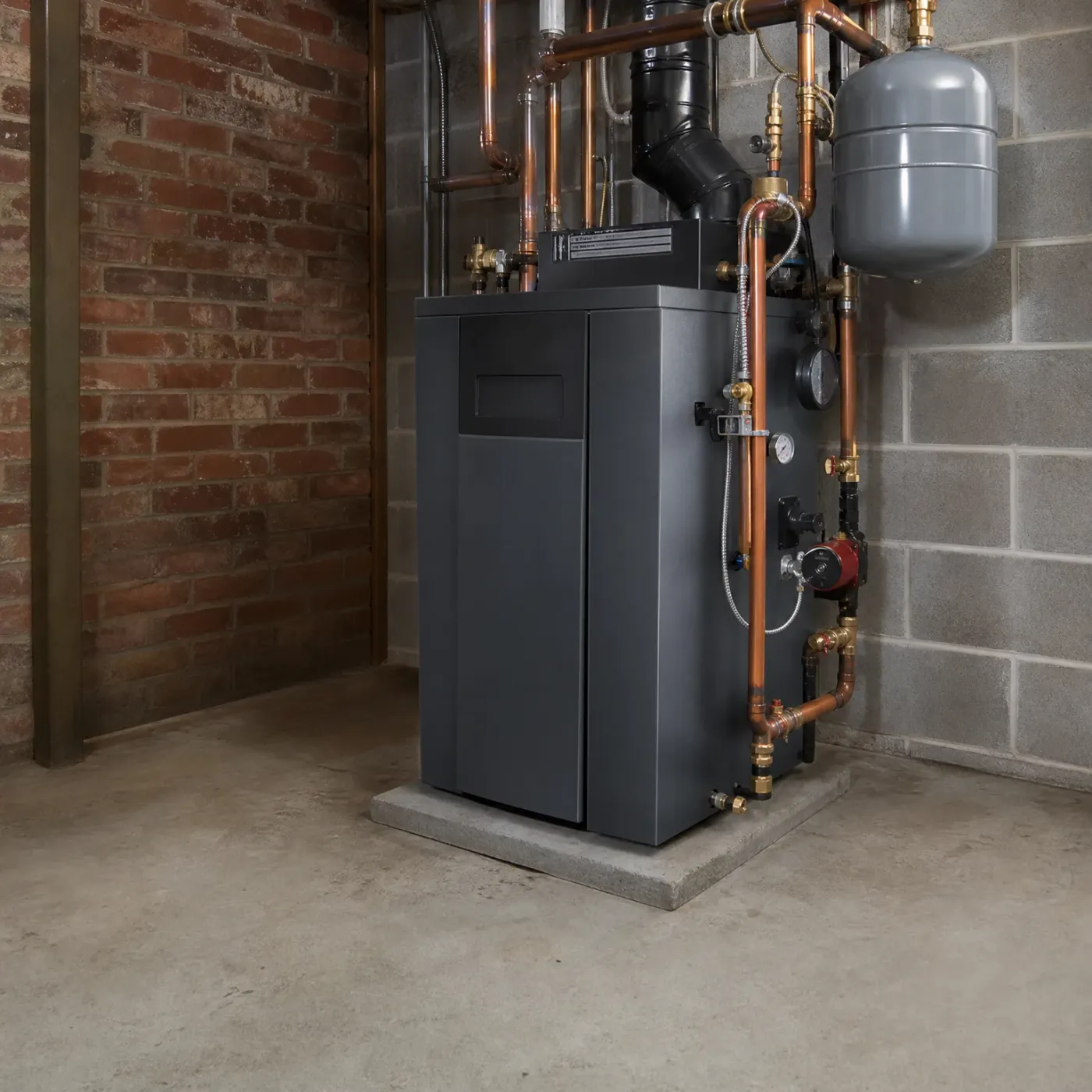
Pipe fittings near the boiler take more heat than anything else in the system, and threaded or soldered joints there corrode or work loose faster than fittings further down the line. A joint that was tight for years can start seeping once it's been through enough heating cycles.
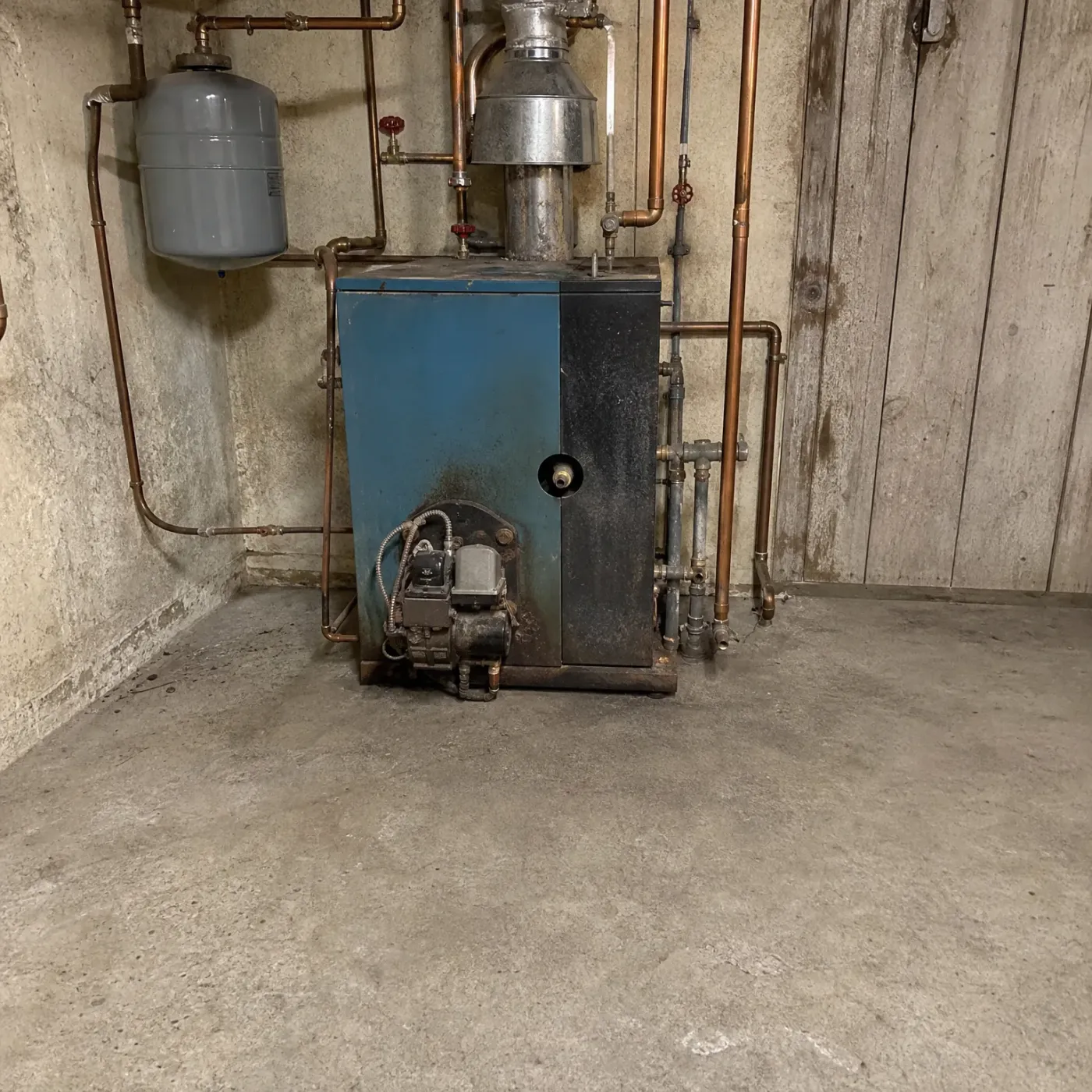
And if water is pooling at the base with no clear source above it, that can mean the heat exchanger itself has cracked, which usually only becomes visible once it's already failed.
The pro who reaches out is licensed in Texas.
Sending the form costs nothing.
A boiler holds water at pressure, so any leak gets worse the longer it runs. A drip from a relief valve or a loose fitting won't seal itself back up.
Left alone, that same leak can corrode the fittings around it or trip the low water cutoff, which shuts the boiler down until the leak gets fixed.


That's the pressure where your relief valve is built to open. Once it's released water past that point, the valve itself is usually worn and won't reseal, even after pressure drops.
A leak that sits can corrode the fittings around it or trip the low water cutoff, leaving you with no heat until someone fixes both the leak and what it caused.
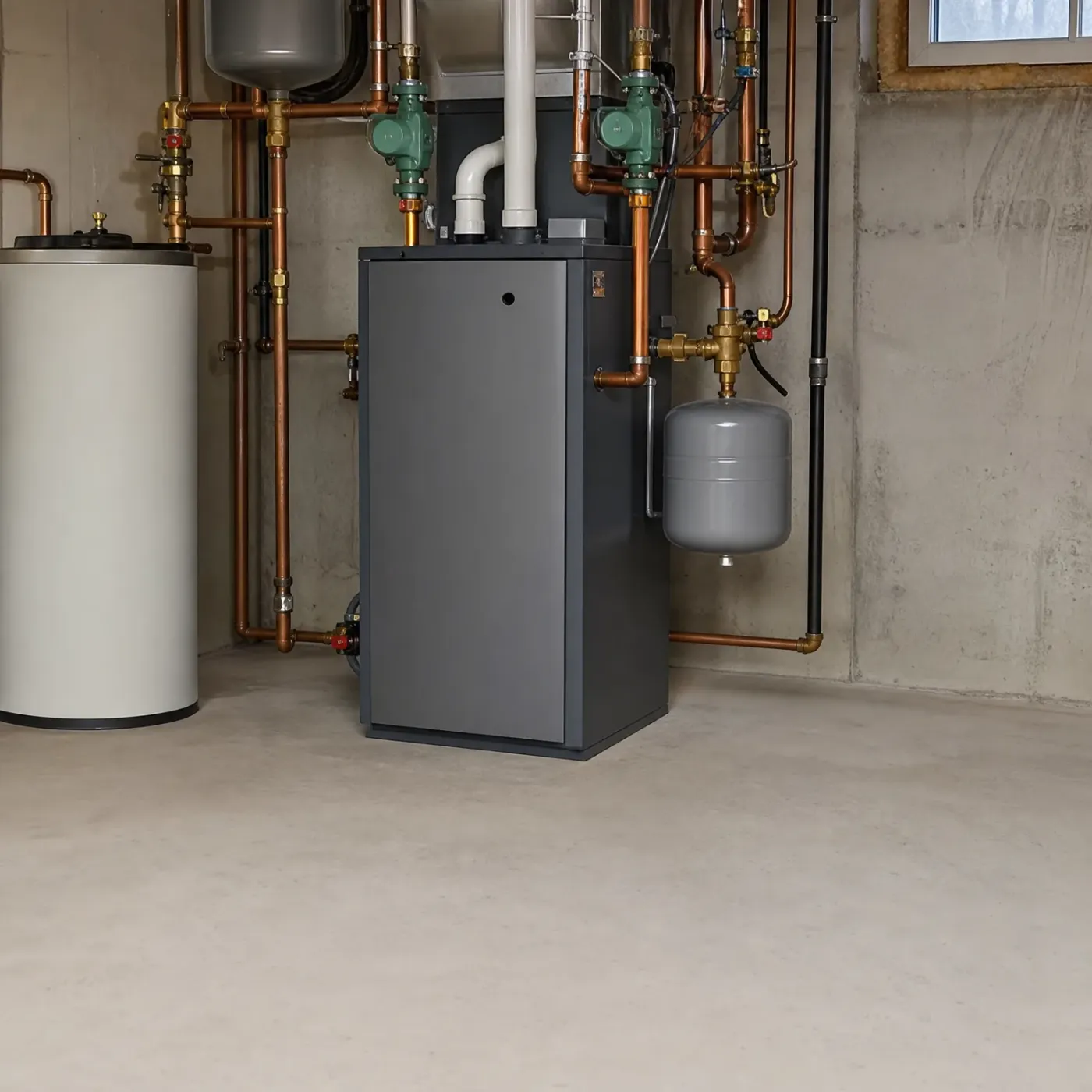
Pressure holds steady, the relief valve stays shut, and the pumps push water through the pipes without a drip anywhere. The expansion tank keeps its charge, so pressure doesn't creep up as the boiler cycles on and off through a Texas winter.
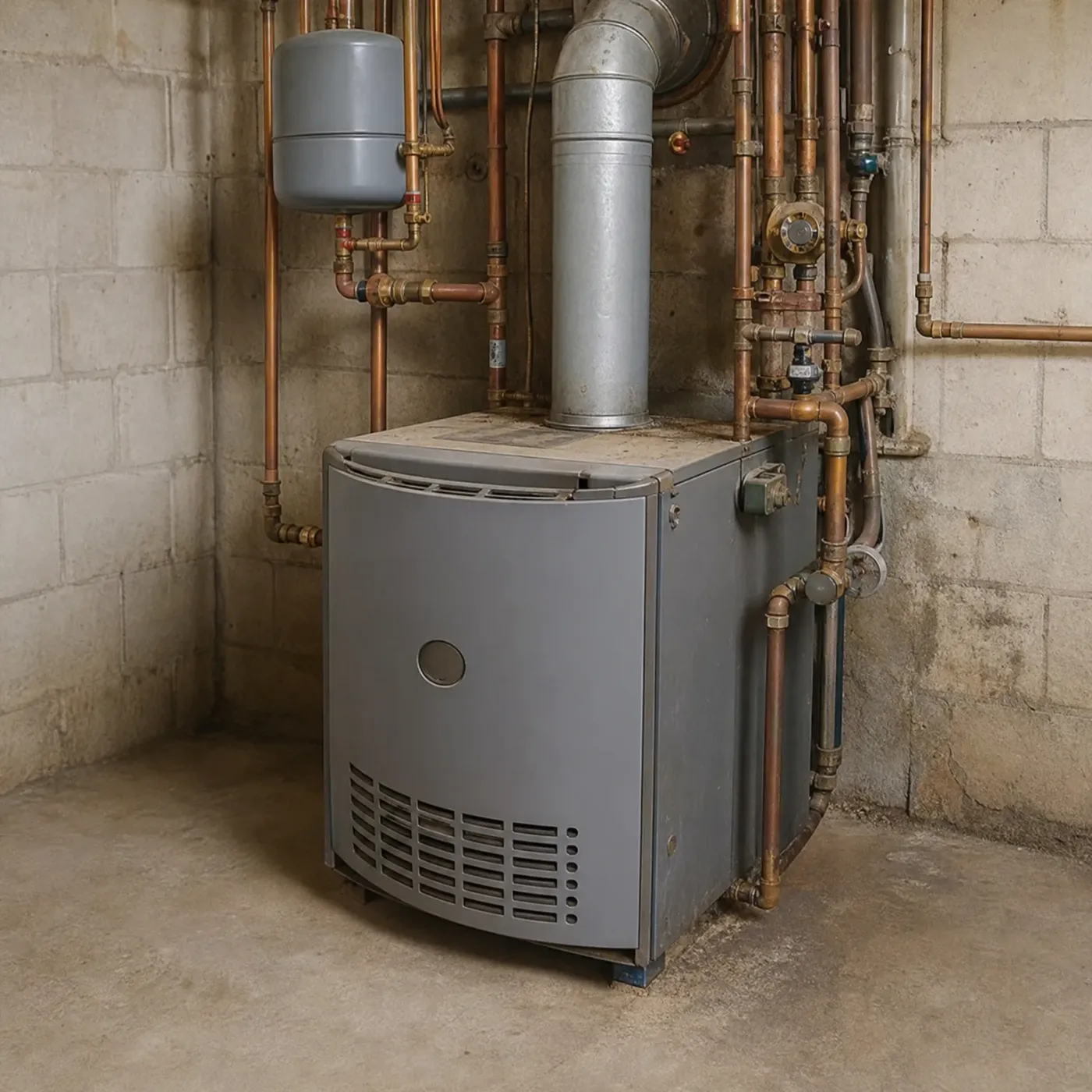
Water tracks down the flue pipe or pools near a fitting, and it doesn't stop on its own. A worn valve seat or a loosened joint keeps seeping, and the longer it sits, the more it corrodes the metal around it.
Winter nights in Texas average 41°F, so your boiler isn't running flat out the way one up north would. It cycles on and off rather than holding steady for hours, and that start-stop pattern is what stresses a relief valve or a loose fitting into finally giving way.
NOAA nClimDiv 1991-2020 county normals weighted by homes
Pressure climbs past 30 psi as water heats and expands.
The relief valve opens on its own to release that pressure.
A worn valve seat drips instead of sealing shut again.
Water tracks down the valve pipe and collects at the base.

Whatever started it, a worn relief valve, a loose fitting, a tired expansion tank, the water at the base of your boiler means something inside it has already given out. It won't reseal on its own, and running the boiler through another Texas winter with it dripping only gives corrosion more time to work on the fittings nearby.
Finding someone who works on boilers regularly in Texas, where most homes heat with electricity and a boiler is already the less common setup, isn't always a short search. This page connects you with one licensed local contractor instead of leaving you to call around and describe the same leak to each one. They'll know from experience what usually fails first on a system like yours and what it takes to put it right.

Your request stays with one local pro.