A floor-standing gray boiler unit on a concrete plinth in a basement, with copper pipes, an expansion tank, and a flue pipe above, a wall light, a small potted plant on a wooden shelf, and a window in the background.

Get your boiler to the right pro

Why your boiler is kettling in Texas

Kettling is that rumbling, popping noise coming from your boiler, like a kettle left on too long. It usually means scale or sediment is building up where the water heats, and it's not something to ignore even if the boiler isn't your main heat source. Below, what's behind the noise and what to do about it. Send your details and a contractor who handles boiler repair can reach out about your situation.

Get a local pro

That rumbling comes from water trying to boil inside a layer of scale or sludge stuck to the heat exchanger. Instead of heating evenly, the water gets trapped against that buildup, flashes to steam, and collapses again, which is what makes the knocking and popping you're hearing. It happens most in boilers with hard water running through them, since minerals bake onto the metal a little more every time the burner fires. Most homes in Texas heat with electricity, so your boiler may only run on the coldest days, but kettling doesn't need constant use to take hold. It builds slowly, a little scale at a time, until the noise shows up. Left alone, that buildup makes the boiler work harder to heat the same water, stresses the heat exchanger, and can crack it over time. The noise itself won't go away on its own, and it's telling you something inside needs attention before it gets worse.

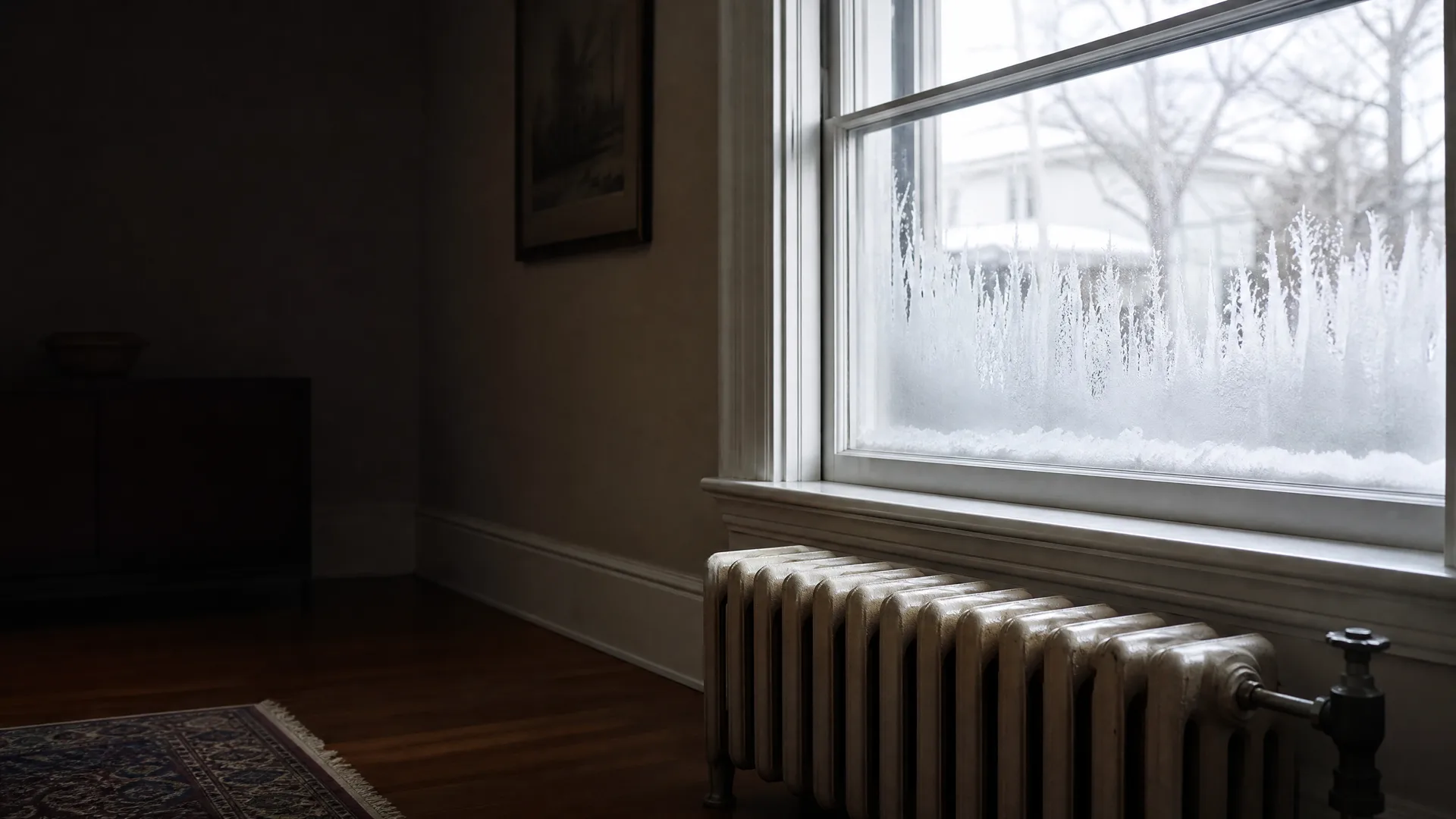
A cast-iron radiator with a valve sits beneath a frost-covered window in a dim room with dark wood floor, a patterned rug, a framed picture, and a low cabinet.

It's early, still dark, and the house is cold enough that you noticed. You're down in the room that has the boiler because the radiator upstairs started up with that knocking again, loud enough it woke you. Ice has crept across the inside of the window glass next to the cast-iron radiator, a thin frost pattern catching the one lamp you turned on. The radiator ticks and rumbles under your hand, warm in patches, cold in others. You stand there a minute listening to it pop, thinking about whether it'll quiet down on its own or whether you're calling someone before you leave for work.
Is this just a noisy boiler, or something worse?

Since most homes here heat with electricity, you may only notice this on the coldest mornings, when the boiler runs longer to catch up. That's when the popping gets loud enough to hear from another room, and the knock can repeat every few minutes while it's firing. You might also see the pressure gauge creeping up and down more than it used to, or notice a radiator that heats unevenly, warm at the bottom and cool at the top. Left alone, the scale causing the noise keeps the heat exchanger from doing its job, and that part can crack under the strain. A cracked exchanger means no heat at all until it's replaced, on a morning you're already relying on the boiler to keep the house livable.

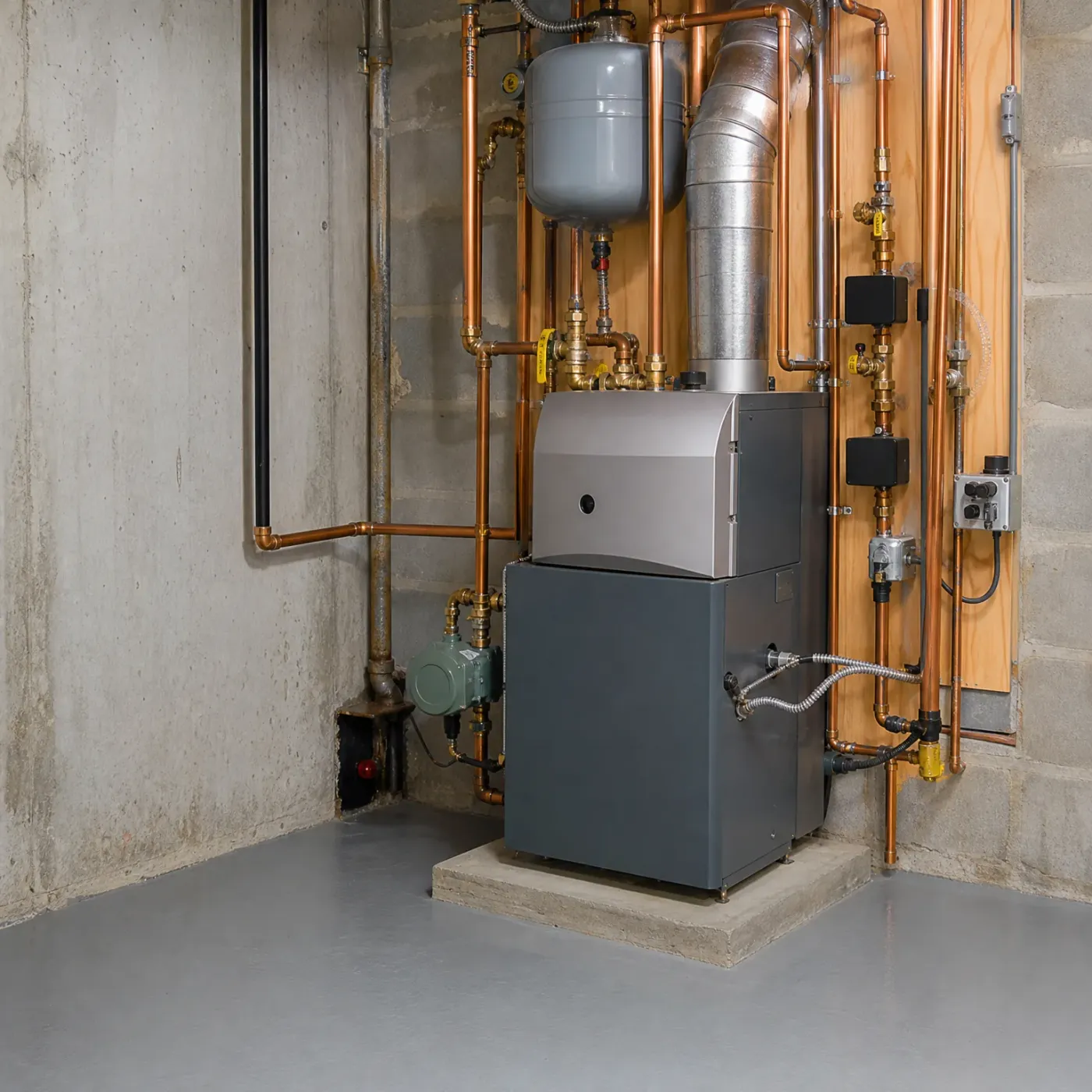
A gray residential boiler on a concrete pad in a basement corner, connected to copper piping, an expansion tank, circulator pumps and insulated flue ducting against concrete and plywood walls.

Running clean

This is a boiler heating water without a fight. The pipes, valves and pump all have a clear job, and the water moves through them quietly because nothing inside is blocking it. No popping, no knocking upstairs, just heat getting where it needs to go.

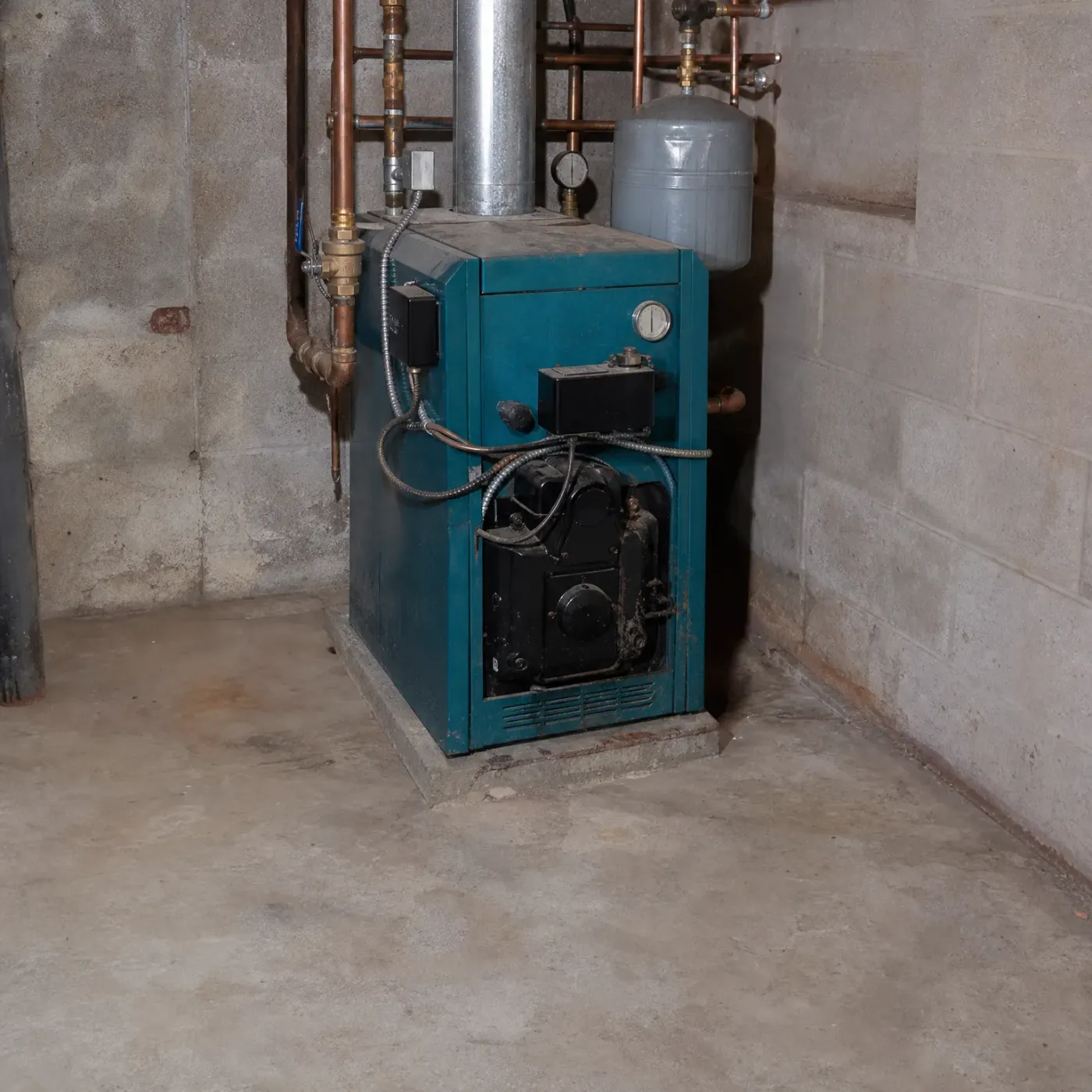
A teal boiler with a pressure gauge and black burner unit sits on a concrete pad in a basement corner, with copper pipes, a flue vent, and a gray expansion tank above against concrete block walls.

Scaled up

This is what kettling looks like from the outside: an older unit that's been building scale for a while. The gauge still reads normal pressure, but inside, that layer on the heat exchanger is forcing the water to boil in place instead of moving through.

Live With It or Get It Checked

Keep running as is

  • The noise doesn't go away on its own, since the scale causing it only builds up more over time.
  • Each popping cycle is stressing the heat exchanger at the exact spot where the buildup sits.
  • A boiler that's working harder to heat the same water is pulling more power to do it, even where rates are typical.
  • If the boiler is backup heat in a mostly electric house, it's easy to let the noise slide since you're not relying on it daily.
  • Left long enough, the stress at that spot can crack the heat exchanger, which is a different repair than cleaning scale.
  • Nothing about kettling fixes itself between the cold mornings when you hear it worst.

Get it looked at

  • A contractor can flush the scale or sludge off the heat exchanger before it cracks anything.
  • Catching it early usually means cleaning the exchanger rather than replacing it.
  • Once the buildup is cleared, the water heats evenly again and the knocking stops.
  • A technician can also check whether low water flow or a bad thermostat setting is adding to the problem alongside the scale.
  • You get a straight answer on whether the boiler still has life left or is heading toward bigger repairs.
  • Getting it checked now means one less thing to listen for on the cold mornings ahead.
A woman with dark hair in a bun wearing a cream knit sweater sits on a gray sofa in a bright living room, looking off to the side.
A woman wrapped in a knit blanket sits on a gray sofa in a living room, looking toward a bright window with houseplants and an armchair in the background.
A woman in a gray cowl-neck sweater sits on a light sofa with cushions, smiling and looking to the side, with a kitchen and window visible behind her.
A woman with dark hair in a bun, wearing a light linen shirt, sits on a sofa and looks to the side, with a window, houseplants and a kitchen with pendant lights blurred behind her.

The right pro for this job

That scale isn't going anywhere on its own, and every cold morning that boiler runs longer to push heat through it, the popping gets worse. Since this isn't your main heat source, it's easy to let it sit until spring. But the heat exchanger is taking that stress every single cycle, right at the spot where the buildup sits, and a boiler left like that tends to fail at the worst time, not the convenient one. You don't need to figure out whether it's scale or sediment or something else before you do anything. Send the request and a contractor who works on boilers in your area will look at what's actually going on and tell you straight. Once that's sent, it's off your plate. No more listening for it every time the heat kicks on.

Scale builds up fastest at the hottest point of the heat exchanger, so that's where kettling starts and where the metal takes the most damage.

A heat exchanger working against that buildup runs hotter than it was built for, and that's how a boiler that's only backup heat ends up needing a repair call anyway.

Winter nights average 41°F statewide

Those 41°F nights statewide are exactly when your boiler runs longest to keep up, since most homes here lean on electric heat and only call on the boiler when it's genuinely cold. That extra runtime means more cycles pushing water against the scale, so the kettling shows up worst on these colder mornings.

NOAA nClimDiv 1991-2020 county normals weighted by homes

What the noise is telling you

  • Kettling comes from scale or sludge sitting on the heat exchanger, not from a cracked part.
  • The popping gets worse the longer it's ignored, since the buildup only thickens with each cycle.
  • A boiler running on backup duty still takes the same damage when it's forced to fight scale.
  • Cold snaps push the boiler to run longer, which means more cycles hammering the same weak spot.
  • The fix is clearing what's built up inside, not replacing the boiler itself.
  • Left alone, the heat exchanger keeps overheating at that one spot until it cracks or fails.

That popping and rumbling is water hitting a layer of scale or sludge on the heat exchanger, flashing to steam, then collapsing. It's not a sign the boiler is breaking apart. It's a sign something has built up where the water heats, and it's getting in the way. The noise itself tells you where to look, since kettling starts at the hottest point in the heat exchanger and stays there, getting worse each time the boiler cycles. Because most homes here run on electric heat, this boiler may only be doing real work on the coldest mornings, the ones where it runs long enough to catch up. That's exactly when the buildup gets pushed hardest, and exactly when you'll hear it. Backup duty doesn't protect the heat exchanger from what's happening inside it. A boiler that only runs part of the year still takes the same wear at that one spot, cycle after cycle, until the metal gives out there. None of this calls for a new boiler. It calls for getting that scale and sludge out so the water can heat evenly again, the way it did before the buildup started. Left as is, the exchanger keeps overheating in the same place every time the boiler runs, and that's how a part that could've been cleared out instead ends up cracked.

An older woman with gray hair in a bun and glasses, wearing a beige knit sweater, smiles while looking to the side in a warmly lit kitchen, with a loaf of bread on the counter in the foreground and a snowy scene outside the window.
A woman and a child wrapped together in a knitted gray blanket on a couch, with the child's head resting on her shoulder and a lit table lamp and houseplant in the background.

Boiler Repair

Matched to your boiler job

After you send the request, you're done searching.

A black-framed smartphone standing upright against a plain white background, its screen filled with solid green.
Step 1 of 3: Equipment