Why your boiler is gurgling in Texas

Send the request today and stop worrying about who to call.

Hand off the search

A gurgling boiler usually means air trapped in the system, or water that has dropped below the level the boiler needs to run quietly. Air gets in when water is added after a drain-down or a repair, and it collects in the radiators and pipework, where it bubbles and knocks as the system heats up. Low water pressure does something similar, letting pockets of air form where there should be none. In most Texas homes the boiler handles hot water rather than running all day for heat, so it cycles on and off instead of staying under steady use, and that start-stop pattern can shake loose air that was sitting quietly in the lines. The gurgling itself won't damage anything right away, but it means the system isn't running the way it was built to, and left alone, trapped air can wear at the pump and leave parts of the system cooler than they should be.

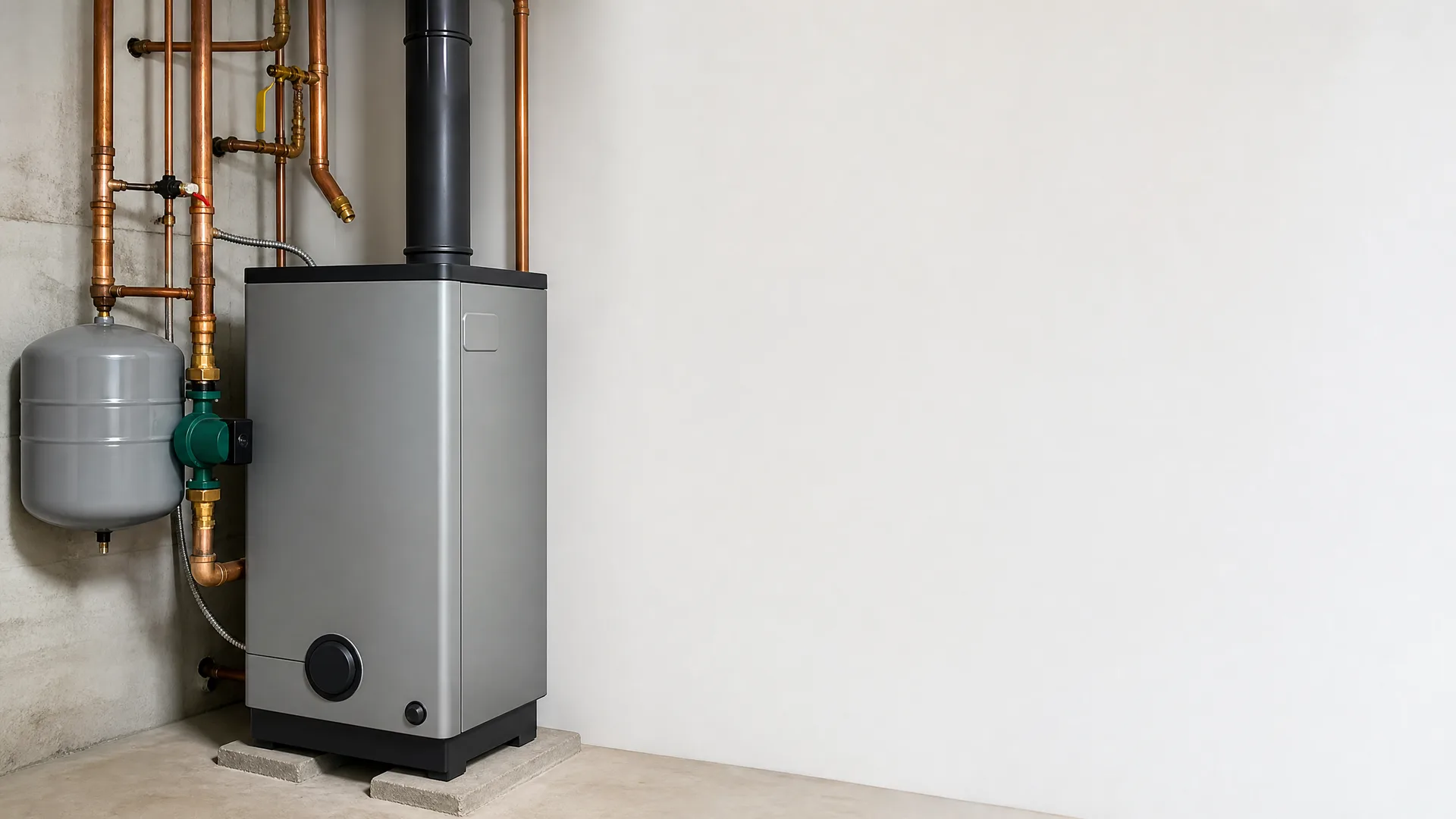
A gray floor-standing boiler with a black flue pipe stands on concrete blocks in a corner, connected to copper pipes, a green circulation pump, and a gray expansion tank on the wall.

Air finds the highest point

Trapped air travels to whatever radiator or pipe run sits highest in the loop, which is why gurgling often sounds like it's coming from one spot rather than the whole house. Bleeding that radiator lets the air out and water takes its place. If the noise comes back within a few weeks, air is getting in somewhere it shouldn't, and that points to a slow leak worth having a contractor track down.

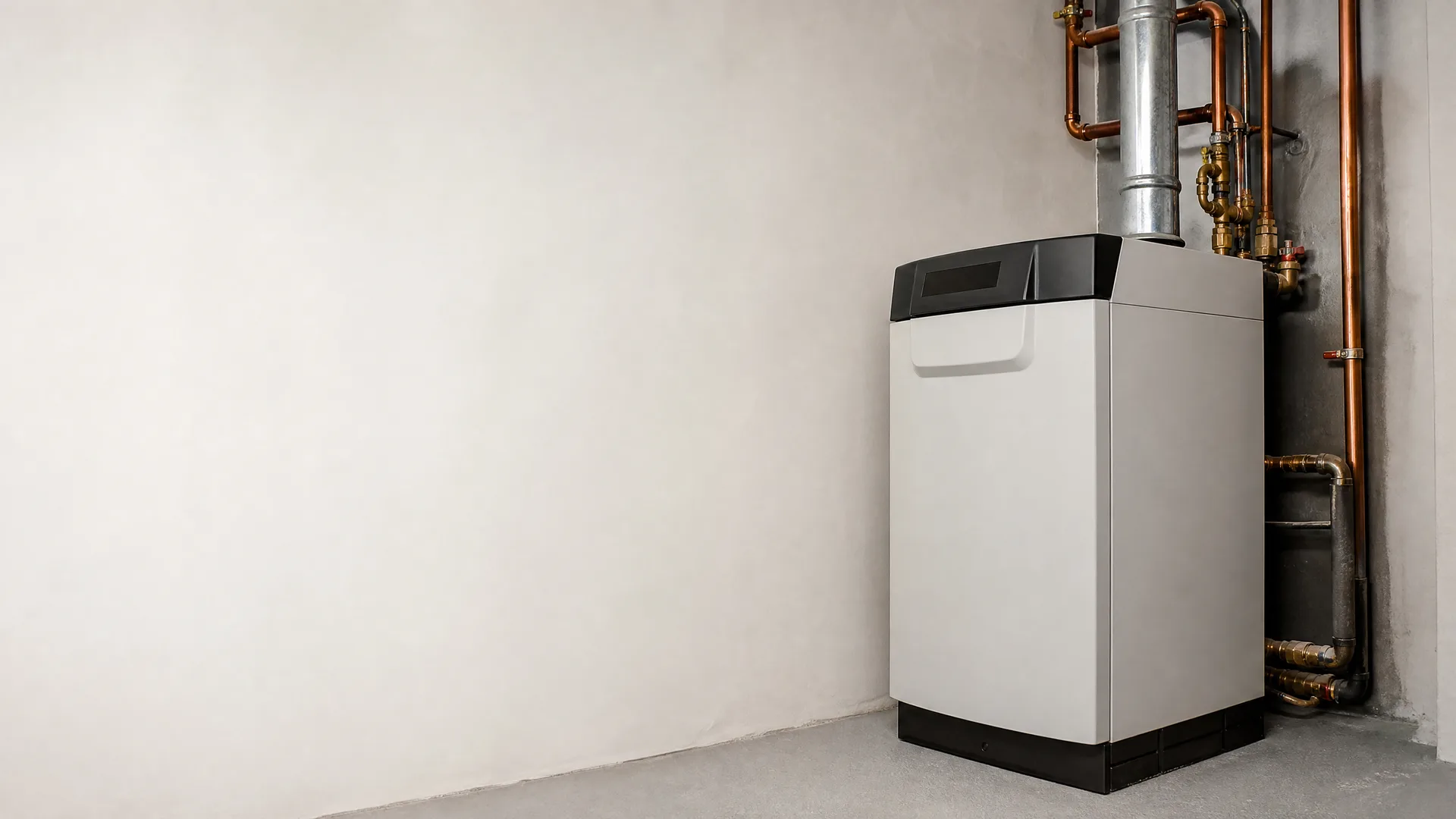
A white and black floor-standing boiler in the corner of a bare plastered room, with copper and metal pipes running up the wall behind it.

Low water pressure makes it worse

Most boilers have a pressure gauge on the front, usually marked with a green zone. If the needle sits below it, the system is low on water, and the pump can pull in air as it circulates what's left. Topping off the pressure with the filling loop quiets things down for a while, but pressure that keeps dropping means water is leaving the system somewhere, not just settling.

A closed silver laptop and a ceramic mug of dark coffee sit on a wooden table in front of two chair backs, with a kitchen counter, tiled backsplash, wooden cutting boards, a vase of greenery and a potted plant by a window behind.

Left alone, it wears on the parts that keep it quiet

A boiler that gurgles is working harder than it should to move heat through the house. Low water and trapped air both make the pump push against resistance it wasn't built for, and over weeks that shortens the life of the pump and can scorch the heat exchanger if the level keeps dropping. None of that shows up as a bigger problem overnight. It shows up as a repair bill later that would have been a small fix now.

Most homes in Texas heat with electricity, so a boiler here is often doing other work too, like a loop to a water heater, and a strained pump affects more than the sound you hear. You don't have to figure out which it is before you call. Send the form once and skip the part where you're searching contractor sites, calling around to see who answers, and explaining the gurgling to three different people before anyone shows up. That work is gone the moment it's sent.

A living room corner with a beige sofa and cushion, a round wooden coffee table holding a pale ceramic vase of eucalyptus stems and a wooden bowl, and a curtained window with a potted plant above a latticed radiator cover in the background.
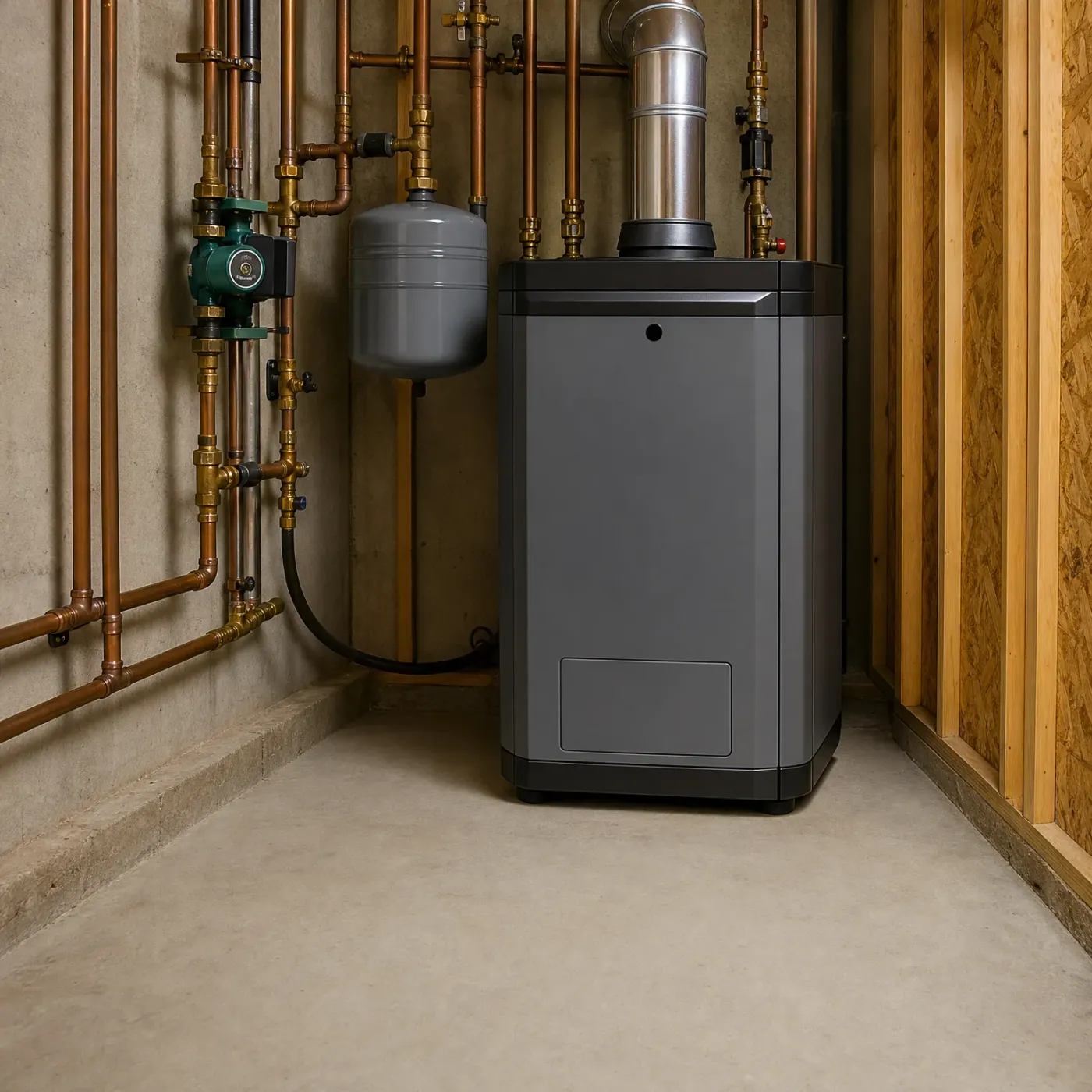
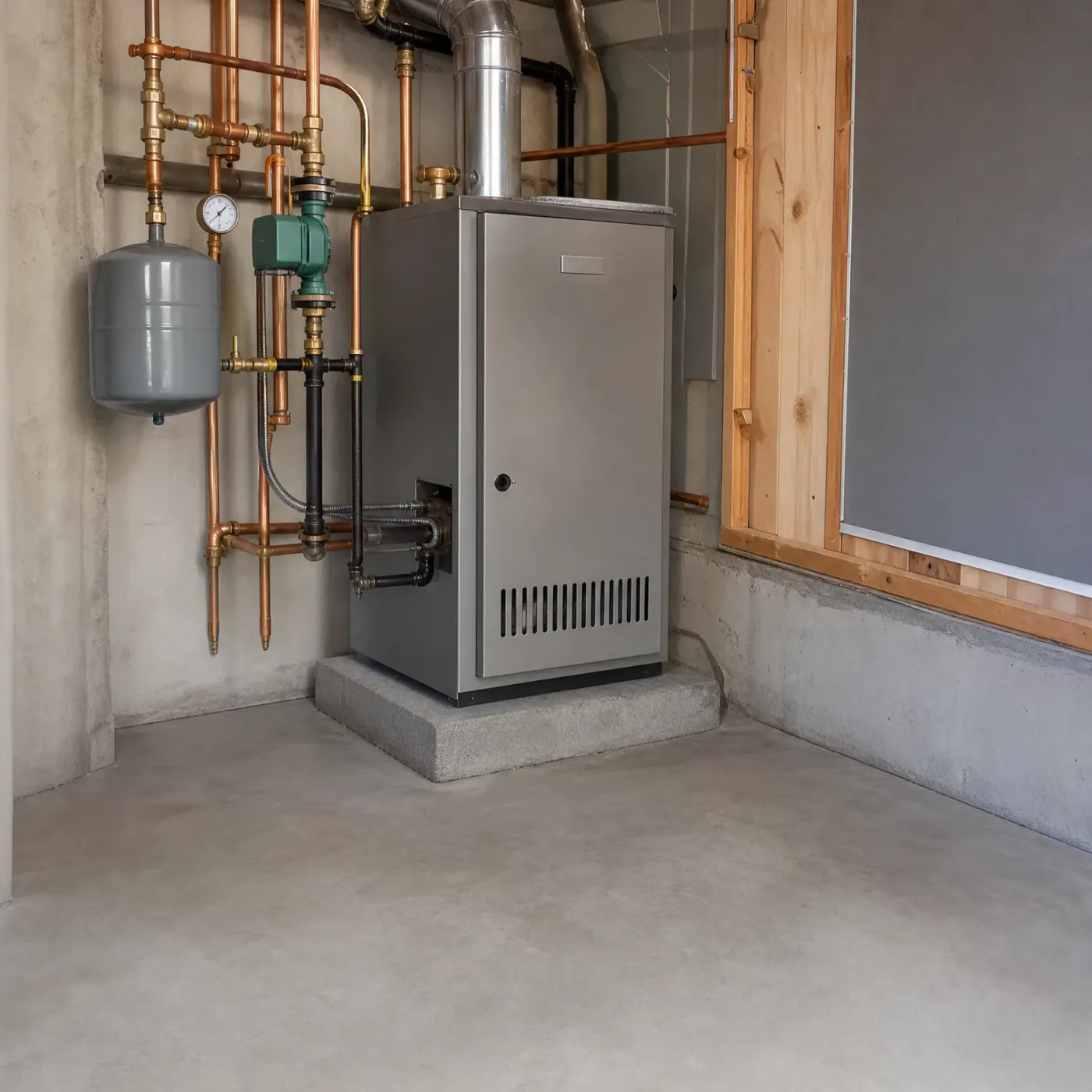
A gray floor-standing boiler with a metal flue pipe stands in a basement corner beside copper piping, brass valves, a green circulator pump, and a gray expansion tank on a concrete wall, with exposed wood framing and sheathing at right.

Quiet, full, and running right

This is a boiler with enough water in it and no air in the loop. The pump moves water through the pipes and the circulation pump without a sound, and the expansion tank is doing its job of absorbing pressure as the water heats. Nothing in this picture is fighting itself.

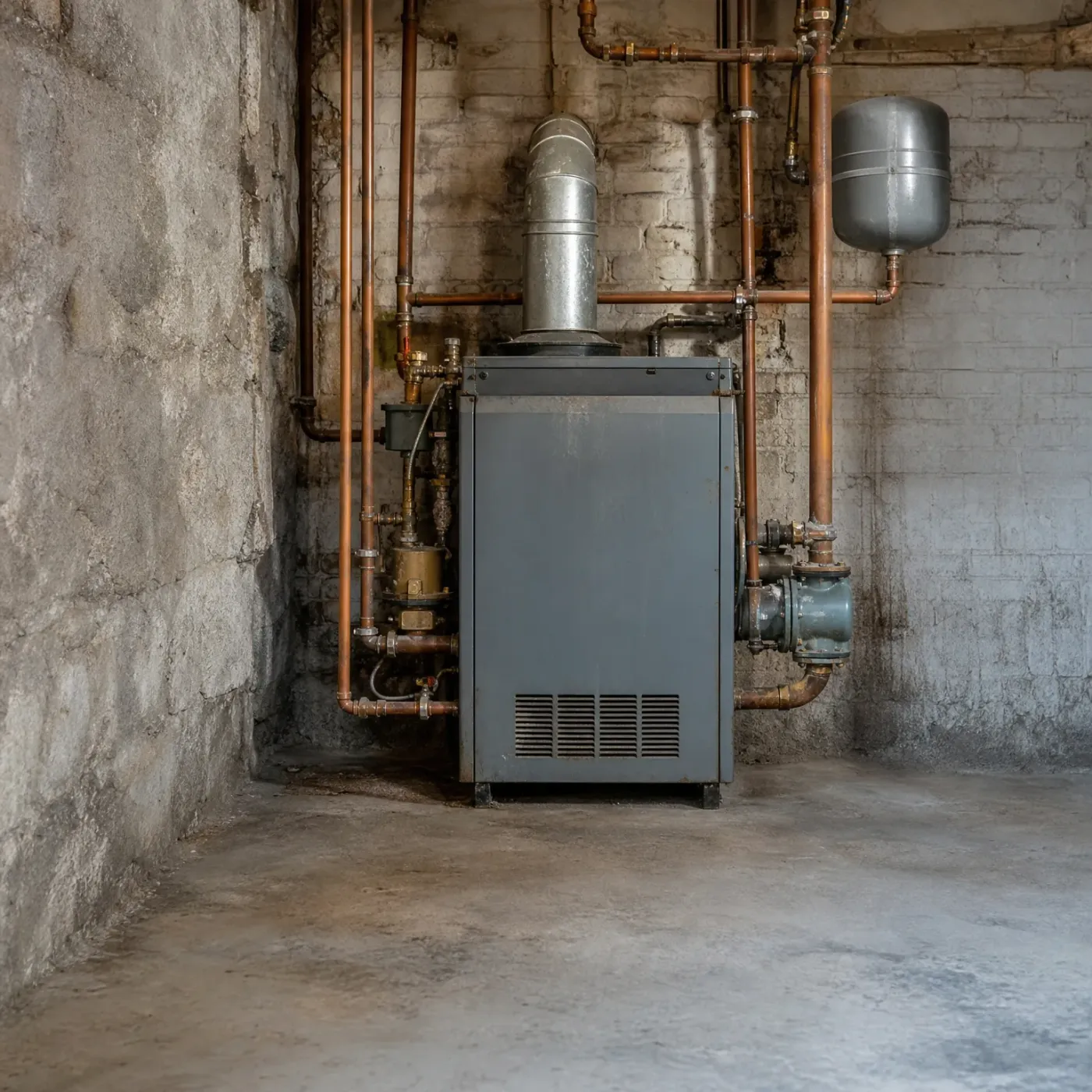
A gray boiler with a metal flue pipe and copper piping stands against a weathered painted brick basement wall, with an expansion tank mounted overhead and a bare concrete floor in front.

An older system under strain

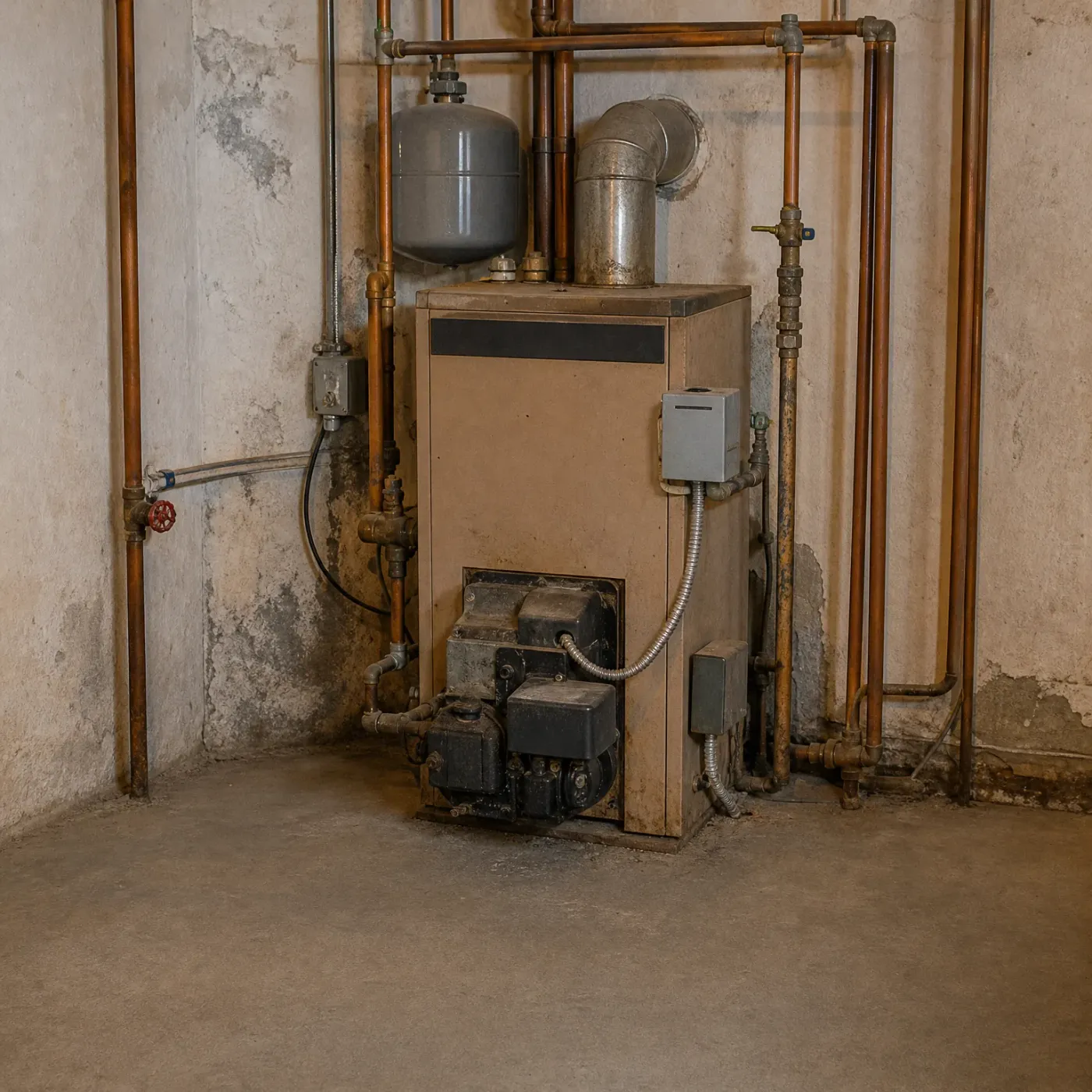
Cast iron boilers like this one hold a lot of water, and when the level drops or air works its way into the pipework, the noise shows up fast. The galvanized flue and aging valves on a system this old are more likely to need a hand once gurgling starts, rather than sort itself out.

A smiling man with dark curly hair in a dark green henley shirt sits on a light sofa in a living room with large windows, a lamp, shelving, a stone fireplace, and a bowl of popcorn in the foreground.
A smiling man in a dark long-sleeved henley shirt sits on a beige sofa in a living room, with a bowl of popcorn and a remote on the table in the foreground and shelves, a lamp, and a doorway behind him.
A smiling man with graying hair and stubble in a blue henley shirt sits on a gray sofa with cushions in a living room, with a bowl of popcorn on a wooden table in the foreground.
A smiling man in a dark green long-sleeve shirt reclines on a sofa in a dimly lit living room, with a bowl of popcorn on a side table in the foreground and a bookshelf, lamp, and houseplant behind him.
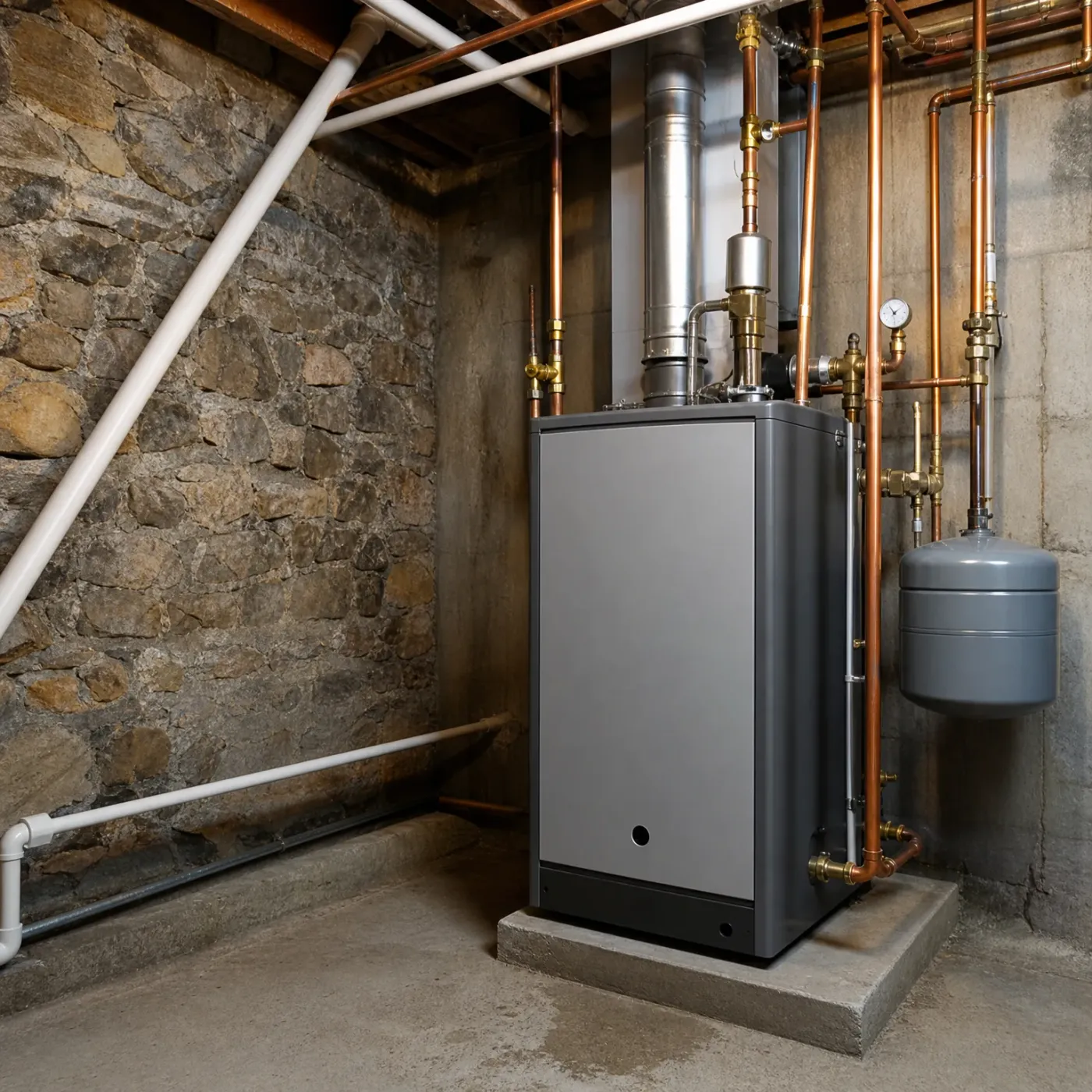
A gray floor-standing boiler on a concrete pad in a basement, connected to copper piping, a metal flue, a gauge, and a gray expansion tank, beside a stone wall and white insulated pipes.

Send one request and you're done looking

Fill out one short form instead of calling around.

Send the request and finding a pro stops being your problem.

Send my request

No charge to send it. You decide if you hire them.

Bleed It or Call a Contractor

Bleed it yourself

  • A radiator key opens the bleed valve at the top of the radiator that's gurgling, letting trapped air hiss out until water drips.
  • This only helps if the noise is air, not low water pressure, so it won't fix a gurgle caused by the boiler needing a refill.
  • You have to find the right radiator first, and in a loop with several zones that can mean working through them one by one.
  • Bleeding doesn't tell you why the air got in, so if a fitting is letting air back into the system, the gurgle comes back in a few weeks.
  • Getting the pressure back to where the boiler wants it after bleeding takes checking the gauge and topping off through the filling loop, not just opening a valve.

Have it repaired

  • A contractor checks the system pressure, the expansion tank, and the pump together, so the actual cause gets found instead of guessed at.
  • If the gurgle is from a cracked heat exchanger or a failing pump rather than air, that's not something a radiator key can reach.
  • Repair deals with whatever let the air in or the water out in the first place, whether that's a loose fitting, a faulty valve, or a slow leak somewhere in the loop.
  • Once it's sent, you're done calling around or explaining the noise to anyone else; finding who handles it stops being something you have to manage.
  • A boiler that's been running on low water or trapped air for a while gets checked for wear on the pump and the heat exchanger, not just quieted down.
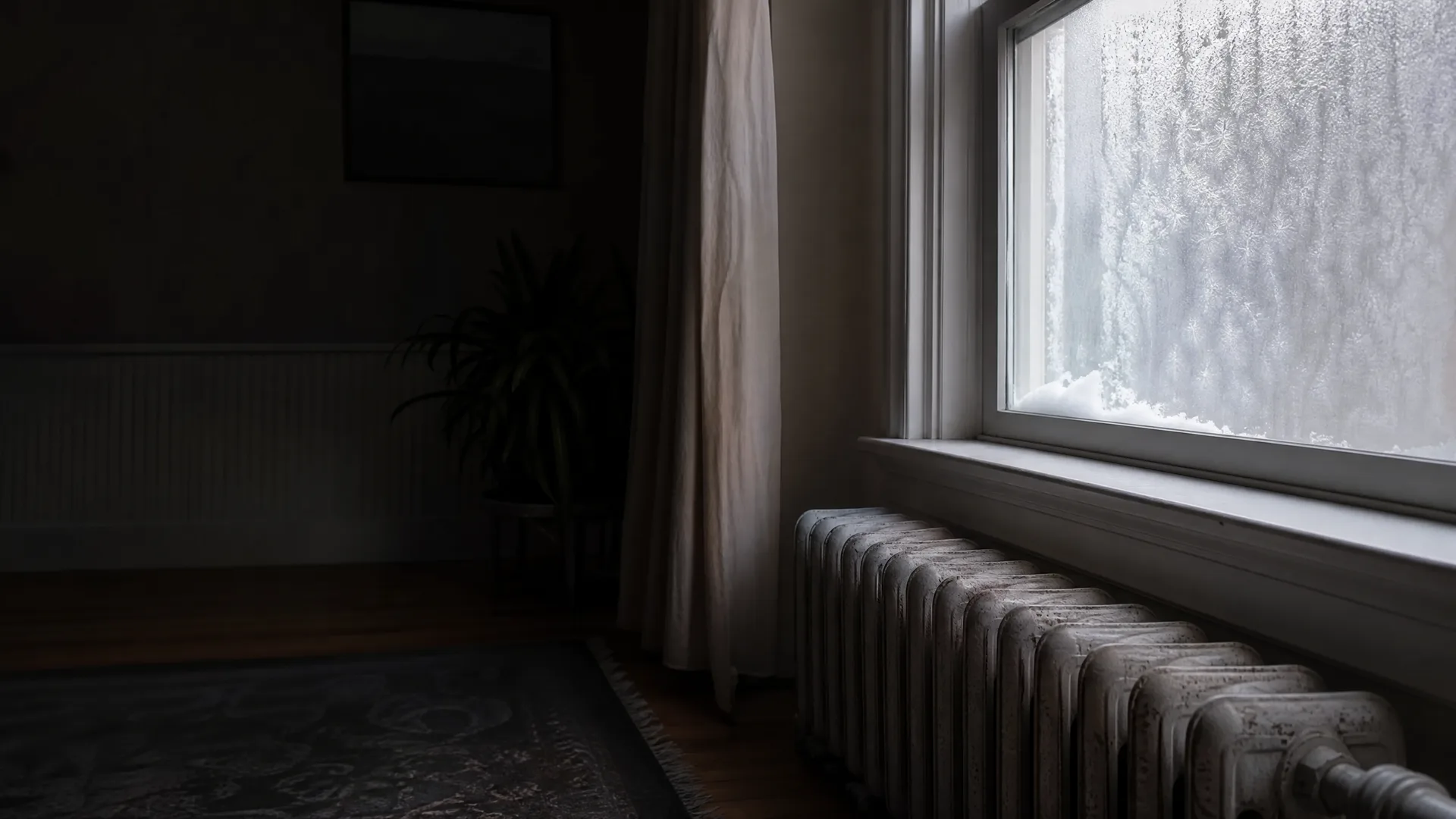
A dimly lit room with a cast-iron column radiator beneath a wide window covered in frost and snow, with a pale curtain, a potted plant, and a patterned rug on a wood floor.

It's early, still dark outside, and the house is cold enough that you can see your breath for a second when you walk into the living room. The radiator under the window has ice feathered across the inside of the glass above it. You crouch down and hear it before you feel any heat coming off the cast iron: a gurgle, then a pause, then another, like water moving somewhere it shouldn't be. You put your hand on the metal. It's barely warm at the bottom and cooler toward the top. Outside, Texas is having one of its cold snaps, the kind that doesn't last long but gets into a house fast, and right now the only thing standing between you and it is a boiler that sounds like it's struggling to do its job.


A gray boiler on a concrete pad in a basement corner, connected to copper and black pipes with a gauge, circulator pump, and gray expansion tank, beside a wood-framed wall.
Gauges steady, pipes quiet, the pressure sitting where the boiler wants it to sit.
An older oil-fired boiler with a burner unit, flue pipe, expansion tank and copper piping stands in the corner of a concrete-floored basement with weathered plaster walls.
This old oil boiler and its maze of copper pipework are exactly where a gurgle starts.

Winter nights average 41°F statewide

Boiler heat runs most nights here, since winter lows average 41°F across the state. That's enough for the system to cycle on and off night after night, and every cycle is a chance for water levels to drop or air to work its way into the pipes.

NOAA nClimDiv 1991-2020 county normals weighted by homes

What the gurgle comes down to

  • Gurgling almost always traces back to trapped air or water that has dropped below where the boiler needs it.
  • Bleeding the highest radiator clears air, but it won't touch a gurgle caused by low water.
  • A boiler running low or full of air pushes the pump harder than it was built for, night after night.
  • With lows averaging 41°F across Texas, that strain repeats on a regular cycle all winter.
  • A quiet boiler is simply one with the right water level and no air working through the loop.
  • Sorting out which cause applies to your system takes someone checking the pressure and the pipework in person.

Two things cause this, air in the loop or water sitting below where the boiler needs it, and the fix depends on which one you have. Bleeding a radiator tells you something either way. If water drips out after the hiss of air, that radiator's sorted, and if the gurgle stops, air was the whole problem. If the gauge still reads low once the air's out, the boiler needs water added at the filling loop, not another round with the radiator key. Either way, the pump has been working against that resistance for as long as the noise has been there, and with winter lows averaging 41°F across Texas, the boiler isn't cycling once or twice a night. It's doing it over and over, which means whichever cause you have gets more chances to wear on the pump with each cold night that passes. A boiler running right doesn't make this noise at all. Water moves through the pipes, the pump stays quiet, and the expansion tank absorbs pressure the way it's supposed to. Getting back to that point means knowing which of the two problems you're dealing with, and that's not always obvious from the sound alone or from one radiator bleeding clean while the gurgle keeps going elsewhere. Rather than guessing at it over a few evenings, or calling around to find someone who'll come look at the pressure and the pipework directly, a short form gets that sorted for you, and what was your problem to chase down becomes someone else's to solve.

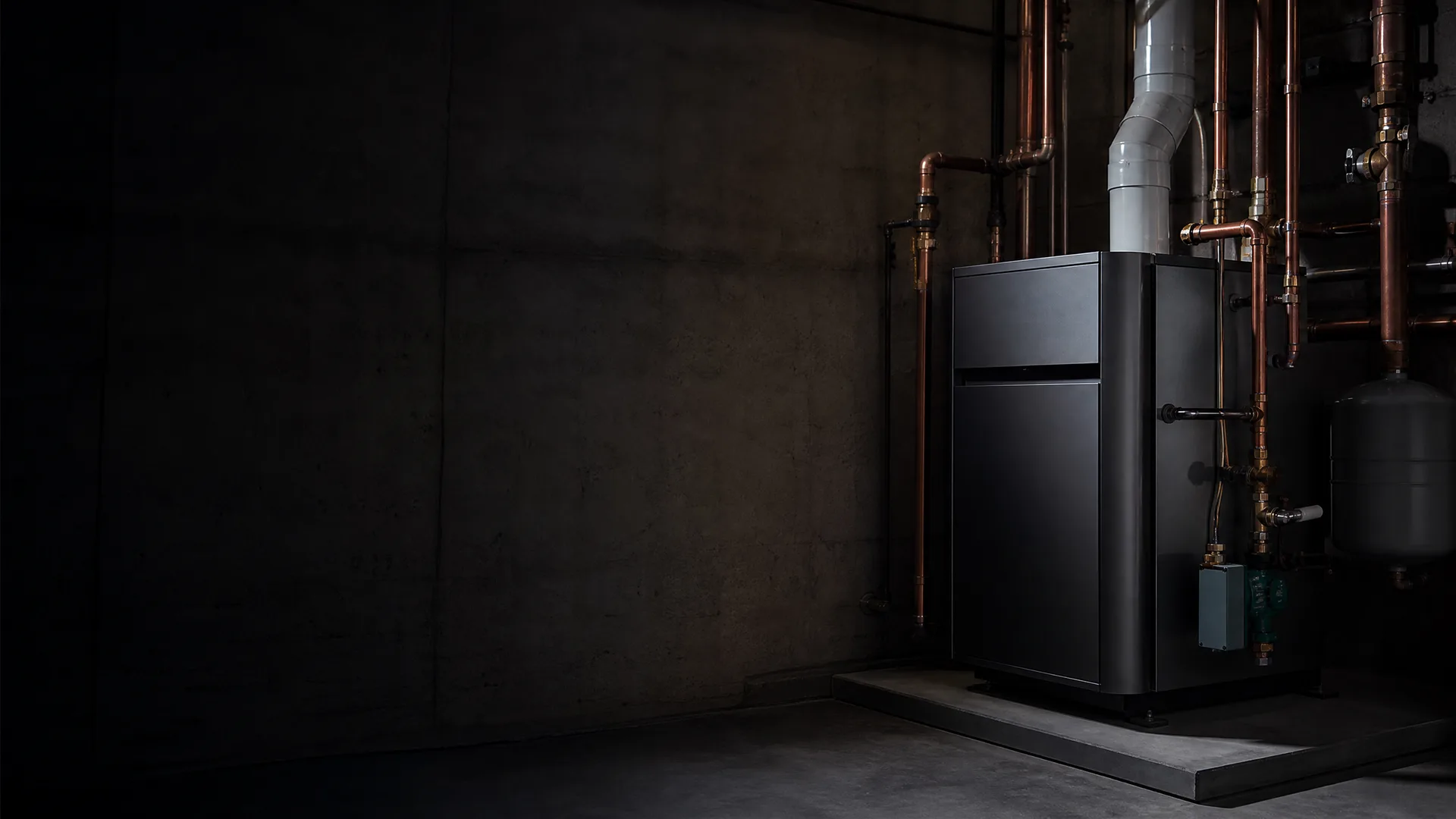
A black boiler unit on a concrete pad in a dim basement room, connected to copper pipes, a metal flue duct, and an expansion tank against a bare concrete wall.

Finding a pro stops being your job

Explain the job once and skip repeating it on every call.

Step 1 of 3: Equipment