Texas Boiler Works
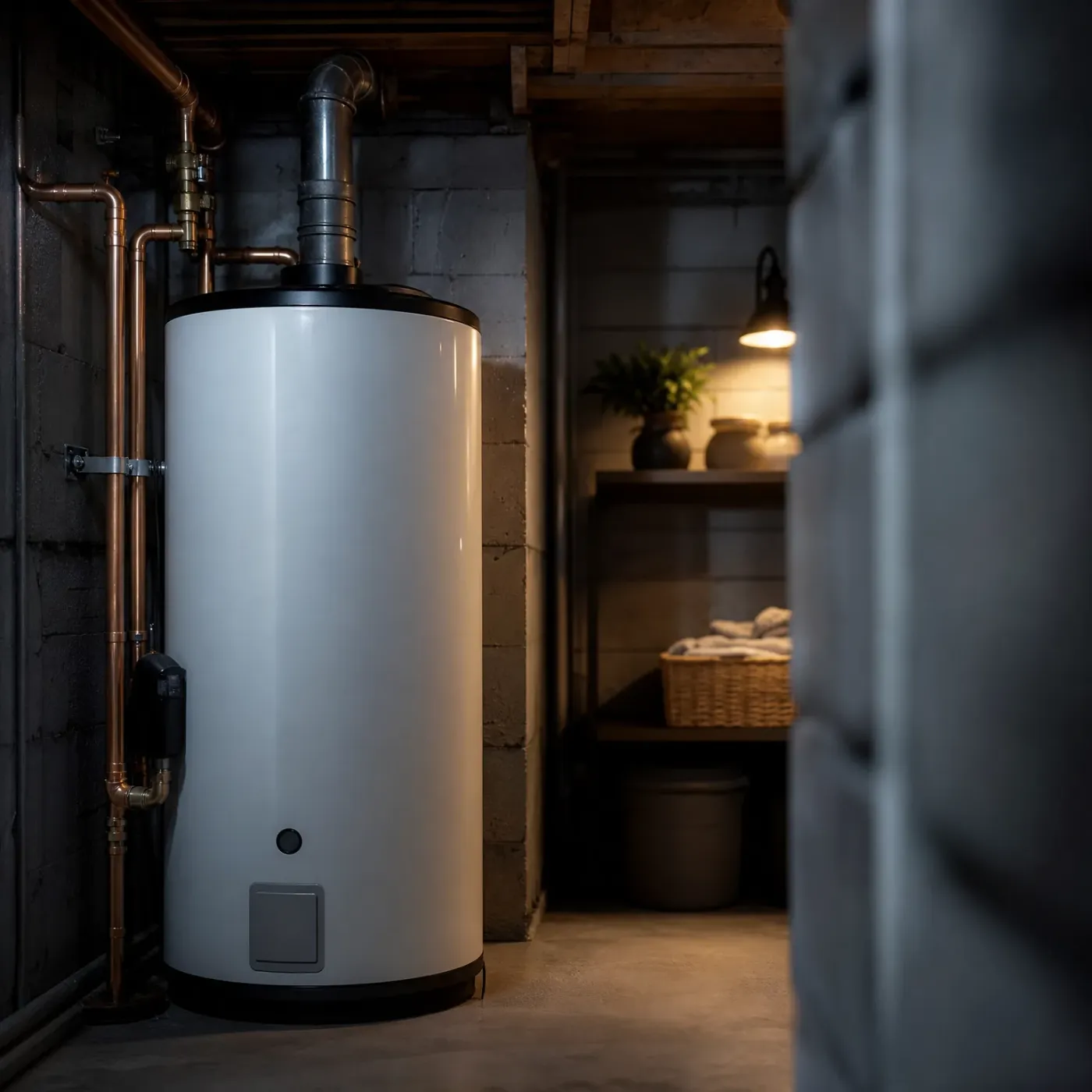
A white cylindrical water heater with a metal flue pipe and copper piping stands against a concrete block wall in a dim basement, with a lit shelf holding a plant, pots, and a laundry basket in the background.

One request and it's handed off

When to replace a boiler in Fort Worth, TX

Boilers are less common out here, since most Fort Worth homes heat with electricity, so there's not much local word of mouth on when to call it quits on one. This page walks through the signs that matter: age, repair costs piling up, uneven heat, strange noises. Send the form once you've read through, and skip the search for who's actually licensed to work on one.

Send my request

Most boilers last 15 to 20 years. Past that, the heat exchanger and other parts have taken a lot of cycles, and the odds of a crack or a leak go up each winter you keep it. If yours is in that range and needs a repair now, that repair is usually a sign to replace rather than patch, since the next one tends to follow close behind. Winters in Fort Worth are mild, so the boiler here doesn't run nearly as hard or as long as one would up north, and that can stretch its working life past what you'd expect elsewhere. But a boiler that's uneven, that short cycles, or that needs a technician out more than once a season has already told you what it needs. Since most homes in this area heat with electricity instead, there's little reason to wait once an aging boiler starts costing you real money to keep running.

A gray boiler unit with copper piping, valves and a metal flue stands on a concrete pad in the corner of a bare basement room.

Why boilers fail differently

A furnace pushes heated air through ducts. A boiler heats water and sends it through pipes to radiators or baseboard units, or through tubing under the floor. That water sits under pressure, and the metal around it corrodes from the inside where you can't see it. A furnace that's dying usually gets loud or weak first. A boiler can look fine on the outside while a hairline crack is already forming in the heat exchanger.

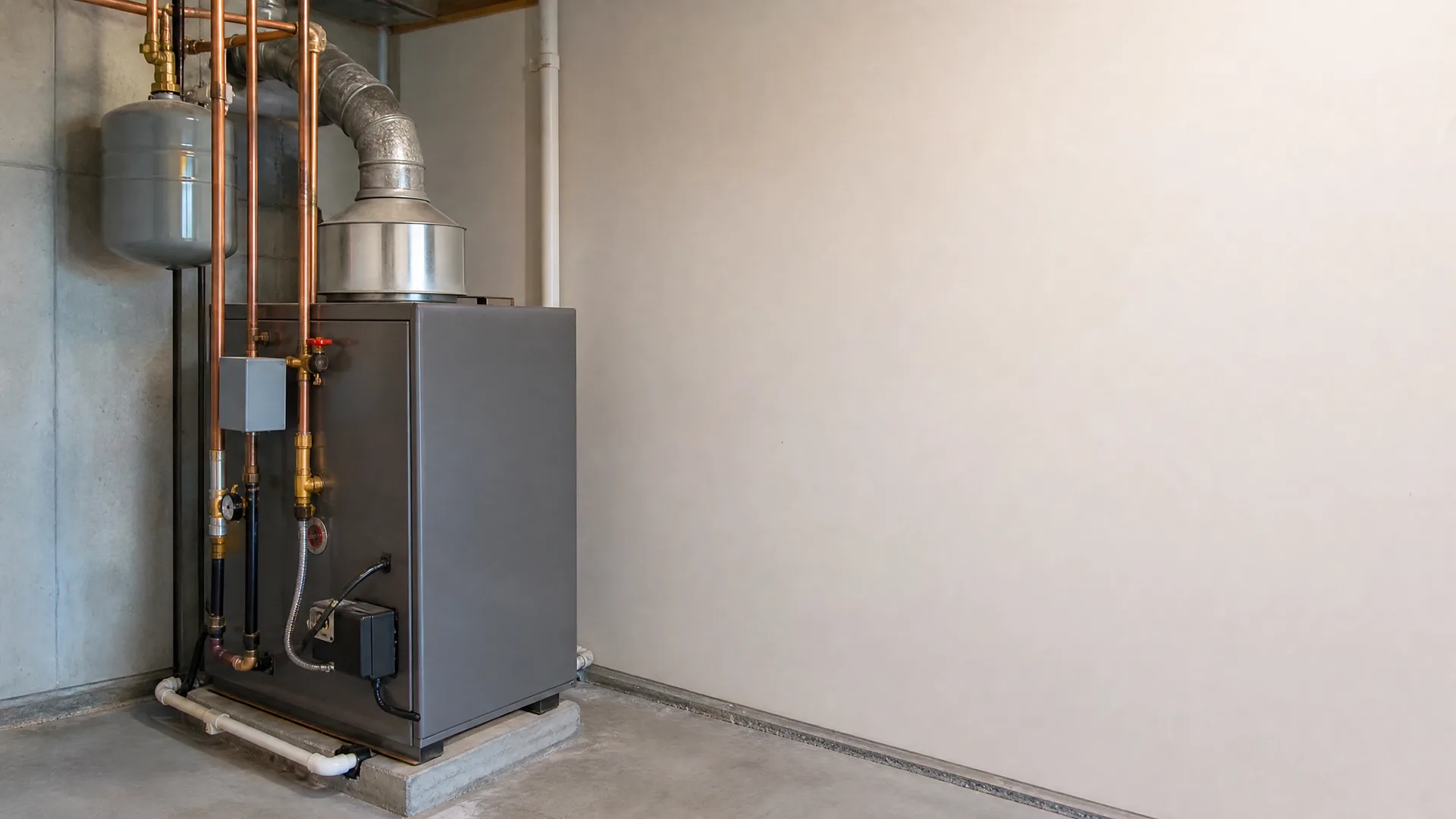
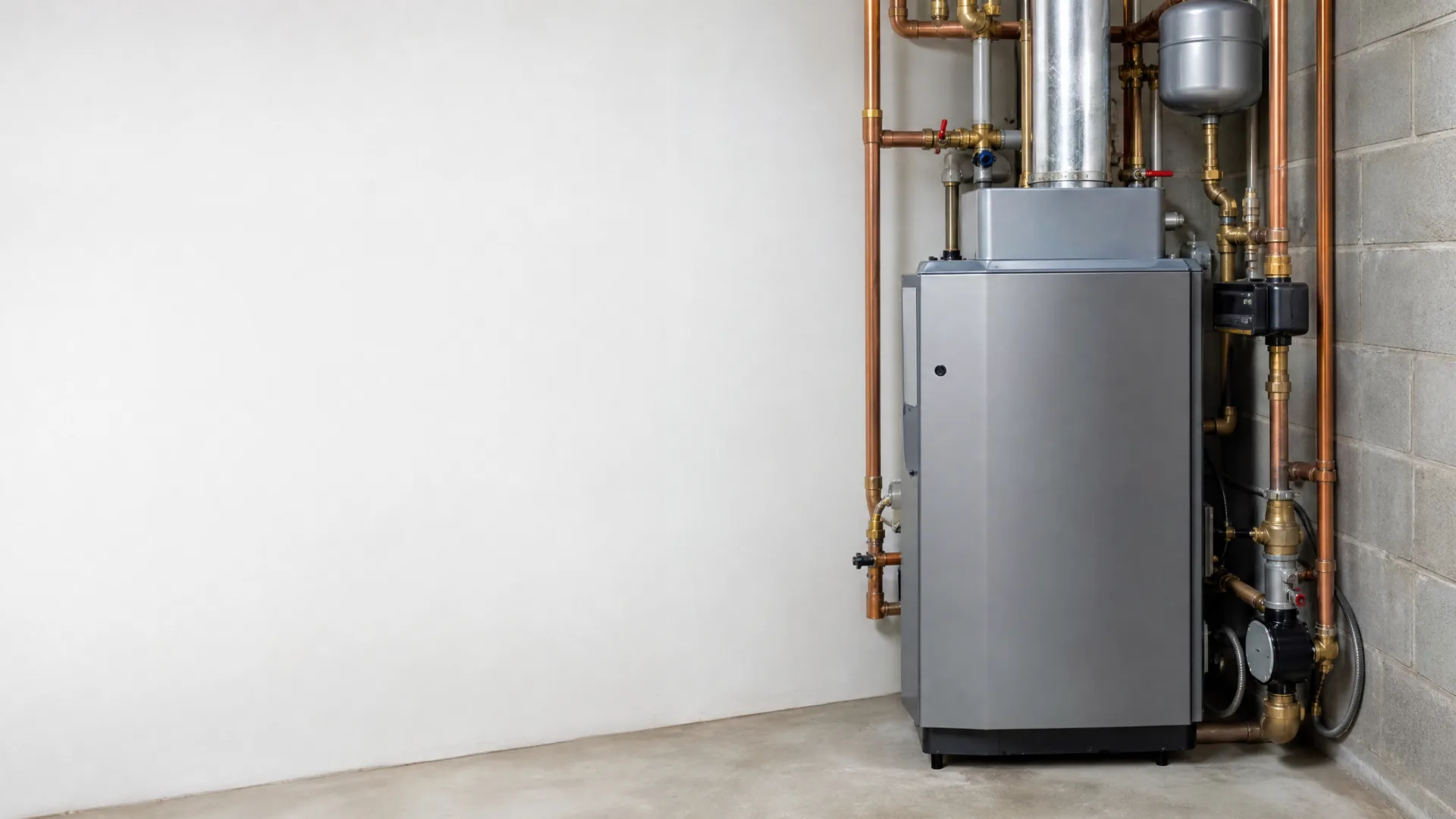
A gray floor-standing boiler with a metal flue and copper pipework, valves and a pump stands against a concrete block wall beside a plain white wall in a bare room.

What a crack means for you

Once a heat exchanger cracks, it doesn't patch. Boiler sections are cast iron or steel, and a leak there means replacing the exchanger or the whole unit, since the part that cracked is the part that does the heating. Low winter use in Fort Worth means the system sits idle for long stretches between October and the next cold snap, which is exactly when a slow leak has time to go unnoticed until a cold morning finds it.

Is your boiler telling you something right now?

A boiler that's struggling usually makes itself known. You might hear a low rumble or banging from inside the tank, which often means sediment has built up around the heat exchanger. You might notice one room stays cold while the rest of the house is fine, or the radiators take longer to warm up than they used to. A short cycle, where it fires on and off every few minutes, wears the parts faster and pushes your power bill up. Water pooling near the base, or rust around any fitting, means the tank or a pipe is on its way to failing outright, and that can mean a flooded utility closet with no warning.

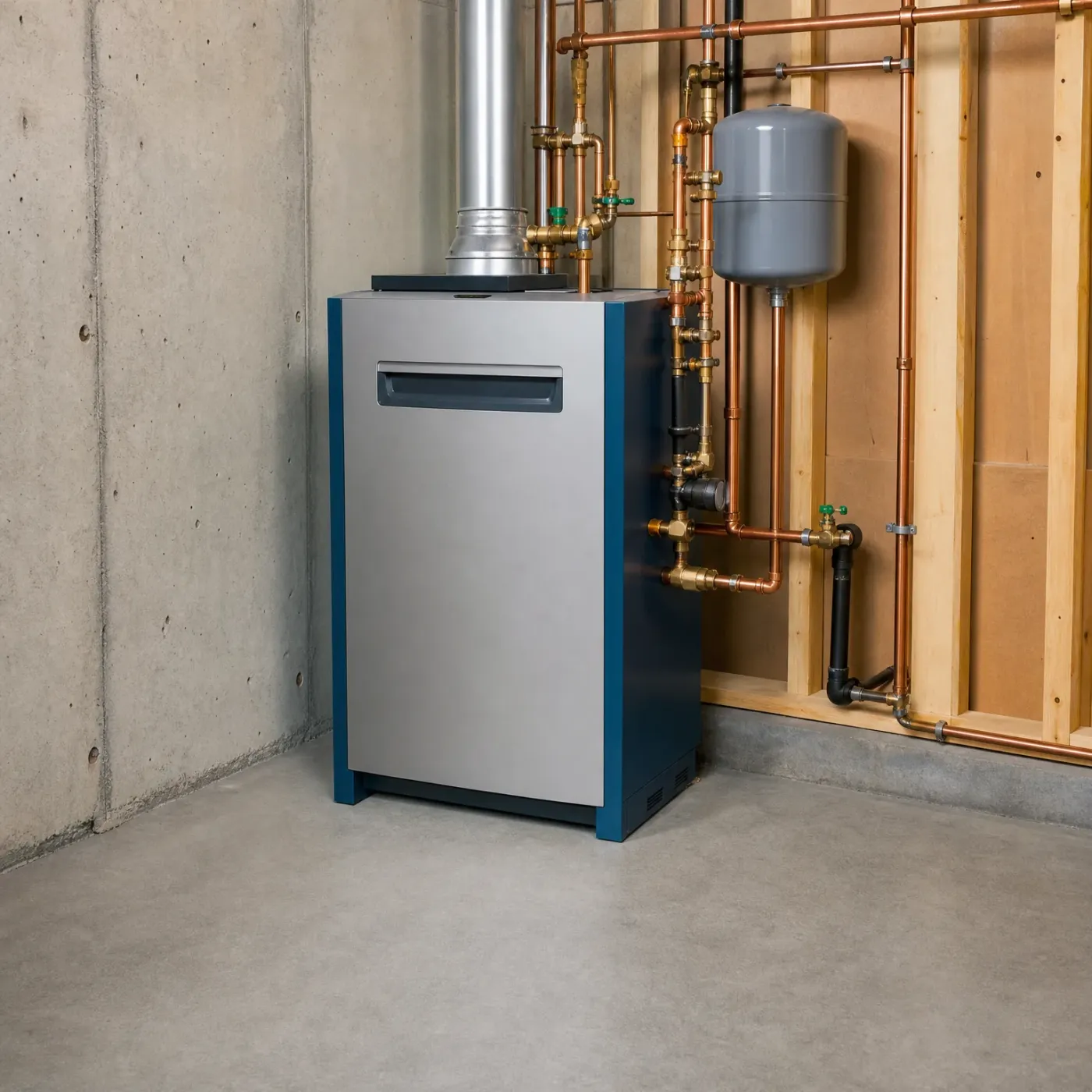
A gray and blue floor-standing boiler in a basement corner, with a metal flue pipe and copper and black piping, valves, and a gray expansion tank mounted on an unfinished wood-framed wall beside a concrete wall.

Running the way it should

A boiler like this heats water quietly and moves it out through copper and black iron pipe to the rest of the house. The expansion tank handles the pressure changes as the water heats and cools. No rust at the fittings, no banging, no rooms that lag behind the thermostat.
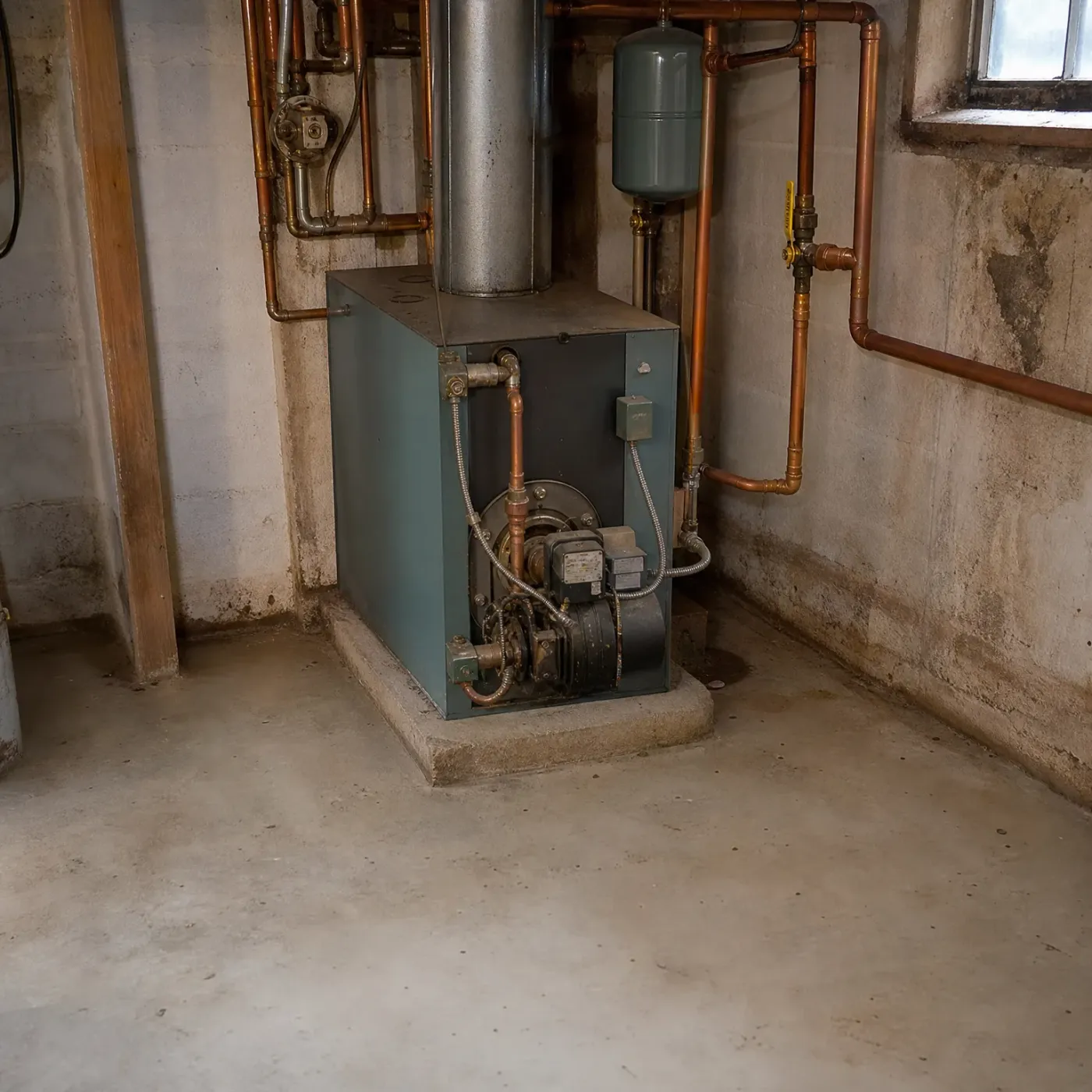

A green oil-fired boiler with a flue pipe, burner and circulator pumps sits on a concrete pad in a basement corner, surrounded by copper piping and an expansion tank against concrete walls.

Signs of a boiler in trouble

An oil-fired boiler on a pad like this is worth a second look if you see dark soot near the flue or moisture pooling at the base. Corrosion works on these units from the inside, and once it reaches the heat exchanger, a repair usually isn't the end of it.

A closed laptop and a ceramic mug on a wooden table in front of a kitchen with green cabinets, marble counter, black pot, cutting board, wooden bowl, and a white vase with greenery.

What happens inside when a boiler is on its way out

A boiler relies on a handful of controls to decide when to fire and how hard. The aquastat reads the water temperature and tells the burner when to kick on. As a boiler ages, that aquastat can drift, or the low water cutoff can start sticking, and the burner either runs longer than it should or shuts off before the house is warm. Neither one shows up as a single clear failure. It shows up as a utility bill that creeps up and a house that never quite feels right.

Finding someone who still works on boilers regularly in Tarrant County takes longer than finding a furnace tech, since there are fewer of them out here. You'd be the one calling around, asking if they still service older cast iron systems, and getting quotes that are hard to compare because every tech describes the same problem differently. Send the form on this page and that search is done for you. Whoever you're matched with already knows this equipment and can tell you straight whether it's worth repairing or time to plan the replacement.

Interior corner of a room with a dark upholstered sofa and textured cushion, a potted plant, sheer curtains at a multi-pane window showing blurred green and yellow trees, and a dark table holding a wooden tray with stacked coasters and a small ceramic vase.

If your boiler quits in January, what are you actually up against?

  • Winter nights average 37°F

    Overnight lows average 37°F here in December, January and February. A boiler that's down on one of those nights leaves you with real cold to deal with, not a mild chill.

  • Heat runs November through March

    Heat only has to run November through March here. A boiler that's on its last legs has to get through five months, not fix itself and rest the other seven.

  • 66.6% of homes heat with electricity

    66.6% of homes in Tarrant County heat with electricity, not boilers. That's part of why a struggling boiler can be hard to get a straight answer on without calling around.

NOAA nClimDiv 1991-2020 · ACS 2020-2024

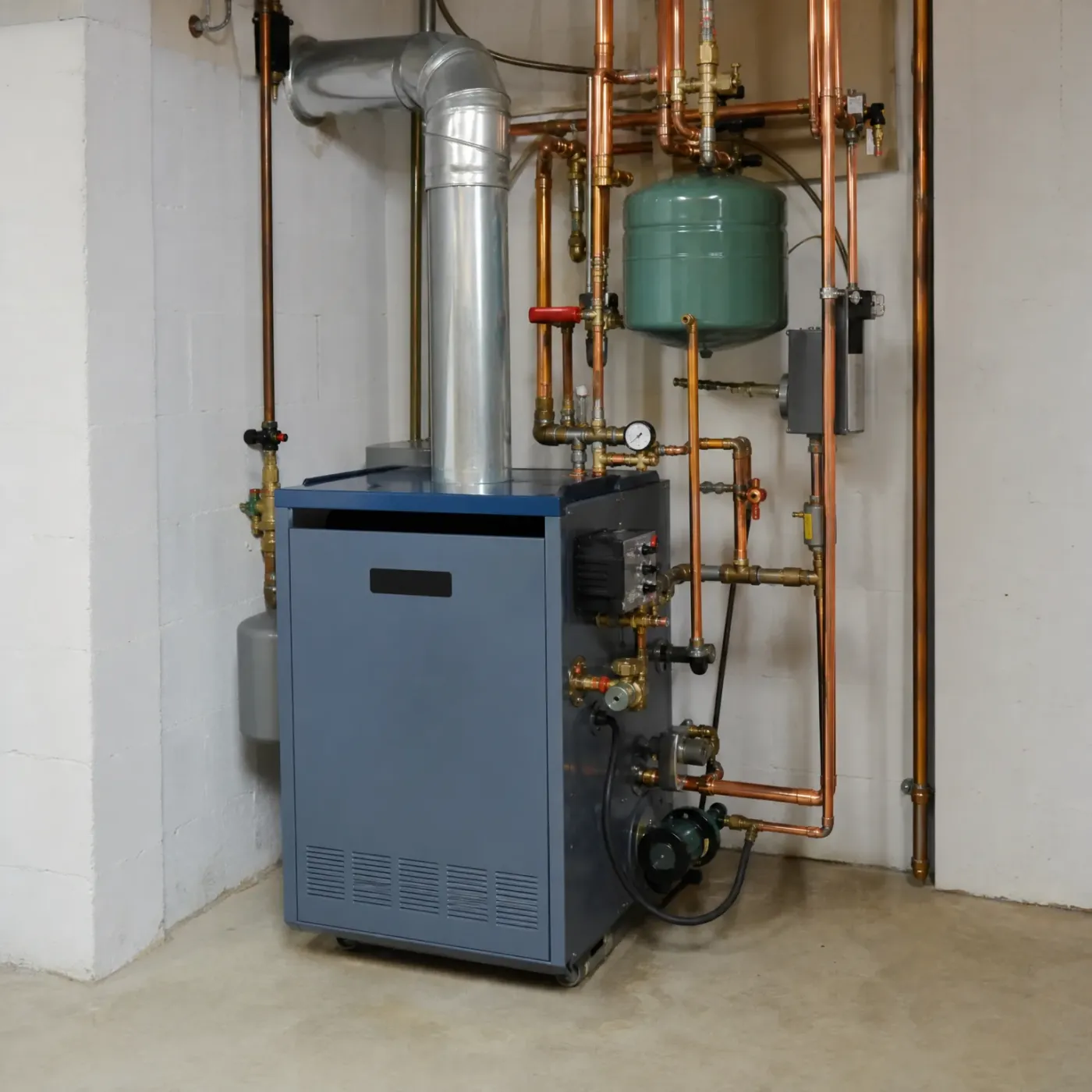
A blue-gray residential boiler in a basement corner, connected to copper piping, a green expansion tank, a circulator pump, gauges, and a metal flue pipe against painted block walls.

Working the way it should

A boiler like this keeps the pressure gauge steady and the expansion tank doing its job. The pipes and fittings stay dry, no rust at the joints. It fires, heats the water, and goes quiet again without any fuss from the flue or the firebox.

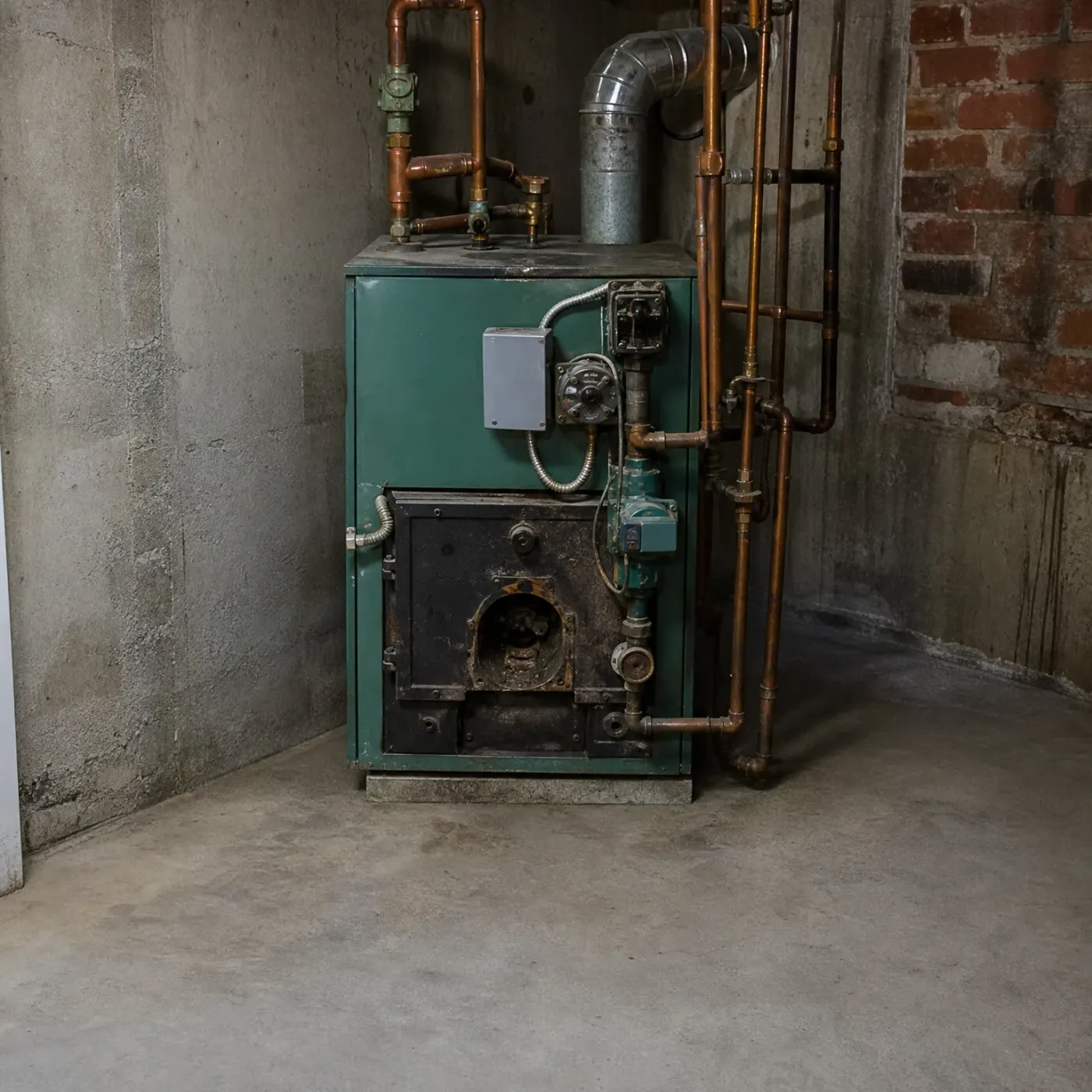
A green cast-iron boiler with a soot-stained front door, copper piping and a metal flue, standing on a concrete floor in a basement corner with concrete and brick walls.

On its way out

An open firebox like this with corrosion inside tells you the metal has been breaking down for a while. Rust spreading to the walls and floor around a boiler this old is a sign the leaks have already started, even if you haven't seen standing water yet.

Winter nights average 37°F

37°F isn't brutal, but it's enough to chase a draft into every room if your boiler can't keep up. A boiler that's slow to recover or short-cycling on a night like that leaves the house noticeably colder by morning, not just uncomfortable for an hour.

NOAA nClimDiv 1991-2020

A man in a navy sweater reclines with closed eyes in a beige armchair in a living room, with a lamp, wooden cabinet, bookshelf, potted plant, and a side table holding a newspaper and mug nearby.
A man in a blue henley shirt reclines on a leather chair with his eyes closed, beside a window, a houseplant, a side table with a newspaper and a dark mug.
A man in a gray sweatshirt reclines with his eyes closed in a dark leather chair, with a bookshelf behind him and a side table holding folded newspapers, a mug, and a potted plant by a window.
A man in a blue sweater leans back on a brown leather chair with his eyes closed and a slight smile, in a room with bookshelves, framed pictures, a potted plant by a window, a folded newspaper and a dark mug on a table.

Done looking for a boiler pro

Skip collecting and comparing quotes for the new boiler.

It costs nothing to send, and you don't have to hire anyone.

  1. Cold water fills the boiler and the aquastat checks its temperature

  2. Burner fires and heats the water inside the heat exchanger

  3. Circulator pump pushes hot water out through the pipes

  4. Water moves through radiators or baseboard units and gives off heat

Repair It or Replace It

Repair

  • A repair makes sense if the boiler is under 15 years old and the problem is a single part, like a circulator pump or a control.
  • If this is the first repair the boiler has needed, that's a different situation than the third one in two winters.
  • A cracked heat exchanger can't be repaired. If that's the diagnosis, the boiler is done no matter its age.
  • Sediment buildup causing the rumbling or banging can often be flushed out, which is a repair, not a replacement.
  • If parts for your model are still easy to get, a repair now can buy you several more winters.

Replace

  • Past 15 to 20 years, a repair bill is often the system telling you the next failure is close behind.
  • Rust at the fittings or a pressure gauge that won't hold steady points to a tank or piping problem that repair won't fix for good.
  • Uneven heat room to room, even after a repair, usually means the boiler can no longer keep up with the house.
  • Replacing now, before a January failure, means you choose the timing instead of a cold night choosing it for you.
  • A new boiler runs quieter and recovers faster, so the whole house holds temperature instead of just the room with the thermostat.
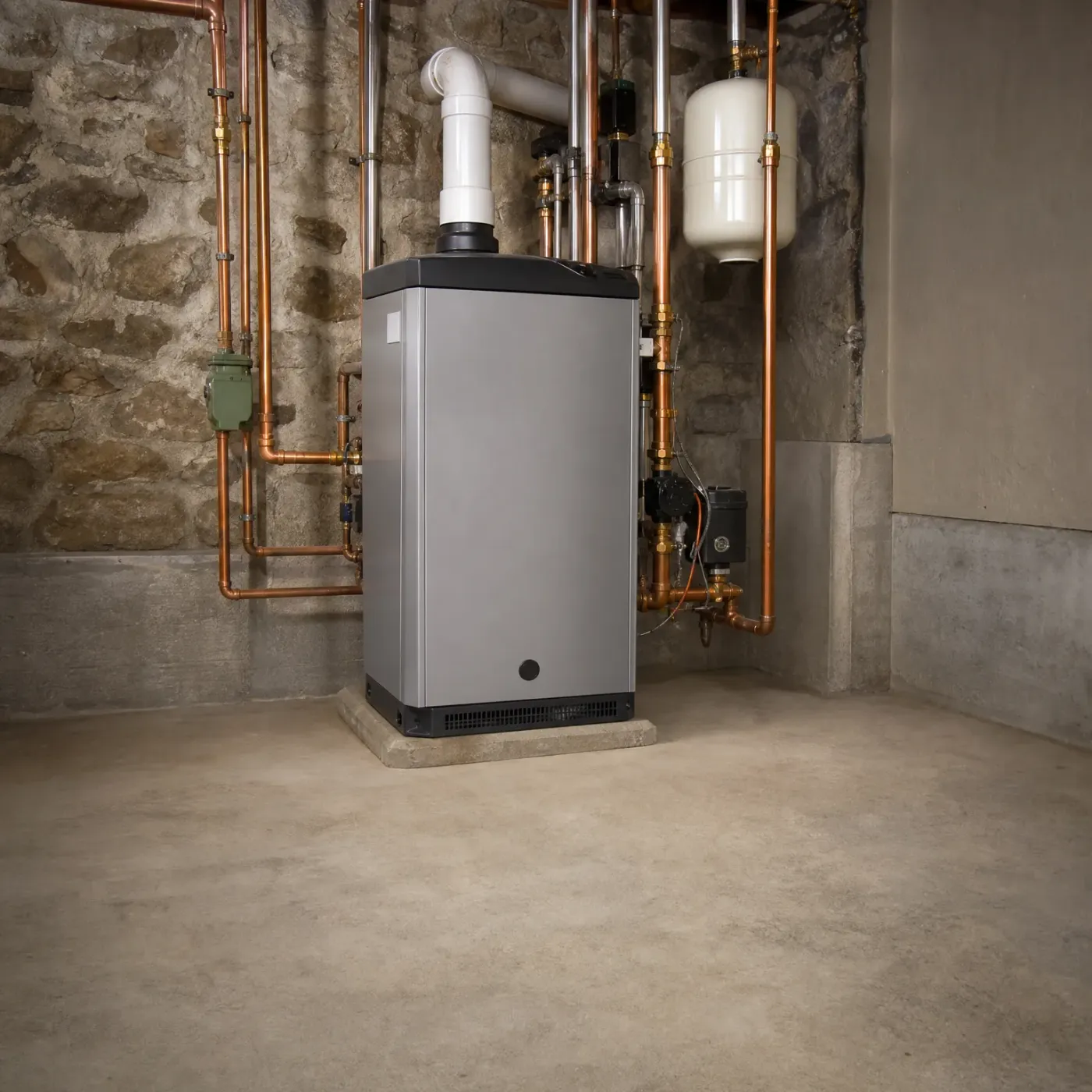
A gray floor-standing boiler on a concrete pad in a basement, connected to copper pipes, a white expansion tank, and a white PVC vent against a stone and concrete wall.
Copper pipe, a steady pressure gauge, dry fittings. This boiler is doing exactly what it should.
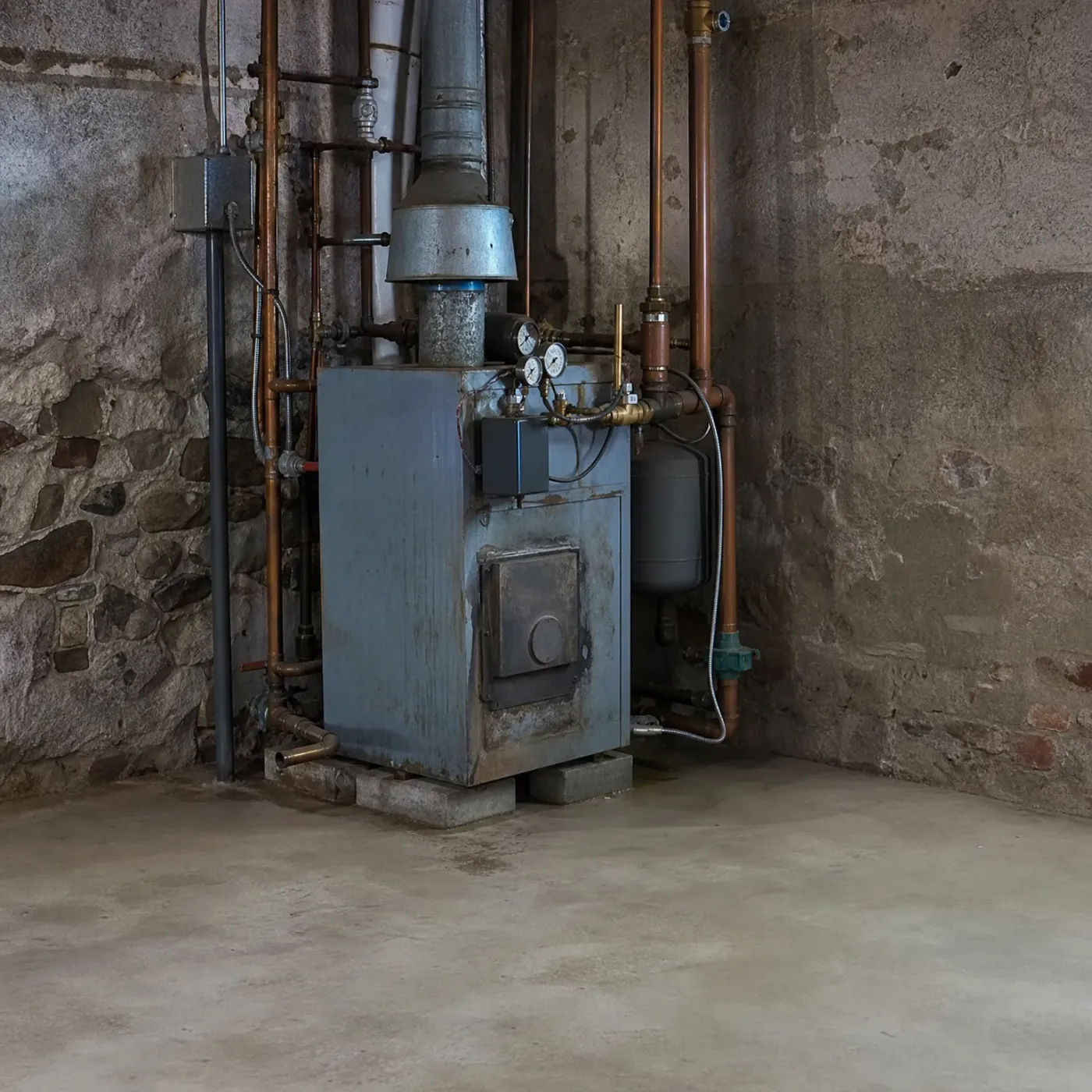
An older gray boiler with a metal flue, copper piping, pressure gauges and an expansion tank sits on concrete blocks in a basement corner with stone and concrete walls.
Cast iron, a wide flue, gauges that have seen a lot of winters. This one is closer to the end than the start.

Does it matter what kind of boiler I have?

You've seen the general signs by now, age, repair costs, strange noises, but your boiler might not match the picture exactly. Cast iron and steel boilers wear differently, and newer condensing models have their own failure points. Before you decide anything, it helps to know which kind you have and what that means for how much longer it's likely to hold up.

Yes, cast iron and condensing boilers age in different ways

A cast iron boiler is built heavy and tends to last toward the long end of that 15 to 20 year range, but when the heat exchanger finally cracks, it's done. There's no patching cast iron. A condensing boiler runs more efficiently but has a secondary heat exchanger exposed to acidic condensate, and that part can corrode faster, sometimes inside 10 to 15 years. If you're not sure which one is in your mechanical room, check the data plate on the unit itself. It lists the manufacturer and model, and that tells you which failure pattern to watch for.

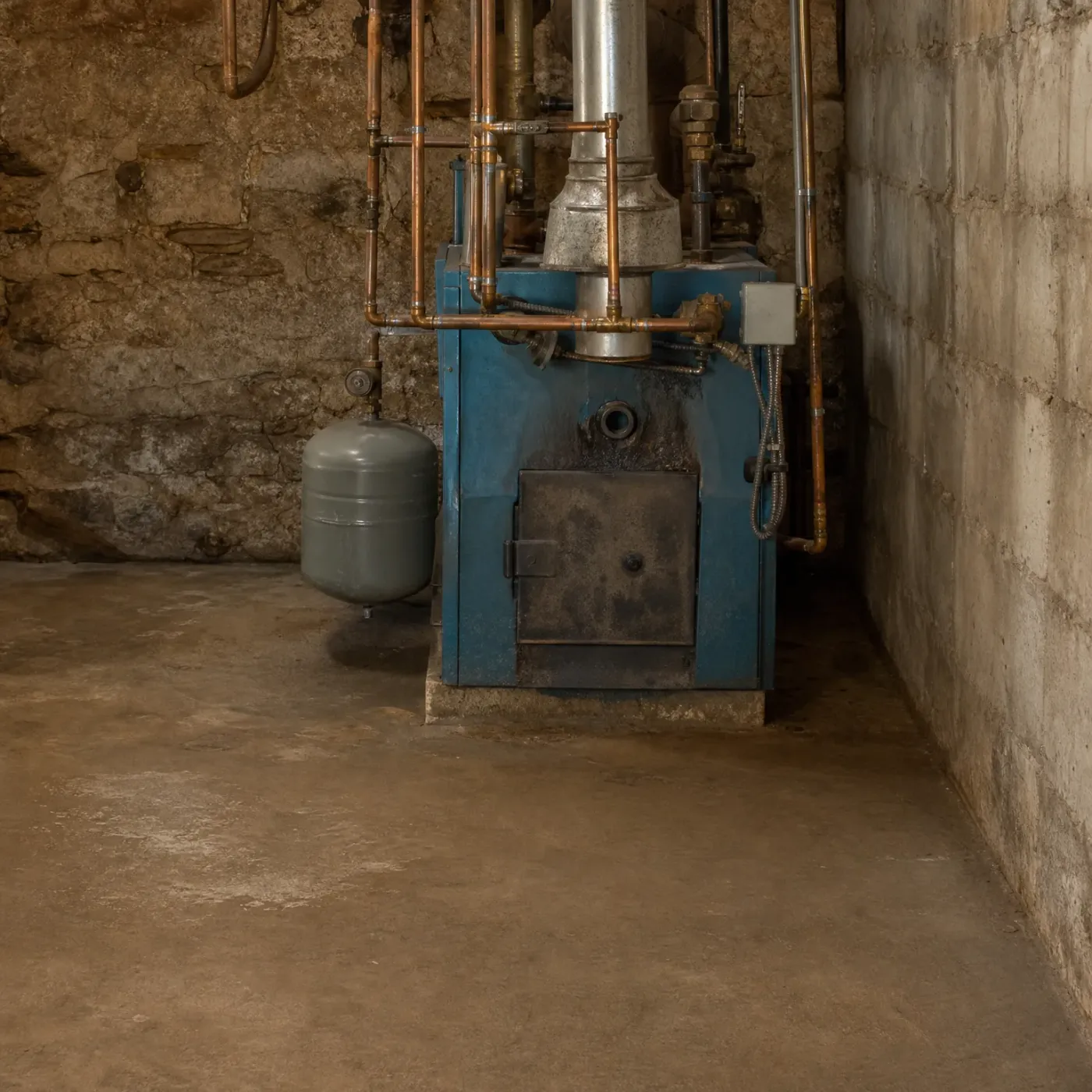
A blue cast-iron boiler with a metal flue pipe and copper piping stands against a stone and concrete block basement wall beside a gray expansion tank on a bare concrete floor.
Before you get your boiler installation
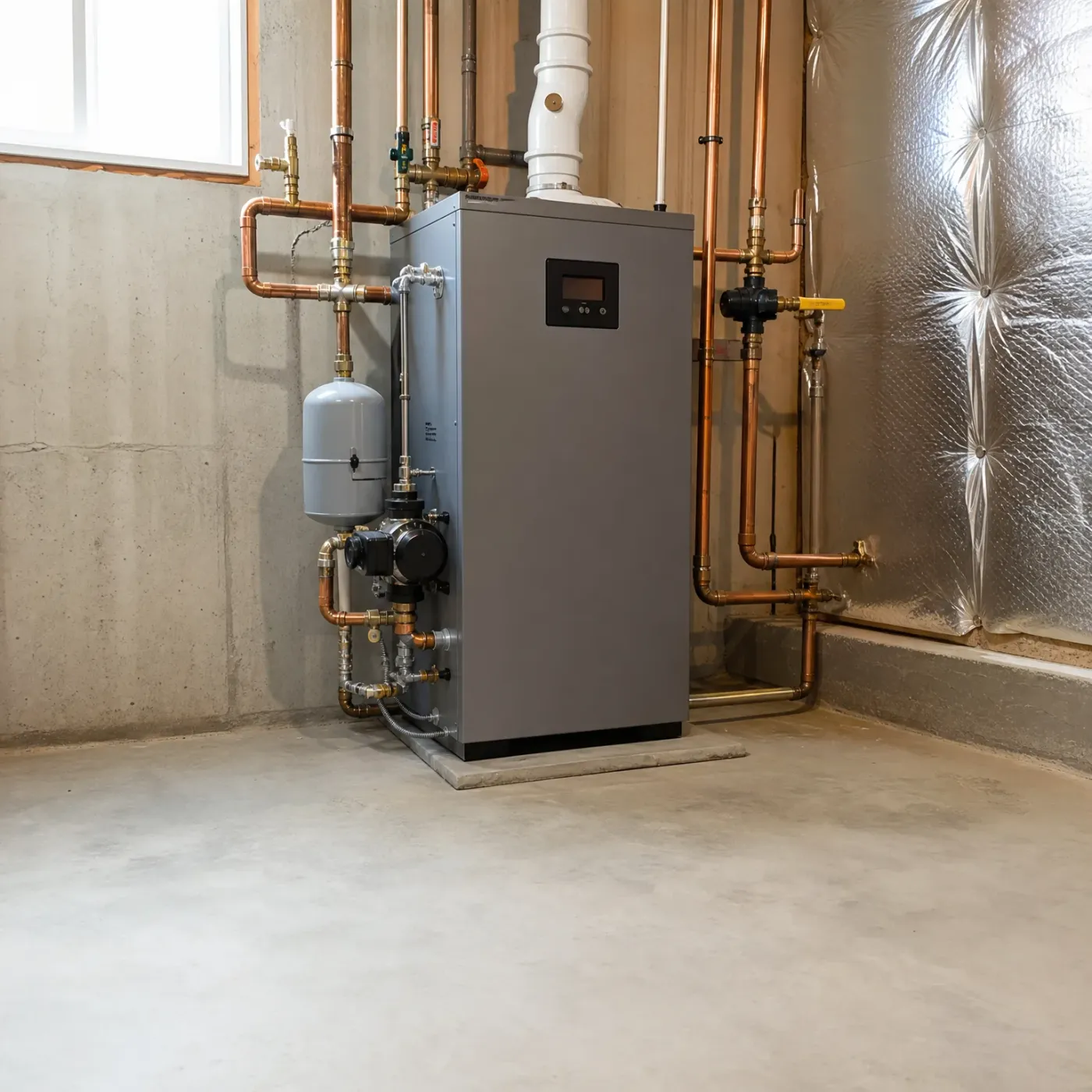
A gray boiler unit with a digital display stands on a concrete basement floor, connected to copper piping, a gas valve, a circulator pump and an expansion tank, beside a concrete wall and foil-faced insulation.
After you get your boiler installation

Where that leaves you

  • Most boilers here last 15 to 20 years, and a repair past that age usually means it's time to replace it.
  • Repeated repairs in the same couple of winters cost more over time than one replacement does.
  • Banging, rumbling, uneven heat and a boiler slow to recover are all signs it's struggling to keep up.
  • Cast iron, steel and condensing boilers each wear differently, so the right call depends on which one you have.
  • Overnight lows near 37°F in Fort Worth mean a boiler that quits in January leaves you with real cold to manage.
  • A single part failing on an otherwise young boiler is a repair, not a reason to replace it.

Most of what decides this comes down to age and pattern. A boiler under 15 years old that needs a part is usually worth fixing. A boiler past 15 to 20 years that needs a part is usually telling you the whole unit is catching up to it, not just that one component. The noises and the uneven heat matter less on their own than what they add up to over a winter or two. One banging sound after a cold snap is worth a look. Banging every week, plus a room that never quite gets warm, plus a repair bill from last January, is a different situation entirely. What kind of boiler you have changes some of the specifics. Cast iron tends to go slow and show its age in pressure and corrosion. Steel and condensing models fail in their own ways, on their own timelines. None of that changes the basic math: age plus a real repair bill is the point where replacing it starts to make more sense than patching it again. And none of it is abstract here. Overnight lows sit around 37°F through December, January and February, and a boiler that quits on one of those nights is not a minor inconvenience. It is cold rooms and a cold house until someone gets it running again. Knowing where your boiler sits against these signs is most of the decision. What you do with that is the only part left.

An older man with gray hair in a green quarter-zip sweater leans back on a couch with his eyes closed and head tilted up, in a sunlit room with windows, houseplants, a lamp, and a cushion behind him.
A woman in a cream knit sweater sits in a light upholstered armchair with her eyes closed and a slight smile, beside a window showing orange autumn foliage, with a bookshelf, lamp, and a mug on a side table nearby.

Boiler Installation

It's off your list after this

Skip the round of in-home estimates for a new boiler.

A smartphone with a blank green screen stands upright against a plain light gray background.
Step 1 of 3: Equipment