When to replace a boiler in El Paso, TX

Step 1 of 3: Equipment

Most boilers in El Paso need replacing around 15 to 20 years, or sooner if the heat exchanger has started leaking or the unit needs a repair every winter. Boilers run hard here from December through February, when nights get genuinely cold, and that seasonal stop-and-start wears on the same parts year after year until the repairs add up to more than the boiler is worth. A furnace that's short-cycling, making banging or kettling noises, or no longer heating rooms evenly is telling you the same thing. Since most El Paso homes heat with gas, a boiler that's losing efficiency also means higher gas bills for the same warmth, even before it fails outright. If yours is original to the house, or a contractor has already flagged the heat exchanger or the controls, replacing it before a cold snap is usually the better call than waiting for it to quit during one.

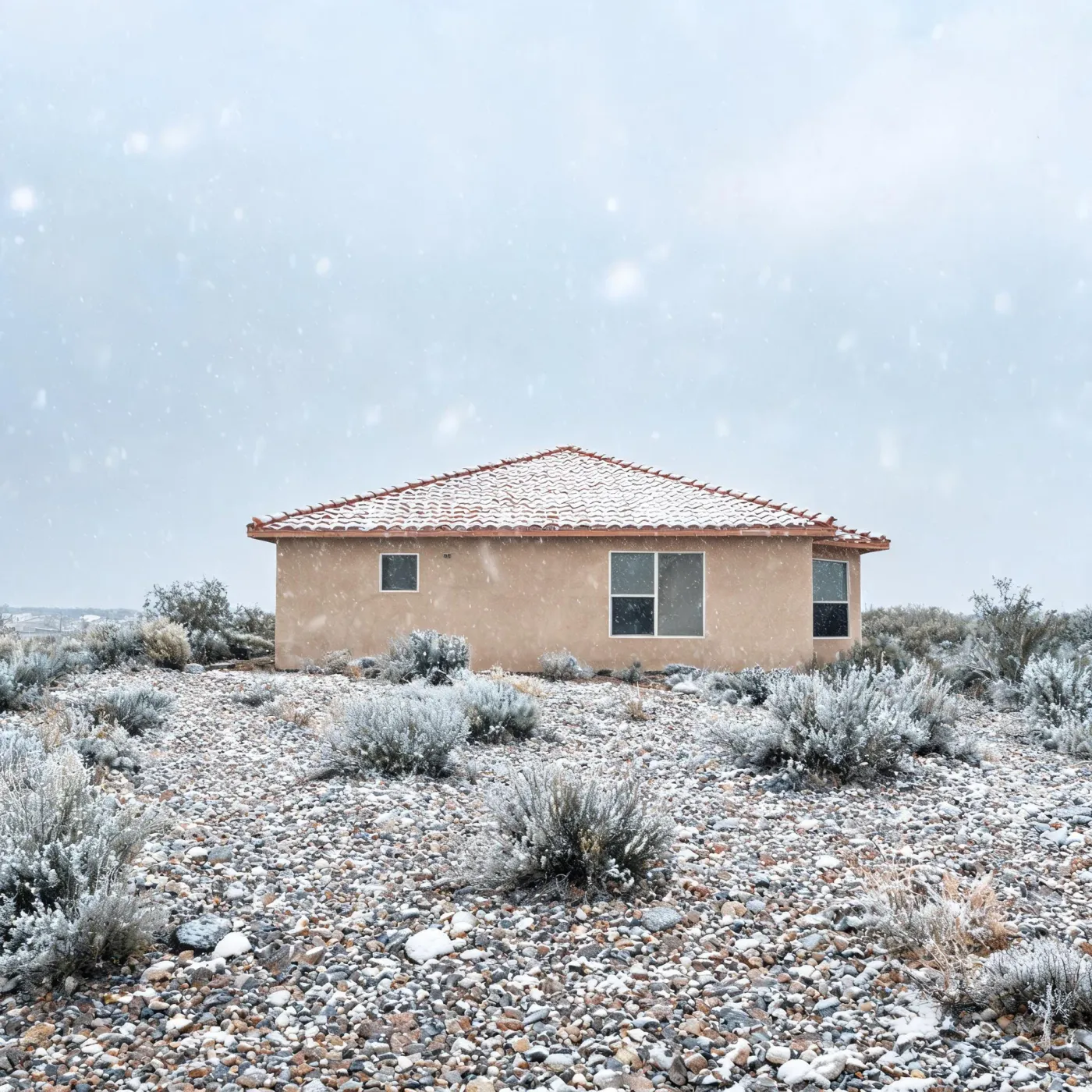
A single-story tan stucco house with a red tile roof stands amid snow-dusted desert scrub and a rocky gravel foreground during falling snow.

Winter nights in El Paso County average 32°F across December, January and February, according to NOAA climate data. That's right at the freezing line, so your boiler is cycling on through the coldest part of the night, not just taking the edge off in the morning. An older unit feels this most: it runs longer to hold the house at temperature, and if the heat exchanger has already started to go, those are the nights it's most likely to quit on you. If your boiler is struggling to keep rooms warm by early morning, that's the weather asking something your equipment may not have left to give.

NOAA nClimDiv 1991-2020

Is your boiler telling you it's done?

Look at the water around the base of the unit. A puddle there, even a small one, usually means the heat exchanger or a fitting is failing, and that's not a part you patch twice. Listen for banging or kettling in the pipes when the boiler fires, a sign of mineral buildup working against the heat exchanger. Check if rooms take longer to warm than they used to, or if the pilot or igniter won't hold. If you've had a tech out more than once this winter for the same unit, the math stops favoring another repair. A boiler that can't heat reliably on the coldest nights leaves pipes at risk of freezing if the house drops low enough.

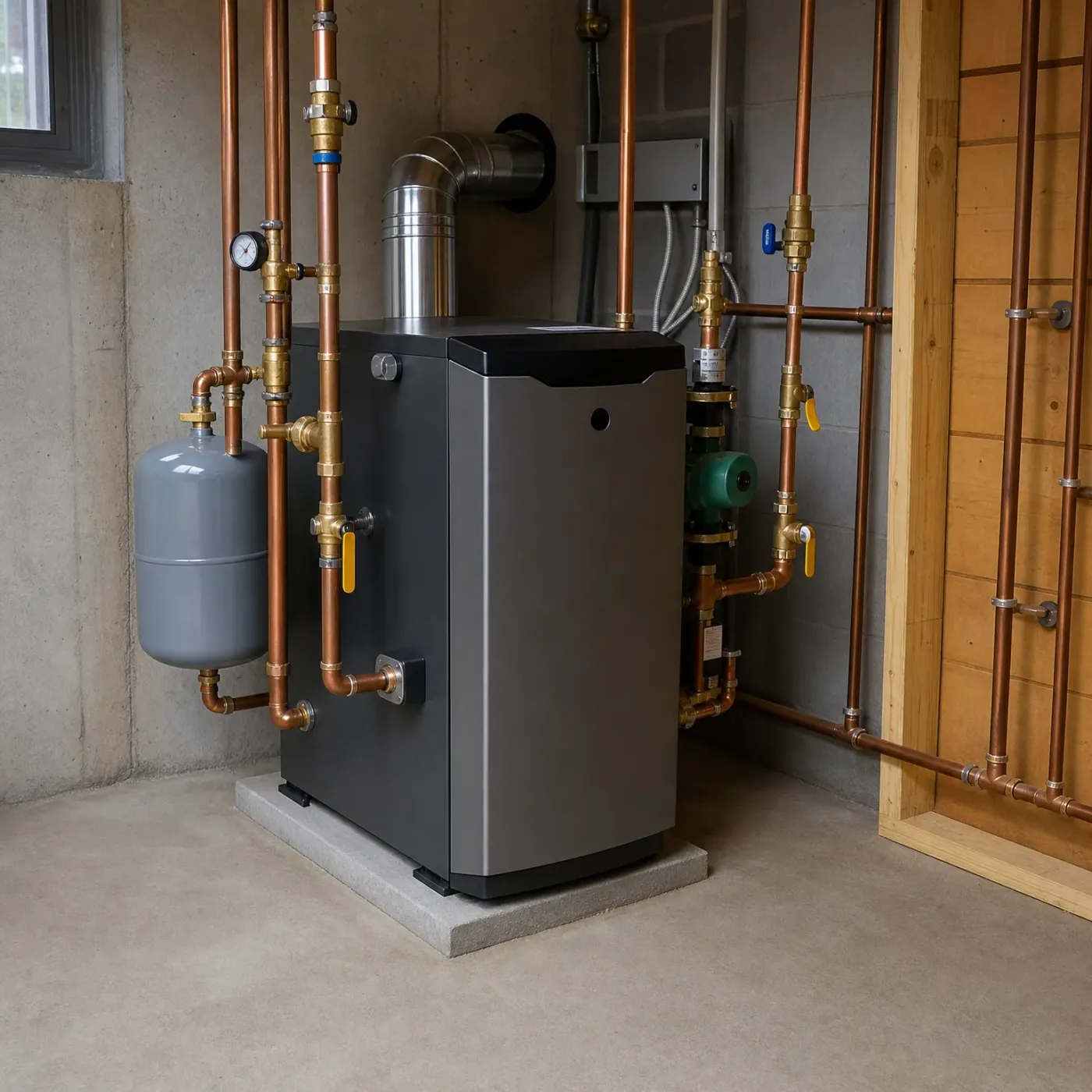
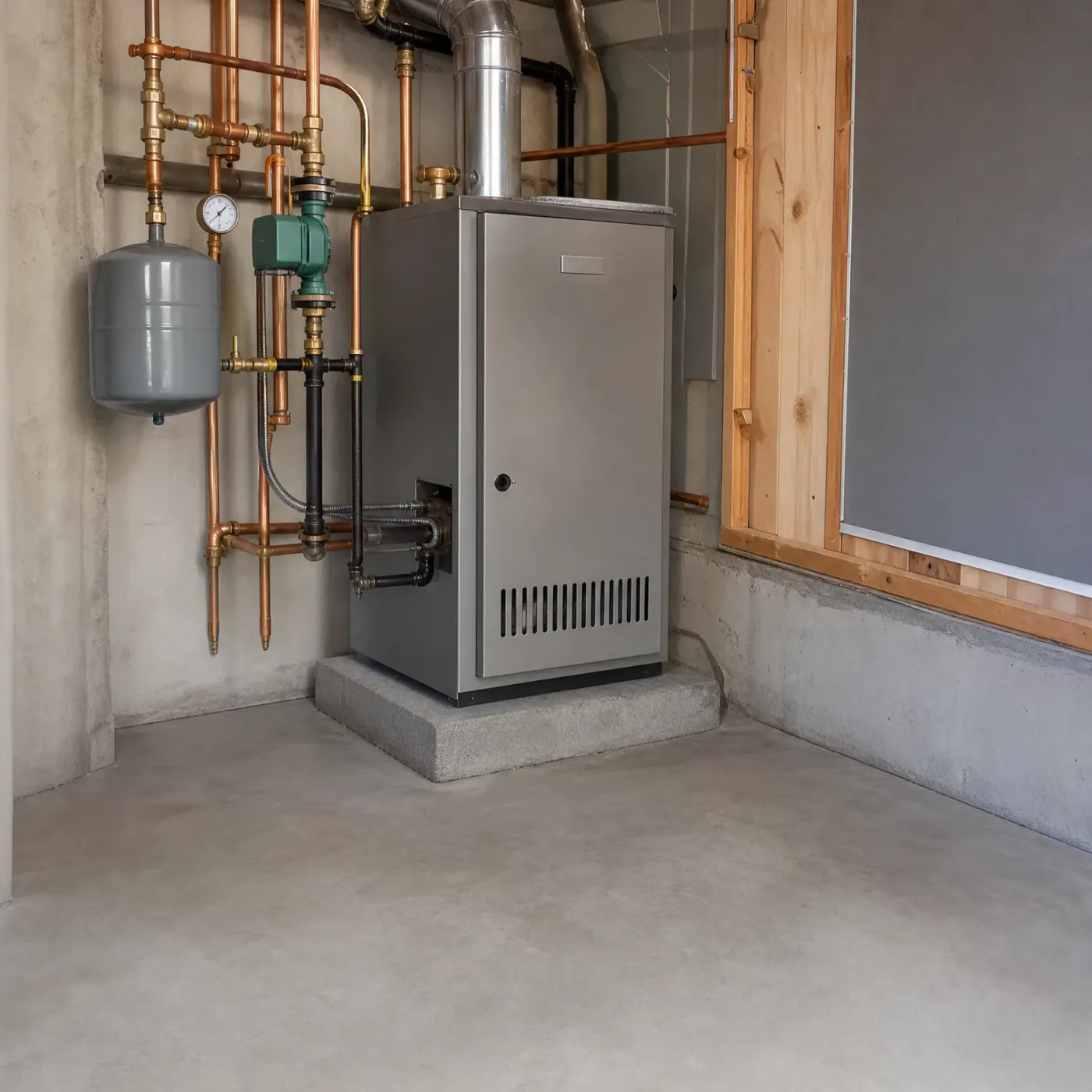
A gray boiler on a concrete pad in a basement corner, connected to copper and black pipes with a gauge, circulator pump, and gray expansion tank, beside a wood-framed wall.

Running the way it should

This is what a boiler looks like when it's doing its job. The pressure gauge holds steady, the expansion tank keeps the system from building up stress, and the flue draws clean. No water on the concrete, no rust on the fittings. If yours still looks like this, a yearly check is probably all it needs.
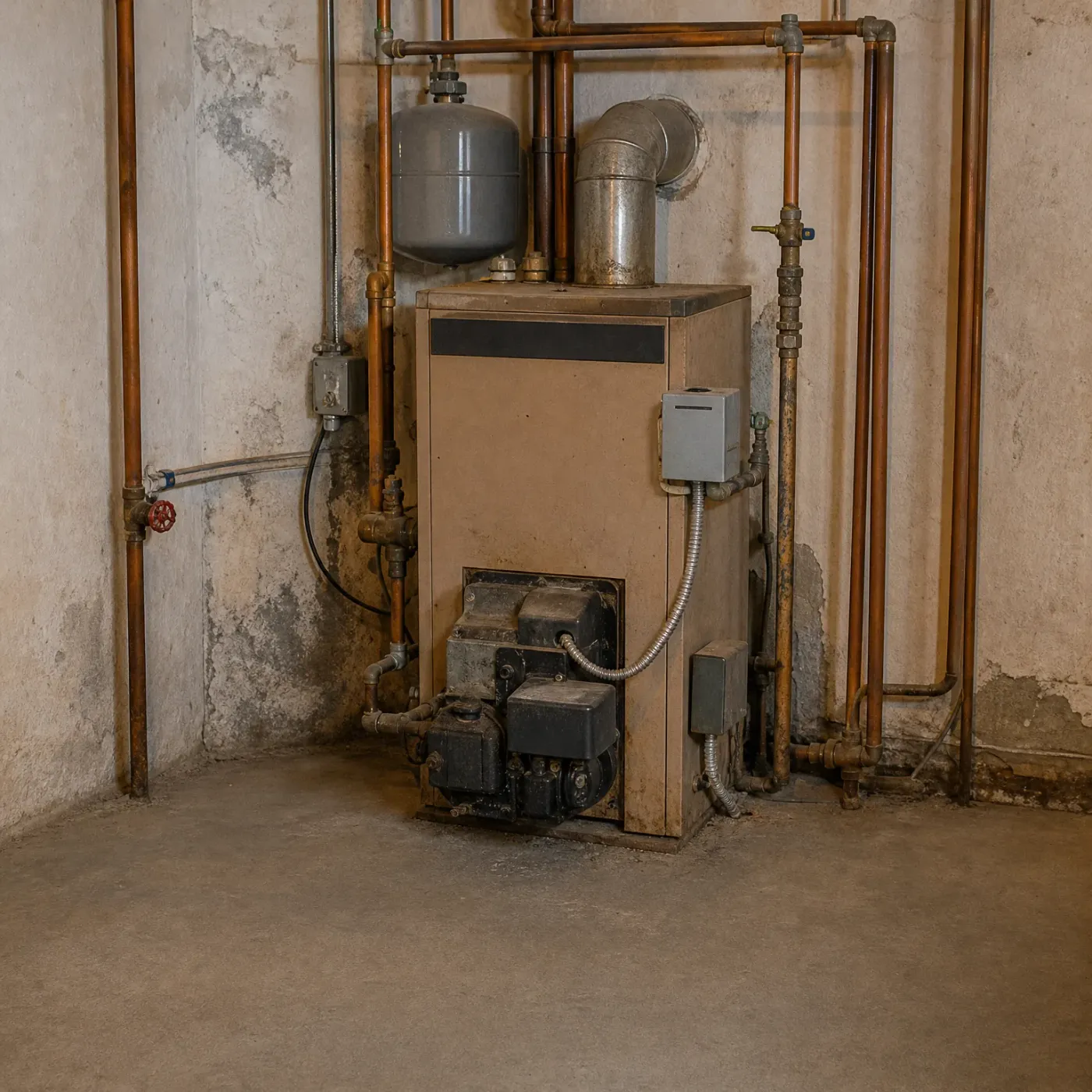
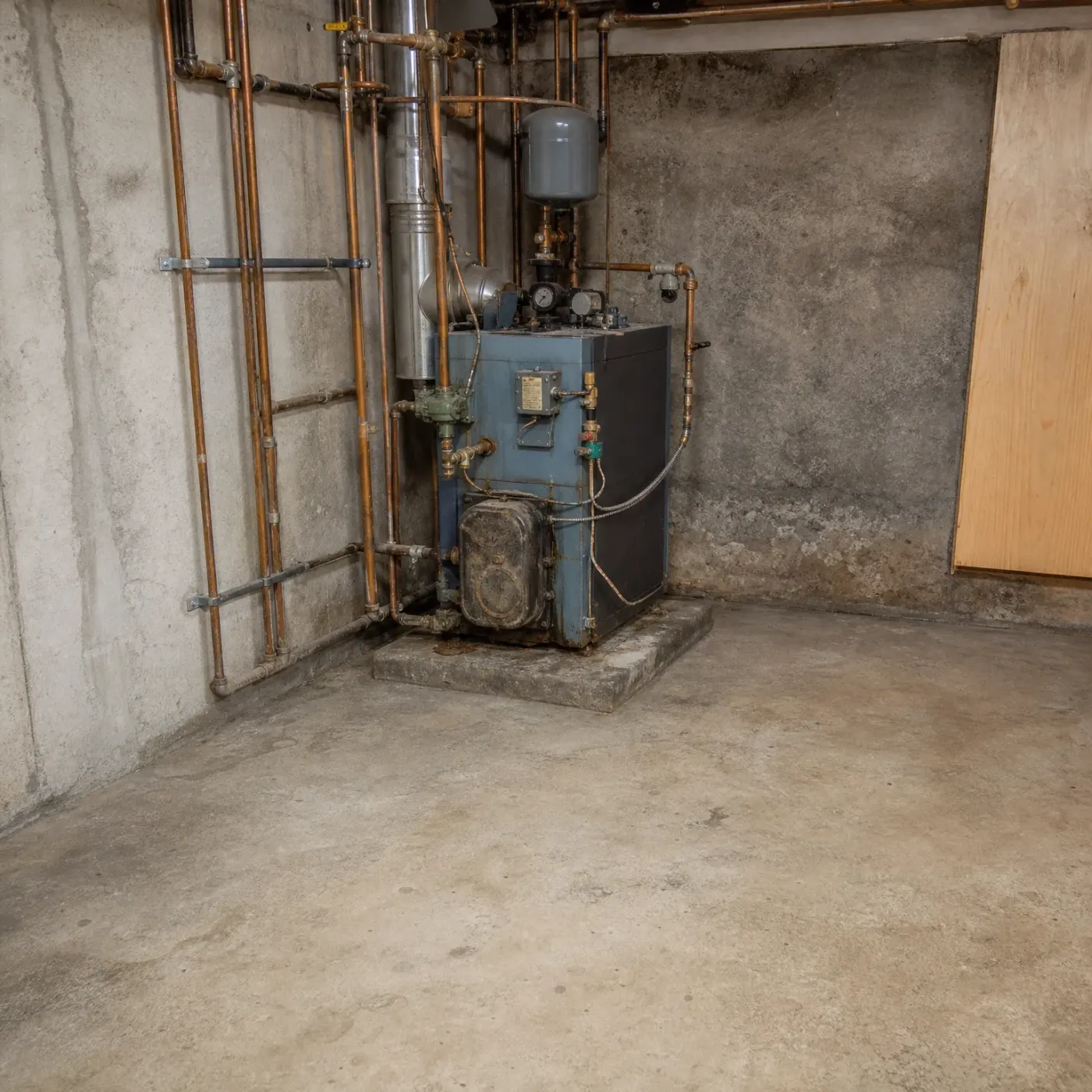
An older oil-fired boiler with a burner unit, flue pipe, expansion tank and copper piping stands in the corner of a concrete-floored basement with weathered plaster walls.

On borrowed time

Old copper runs everywhere, a worn burner assembly, a flue elbow that's seen better days. A boiler in this shape has likely already asked for more than one repair, and the next one may not be worth paying for. Once a unit gets here, replacement usually costs less over time than keeping it running.

Why does boiler age matter so much in El Paso?

  • Winter nights average 32°F

    Five months of heat a year still adds up fast over a 15 to 20 year lifespan, and most boilers in El Paso County are at or past that mark before anyone notices.

  • Heat runs November through March

    A 32°F overnight low means the boiler isn't just warming the house, it's holding the line against freezing for hours at a time, all winter long.

  • 71% of homes heat with gas

    With 71% of homes here running on gas, most of El Paso County boilers share the same wear points, so an aging gas boiler is the norm to watch for, not the exception.

NOAA nClimDiv 1991-2020 · ACS 2020-2024

How a boiler actually works

  • A boiler heats water in a sealed loop and sends it through pipes to radiators or baseboard units, it never mixes with the air you breathe.
  • The circulator pump keeps that water moving constantly whenever the thermostat calls for heat, and a failing pump is a common reason rooms stop warming evenly.
  • Gas boilers burn fuel to heat the water, then vent the exhaust out through a flue, and a cracked heat exchanger can let that exhaust mix with your water supply.
  • The expansion tank holds extra room for water as it heats and expands, so a waterlogged tank is often why your pressure gauge swings instead of holding steady.
  • Low water pressure usually means a slow leak somewhere in the system, since a sealed loop should hold its fill without needing regular topping off.
  • Kettling, that rumbling or banging sound from the unit, happens when mineral scale builds up on the heat exchanger and traps steam pockets against the metal.

A boiler doesn't heat your house directly. It heats water in a closed loop, and a circulator pump pushes that water out to radiators or baseboard units, where it gives up heat to the room before coming back around to be reheated. The water itself never leaves that loop and never mixes with the air in your home. Gas does the heating, burned at the bottom of the unit, and the exhaust from that flame has to go somewhere. It vents out through the flue. The heat exchanger is the wall between the flame side and the water side, and it has to stay intact. If it cracks, exhaust can get into your water, which is a safety problem, not just a performance one.

The expansion tank's job is simple. Water takes up more room when it's hot, and the tank gives it somewhere to go so the system pressure doesn't spike. When that tank fills with water instead of air, which happens over years, the pressure gauge starts swinging instead of holding steady, and that's usually the first sign something's wrong, not a leak itself.

Speaking of leaks, a sealed system shouldn't need topping off. If your pressure keeps dropping and you keep adding water, something is leaking out slowly, somewhere in the loop or at a fitting. And if you hear banging or rumbling from the unit, that's scale building up on the heat exchanger, trapping steam against the metal where it shouldn't be.

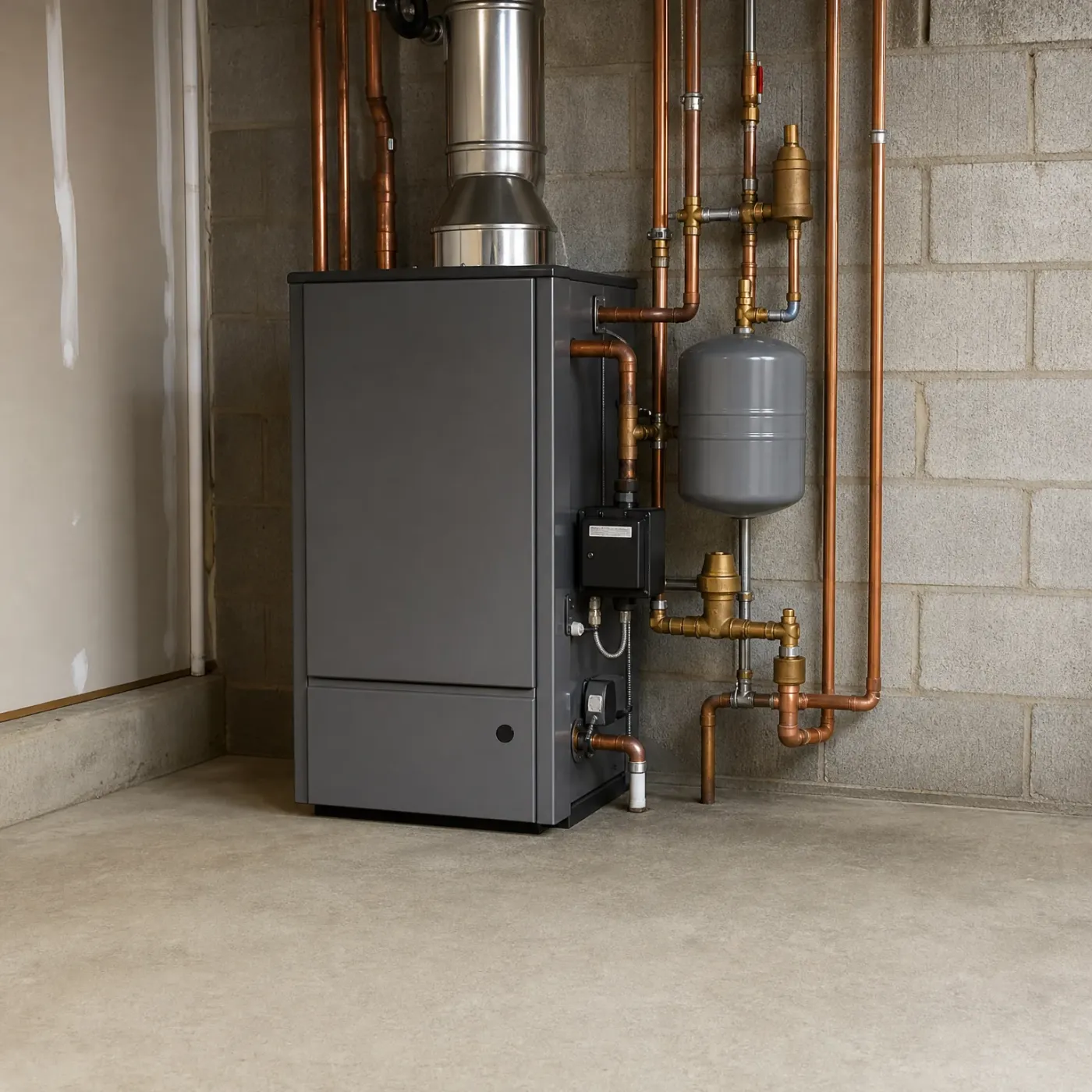
A gray floor-standing boiler with a metal flue stands against a concrete block wall, connected to copper pipes, brass valves and a gray expansion tank, on a bare concrete floor.
A boiler like this holds pressure steady, feeds its loop clean, and keeps that steel flue drawing without any rust at the base.
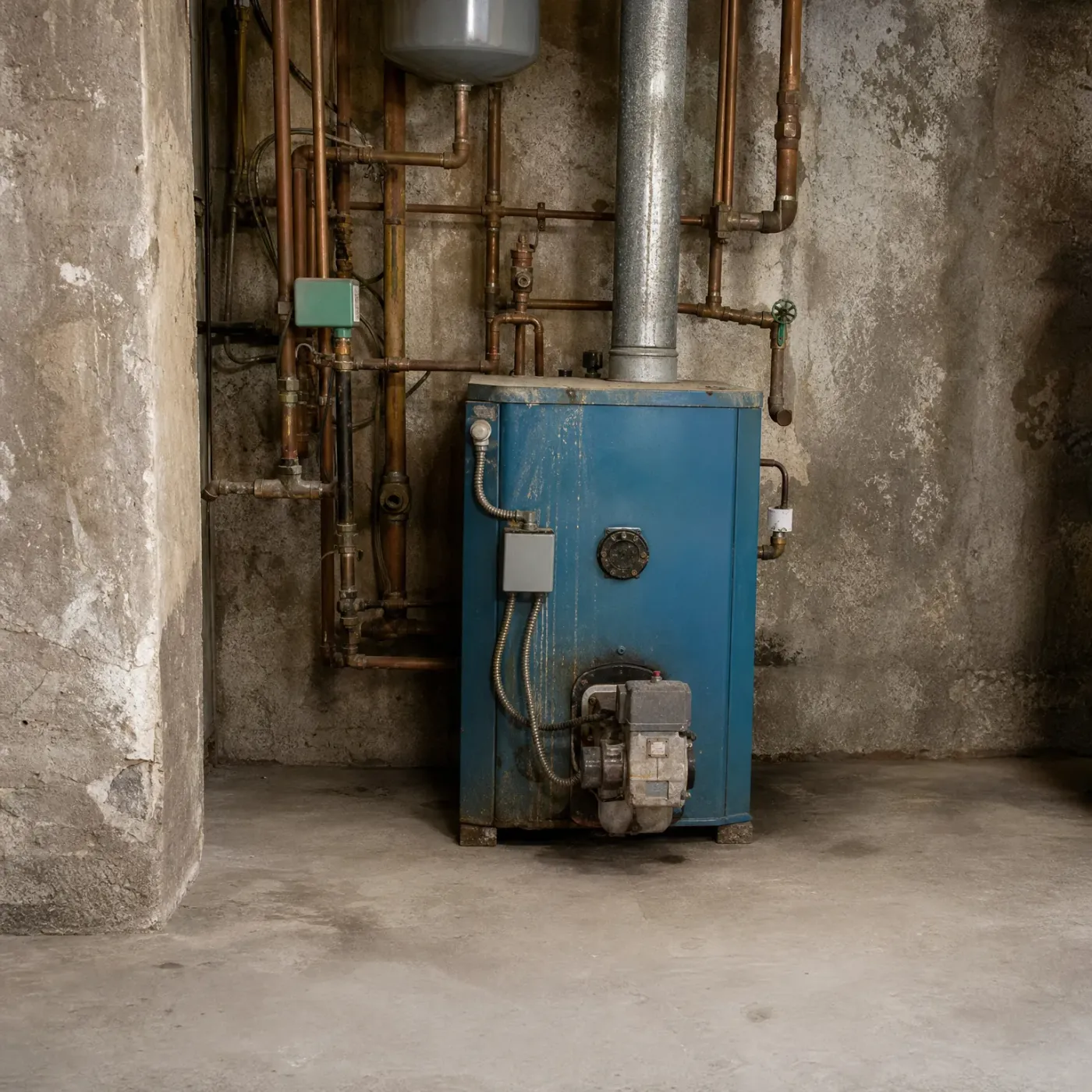
A blue oil-fired boiler with a burner unit and pressure gauge stands in a concrete basement corner, connected to copper pipes and a metal flue.
A teal oil-fired unit like this, with an aging burner and fuel pump up front, is past the point where another repair makes sense.
An older man with gray hair, a dark coat and scarf dusted with snow stands in a warmly lit entryway with an open wooden door, a table lamp, framed pictures, and a plant in a vase.
An older man with gray hair and a beard wearing a dark snow-dusted coat stands in a home entryway, with a lamp-lit living room and a wooden staircase behind him.
An older man with gray hair and a beard, wearing a dark snow-dusted coat, stands in a warmly lit home entryway with a hallway, console table with lamp, patterned rug, and living room visible behind him.
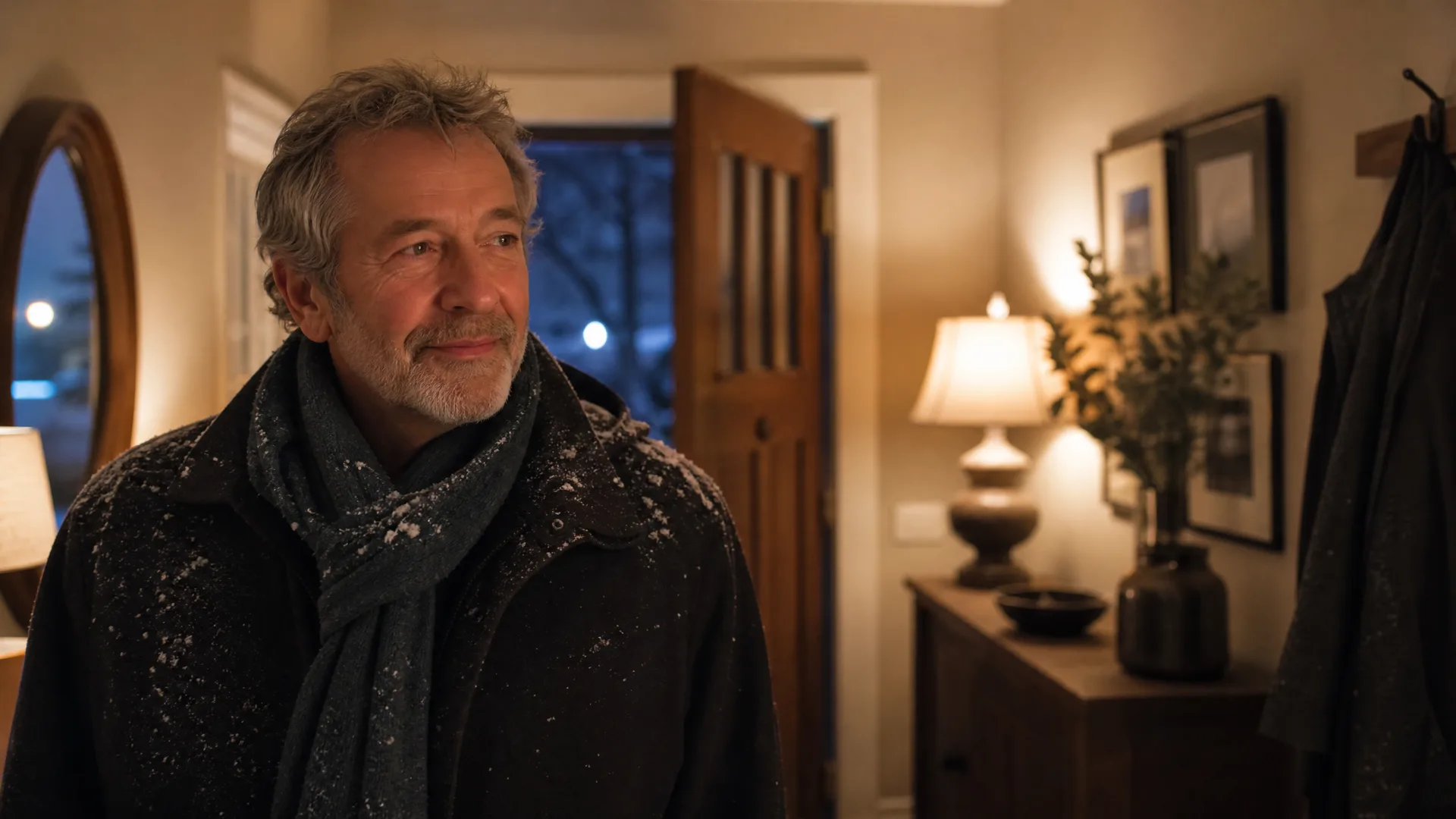
A gray-haired bearded man in a dark snow-dusted coat and scarf stands inside a dimly lit home entryway, with a hallway, framed picture, lit table lamp and staircase behind him.

Winter nights average 32°F

At 32°F, your boiler isn't cycling off for long stretches at night. It's holding a near-constant call for heat from evening through sunrise, and an aging heat exchanger or circulator pump feels that load before a mild winter would ever show it.

NOAA nClimDiv 1991-2020

A woman wrapped in a thick cream knit blanket sits in an armchair beside a lit table lamp, with an open book in the foreground and a frost-covered window behind her.
A smiling older woman with gray shoulder-length hair in a cream cable-knit turtleneck sweater stands behind a wooden board holding a round loaf of bread, in a warmly lit kitchen with a dark window and shelves behind her.

Get matched with a boiler pro in El Paso County

A boiler that's past 15 years and showing any of these signs isn't a quick fix anymore. Once a heat exchanger starts leaking or the circulator pump is struggling, replacement is the honest answer, not another service call that buys you a few more weeks. Getting that done in El Paso means finding a contractor who installs boilers, not just the furnace and AC work most companies lean on, then getting quotes you can actually compare before the next cold snap settles in. That's the part this page shortens. Instead of calling around and describing the same leak or the same banging pipes to five different companies, you answer a few questions once and a contractor who handles boiler installs in El Paso County gets in touch with you directly. You still decide what happens with your system. You just stop spending your evenings on the phone to get there, right as those near-freezing nights are asking the most of it.

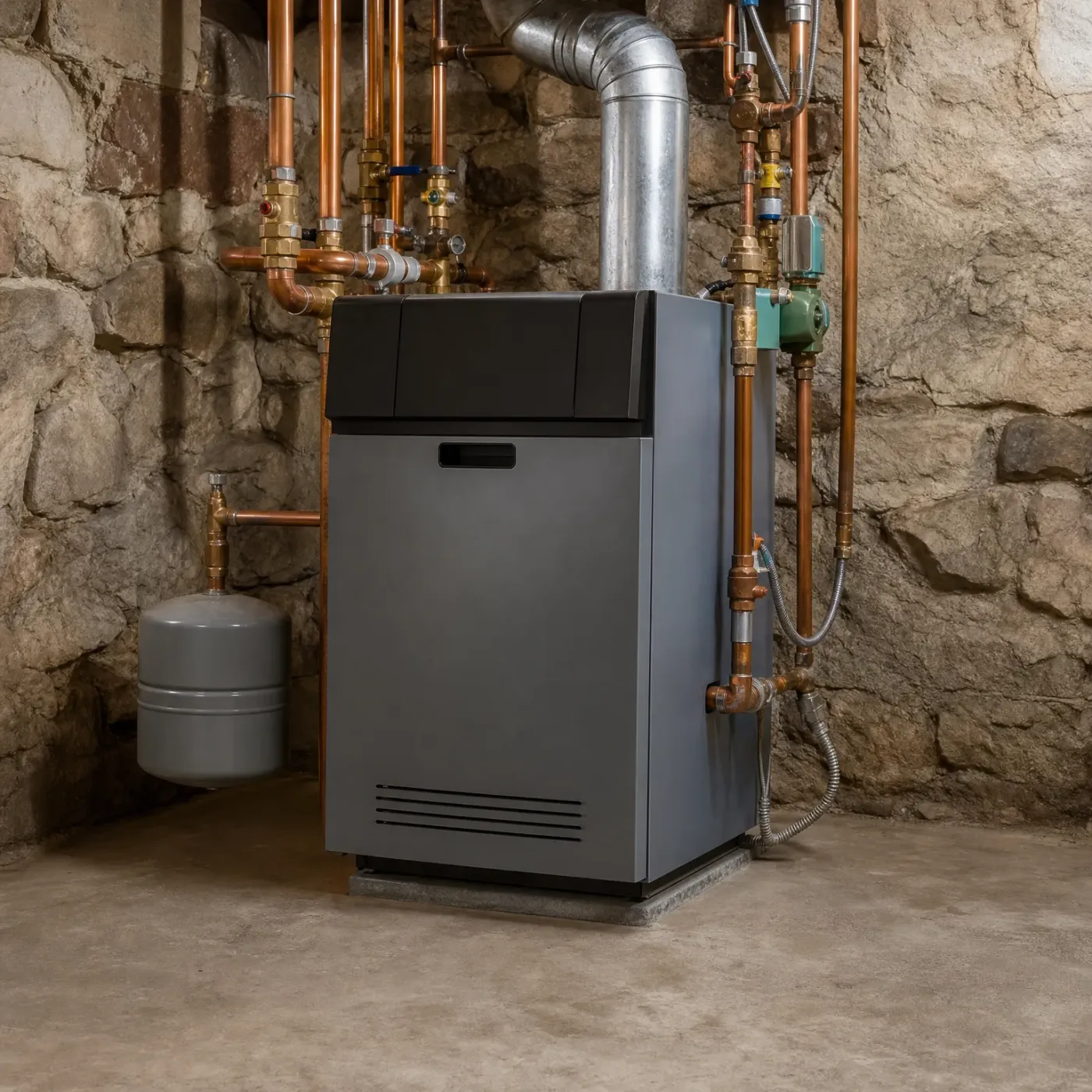
A gray residential boiler on a concrete pad in a basement with stone walls, connected to copper piping, brass valves, a circulator pump, an expansion tank, and a metal flue duct.

A boiler that's holding up its end

The copper piping stays tight and dry, the circulation pump runs quiet, and the expansion tank does its job of absorbing pressure as the water heats. No rust creeping up the fittings, no scale ring on the concrete pad. A system like this can carry you through another El Paso winter without drama.

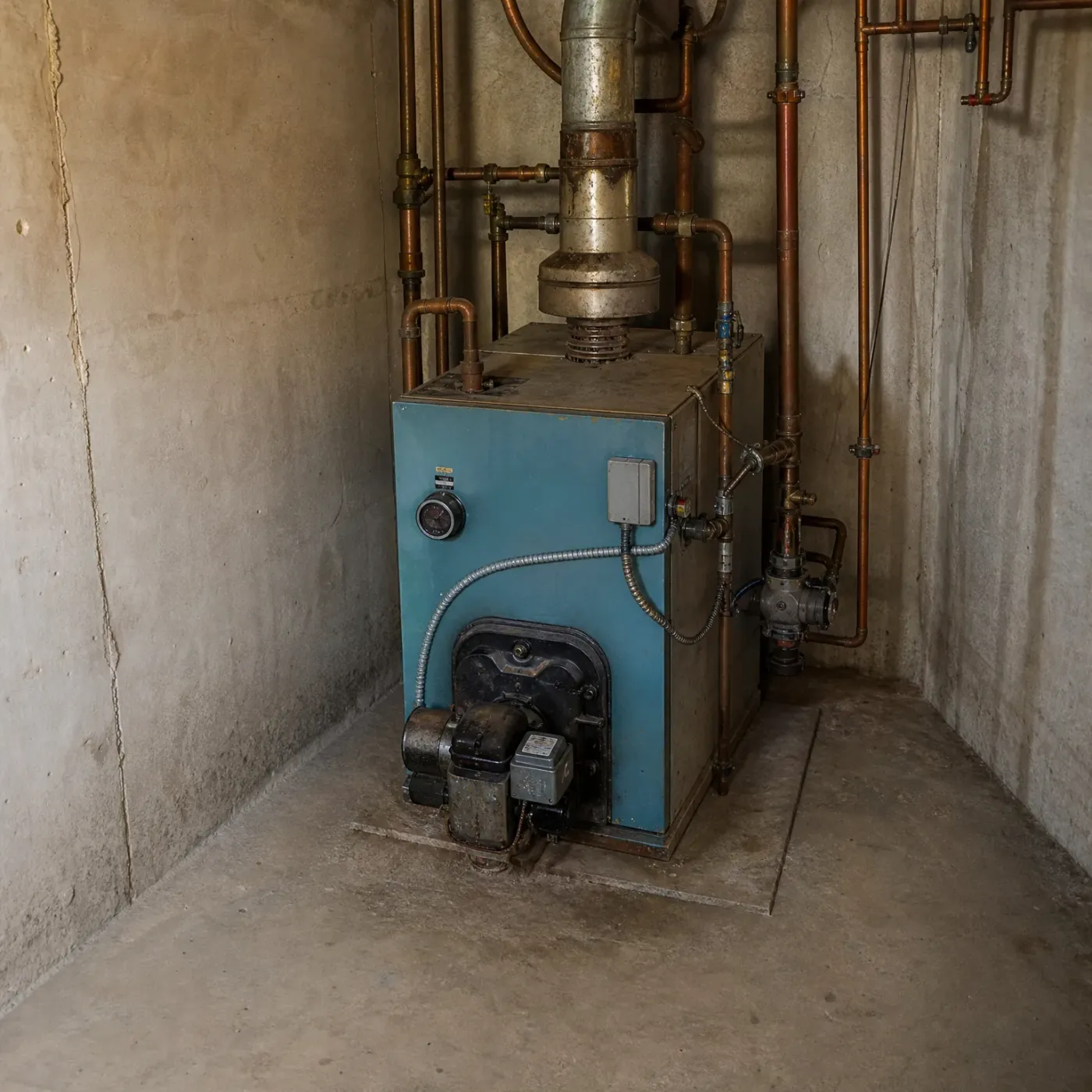
A blue cabinet boiler with a metal flue pipe and copper piping stands against a bare concrete wall in a basement with a concrete floor.

A boiler on borrowed time

That blue unit has an old burner assembly and a flue pipe that's seen better days. Galvanized steel like that corrodes from the inside, and once a flue starts going, the exhaust path isn't reliable anymore. Paired with bare concrete and no sign of upkeep, this is a system closer to its last winter than its first.

A blue boiler on a raised concrete pad in a basement corner, with copper and steel pipes, a gauge cluster, an expansion tank, and a metal flue running up the bare concrete walls.
Before you get your boiler installation
A dark gray floor-standing boiler on a concrete pad in a basement, surrounded by copper piping, brass valves, a gray expansion tank, a circulator pump, and a metal flue pipe against concrete block walls.
After you get your boiler installation

Repair the Boiler or Replace It

Repair

  • Makes sense if the boiler is under 15 years old and this is the first repair call it's needed in a while.
  • A failed igniter, a bad thermostat sensor, or a stuck zone valve are each single-part fixes that don't point to a dying system.
  • Worth doing if the pressure gauge still holds steady and there's no water showing up at the base of the unit.
  • Keeps the system running through the rest of this winter without the disruption of swapping out the whole unit.
  • Makes sense when a contractor can point to the one part that failed, not a list of things wearing out at once.

Replace

  • Makes sense once the boiler is past 15 years old and has needed a repair call more winters than not.
  • A leaking heat exchanger isn't a part worth patching twice, since the next failure is a matter of when, not if.
  • Worth doing if the circulator pump is struggling to keep water moving through a full overnight call for heat.
  • Stops the pattern of paying for repairs on a unit that's already past the point where they hold.
  • Makes sense if rust has started showing at the fittings or a scale ring is building on the concrete pad underneath.
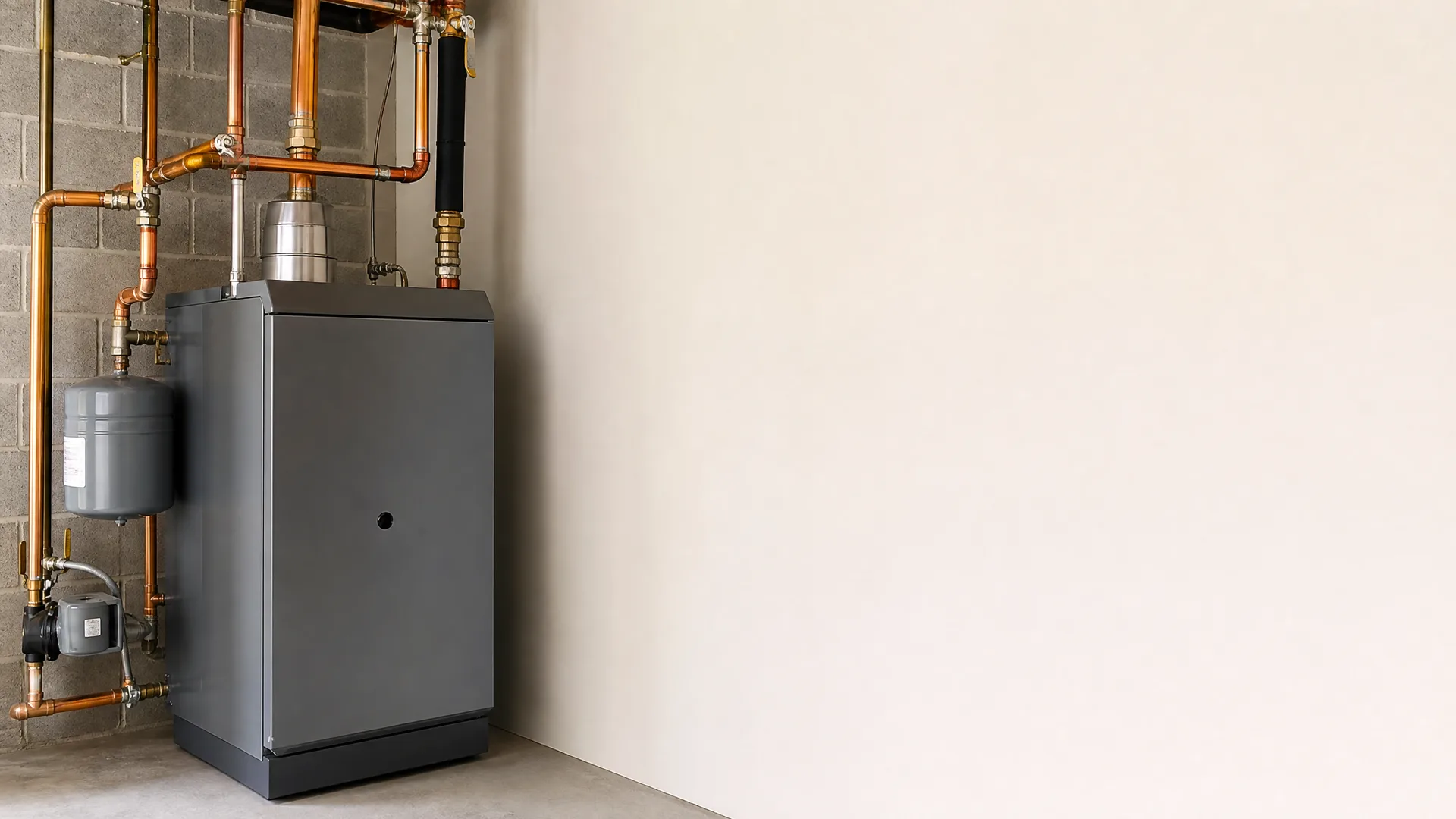
A gray boiler cabinet stands against an interior wall, connected to copper and black pipes and a small expansion tank mounted on a concrete block wall, with a plain beige wall and concrete floor to the right.

Keep paying for repairs

Every call-out adds up, and every winter you wait, the odds of a bigger failure go up too. A circulator pump or a cracked heat exchanger doesn't wait for a convenient week. If it fails on one of those 32°F nights in January, you're without heat until someone can get out to you, and then you're paying for an emergency visit on top of the unit you still need to replace.

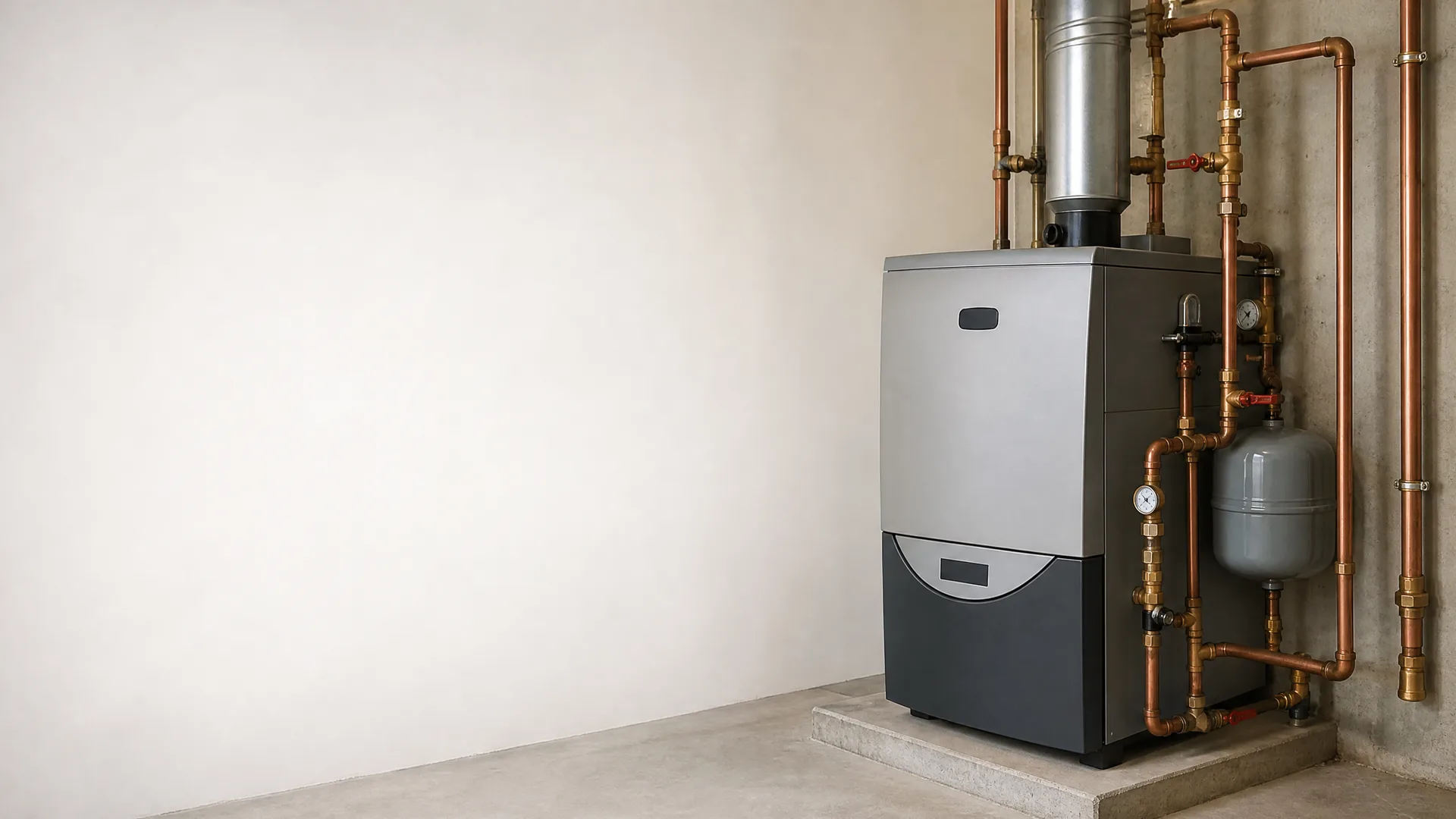
A gray floor-standing boiler on a concrete plinth in a bare room, connected to copper pipes, valves, pressure gauges and a gray expansion tank against a plain wall.

Replace it on your schedule

You pick the week. You compare what a new boiler costs against what you've spent on repairs the last two winters, and you get it installed before the cold sets in, not during it. No scrambling for an emergency contractor in the middle of a cold snap, no space heaters running while you wait. You line up the work, it gets done, and the next 15 to 20 winters aren't a question mark.

A woman in a gray sweater and jeans stands in an open wood front door of a white stucco house while a man in a dark jacket walks toward her on the entry path.

So where does that leave your boiler

If it's past 15 years and you've had a repair call every winter, or you've seen water at the base, the honest answer is replacement, not one more service visit. If it's younger than that and this is the first issue it's given you, a repair is still the right call. The age and what you've seen are the two things that decide it.

Getting the right answer for your own boiler, and the right person to act on it, are two different problems. You don't need to call around El Paso County explaining the same leak or the same banging noise to five different companies and then sort through what each one quotes you. Answer a few questions about what your boiler is doing and you'll be matched with a contractor who works on these systems and knows what a 32°F January night does to them, and they'll reach out to you directly.

A large weathered ceramic vase and a shallow wooden bowl sit on a rustic wooden table beside a window with linen curtains, with a blurred sofa with cushions and a hanging fabric panel in the background.
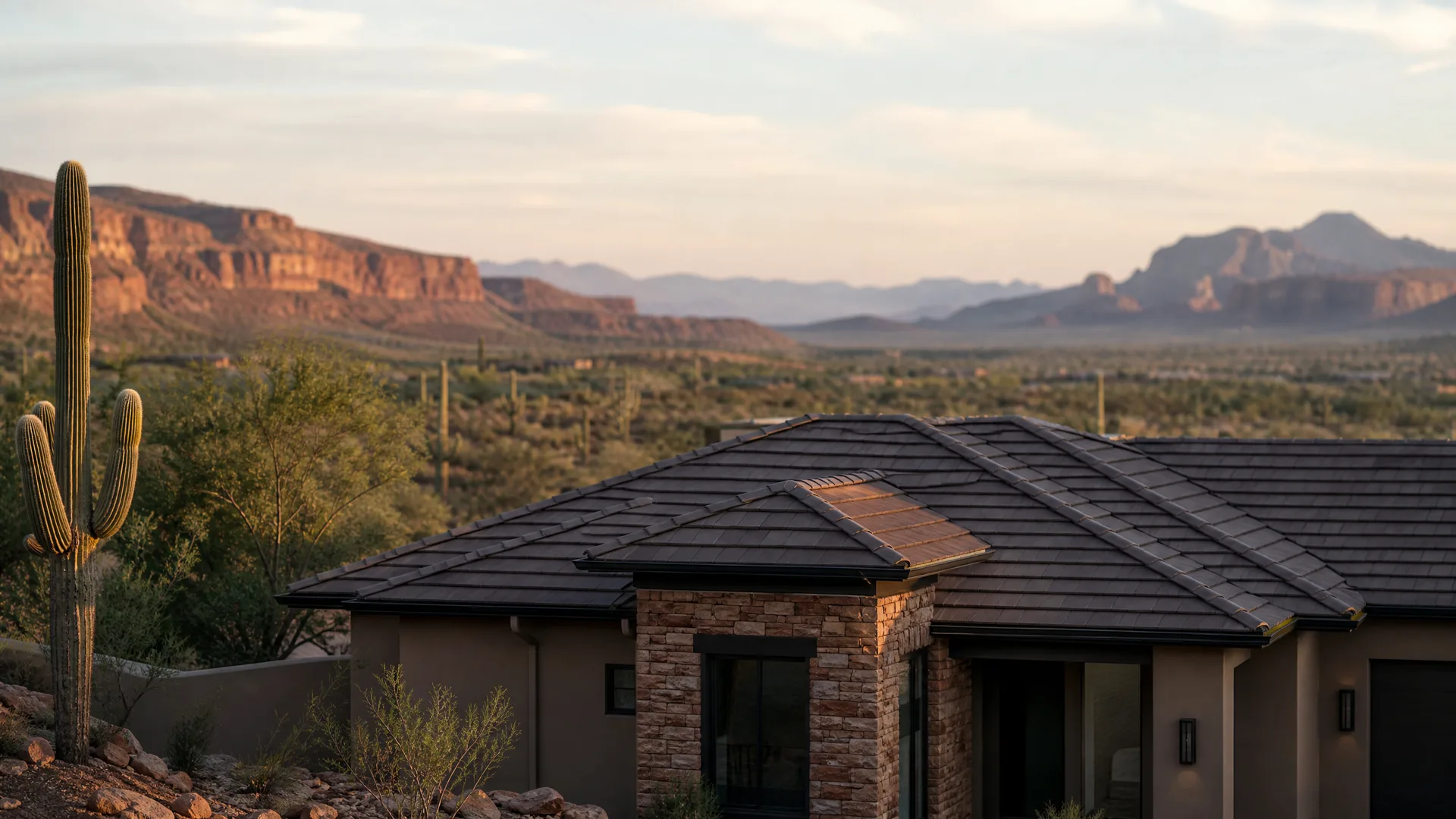
A single-story house with a dark tile hip roof, stucco walls and stone-clad entry, with a saguaro cactus in the left foreground and desert hills and mountains in the background.

Find a boiler installation pro in El Paso County

Skip calling around

There's no charge for the request.

A boiler that fails on a 32°F night doesn't wait for business hours, and finding a contractor at that point means calling around with no way to compare who's actually available. Sending one request now gets you matched ahead of that, while you still have time to decide instead of reacting to a cold house.