








What your boiler pressure should be in Texas

Describe your boiler job, and a local pro who handles it gets in touch.

Get matched

A cold boiler should read somewhere between 12 and 15 psi on the gauge. Once it heats up and the water expands, that number climbs, and 20 psi or so while it's running is normal. If the needle sits below 12 when the system is cold, you're low and need to add water through the feed valve. If it climbs past 25 or 30, or the relief valve is dripping, you have too much pressure and that strains the system over time. Most Texas homes heat with electricity rather than a boiler, so if you have one, it may be older or came with the house, which makes it worth checking the pressure a few times each winter rather than assuming it holds steady. A boiler that's far off in either direction is usually losing water somewhere or has a feed valve that needs attention, and catching it before the cold months you still have ahead means fewer surprises when you need the heat most.

A woman with long gray hair wrapped in a checked blanket sits on a sofa by a window with yellow autumn foliage outside, with a lamp, framed picture and plant in the background.
An older woman in a cream knit sweater sits on a sofa by a window, looking out at sunlit trees with yellow and orange autumn leaves, with a bookshelf and lamp behind her.
A woman with gray shoulder-length hair in a dark knit sweater sits on a cushioned seat by a window, looking out at yellow autumn foliage, with a living room, armchair, houseplant and framed picture behind her.
An older woman with gray hair in a bun, wearing a cream knit sweater, sits on a sofa with a gray blanket and looks out a large window toward yellow-green autumn trees, with a lit table lamp and dark armchair behind her.
A man seen from behind raises his hand to wave at a woman standing in the open front doorway of a single-story house with gray shingle siding, white columns and a gabled porch entry.

What low pressure does to your house

A boiler that keeps losing pressure usually stops heating one room first, often the one farthest from the mechanical closet. You'll notice a bedroom or a back room running cold while the rest of the house is fine, and that's the system struggling to circulate water with less of it in the loop. Let it drop far enough and the boiler shuts itself off rather than run dry, which in Texas means a cold house on the handful of nights you actually need it.

If you're topping off the pressure every few weeks, something is letting water out, whether that's a slow weep at a valve or a fitting that's never been quite right. A contractor who works on boilers in your area all season can usually tell from the pattern, how fast it drops and where the house cools first, what's causing it before they ever take the cover off. Getting matched with one contractor local to you, instead of several competing for the job, means someone looks at your system once and knows what they're dealing with.

A gray upholstered sofa with a textured cushion sits beside a dark round side table holding a vase of green foliage, with a table lamp and sheer-curtained window behind.
  1. Check the gauge only when the boiler is cold.

  2. Find the feed valve that connects to your water line.

  3. Open it slowly until the needle reaches 12 to 15 psi.

  4. Close the valve as soon as it hits that mark.

Boiler Pressure: Normal vs Low

Pressure stays in range

  • The gauge reads 12 to 15 psi cold and climbs to around 20 while the boiler runs, which is where it should sit.
  • Radiators and baseboard loops heat evenly room to room, with no cold spots in the parts of the house farthest from the mechanical closet.
  • The feed valve and expansion tank are doing their job holding water volume steady as it heats and cools.
  • You won't hear the boiler short cycling or see the pressure relief valve weeping, since the system isn't fighting to hold pressure.
  • A technician checking the system during a maintenance visit is looking at a boiler that's running the way it was set up to run.

Pressure drifts low

  • The gauge reads below 12 psi cold, which means the system has lost water somewhere and needs more added through the feed valve.
  • One room, often the one farthest from the mechanical closet, stops getting heat while the rest of the house stays fine.
  • Air trapped in a radiator or baseboard loop can mimic low pressure, so bleeding the loops is worth doing before adding water.
  • A boiler that needs water added every few weeks instead of holding steady points to a leak somewhere in the system, not a gauge problem.
  • Left alone through a Texas winter, a boiler running low keeps losing heat to the same rooms until someone finds where the water is going.
  • A local contractor who services boilers every season knows which fittings and valves in these systems tend to be the ones that let go first.
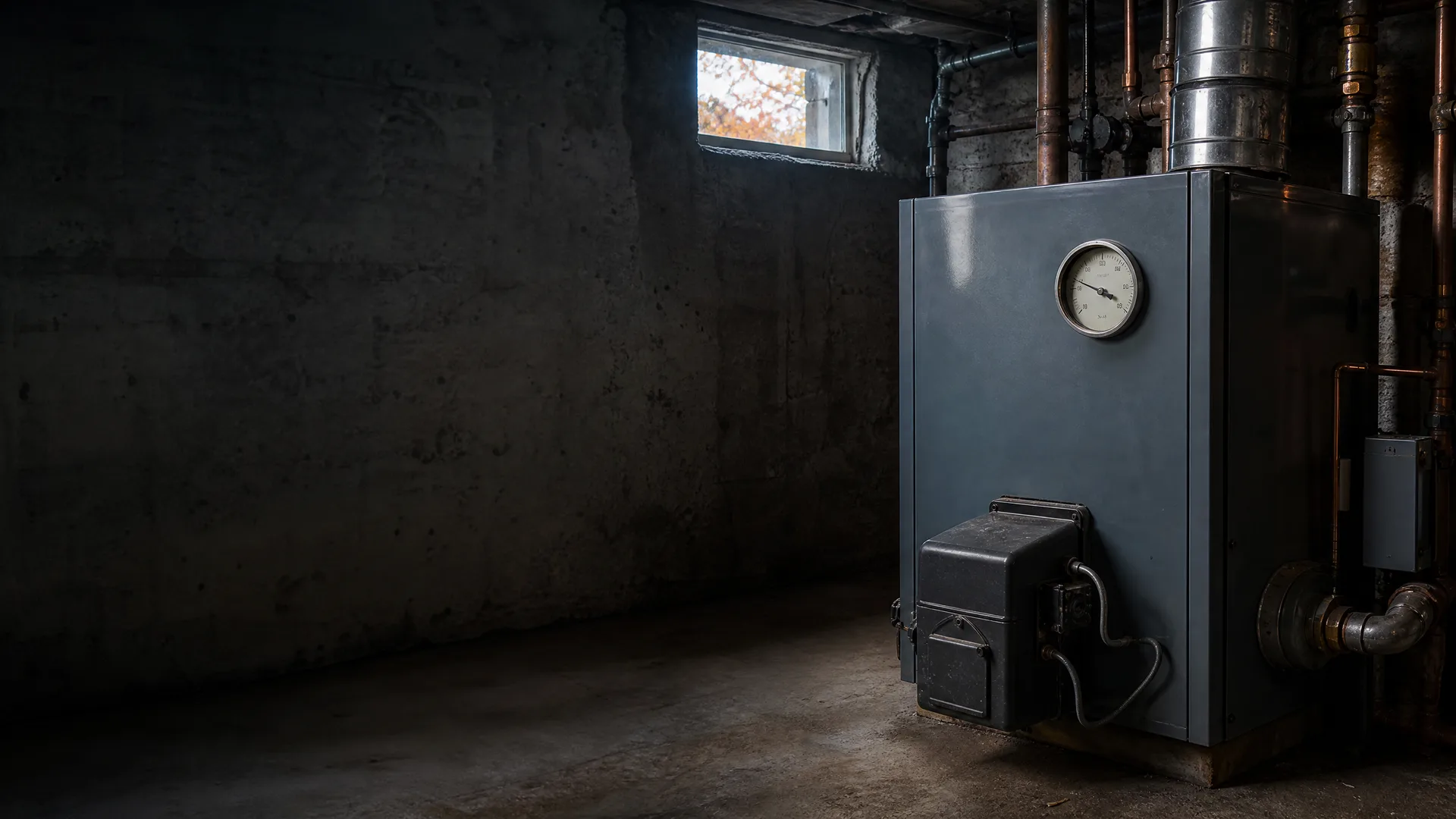
A gray boiler with a round pressure gauge and copper and metal pipes stands in a dim concrete basement lit by a small window.

Outside it's still warm enough for the AC to run most afternoons, but down in the mechanical closet the boiler sits quiet, waiting on the first cool snap. You crouch down to check it the way you do every fall, and the gauge needle is resting under 12, closer to 8. The glass over the dial has a thin film of dust on it from sitting untouched since spring. You tap it once out of habit. The needle doesn't move. Upstairs the house is still warm from the electric heat strip carrying things for now, so nothing feels wrong yet, but you know this is the number that decides whether the back bedroom gets heat once the real cold gets here.

A local pro for your boiler maintenance

Only one pro gets your request, so you hear from one company.

It costs nothing to send, and you don't have to hire anyone.

Why the gauge moves at all

Water expands when it heats up, and a boiler is a sealed loop, so that expansion has nowhere to go but into the pressure reading. That's why a cold reading of 12 to 15 psi climbs toward 20 once the burner's been running a while. The gauge isn't telling you something is wrong when it rises through the day. It's doing what a closed system full of heated water is supposed to do. The number to watch is the cold one, first thing before the boiler has fired.


What the relief valve is for

Every boiler has a pressure relief valve set to open around 30 psi, well above where a normal system ever runs. It exists for the rare case where pressure keeps building past where it should, venting water out before anything in the system gets stressed. If you ever find that valve has discharged, something pushed the pressure higher than the usual cold-to-running climb accounts for, and that's worth a contractor looking at, not something to just reset and ignore.

A woman in a cream knit sweater sits in an armchair with her eyes closed and a slight smile, beside an open window showing orange autumn foliage, with a mug, books and a lit candle on a small side table.
An older man with gray hair and a beard leans back on a beige sofa with his eyes closed, in a sunlit room with potted plants, a wicker chair and large windows behind him.
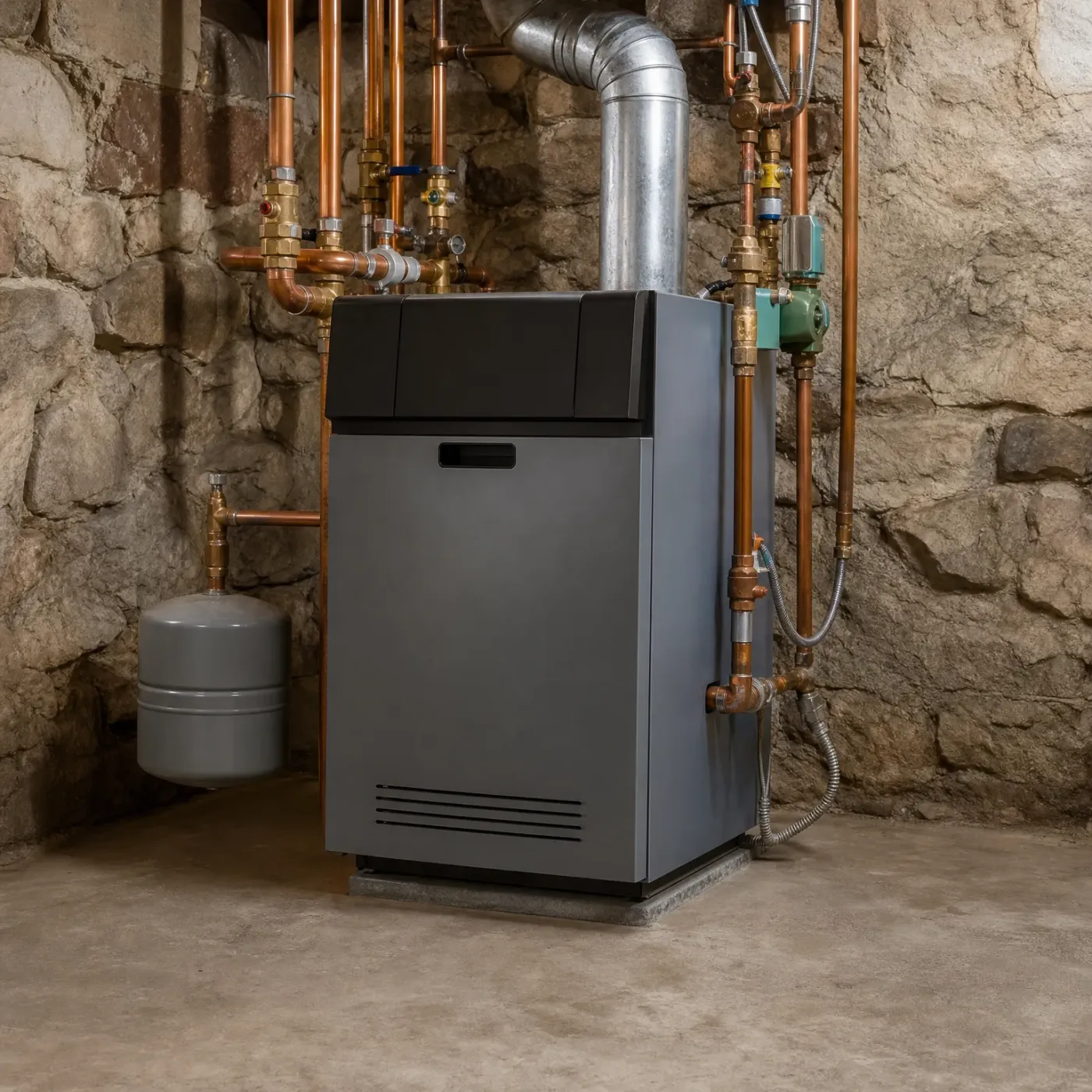
A gray residential boiler on a concrete pad in a basement with stone walls, connected to copper piping, brass valves, a circulator pump, an expansion tank, and a metal flue duct.
A boiler holding correct pressure keeps its full loop of pipes and valves doing its job, cold readings near 12 to 15 psi and steady.
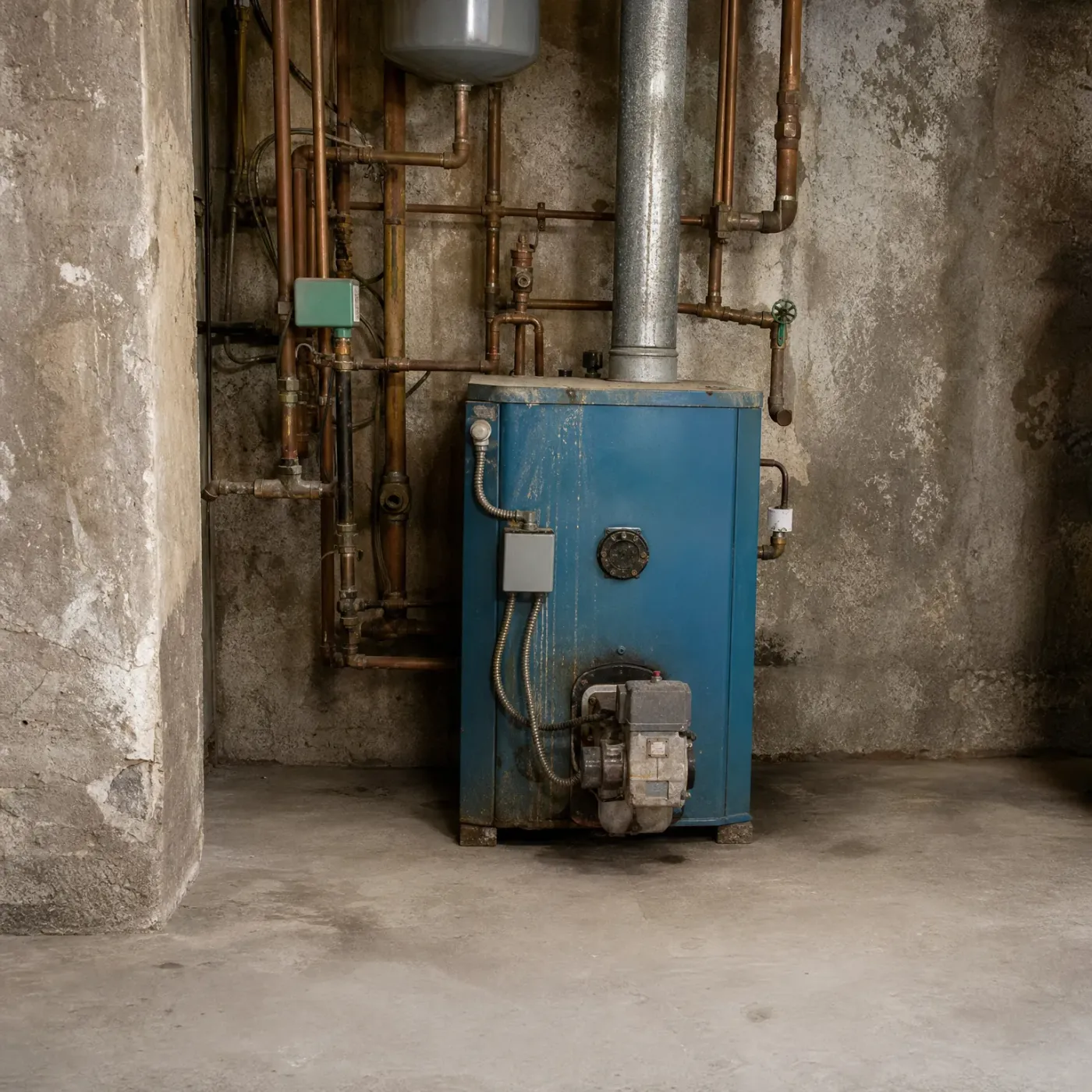
A blue cabinet boiler with a metal flue pipe and copper piping stands against a bare concrete wall in a basement with a concrete floor.
An old boiler with a corroded flue and bare fittings is where pressure trouble tends to show up first, the gauge drifting low between checks.

Winter nights average 41°F statewide

Winter nights here average 41°F, so your boiler isn't working against the kind of hard freeze that stresses a pressure system. Mild nights mean steadier pressure, but check that cold reading before the first real cold snap arrives anyway.

NOAA nClimDiv 1991-2020 county normals weighted by homes

Where your gauge should sit

  • A cold reading between 12 and 15 psi is correct, and a number outside that range is the one thing worth checking before cold weather sets in.
  • Letting the pressure drift is what causes a back room to run cold while the rest of the house heats fine.
  • The fix is usually the feed valve, opened slowly until the needle settles back in range, then closed.
  • A technician who services boilers in Texas all year knows which fittings and flues tend to fail first on an older unit.
  • Matching you with one licensed local contractor means a single call back from someone who already knows what to look for, not a string of unrelated quotes.
  • Checking the gauge now, before the first cold snap, is a small step that keeps the whole house heating evenly through winter.

Cold, the needle belongs between 12 and 15 psi. That single number is what this whole page comes back to, and checking it now, before the first cold snap, tells you whether winter will start even or start with a cold back room. Pressure that drifts low doesn't announce itself. It shows up as one part of the house falling behind while the rest of the rooms heat the way they should, and by the time you notice, the feed valve has probably needed attention for a while. Opening that valve slowly until the gauge settles back between 12 and 15, then closing it, is most of what the fix involves. The harder part is knowing which fittings and which flue connections on your particular unit tend to go first, and that's where a contractor who works on boilers in Texas all year earns the call. Someone who sees this equipment every winter has a sense for what fails on an older system before it actually fails. When you request service through this page, you're matched with one licensed local contractor, not a handful of unrelated companies competing for your number. That means one callback from someone who already knows what questions to ask about your boiler, not a pile of quotes to sort through. Check the gauge while it's quiet and still cold outside. If it's holding in range, you're set for winter. If it's not, that's the one thing worth getting looked at before the first real cold night arrives.

At dusk, a dark board-and-batten house with a standing-seam metal roof and lit entry walkway of stone pavers, with two large outdoor heat pump units on a stone-walled pad at right and trees and hills in the background.

Boiler Maintenance

Get the right pro for your boiler

Step 1 of 3: Equipment
  • A brown leather and wood armchair with a cream knit throw sits in a corner beside a woven basket holding a dark cushion, under a framed mountain photograph, with a wood-trimmed window showing yellow and green foliage.
    • A local pro who services boilers gets in touch about the tune-up.
  • A dark wood dresser against a pale wall holds a ceramic vase of eucalyptus branches, a stack of books with a wooden bowl, and a woven basket, with a framed landscape painting above and a woven basket holding a knit blanket on the floor beside a window.
    • Send the form, and lining up the boiler tune-up stops being yours to chase.
    • Send the request and finding a pro stops being your problem.
  • A window seat with beige linen and brown textured cushions, a chunky knit blanket, and an open book, beside a window showing blurred yellow autumn foliage.
    • Answer a few questions instead of calling shop after shop.
    • Describe your boiler job once, to one pro.
  • A cream upholstered armchair with a rust-colored pillow and knit fringed throw sits beside a window with a ceramic vase of orange-leafed branches on the sill, overlooking autumn trees and leaf-covered ground.
    • A licensed local pro takes the request for your boiler tune-up.
    • Your request goes to one pro, not a list of companies.