Signs your boiler won't last a Texas winter

Tell a local repair pro what your boiler is doing.

Get a local pro

What are the signs my boiler won't make it through winter?

A few cold nights in and you're already hearing things from the boiler, or it's running longer than it used to to get the house warm. With most Texas homes heating on electricity, a boiler is already the exception in the house, and when it starts acting up, you want to know if it's a quick fix or if it's telling you something bigger before the next cold snap hits.

Banging, leaking, or short cycling means it may not hold up this winter

Kettling noises, water pooling at the base, or the burner kicking on and off too fast are the clearest warnings. Kettling means scale has built up inside and the boiler is working harder to heat the same water. A leak usually means a seal or fitting has given out under pressure. Short cycling points to a problem with the pressure or the controls, and each cycle adds wear it won't recover from. Winters here don't test a boiler the way they would further north, but a system already struggling in October won't get easier to run in January. Once any of these show up, the question isn't whether the boiler needs attention, it's how much longer it can be put off.

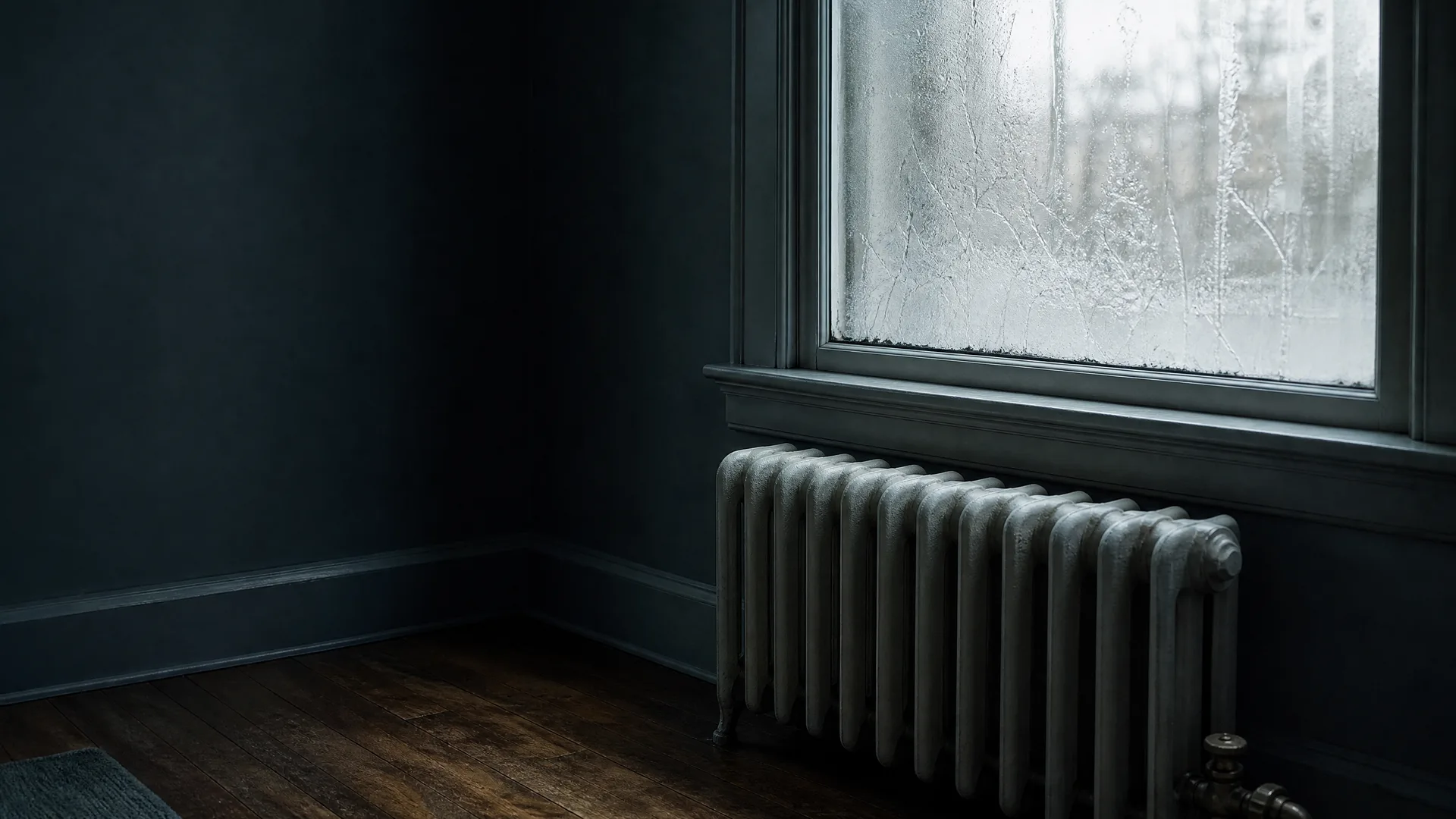
A cast iron column radiator under a condensation-covered window in a dim room with dark walls, dark baseboard trim and a worn wood floor.

You wake up before the house is warm, which tells you something by itself. Outside it's a cold snap morning, the kind Texas gets a handful of times each winter, and the radiator under the window has gone quiet instead of ticking the way it usually does. Ice has formed on the inside of the glass. You put a hand on the cast iron and it's barely warm at the top, cold at the bottom. Somewhere down in the basement or the closet, the boiler is running, you can hear it, but the heat isn't making it to this room anymore. You stand there in the cold a minute before you go check on it.


Will Your Boiler Survive Winter

Signs it will

  • It fires up, reaches temperature, and shuts off the way it always has, even on the coldest mornings.
  • The radiators heat evenly from room to room instead of one staying cold while another scorches.
  • No rust-colored water comes out when a radiator valve is bled, and no puddling shows up near the base of the unit.
  • The pressure gauge holds steady instead of needing to be topped off every week or two.
  • It runs quietly, without the banging or kettle-like sounds that come from sediment buildup inside.
  • A contractor who has looked at it recently found no cracks in the heat exchanger or failing parts.

Signs it won't

  • It short cycles, turning on and off every few minutes instead of running a full heating cycle.
  • One or more radiators stay cold no matter how long the system runs.
  • Rusty water or sludge comes out when you bleed a radiator, a sign of corrosion inside the pipes.
  • The pilot light or igniter keeps going out on its own, especially on the coldest nights.
  • You smell something metallic or see water pooling around the boiler itself.
  • It struggles to keep up during a cold snap and never quite gets the house to temperature.
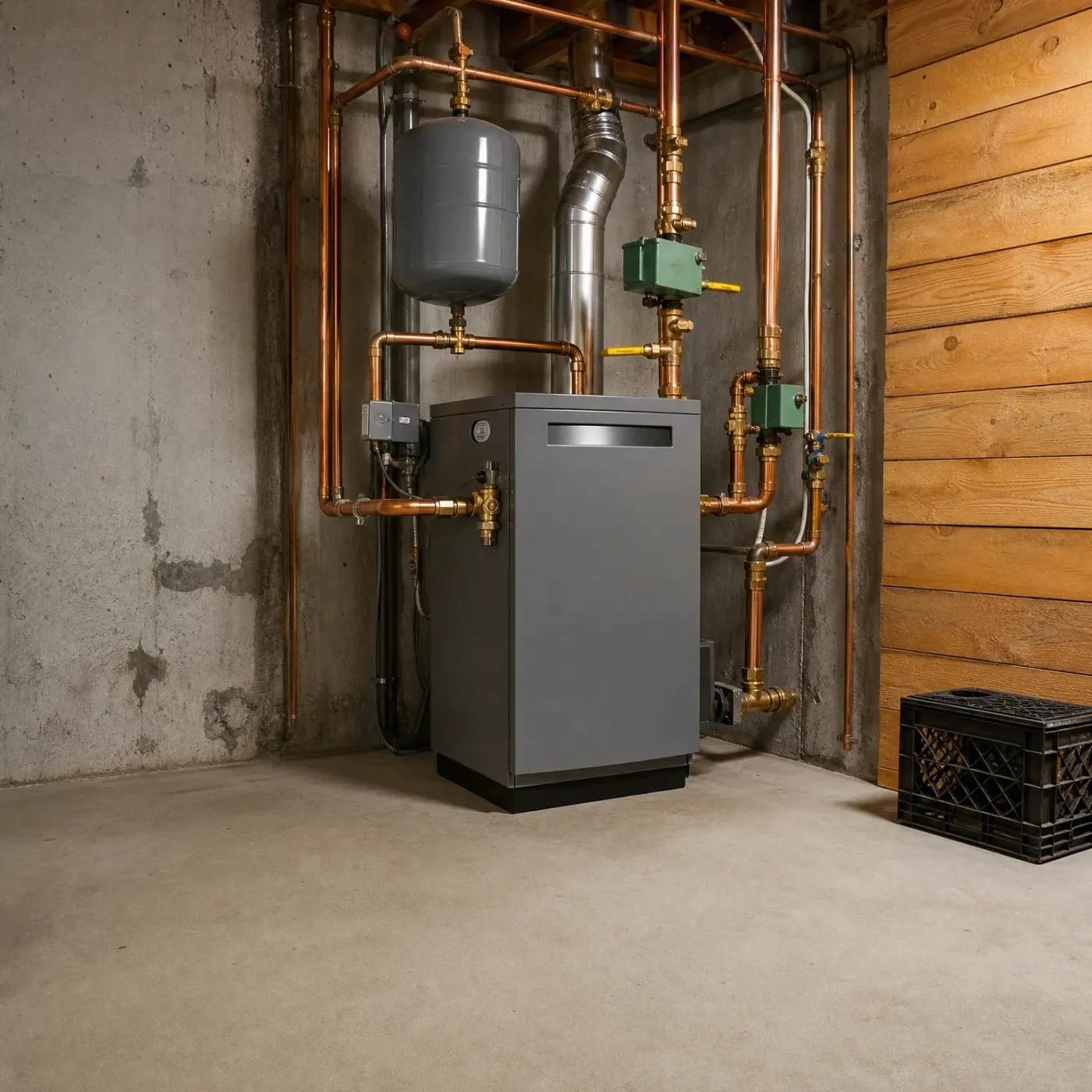
A gray boiler unit in a basement corner with copper piping, brass valves, a gray expansion tank, a metal flue duct, concrete walls and a wood-paneled wall, with a black plastic crate on the floor at right.

Running the way it should

This is what steady looks like. The boiler ties into its zone valves and circulators without a leak anywhere along the copper, and the expansion tank holds pressure the way it's supposed to. Nothing on that wall needs a second look before the cold gets worse.

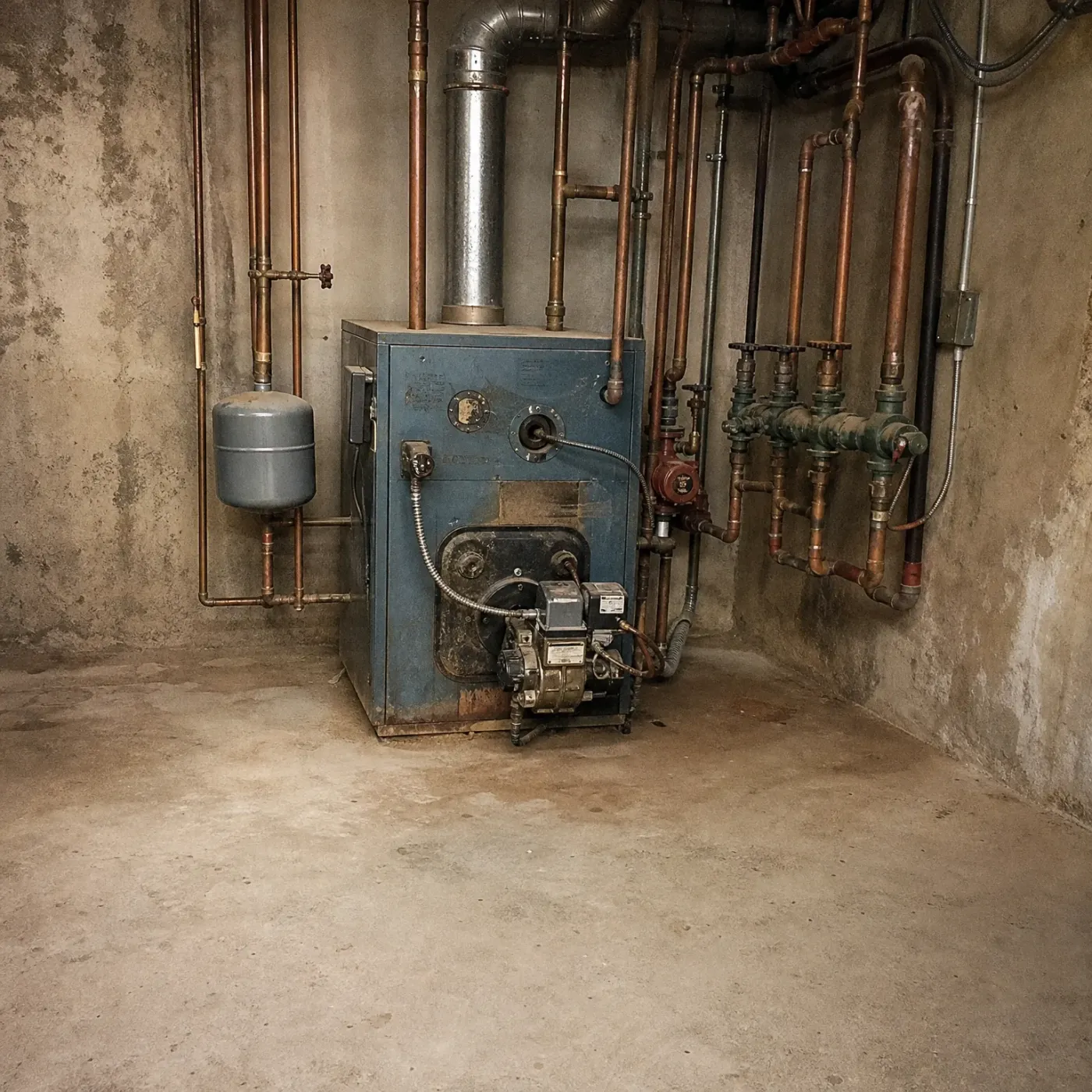
An older blue boiler with a burner unit stands in a concrete basement corner, connected to copper and steel piping, valves and a gray expansion tank on the wall.

Past its working life

This is an old oil-fired boiler, and it shows. The flue pipe is galvanized steel, not stainless, and rust like that doesn't stay put. If yours still looks like this when a hard freeze hits, a circulator or valve failing overnight is the kind of thing a repair call needs to catch first.

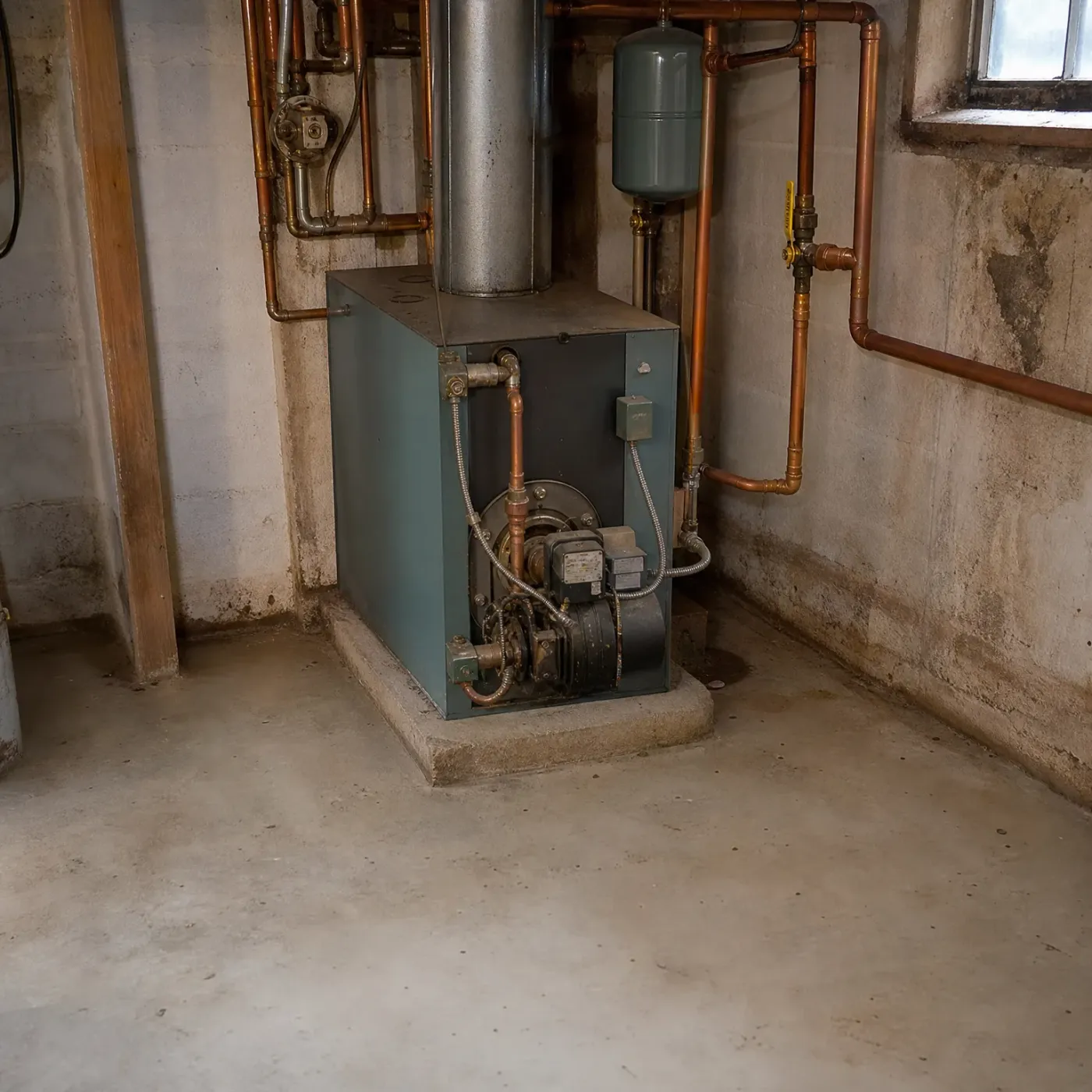
A green oil-fired boiler with a flue pipe, burner and circulator pumps sits on a concrete pad in a basement corner, surrounded by copper piping and an expansion tank against concrete walls.
Before you get your boiler repair
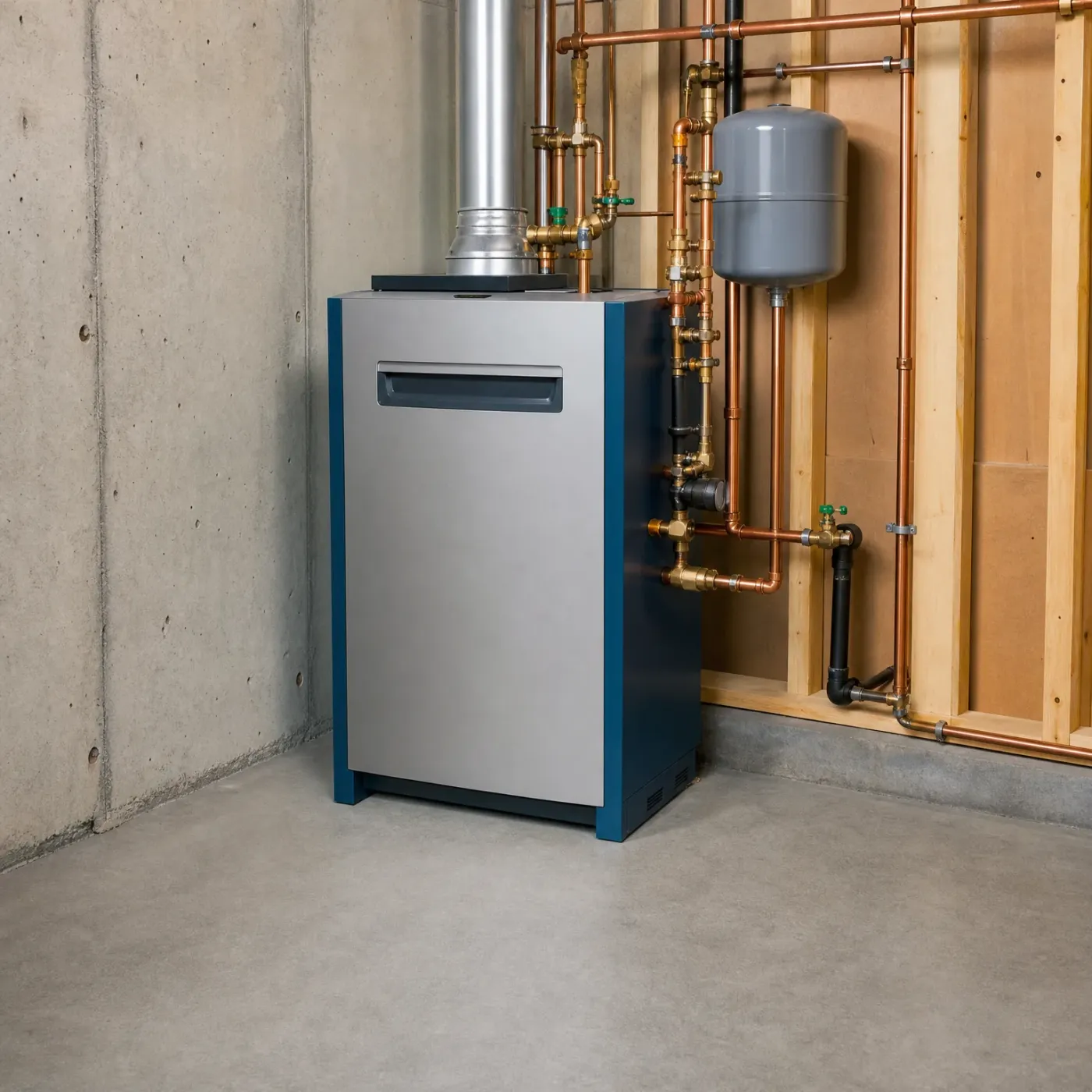
A gray and blue floor-standing boiler in a basement corner, with a metal flue pipe and copper and black piping, valves, and a gray expansion tank mounted on an unfinished wood-framed wall beside a concrete wall.
After you get your boiler repair

A pro who works on boilers

Fill out one short form instead of calling around.

No charge to send it. You decide if you hire them.

A boiler that's losing the fight usually short cycles first. It fires, runs a few minutes, shuts off before the water gets hot, then fires again. The thermostat reads a temperature the house hasn't actually reached yet.

Short cycling wears the ignition parts and the heat exchanger faster than steady runs do, so the pattern that seems minor now is what shortens what's left of the boiler's life.

A smiling woman with dark shoulder-length hair in a cream V-neck sweater sits at a marble counter with a glass of red wine, with a kitchen and softly lit living room behind her.
A woman in a dark green sweater laughs while seated at a marble kitchen island with a glass of red wine, with open shelving, cabinets and a living room visible behind her.
A woman with long dark hair in a cream knit sweater laughs while looking off to the side, seated at a counter with a glass of red wine, in a dimly lit living room with a sofa, lamp, framed pictures and houseplant behind her.
A smiling woman with long dark hair in a beige sweater sits at a marble kitchen counter with a glass of red wine, with a dimly lit living room behind her.

Riding it out one more winter

If the boiler still reaches temperature on its own and the only issue is a strange noise now and then, a repair can carry it through the cold months that are left. Texas winters are short enough that a boiler with one weak part, not several, often makes it to spring without a bigger failure. That buys time to plan a replacement on your schedule instead of in a January cold snap, and it means one call instead of pricing out contractors while the house is cold and the pipes are at risk.

Calling it before it fails

If the boiler is short cycling, leaking at a joint, or needs a repair for the second time this winter, waiting usually costs you a night with no heat and a scramble to find someone who can come out fast. A boiler that's failing in more than one way at once is telling you it's done compensating. Getting matched with a contractor now means the diagnosis, the scheduling, and the comparing of quotes happen before the next cold front, not during it, while you're the one sitting in a cold house.

Winter nights average 41°F statewide

41°F is the average overnight low here in December and January, not a one-off cold snap. That's a steady stretch of nights your boiler has to answer, and a unit already struggling won't get many nights off to recover.

NOAA nClimDiv 1991-2020 county normals weighted by homes

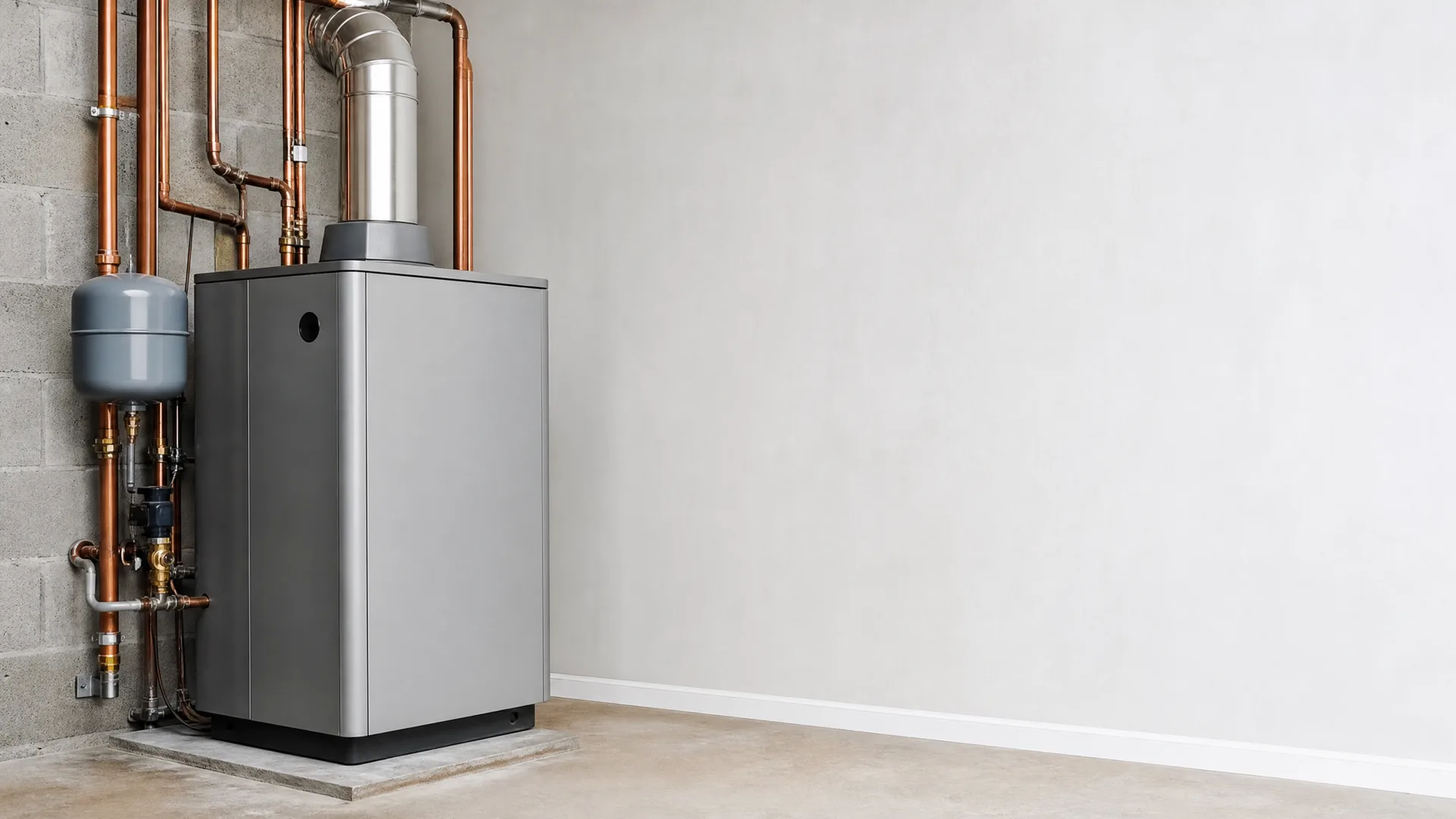
A grey floor-standing boiler with a metal flue and copper pipework and an expansion vessel stands against a concrete block wall beside a plain light-coloured wall.

Waiting on a repair call

Right now the noise or the short cycling is a problem you're living with every evening, and on top of that there's the work of fixing it. You'd be searching up boiler repair in your area, calling a few, explaining what the radiator's doing and what the thermostat says, then trying to line up the quotes against each other. That's hours you don't have on a cold week, spent before anyone's even looked at the boiler.

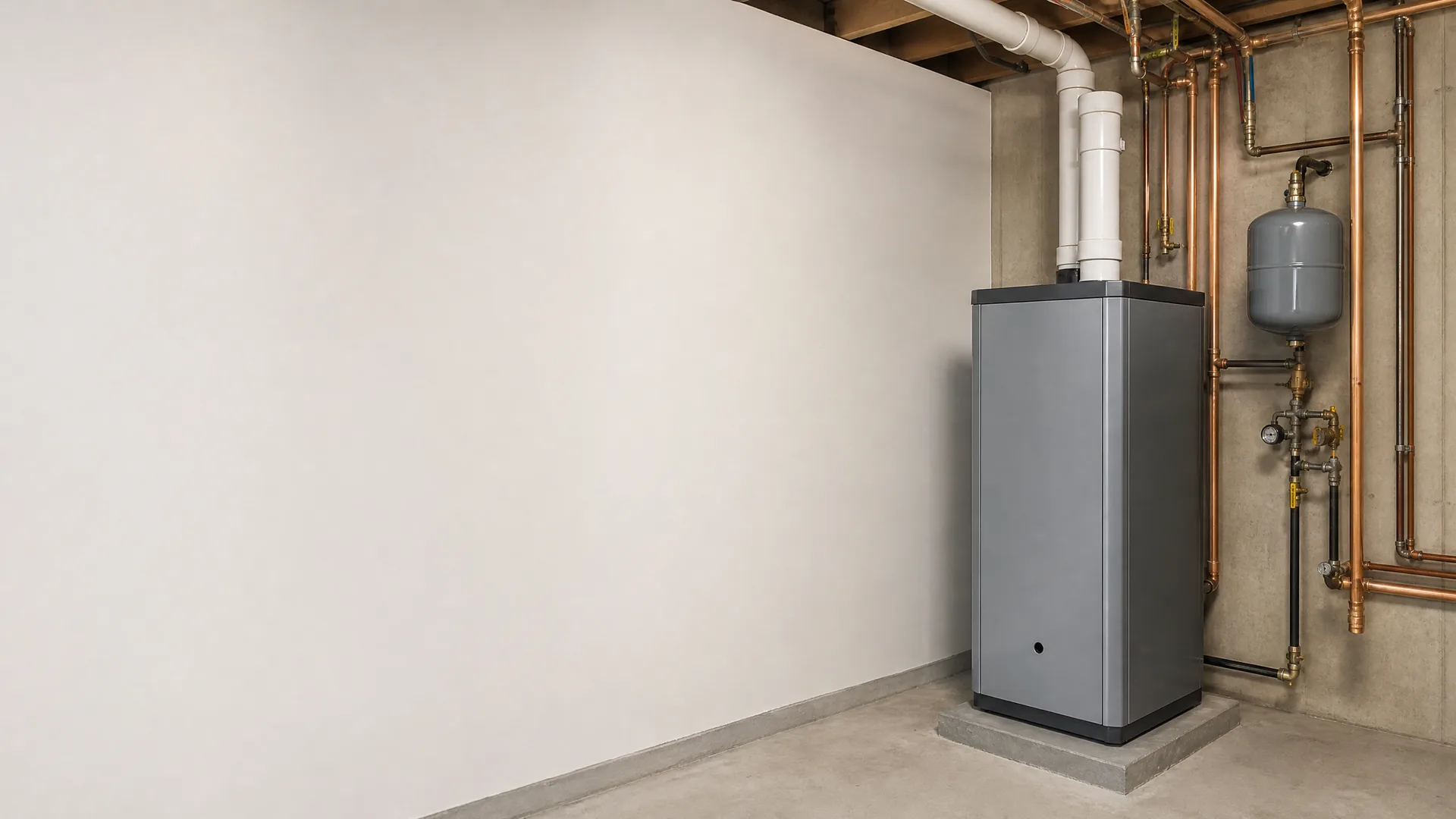
A gray boiler unit on a concrete pad in a basement corner, with white PVC flue pipes, copper piping, and a gray expansion tank on the wall behind it.

Matched with someone who knows it

Once you're matched with a contractor, the explaining is done once. They already know you've got a boiler, where you are, and what you described about the noise or the cold radiator, so the call is about getting to your house, not sorting through who even works on boilers. The searching and comparing is the part that goes away. What they find when they get there, and what it takes to fix, is still ahead of you.

A boiler that short cycles, rusts at the pressure relief valve, or needs a cold start every morning is telling you how this winter goes if nothing changes. The nights here sit around freezing from December through January, and a boiler already struggling doesn't get many of them to rest. One worn part can still be worth repairing if the rest of the system is sound. A boiler that can't hold temperature on its own isn't going to get better on its own either. Right now that means evenings spent listening to it cycle, and if you let it go, it means searching for a boiler repair contractor, calling around to see who answers, explaining the noise and the short cycling again to each one, and weighing quotes against each other while the house stays cold. Getting matched with a contractor who knows this equipment skips all of that. You answer a few questions once, and someone who handles boiler repair in Texas reaches out to you directly, already knowing what you're dealing with.

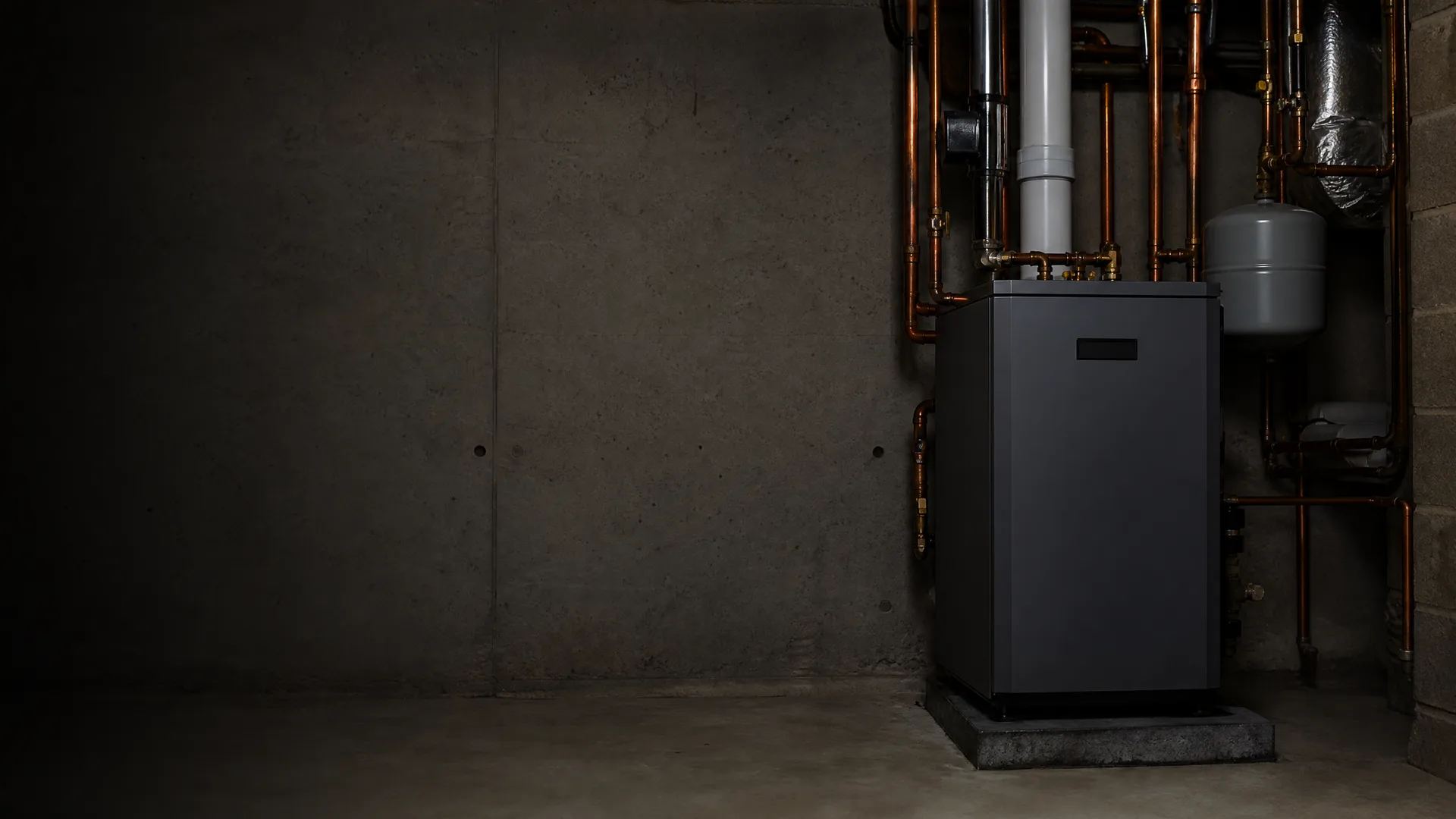
A dark gray boiler unit on a concrete pad in a basement, with copper piping, a metal flue pipe, and an expansion tank against a bare concrete wall.

Get your boiler to the right pro

Explain the job once and skip repeating it on every call.

Step 1 of 3: Equipment