




Profile view of a bearded man wearing a dark green baseball cap and a dark gray T-shirt against a plain light background.

Is a high-efficiency boiler worth it in Texas

Step 1 of 3: Equipment

For most homes in Texas, a high-efficiency boiler is not worth the cost. Boilers heat water for radiators or baseboard heat, and most homes here don't have that kind of system at all. They heat with electricity, usually a heat pump or electric furnace moving warm air through ducts. Winters in Texas are short and mild, so the furnace or heat pump runs only a few months a year, and there isn't enough heating load to earn back what a high-efficiency boiler costs over a standard model, let alone over the ductwork swap it would take to even use one. If your home already has a boiler and hot water radiators, replacing an old one with a newer, more efficient unit can still make sense, since it cuts the gas or electricity used to heat that water. But installing a boiler system where none exists just to chase efficiency isn't something the climate here asks for.

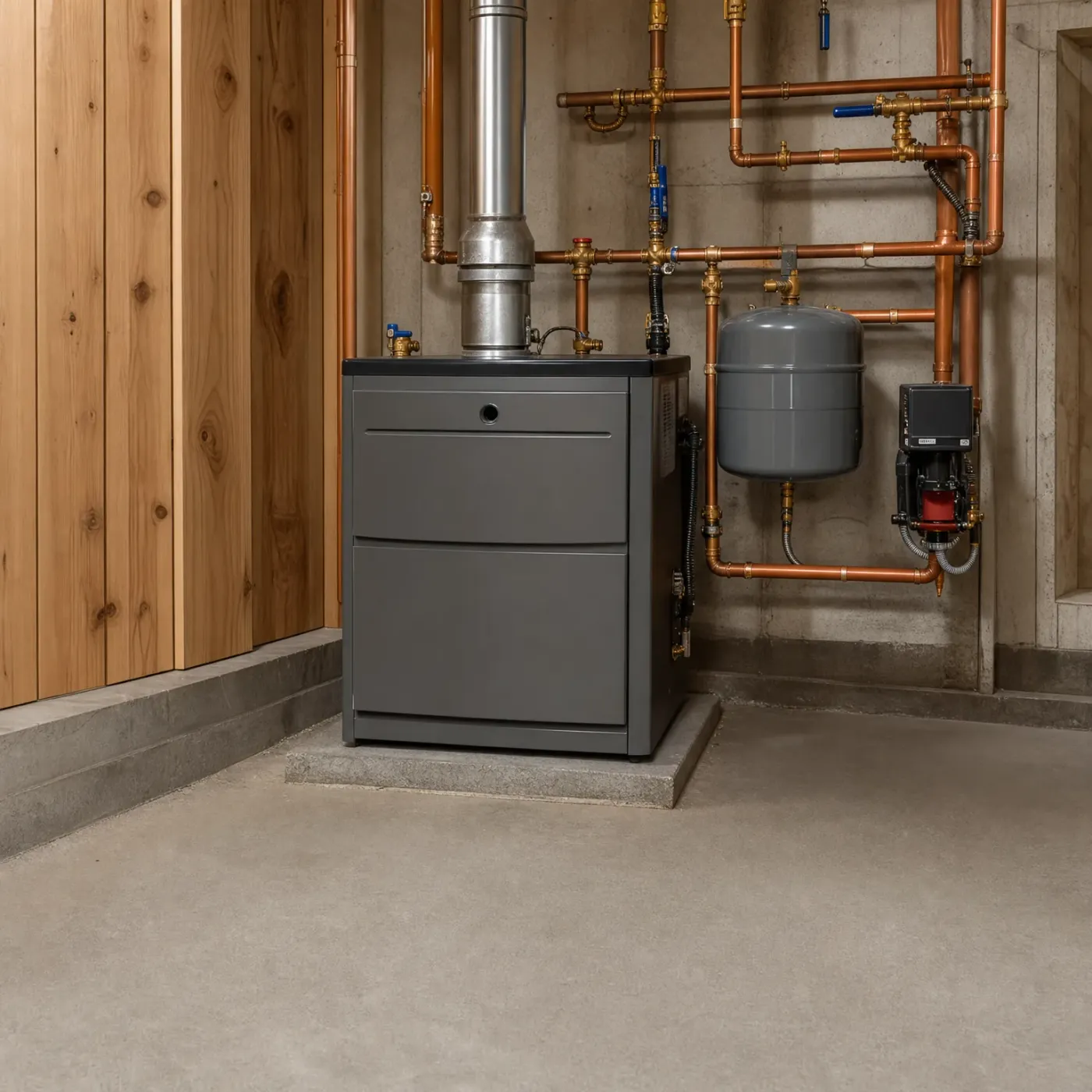
A gray boiler on a concrete pad in a basement, with a metal flue pipe and copper piping, brass valves, a gray expansion tank and a circulator pump mounted on the concrete wall beside wood paneling.
A boiler like this one already has a full loop of pipes, a pump, and a working flue, so a high-efficiency replacement has somewhere to go.
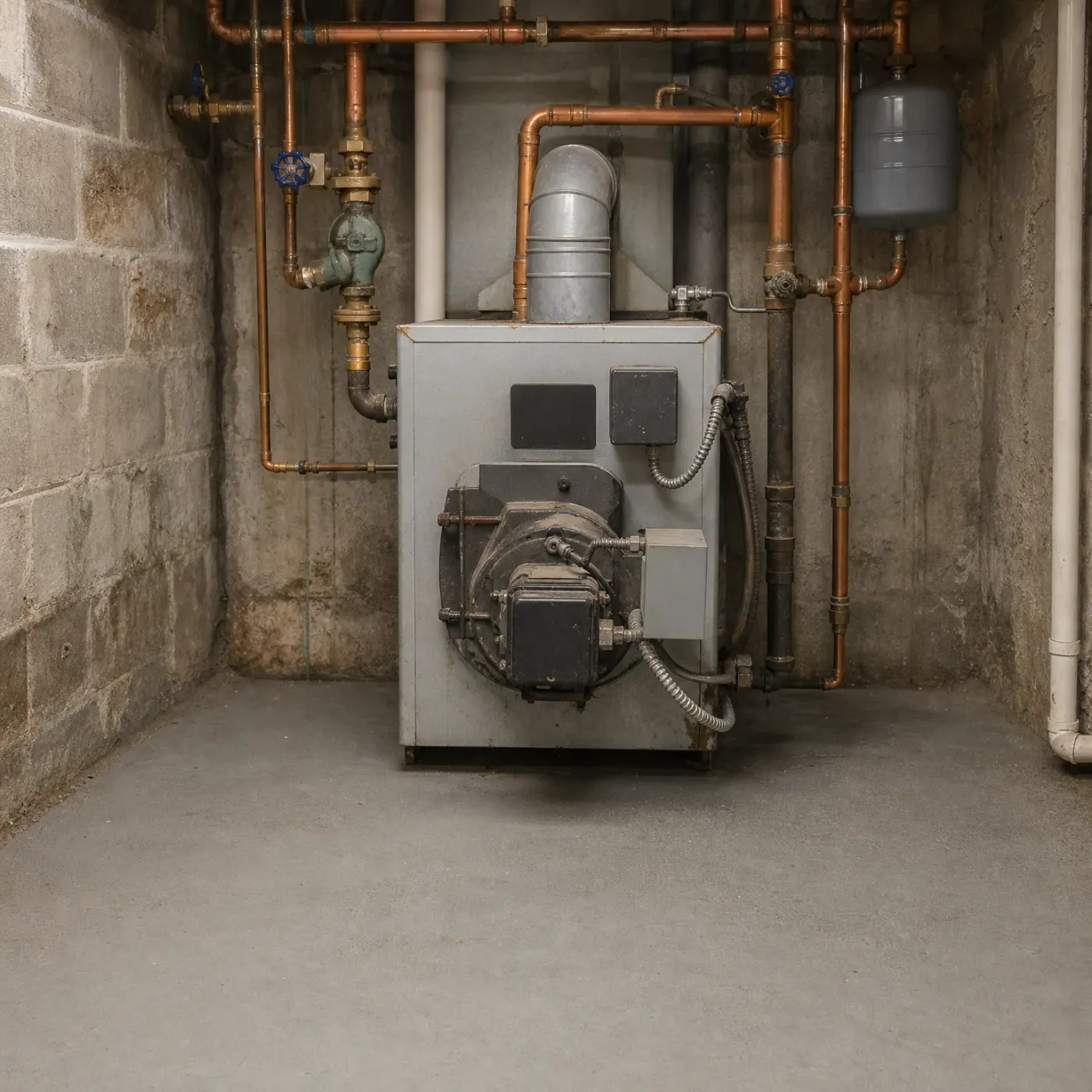
A gray boiler with a flue pipe and burner unit stands against a concrete block basement wall, surrounded by copper and steel piping, valves, and a gray expansion tank, on a bare concrete floor.
A gas or oil boiler with no ductwork beside it means a high-efficiency unit saves on a fuel this house barely burns.

How a Condensing Boiler Works

  • A boiler heats water in a sealed loop and sends it to radiators or baseboard units, not through ducts.
  • A standard boiler burns gas or oil at around 80 percent efficiency, while a high-efficiency condensing model recovers heat from the exhaust and runs in the mid-90s.
  • That recovery happens in a second heat exchanger, where the condensing unit cools the flue gas enough to pull extra heat out before it vents.
  • Condensing boilers vent through PVC pipe out a side wall instead of a traditional metal flue, since the exhaust runs cool enough for plastic.
  • The efficiency gain only pays back by cutting fuel use, so a boiler that barely runs through a Texas winter has little fuel cost to cut.
  • A boiler heating a slab or a few rooms year round burns fuel often enough that the higher upfront cost has something to work against.

A boiler doesn't push air through ducts. It heats water in a closed loop and sends it out to radiators or baseboard units, then draws it back to be heated again. A standard boiler burns gas or oil and sends the exhaust straight out a metal flue, keeping around 80 percent of the heat it produces. A high-efficiency condensing boiler adds a second heat exchanger that the exhaust passes through before it leaves the house. That second pass cools the flue gas enough to wring more heat out of it, which is why these units run in the mid-90s instead of the low 80s. The exhaust ends up cool enough that it doesn't need a metal flue at all. It vents through PVC pipe out a side wall, which is also why condensing boilers are easier to place in a home that wasn't built around one. None of this changes what the boiler is for. It still only saves money by cutting fuel use, so the gain only shows up if the boiler is actually burning gas or oil on a regular basis. A boiler running a slab or a handful of rooms through a Texas winter burns enough fuel that the higher efficiency has real work to do. One that sits idle most of the year, because the house heats with electricity instead, has little fuel cost left for a condensing unit to cut into.

An older woman with gray hair in a cream knit sweater sits under a blanket on a sofa by a window, looking outside toward yellow-leaved trees, with a lamp, shelves and an armchair in the room behind her.
A gray-haired woman in a chunky knit sweater sits in an armchair with a blanket, looking out a window at yellow autumn foliage, with bookshelves and a potted plant behind her.
A gray-haired woman in a navy sweater sits in an armchair with a knit blanket beside a window, looking out at yellow autumn foliage, with a dining table and houseplant in the room behind her.
A gray-haired woman in a gray cowl-neck sweater sits in an armchair with a blanket, looking out a dark-framed window toward yellow autumn trees.

Get the right pro for your boiler

Skip collecting and comparing quotes for the new boiler.

You only hire the pro if you want to.

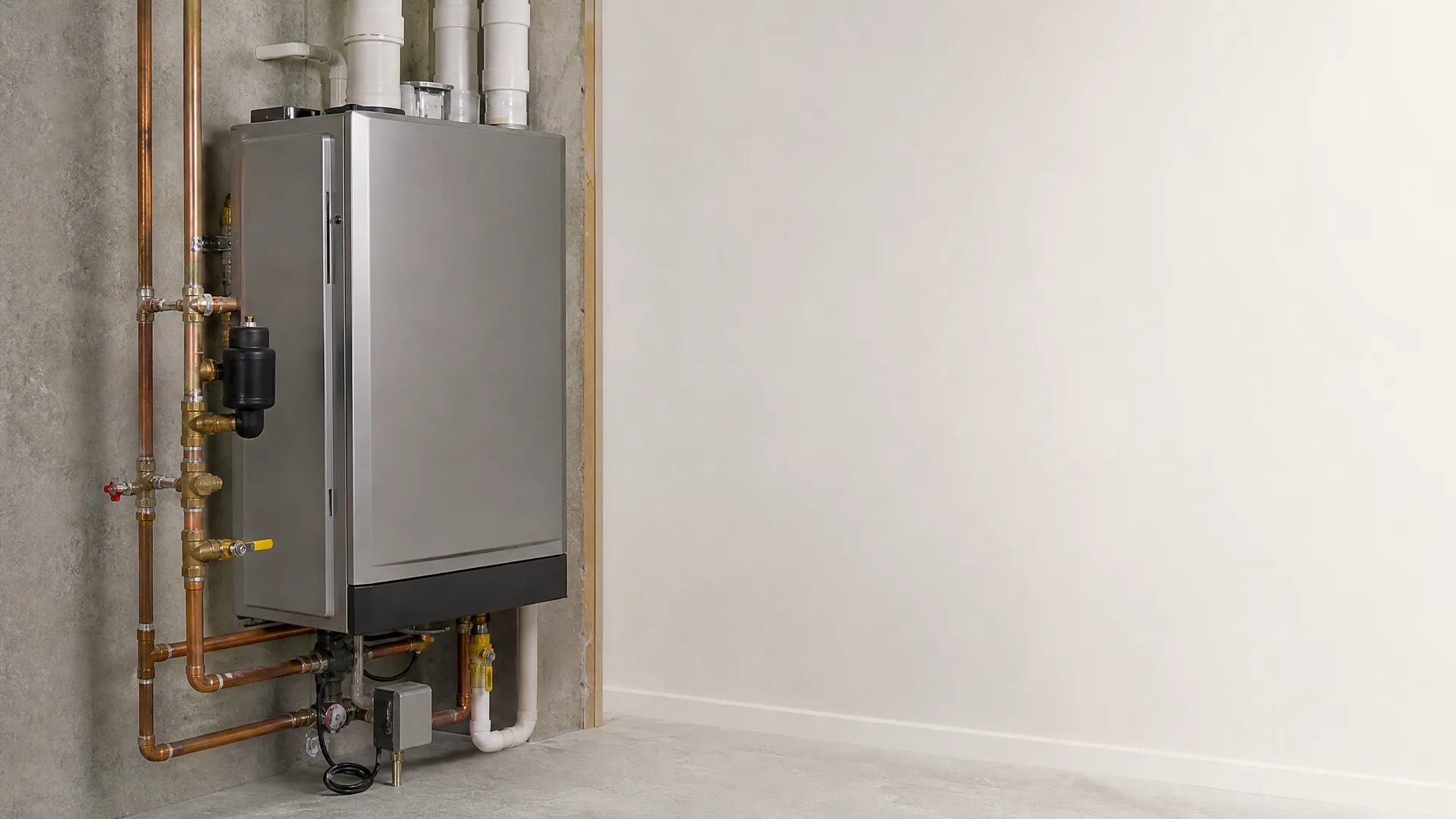
A wall-mounted grey boiler with copper pipework and white flue pipes installed against a concrete wall in an empty room with a plain pale wall to the right.

Why the flue size matters

A standard boiler vents hot exhaust straight up through a metal flue. A condensing boiler cools that exhaust so much it has to drain as water, so it vents through plastic pipe instead, often straight out a side wall. Swapping one for the other means running new venting, not just connecting to the old pipe. If your house already has a boiler, that work is part of any install.

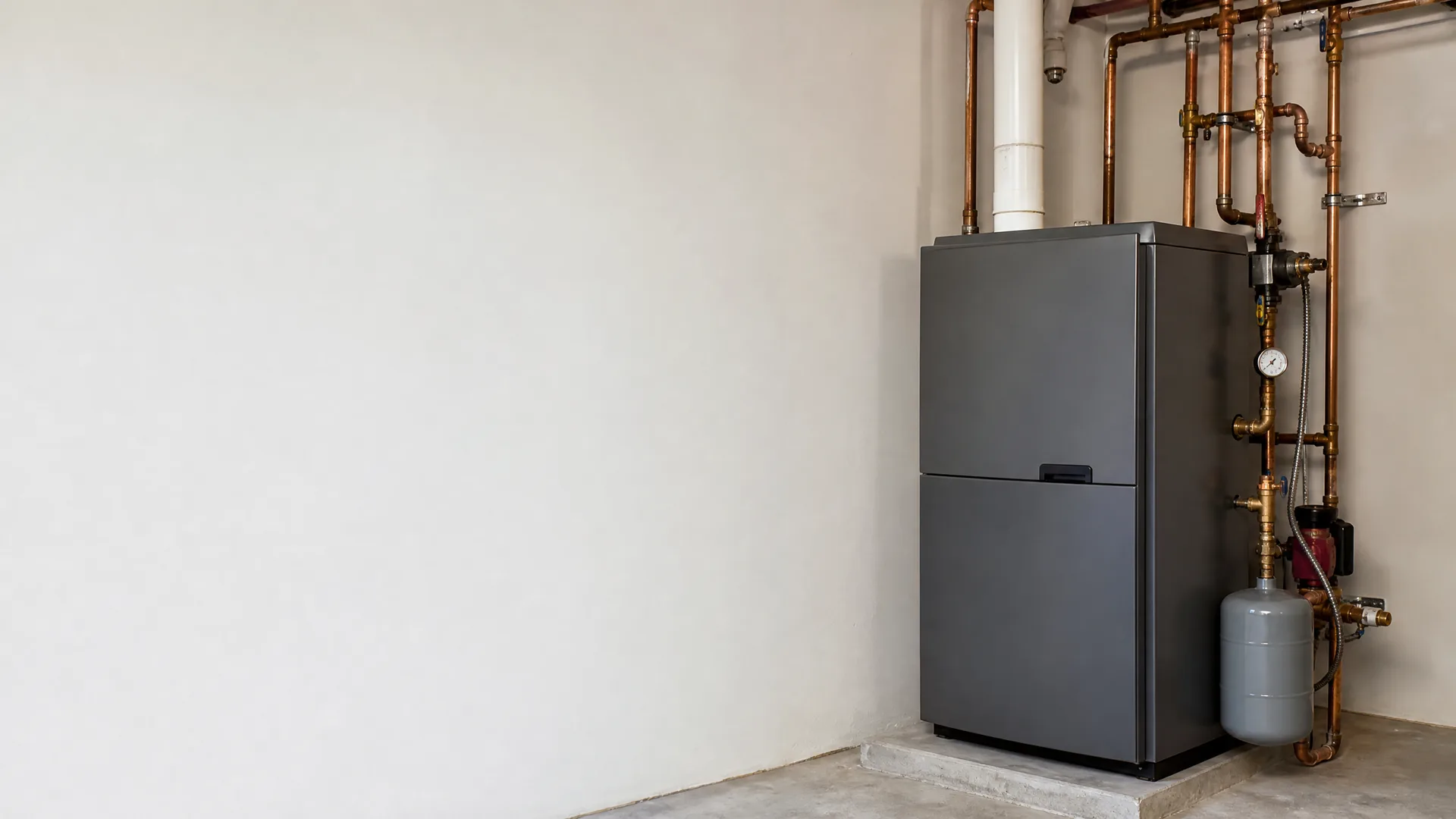
A dark grey boiler unit stands on a concrete pad against a plain light wall, connected to copper pipes, a pressure gauge, a pump and a grey expansion tank.

What the pump already does

The circulator pump that pushes hot water to your radiators doesn't care if the boiler behind it is standard or high-efficiency. It moves the same water through the same loop either way. That's part of why swapping in a condensing boiler costs less here than starting from nothing. The pipes, the radiators, the pump are already in place and already sized for the heat the house needs.

Winter nights average 41°F statewide

A 41°F night doesn't ask much of a boiler. If yours only kicks on for stretches through December and January, the fuel a high-efficiency model saves is a smaller share of what you're paying for in the first place.

NOAA nClimDiv 1991-2020 county normals weighted by homes

If your house runs on electric heat, a high-efficiency boiler has nothing to attach to. You'd be paying for a second heating system to sit next to the one you already use.

If you've got a gas or oil boiler running your radiators every winter, that's the house where a high-efficiency swap actually shows up on the bill.

A blue residential boiler with a metal flue, pressure gauge and burner unit stands against a stained concrete basement wall, surrounded by copper pipes, a green circulator pump and a gray expansion tank.
Before you get your boiler installation
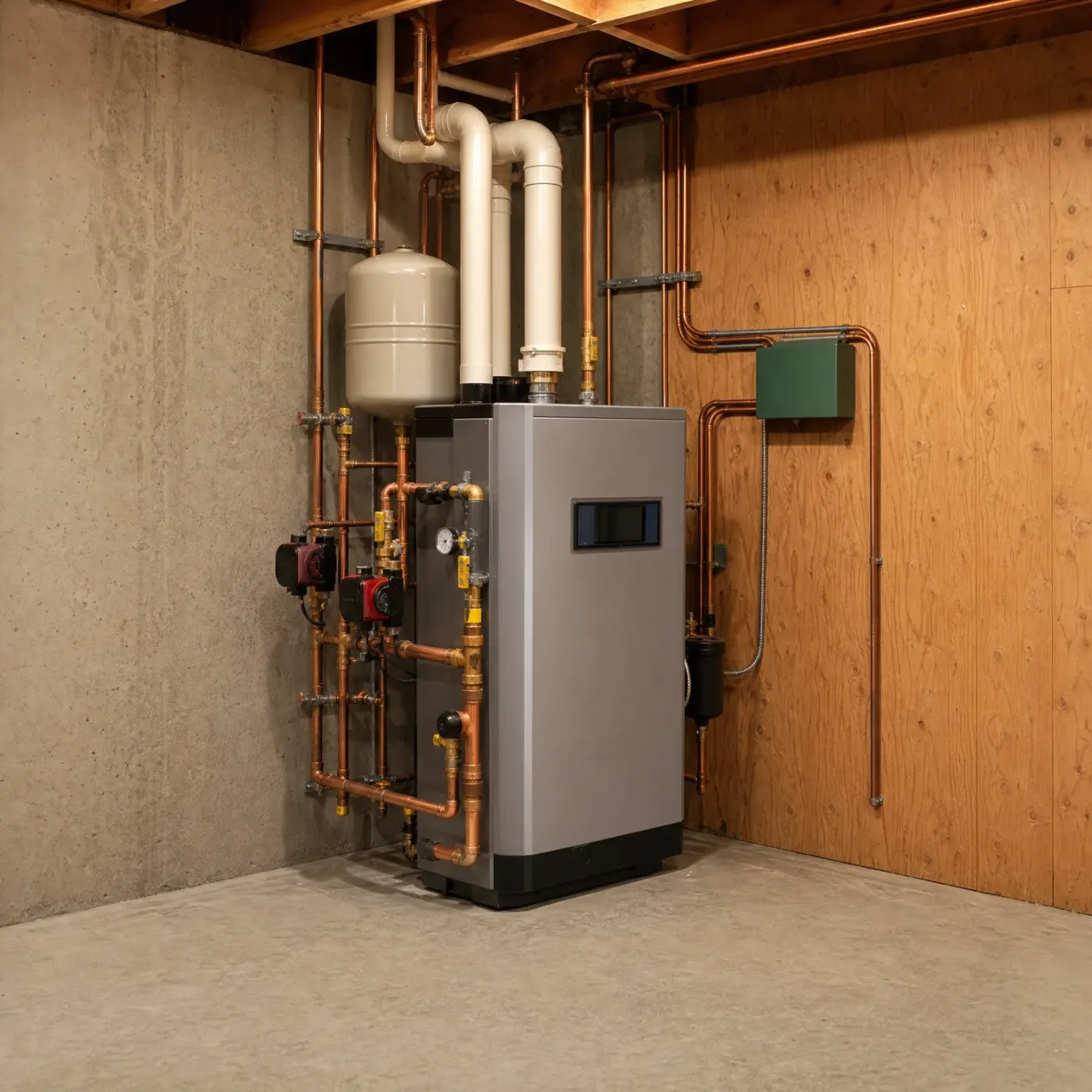
A gray floor-standing boiler in a basement corner with copper piping, two red circulator pumps, a beige expansion tank, white PVC vent pipes, concrete and plywood walls.
After you get your boiler installation
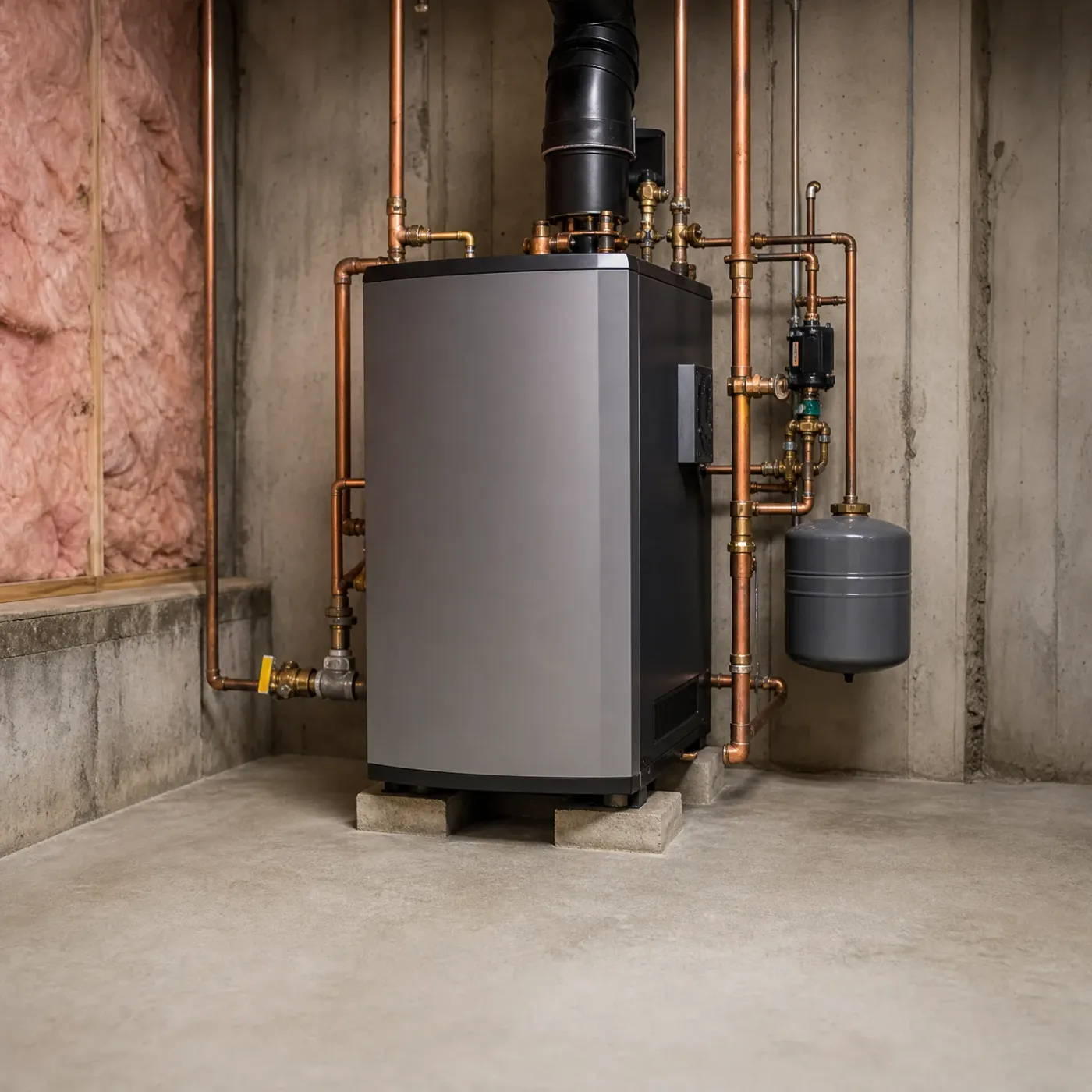
A gray and black boiler unit sits on concrete blocks in a basement corner, connected to copper piping, valves, a black flue duct, and a gray expansion tank, with bare concrete walls and exposed pink insulation at left.

Working boiler, full loop

This is what a boiler install has to work with: copper pipes already running to radiators, a circulator pump, a flue venting straight up. If your house looks like this, a high-efficiency model has a system to plug into and exhaust to actually save on.
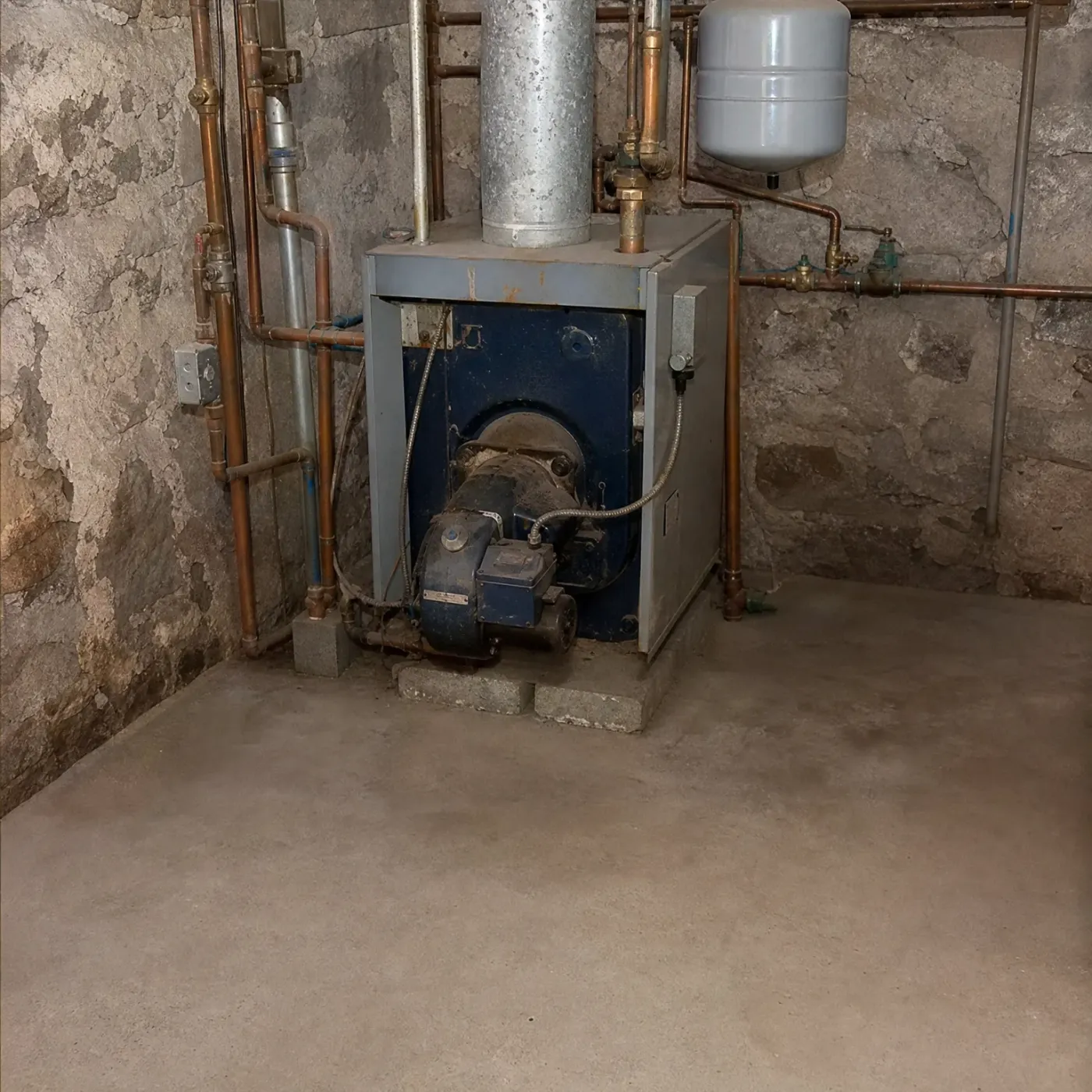
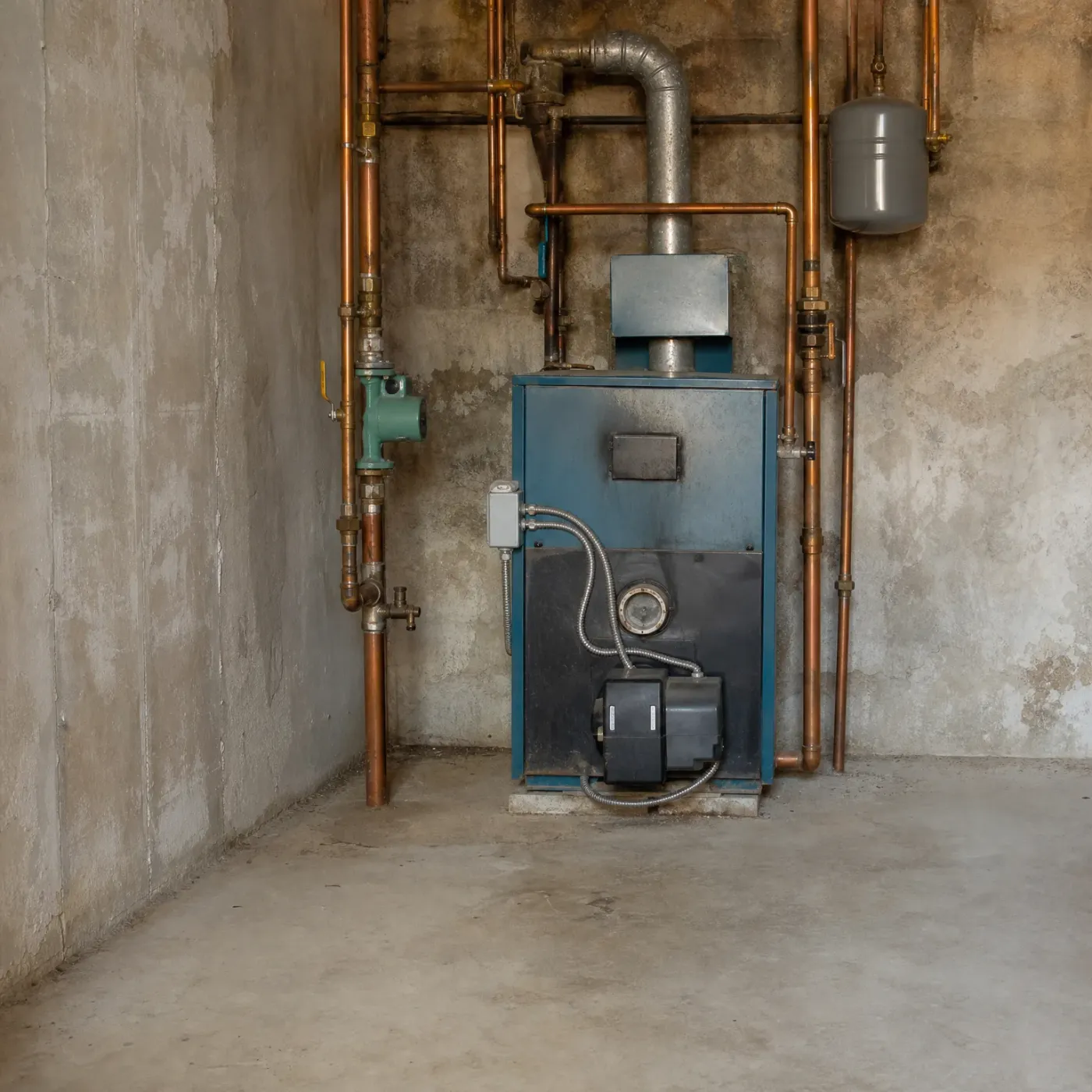
An oil-fired boiler with a blue and gray cabinet and burner sits on concrete blocks in a basement corner with stone walls, connected to copper pipes, a metal flue, and a wall-mounted expansion tank.

Boiler with nowhere to go

An oil boiler propped on blocks in a stone basement, no ductwork anywhere near it. If this is closer to what you've got, or you don't have a boiler at all, a high-efficiency unit is solving a problem your house doesn't have.

A man in a dark blue shirt stands in an open front doorway of a stucco and wood-clad house, facing a blond woman seen from behind in the foreground on a stone walkway.

So where does that leave you

If your house runs on electric heat, the answer is simple: a high-efficiency boiler has no job to do there. If you've got a working boiler and a loop of radiators or baseboard already in the walls, the math works the other way, and swapping it for a condensing model is worth pricing out.

Either way, the next step is the same. You don't have to call around Texas getting quotes from different installers, explaining your setup to each one, and sorting through what they send back. Answer a few questions about your house and what you're working with, and a contractor who installs boilers in homes like yours will reach out to you directly.

Interior corner with a beige sofa holding a dark green and a light cushion and a textured throw, a potted small-leaved tree beside a white-framed window, and a dark shallow bowl on a wooden coffee table in the foreground.
A woman in a cream knit sweater sits in an armchair with her eyes closed near a window showing yellow autumn foliage, with a mug on a round wooden side table beside her.
A gray-haired man with a beard in a blue button-placket shirt reclines on a couch with his eyes closed, beside a sunlit window with a green plant.

A pro who works on boilers

A high-efficiency boiler earns its keep where there's already a loop of pipes and radiators to run it through. It's wasted next to electric heat with no flue or circulator to connect to. If your home has a working boiler system, matching with a contractor means skipping the usual runaround: searching for installers, calling several, explaining your setup over and over, and weighing quotes that aren't really comparable. Instead, you get matched with a contractor who installs boilers in Texas homes and hears directly what your house needs.

Find a boiler pro

One form replaces the calls you'd make to find a boiler pro.

Asking costs nothing, and the choice to hire stays yours.