A local pro who services boilers gets in touch about the tune-up.
A boiler with radiators isn't common in most Texas houses, since electricity heats the majority of homes here. If yours came with one, bleeding the radiators before cold weather sets in is a real step worth taking, not a formality.
Air gets into the loop over a summer of sitting idle. That air collects at the top of each radiator and keeps hot water from filling the whole unit. You get a radiator that's warm at the bottom and cold at the top, or one that barely puts out any heat at all. Bleeding it lets the trapped air out so water can fill the space it was taking up.
This matters more here than it would somewhere colder, because a Texas boiler runs for a shorter stretch each year and sits unused the rest of the time. Months of standing water and still air give corrosion more chance to build inside the system, and that shows up as the same symptom: a radiator that won't heat evenly even after you've bled it.
If you bleed every radiator in the house and one or two still won't heat right, that's not something to keep working at on your own. It usually means something past air in the lines, a valve that's stuck, a radiator that needs flushing, sediment sitting in the boiler itself. That's where it helps to have someone look at the system who actually works on boilers in Texas homes, where this setup is the exception rather than the rule, and who's seen what tends to go wrong in one that only runs part of the year.
Once you request that, the next step is a licensed local contractor reaching out directly, not a handful of companies competing for your callback. Just one contractor, matched to a system like yours.
To bleed a radiator, open the small valve at one end with a radiator key or screwdriver until the hiss of escaping air turns into a steady trickle of water, then close it. Do this on every radiator in the house before the first cold snap. Air works its way into the loop over months of the system sitting idle, since most of the year here it has nothing to do. That air collects at the top of each radiator and keeps hot water from filling the unit, so you end up with a radiator that's warm at the bottom and cold at the top, or barely warm at all. A boiler working to push water past trapped air also runs longer than it should to heat the same rooms. Bleeding the radiators clears that air out so each one heats evenly and the boiler isn't working harder than it needs to once you actually need it.
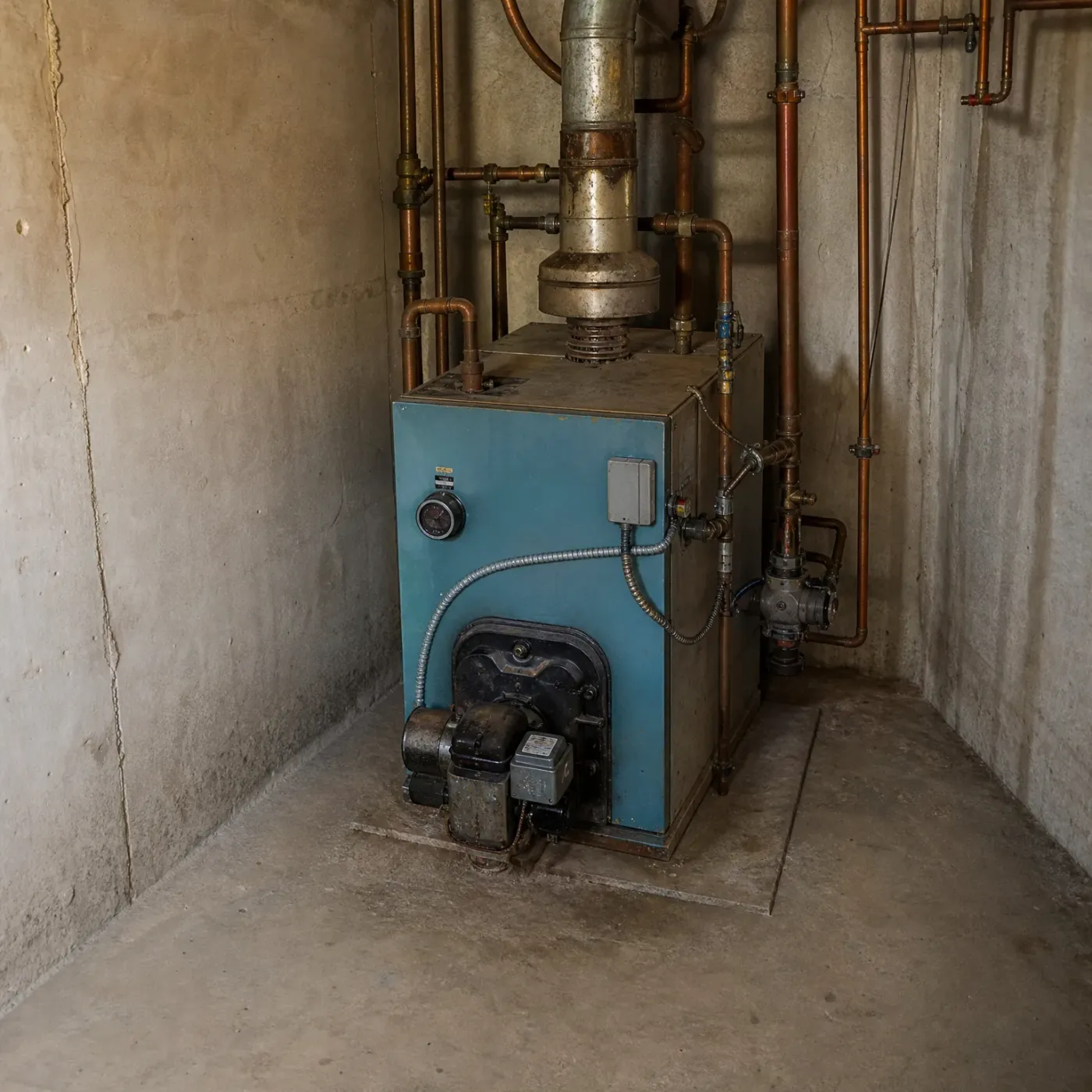
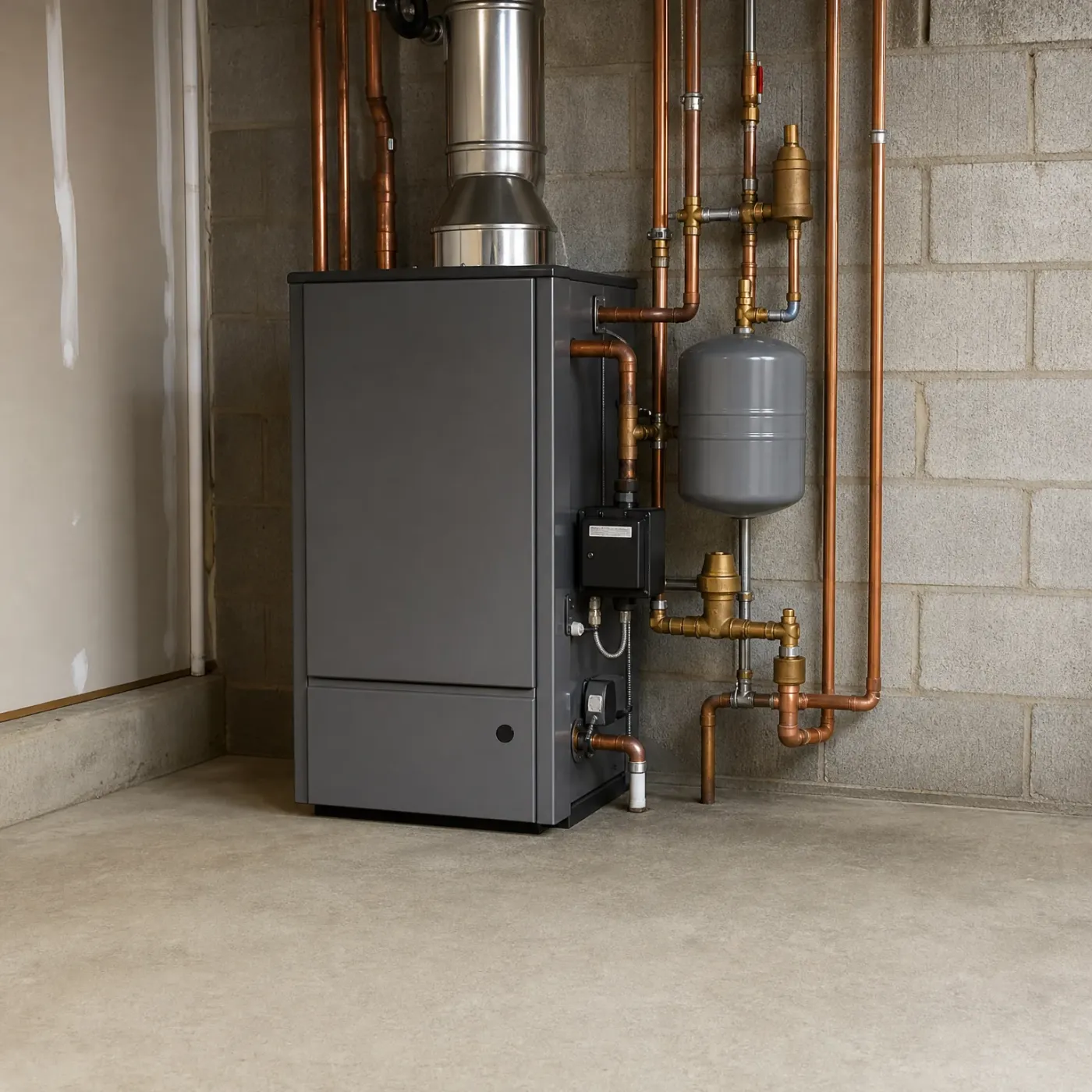
Before you get your boiler maintenanceAfter you get your boiler maintenance
A boiler in Texas is unusual enough that a lot of general HVAC companies barely touch one from October to the next. Bleeding radiators every year is something you can do yourself, but once you get into a system that won't hold pressure, a radiator that stays cold no matter how long you bleed it, or a boiler that short cycles when the weather finally turns, you need someone who actually works on boilers here, not someone who installs heat pumps nine months of the year and sees a radiator twice a winter. That's a smaller pool in this state, and matching you with one local contractor who knows this equipment means whoever calls you back has probably already seen whatever is going on with yours. Get ahead of it now, before the first cold snap finds the problem for you.
Why air gets in every year
A boiler loop isn't sealed from the world the way it seems. Water moves through the pipes, cools, gets reheated, and every time it does, tiny amounts of dissolved air come out of solution and collect at the highest points in the system, which is usually the top of each radiator. Over months this builds into a pocket big enough to block water from filling the radiator all the way. It isn't a leak or a defect. It's just how the system runs, which is why bleeding is something you do on a schedule, not something you do once and forget.
What a cold spot is telling you
If the top of a radiator stays cool while the bottom gets hot, that's air sitting above the waterline, not a radiator that's failing. Heat rises through water fine but stops where the air pocket starts, so the metal above it never gets warm. That's the sign to bleed it. If you bleed a radiator and the cold spot doesn't go away, or it comes back again within a few weeks, that points to something else going on in the system, not just ordinary air buildup.
Bled and holding pressure
Every radiator in the house heats evenly from end to end, with no cold spot at the top. The gauge on the boiler holds steady where it should. The pump runs quiet, and heat gets to every room the first time the thermostat calls for it.
Air still in the loop
One radiator stays cool at the top while the bottom gets hot, a sign of trapped air. The pressure gauge drifts low between heating cycles. Left alone, the pump can end up working harder than it needs to just to push water past the blockage.
Winter nights average 41°F statewide
41°F is the average overnight low here across December, January and February, not a rare cold snap. That's enough nights for trapped air to make a real difference in how evenly your radiators heat, so it's worth bleeding them before those months arrive rather than after a room turns up cold.
NOAA nClimDiv 1991-2020 county normals weighted by homes
Bleed them before the first cold night, not after
Bleeding a radiator takes a key, a few minutes, and a rag for the drip. Do it room by room before December, and every radiator in the house will heat evenly for the rest of the winter. Skip it, and you'll find out which one has the cold spot at the worst possible time, some 41-degree night in January with the boiler already working to keep up.
A boiler is uncommon enough in Texas that finding someone who actually knows one, not just central air and a furnace, isn't automatic. If your house has one and something beyond air is going on, a stuck valve, a pressure that won't hold, a radiator that never gets warm no matter how long you bleed it, you'll want a contractor local to you who works on boilers regularly and has a sense of what tends to go wrong with them. You'd be matched with one, not several, and that one would reach out directly.
Boiler Maintenance
A local pro for your boiler maintenance
Your request goes to one pro, not a list of companies.