Your new boiler project goes to an installer who works in Bell County.
Boilers are not common around Killeen. Most homes in Bell County heat with electricity, so if you have a boiler, chances are it came with an older house or a previous owner put it in on purpose. Either way, you're probably wondering how much life is left in it, and that depends on how it's been run and maintained more than on any fixed number of years.
Winters here are mild, which actually works in a boiler's favor. It's not running hard for months on end the way one would in a colder state. A boiler that only has to take the edge off a handful of cold snaps each year sees less wear than one fighting a real winter. That doesn't mean it lasts forever, but it does mean age alone isn't the full story. A unit that's been flushed, inspected, and kept free of scale can outlast one that's been ignored, even if they're the same age.
When a boiler does need replacing, you want someone who actually works on boilers in this area, not just furnaces and AC units, since boilers are a different trade with their own quirks. Matching with a local, licensed contractor who deals with this equipment regularly means they've likely already seen whatever is going on with yours, whether it's a cracked heat exchanger, a failing circulator pump, or something tied to the age of the unit itself.
You'll be connected with one contractor suited to your situation, not a handful of companies competing for your attention. That contractor will reach out to you directly to talk through what you're dealing with and what your options look like for replacement.
If your boiler is original to the house or you're not sure how old it is, that's worth figuring out before deciding anything. The button below starts that process.
A boiler in the Killeen area typically lasts 15 to 20 years, and some cast iron units go longer if they've been kept up. Winters here are mild, so the boiler isn't working hard for months at a time the way one would in a colder state. That lighter workload is often why an older unit is still running when a homeowner assumes it should have failed by now. What shortens its life is usually water quality, a lack of annual service, or a part like the circulator pump or heat exchanger wearing out on its own schedule, not the weather. If yours is pushing past 20 years, or you've had more than one repair in the last year or two, it's worth finding out whether you're near the end or whether it has real life left. A local look at the unit will tell you more than its age alone can.
Why does a boiler even make sense in a Killeen winter?
Winter nights average 39°F
Winter nights here average 39°F, not cold enough to push any heating system hard. A boiler sitting idle most of the year has less wear to show for it.
Heat runs November through March
Heat only runs November through March here. That's a short stretch of work each year, which is part of why an old boiler can still have years left in it.
86% of homes heat with electricity
86% of homes in Bell County heat with electricity, so a boiler here is the exception. It likely came with the house, and its history is worth tracking down.
NOAA nClimDiv 1991-2020 · ACS 2020-2024
A boiler that's been maintained
If whoever had the boiler before you bled the radiators, flushed the system now and then, and had someone look at the burner and controls yearly, it'll hold up closer to 20 years than 15. Mild winters here mean less strain year to year, but a neglected system still scales and corrodes from the inside no matter how light the workload is. A boiler that's been looked after shows it when the heat clicks on in November.
A boiler left to run itself
A boiler nobody's touched since it was installed is a different story, even in a place like Bell County where it isn't working hard. Sediment builds in the bottom of the tank, the pilot or igniter wears without anyone noticing, and small leaks go unfound until a radiator won't heat. That kind of boiler can fail well short of 15 years, not because the winters here are hard on it, but because nothing's been done to keep it running.
Keep the Boiler or Replace It
Keep it
A cast iron boiler that's been flushed and had its burner checked yearly still has margin left even past 15 years in this climate.
Mild winters here mean fewer hours of hard running each year, so a boiler that's in decent shape now isn't likely to fail suddenly.
Parts like the circulator pump or zone valves can usually be swapped without touching the boiler itself, which keeps the original unit going.
If the heat exchanger hasn't leaked and the burner lights clean, there's no reason tied to age alone to replace it.
A boiler with a known maintenance history from the previous owner is worth more trust than one with no record at all.
Replace it
Once the heat exchanger starts leaking, that's the boiler's main shell failing, and it's not a part that gets patched.
A boiler that short cycles or won't hold pressure after repeated bleeding and flushing is telling you the system's wearing out, not just one part.
If nobody can say when it was last serviced, you're guessing at its condition rather than knowing it.
Rust around the base or at pipe joints points to a leak that's been going on a while, not something new.
A newer boiler sized and installed for how you actually use heat here can run more efficiently than one built decades ago.
1
Burner ignites and heats water inside the cast iron or steel heat exchanger
2
Heated water or steam travels through pipes to radiators or baseboard units
3
Rooms warm as heat radiates off those units into the air
4
Cooled water returns to the boiler through a separate pipe
A boiler that's new to you is still an unknown. You don't know if the last owner flushed it yearly or ignored it until something clanked, and a visual look doesn't tell you what's going on inside the heat exchanger or whether the controls are original. Someone who services boilers around Bell County regularly can look at the age, the wear on the burner, and the condition of the pipes and radiators and tell you whether you're looking at a few good years or a system close to the end. That matters more here than the exact age on a sticker, since a boiler that's sat lightly used through mild Killeen winters can still have real life left even if it's older than you'd guess. Getting matched with a local contractor who works on this equipment all season means someone who's seen what usually goes wrong first, not a guess over the phone. One contractor, looking at your actual unit, beats wondering.
What actually shortens a boiler's life
Water quality and how the system was maintained matter more than age by itself. Minerals in the water settle inside the heat exchanger over years, and that buildup makes the burner work harder to heat the same amount of water. A boiler that's been flushed on a regular schedule sheds that buildup before it becomes a problem. One that hasn't can show reduced output well before 15 years, even in a mild climate like this one. The cast iron itself can outlast the controls and burner components around it, which is why a boiler can look old and still have good years left, or look fine and be close to done underneath.
Why the mild winters cut both ways
Fewer running hours means less wear on the burner and less cycling on the pump, and that's the main reason boilers here tend toward the longer end of their range. But idle time has a cost too. A boiler that sits unused for months can develop rust inside the heat exchanger or let seals dry out, especially if it was shut down without being drained or treated properly at the end of a winter. So the mild weather buys time on wear, but only if whoever owned it before you used that downtime to maintain it rather than just walk away from it until November.
Before you get your boiler installationAfter you get your boiler installation
If it's holding up fine
A boiler that's past 15 and still heats evenly, doesn't short cycle, and keeps the pilot or ignition steady can keep going. You'd notice if it were struggling: rooms that used to warm up fast taking longer, a burner that kicks on and off more than it used to, or water around the base. None of that showing up means the heat exchanger and controls are still doing their job. With mild winters here asking less of the system each year, a boiler in decent shape now has no reason to quit soon.
If it's starting to fail
Rooms that stay cool while the boiler keeps running, banging or kettling sounds from the heat exchanger, or water pooling near the base are signs the inside of the unit is wearing out, not just the surface. Once a cast iron heat exchanger starts to crack or leak, it isn't something to patch and wait on. A failing boiler either keeps costing more to run as it struggles to heat the same water, or it stops producing heat at all on the cold nights when you need it most.
Winter nights average 39°F
At 39°F, your boiler only needs to take the chill off, not fight a hard freeze. It can cycle on, warm the water, and shut back off without straining. That's a big part of why one here can run past 15 years without trouble.
NOAA nClimDiv 1991-2020
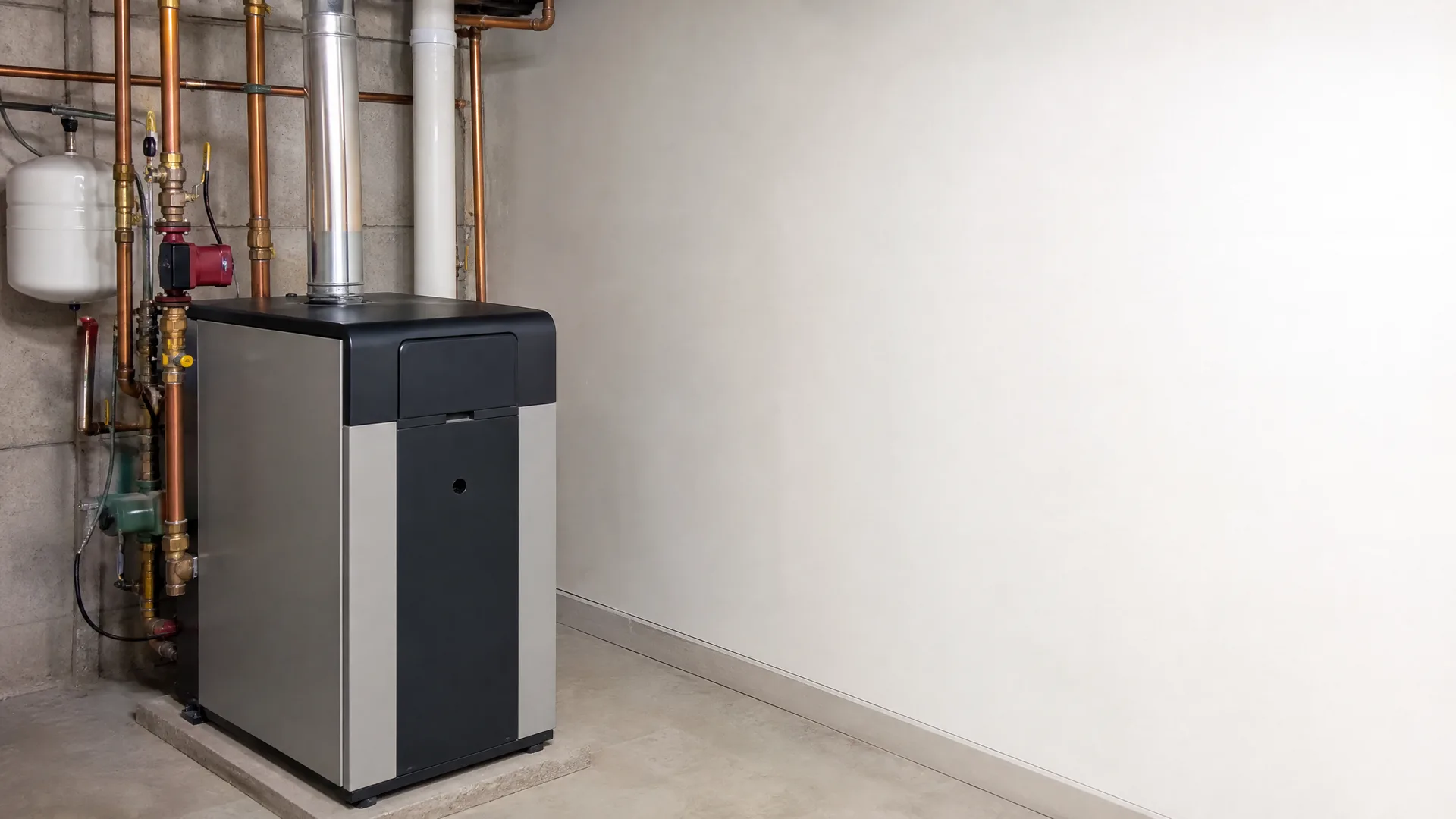
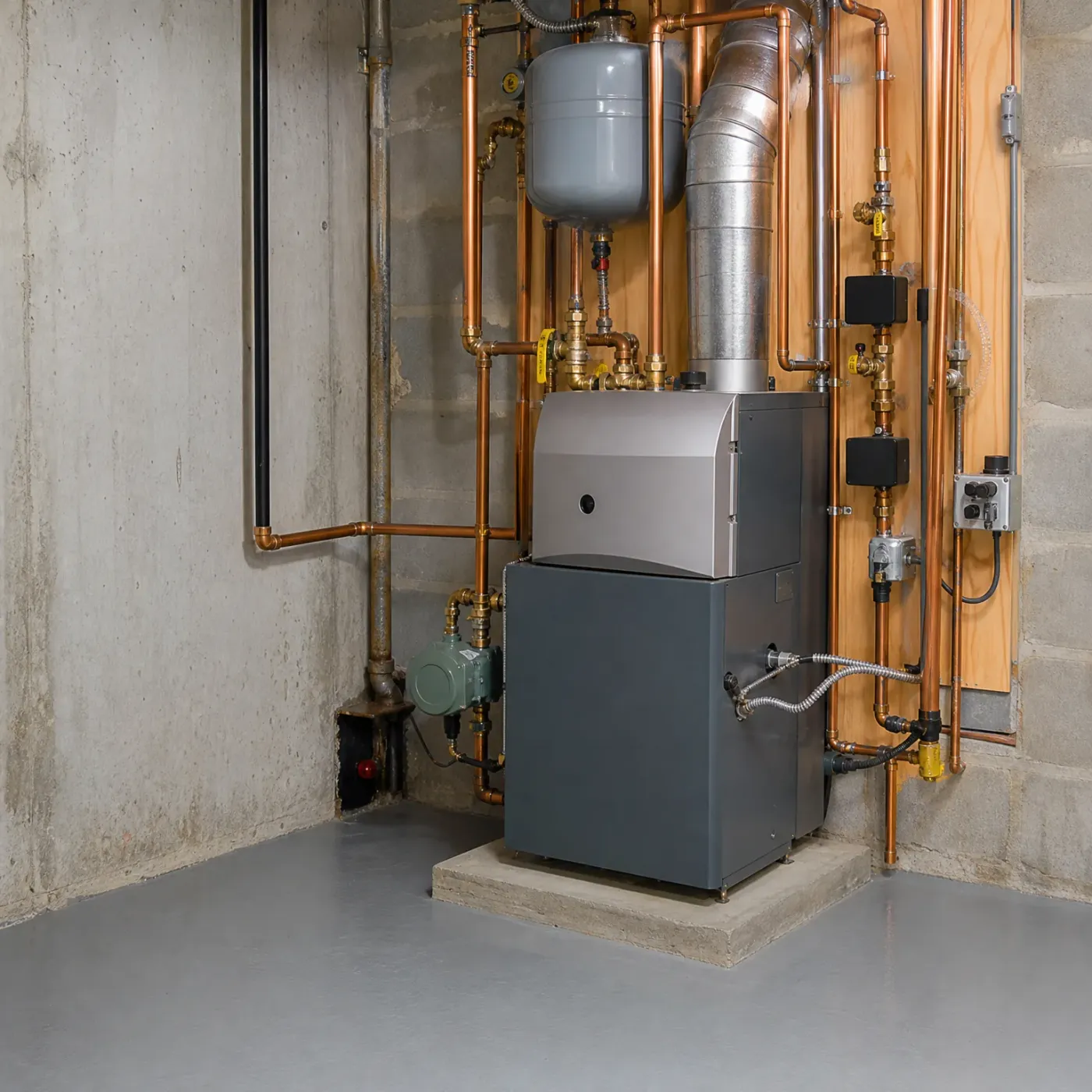
A system like this cycles on, warms the water, and shuts off again without strain, which is how a boiler earns its full 20 years here.
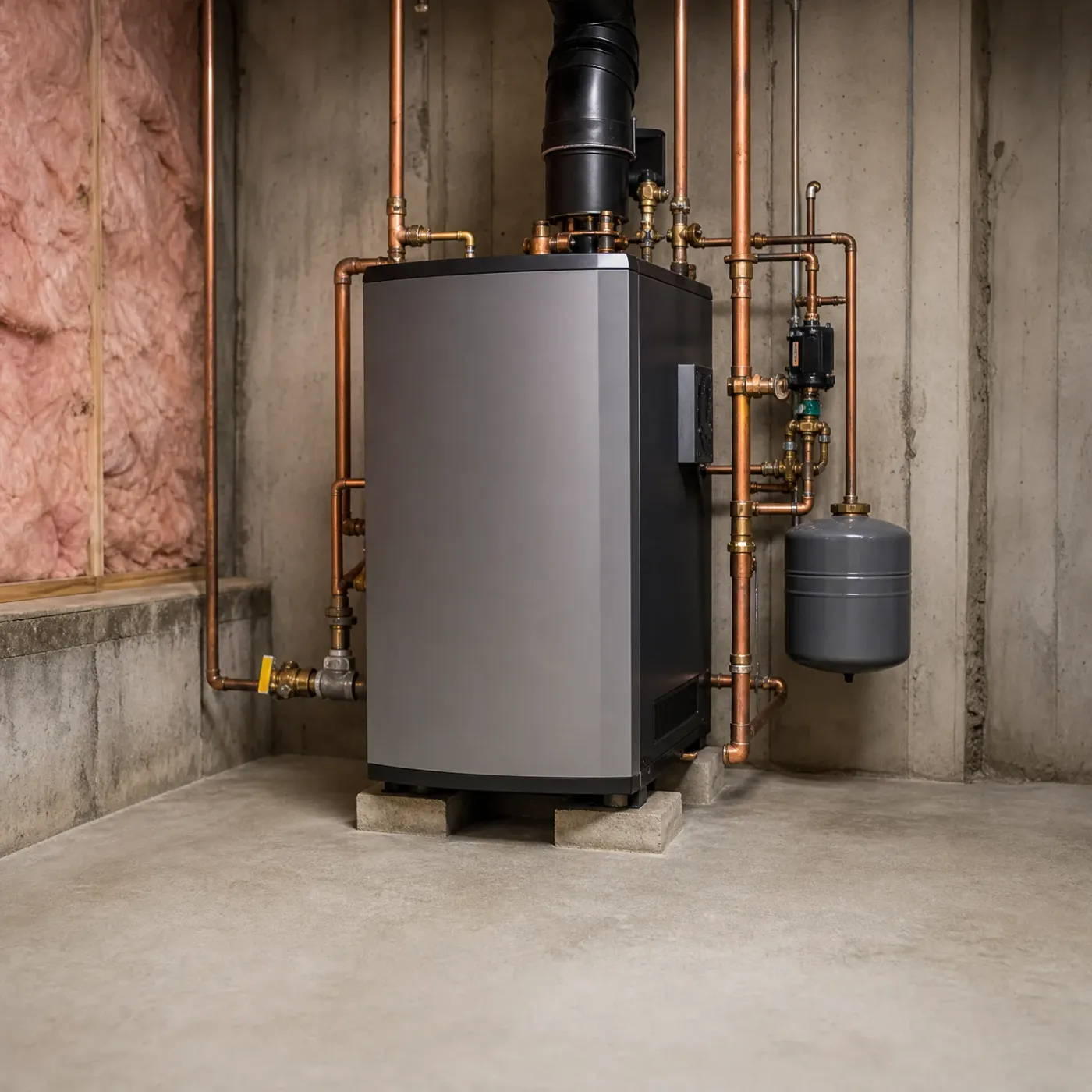
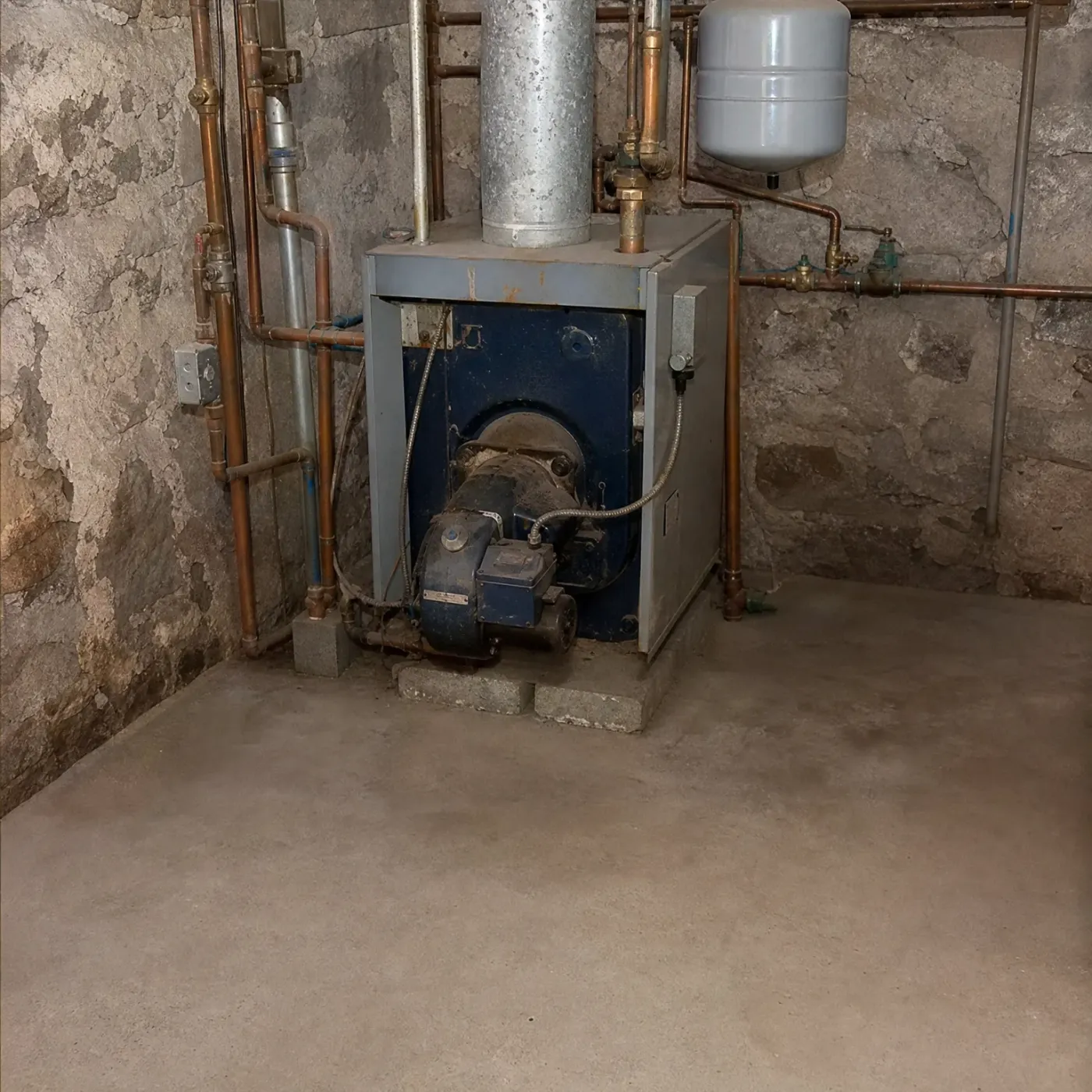
Blocks under the base usually mean the floor took on water at some point, and a flue this old is worth having checked for rust-through.
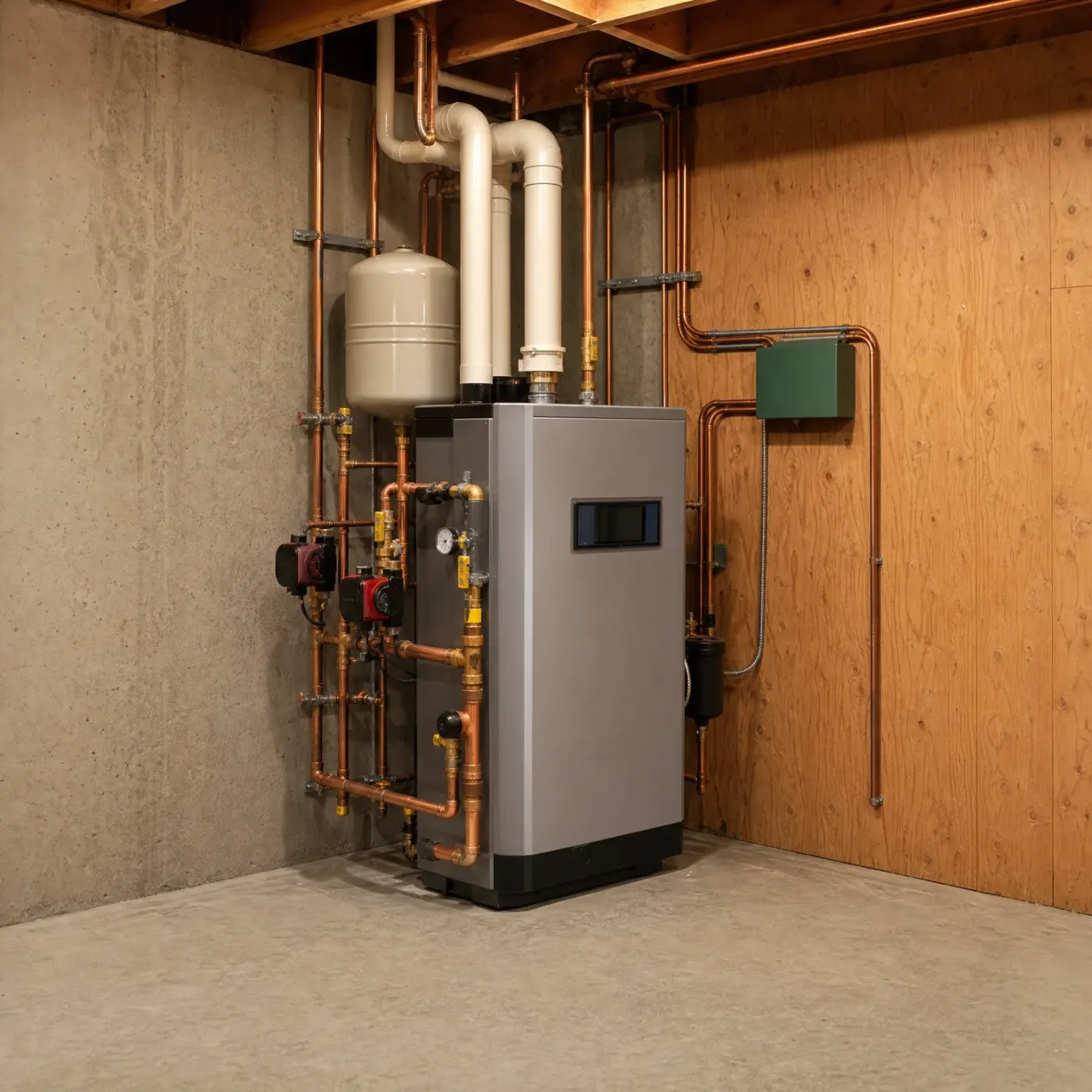
Running clean
Copper lines, brass valves and a circulator pump that aren't straining tell you the system is doing its job without a fight. A setup kept this clear of buildup and corrosion is one that can keep cycling through mild Killeen winters for years without surprises.
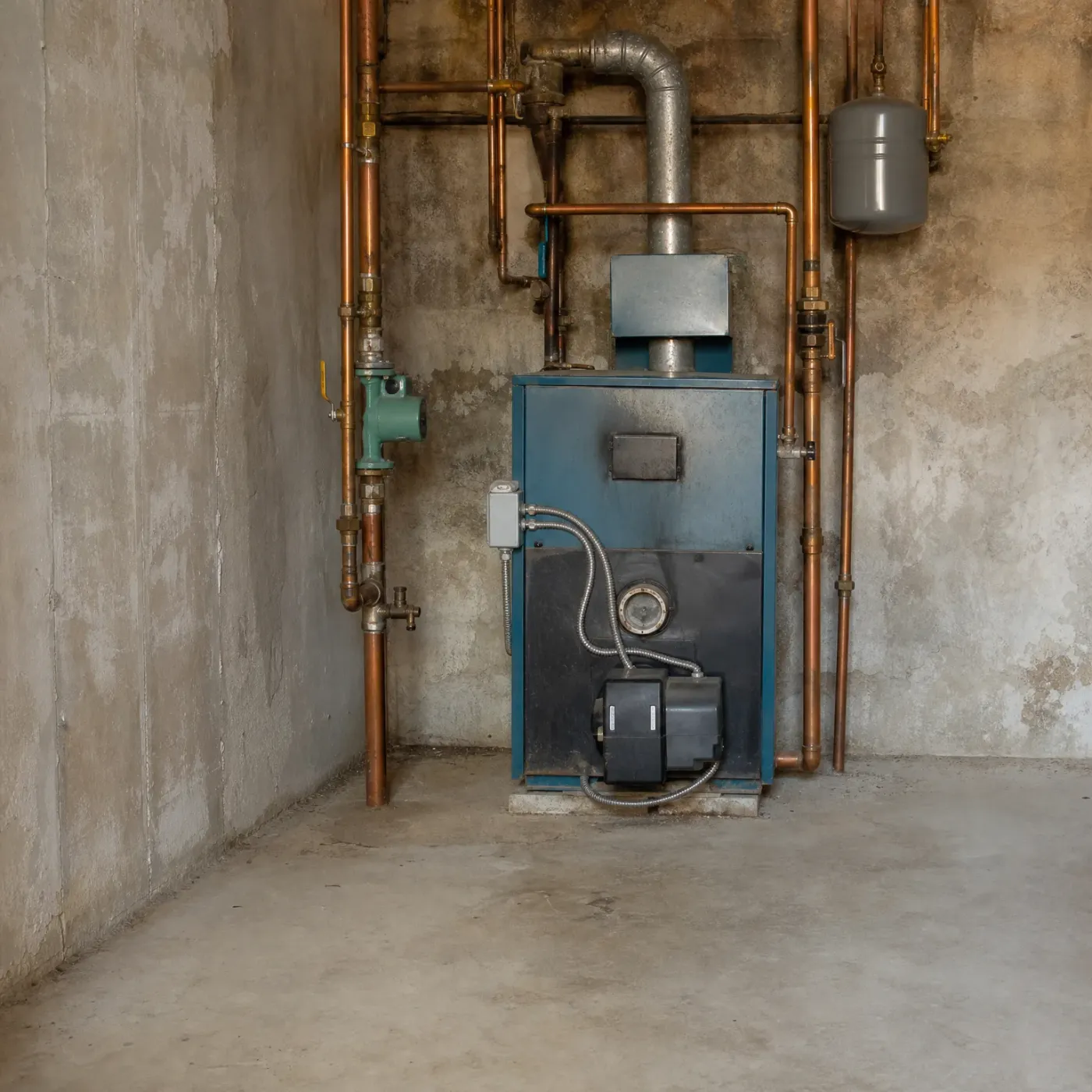
Showing its age
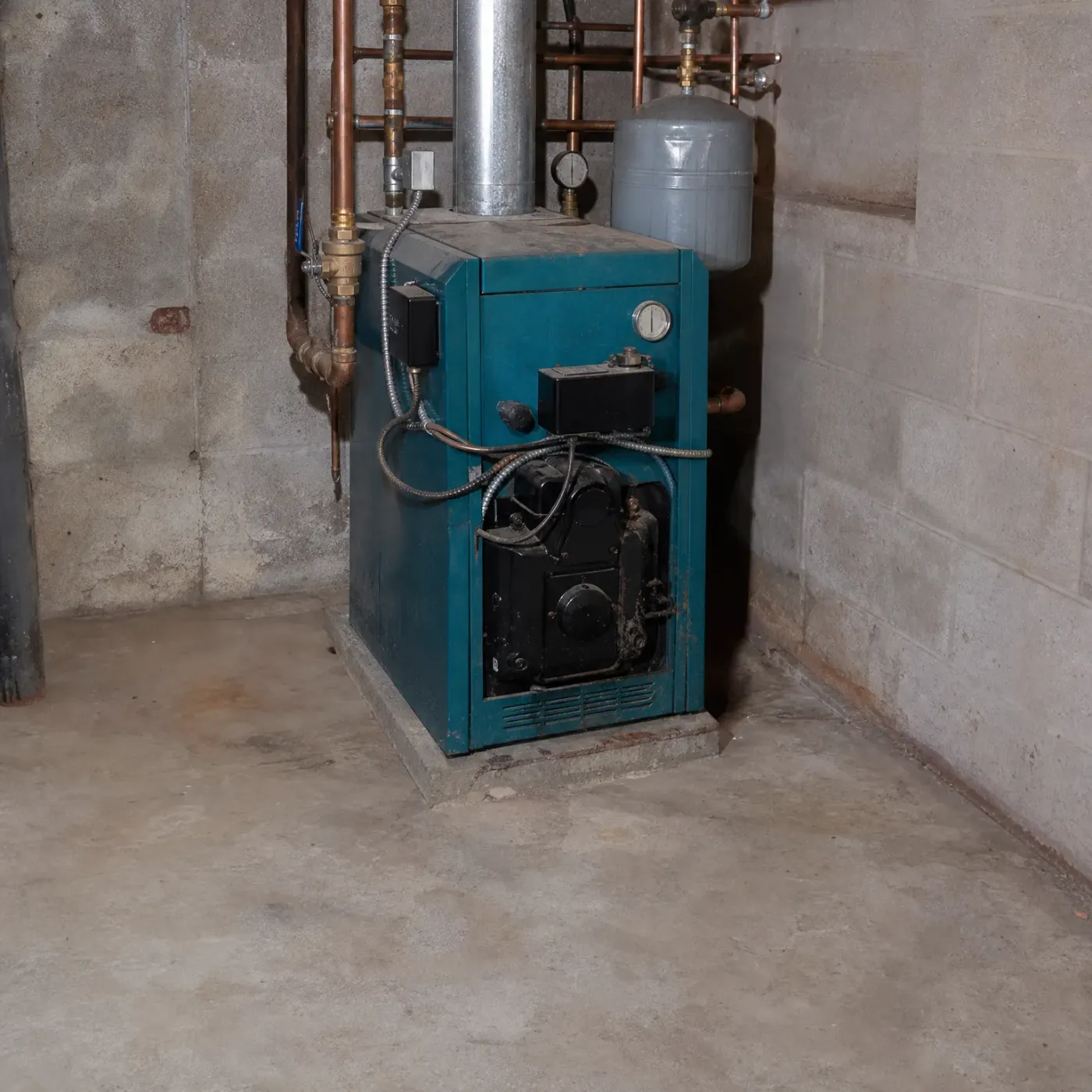
That teal casing and the piping around it have been there a long time, and an oil-fired boiler of this vintage is closer to the end of its run than the start. A pressure gauge and conduit that old are worth a second look before you count on them through another winter.
So how long does a boiler last here
Fifteen to twenty years, longer for a cast iron unit that's been flushed and looked at yearly. Killeen's mild winters help with that, since a boiler here only takes the chill off instead of fighting a hard freeze most of the year. Whether yours lands near the low end or stretches past it comes down to what's happened inside it, not just the date it went in.
If you're not sure where your boiler stands, that's worth getting in front of rather than waiting for a cold morning to tell you. A local contractor who works on these systems every winter can look at the heat exchanger, the burner and the controls and tell you what shape it's really in. You'll be matched with one contractor who services Bell County, not a handful calling at once, and they'll reach out to go over what they find.
A local pro for your boiler installation
One installer gets your project, so there's no bidding war over it.