How long a boiler lasts in Fort Worth, TX

Your new boiler project goes to an installer who works in Tarrant County.

Connect with a pro

A boiler in Fort Worth usually lasts 15 to 20 years. Most homes here heat with electricity rather than a boiler, so the ones you do find are often older systems that came with the house, and plenty keep running well past 20 years if they've been serviced along the way. What actually ends a boiler's life is wear on the heat exchanger and corrosion inside it, not the weather. Winters here are mild, so the boiler isn't working hard most of the year, which is part of why these units often outlast the ones in colder places. The real sign of age is how it runs: longer cycles to heat the same rooms, water that takes longer to warm, or a pilot and burner that need relighting more often. If yours is past 15 years and you're seeing any of that, it's worth having someone look at whether it's worth repairing again or replacing.

What does Fort Worth winter actually ask of your boiler?

  • Winter nights average 37°F

    Nights average 37°F in December, January and February, so your boiler isn't fighting hard freezes most winters, just steady mild cold.

  • Heat runs November through March

    Heat only runs November through March here. A boiler that sits idle half the year wears slower than one working year-round.

  • 66.6% of homes heat with electricity

    Most homes in the county heat with electricity, so a gas or oil boiler here is often the exception, not the standard setup.

NOAA nClimDiv 1991-2020 · ACS 2020-2024

Why a boiler here can outlast the estimate

Fort Worth winters don't put much strain on a boiler. Nights average 37°F through December, January and February, and heat only runs November through March. That's a short, mild season compared to what boilers in colder states deal with. Less demand on the heat exchanger and burner year after year means less wear building up. A boiler that gets serviced on schedule and isn't asked to fight hard freezes has a real shot at running past 20 years, sometimes well past it, especially if it came with the house and was sized right for it from the start.

Why some boilers here fall short of 15

A boiler that sits idle eight months a year has its own problems. Parts can corrode or seize from disuse, and a system that isn't run or checked between heating seasons can fail earlier than one used more steadily. Since most homes in Fort Worth heat with electricity, boilers here are often the exception, sometimes an older system nobody's replaced rather than one chosen new. Skipped service, a furnace that was never quite matched to the house, or a system already old when the current owner moved in can all shorten the life of the thing well before 15 years are up.

An older woman with gray hair in a gray knit sweater sits on a sofa under a knitted blanket beside a large window, looking out toward yellow autumn foliage, with a living room, fireplace and patterned rug behind her.
An older woman with gray hair in a cowl-neck sweater sits on a sofa under a blanket, looking out a large window toward trees with yellow autumn foliage.
A gray-haired woman in a light knit sweater sits in an armchair by a window, looking out at trees with yellow autumn leaves, with a dark ceramic mug on the sill and a plant in the foreground.
A gray-haired woman in a cream knit sweater sits in a chair by a large window, looking out at rolling hills covered in autumn-colored trees.

How a boiler actually heats your home

  • A boiler heats water in a tank or coil, then sends it through pipes to radiators or baseboard units instead of pushing warm air through ducts.
  • The circulator pump moves hot water through the system, and it runs far more hours over a winter than the burner itself does.
  • Gas boilers fire through an ignition system and vent exhaust through a flue, while electric boilers heat the water with elements and skip combustion entirely.
  • Aquastat controls sense water temperature and cycle the burner or elements on and off, so the boiler isn't running continuously even on cold nights.
  • Sediment settles at the bottom of the tank over years, and in areas with harder water that buildup makes the burner work longer to heat the same water.
  • A pressure relief valve and expansion tank keep the closed loop of water from building up pressure as it heats and cools.

A boiler doesn't push air through ducts the way a furnace does. It heats water, either in a tank or a coil, and sends that hot water out through pipes to radiators or baseboard units around the house. The water gives up its heat into each room, cools, and comes back to be heated again. That loop runs on a circulator pump, and the pump works harder over a season than the burner does, since it has to keep moving water any time the system calls for heat.

How the water gets hot depends on the fuel. A gas boiler fires through an ignition system and sends exhaust out through a flue, the same way a gas furnace does. An electric boiler skips combustion entirely and heats the water with elements submerged right in it, closer to how a water heater works. Either way, an aquastat reads the water temperature and switches the burner or elements on and off, so the boiler cycles rather than running straight through a cold night.

Two other parts matter even though they don't do the heating. Sediment builds up at the bottom of the tank over the years, and where the water is harder, that layer makes the burner work longer to bring the same batch of water up to temperature. A pressure relief valve and an expansion tank keep the closed loop from building up pressure as the water heats and expands, then cools and contracts again.

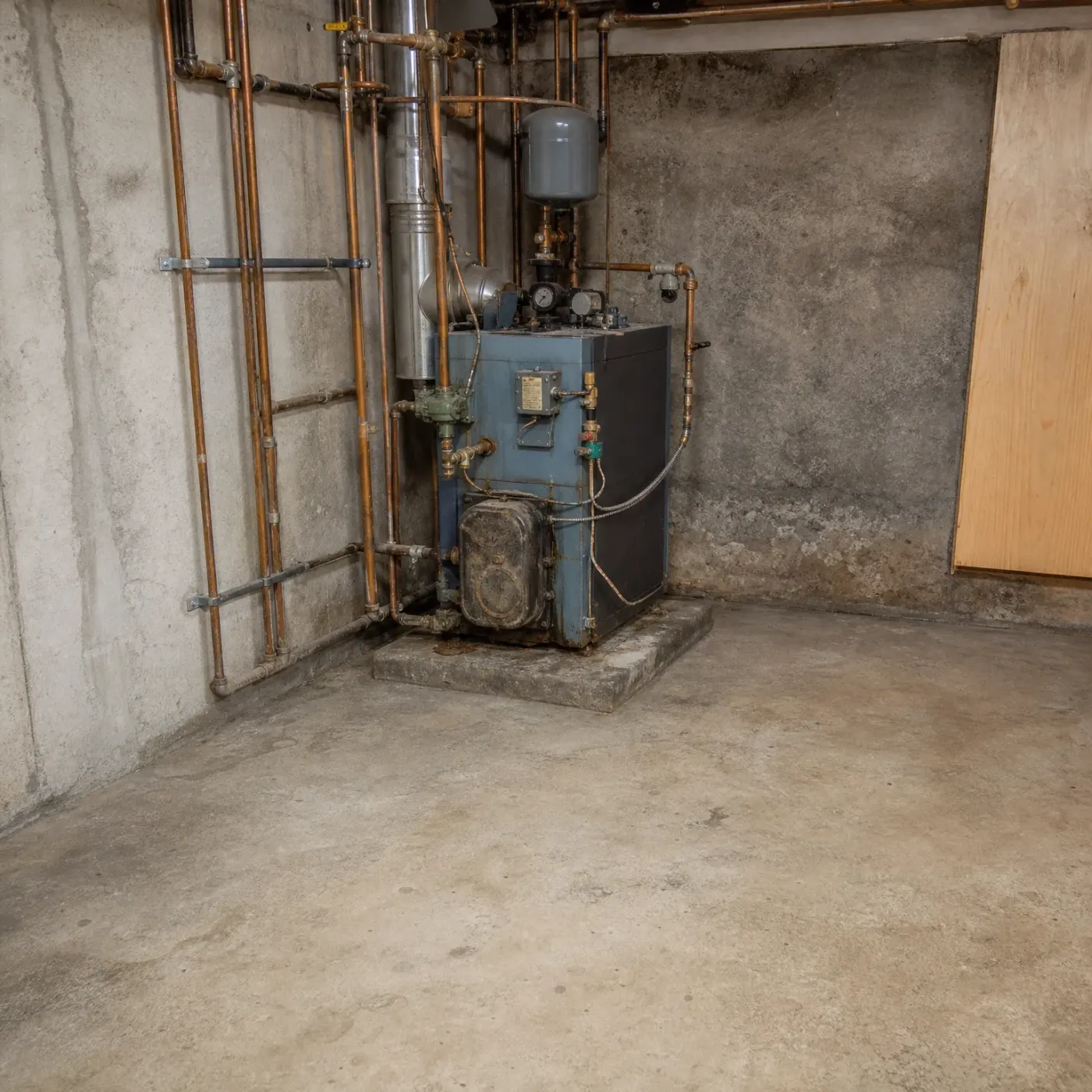
A blue boiler on a raised concrete pad in a basement corner, with copper and steel pipes, a gauge cluster, an expansion tank, and a metal flue running up the bare concrete walls.
Before you get your boiler installation
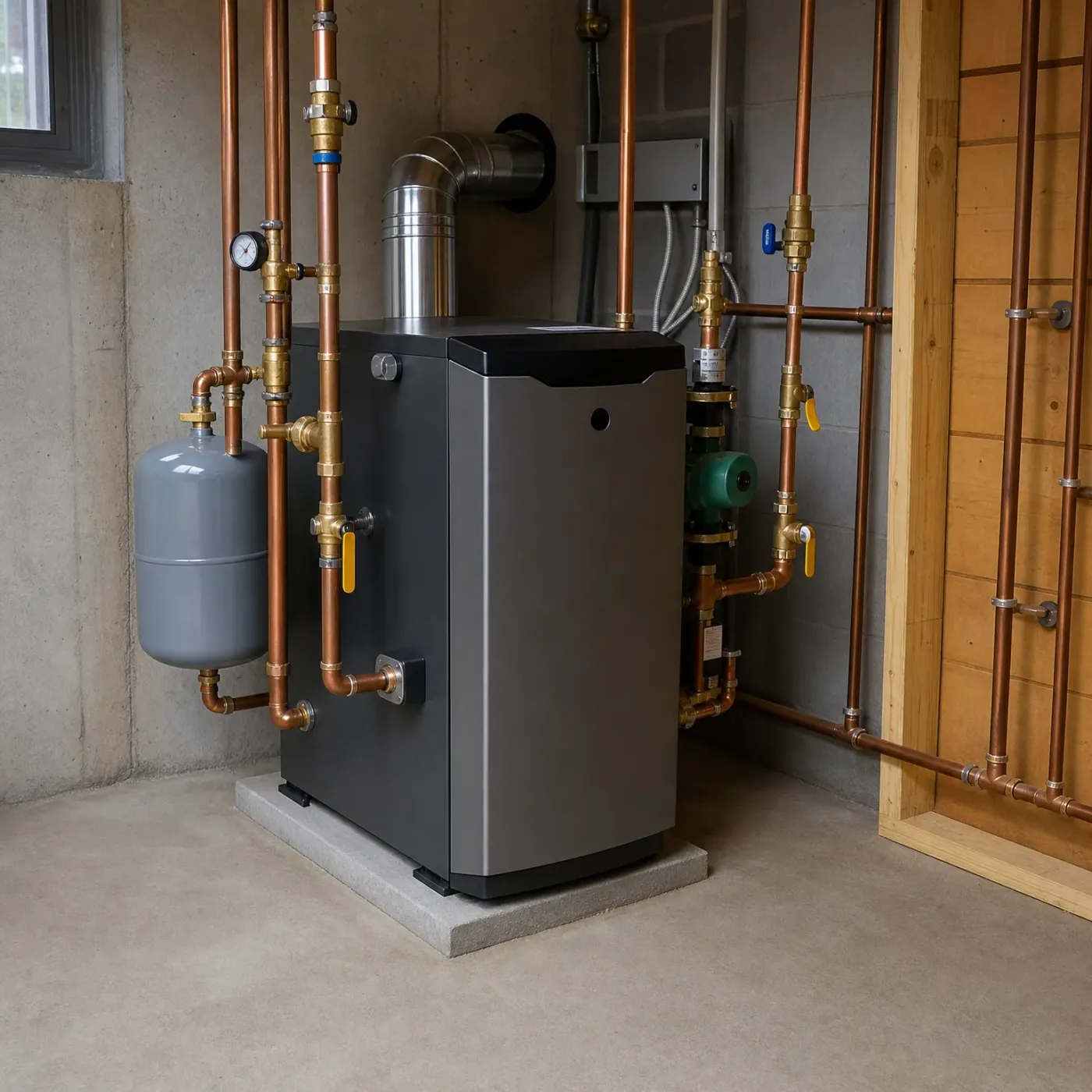
A dark gray floor-standing boiler on a concrete pad in a basement, surrounded by copper piping, brass valves, a gray expansion tank, a circulator pump, and a metal flue pipe against concrete block walls.
After you get your boiler installation

Get the right pro for your boiler

A boiler running on borrowed time in a Fort Worth home is still a gas appliance with water under pressure, and that's not something to leave for the coldest night of the year to decide. If yours is old enough that nobody's sure when it was last serviced, or it's already short-cycling or leaking, waiting rarely makes the decision easier. Since most homes in this area heat with electricity, finding someone who actually works on boilers regularly can take longer than finding an AC tech, and that search is easy to put off until the house is cold. Sending the request now means that search isn't yours to run anymore. A contractor who knows these systems gets your information and reaches out, and from there you're looking at options instead of guessing how many more winters this one has left.

A boiler that short cycles, meaning it fires on and off every few minutes instead of running a steady stretch, wears out its burner and heat exchanger faster than one left to run its full cycle.

That matters here because a mild Fort Worth winter asks for short bursts of heat more often than long steady runs, so a boiler sized right for the house, not oversized, is what keeps it from aging ahead of schedule.

A woman in a cream knit sweater sits with closed eyes in an armchair beside a window showing orange autumn foliage, with a framed picture, plants, and a white mug on a wooden table nearby.
A gray-haired man in a blue sweater over a checked collared shirt sits in an armchair with his eyes closed and head tilted back near a bright window, with a houseplant and lamp nearby.

What an old boiler costs you now

A boiler losing efficiency doesn't tell you with a warning light. It tells you with a gas bill that creeps up a little more each January while the house still feels the same. If yours is original to the house, you don't know what it cost to run when it was new, so there's nothing to compare against except last year's bill and this year's. Corrosion inside the heat exchanger and mineral buildup in the pipes both make the burner work longer to get the same water temperature. That extra run time is the cost, and it shows up on the bill before it shows up as a breakdown. By the time you hear banging in the pipes or see rust at a fitting, the burner has likely been working harder than it should for a while.

What failure looks like here

Because Fort Worth winters are mild, a boiler on its way out often doesn't fail outright. It just struggles on the handful of genuinely cold nights, the ones where the temperature actually drops toward freezing and stays there. That's when a weak unit falls behind and can't bring the house up to temperature, and it's almost always the coldest night of the year when that happens, not a mild one. A gas boiler with water under pressure that's old enough that nobody remembers its last service isn't something to find out about that way. Knowing roughly how old yours is, and whether it's had any attention in the last few years, tells you more than waiting to see what it does in January.

Winter nights average 37°F

A 37°F night doesn't ask much of a boiler. It fires, brings the water up, and shuts off well before it's worked hard enough to strain the burner or the heat exchanger. That's less wear piling up year after year than a boiler in a colder state ever sees.

NOAA nClimDiv 1991-2020

A woman stands in the open front doorway of a single-story house with a dark hipped roof and light siding, while a man in a navy jacket and cap is seen from behind in the foreground on the paved walkway.

So, how long will it last

A boiler in Fort Worth runs 15 to 20 years, often longer, because the mild winters here don't ask much of it. If yours has been serviced along the way and nobody's pushed it through a string of hard freezes, 20 years isn't a stretch. If it's original to the house and nobody can say when it was last looked at, the gas bill creeping up each January is the only warning you're likely to get.

Either way, you don't have to work out where your boiler stands on your own. A contractor who knows these systems can look at its age, how it's been run, and what your winter actually asks of it, then tell you straight whether it's got years left or whether you're better off planning now instead of on the coldest night of the year. Answer a few questions about your home and someone local will reach out to go over it with you.

Interior corner of a living room with a beige upholstered armchair holding a textured pillow and throw, a eucalyptus arrangement in a ceramic vase on a wooden table in the foreground, a blurred glass-front cabinet behind, and a potted plant on a sunlit window sill.
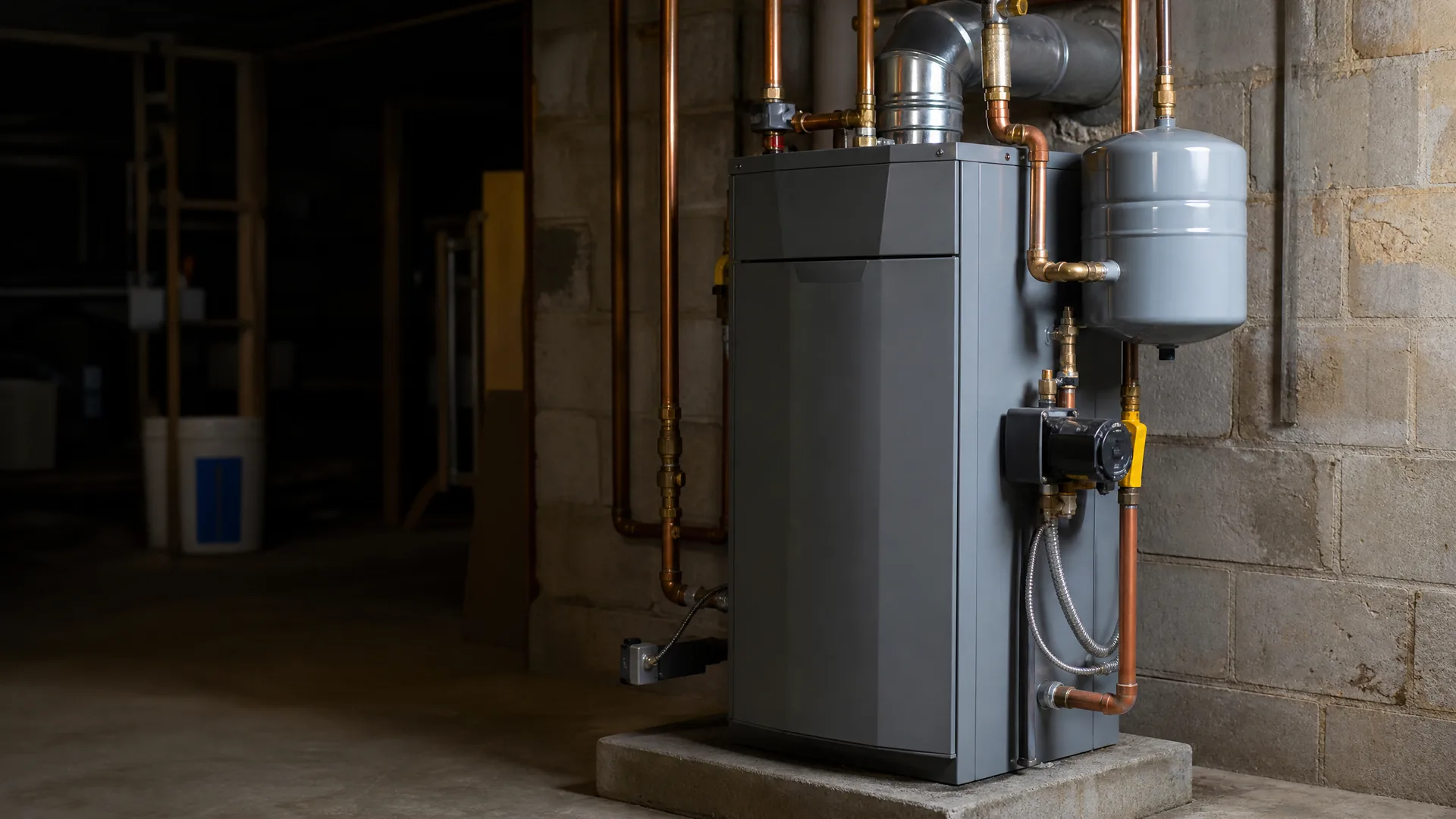
A gray residential boiler on a concrete pad in a basement, with copper piping, a gas valve, a flue vent, and a gray expansion tank against a concrete block wall.

A pro who works on boilers

Step 1 of 3: Equipment