20 to 30 minutes
That's about how long a thermocouple takes to fully heat up and start reading the pilot flame correctly after it's replaced and the boiler is restarted.
Get the right pro for your boiler
A pilot light that won't stay lit usually comes down to a thermocouple, a draft, or dirt in the line, and boilers aren't a job to guess your way through. Most homes in Conroe and around Montgomery County heat with electricity, so a boiler often means an older setup that's worth getting right. This page walks through why it keeps going out, and can connect you with a contractor who takes a look and sorts it, instead of you calling around and explaining the problem over and over.
Find my proA pilot that won't stay lit is almost always one of three things: a worn-out thermocouple, a draft reaching the flame, or dirt clogging the pilot orifice. The thermocouple is the small metal probe that sits in the pilot flame and tells the gas valve it's safe to keep feeding gas. Once it wears out, it stops sensing the flame correctly and the valve shuts the gas off, even though the pilot was lit a second ago. A draft from a nearby vent or a gap around the boiler can blow the flame out directly. Dirt or soot in the line starves the flame of gas so it never burns strong enough to hold. Relighting it yourself might work for a night, but if it keeps going out, something in that chain needs to be found and replaced, and that means opening up the boiler rather than guessing at it from outside.
Most of the time this comes down to the thermocouple. It's a thin metal rod sitting right in the pilot flame, and its only job is to tell the gas valve the pilot is lit so the valve stays open. Heat the rod, it sends a small signal. Let the flame die, the signal stops, and the valve shuts the gas off within seconds, whether you want it to or not. A thermocouple that's worn out can't hold that signal long enough, so the pilot catches, flickers, and drops out again and again. No amount of relighting fixes a bad probe.
A draft can cause the same symptom with a good thermocouple still in place. If the flue isn't drawing air the way it should, or a nearby door keeps pulling air through the boiler closet, the pilot flame gets pushed around and snuffed out before the thermocouple ever gets hot enough.
Dirt works differently. Soot or grime built up in the pilot orifice narrows the opening the gas passes through, so the flame that comes out is smaller and cooler than it should be, sometimes too weak to heat the thermocouple at all. And a flame burning yellow or orange instead of blue means the gas isn't burning clean, which points to a buildup or airflow issue separate from the staying-lit problem.
The gas valve can also fail on its own, closing off supply even when the thermocouple is sending a fine signal, and from the outside it looks exactly like a dead probe.
That's about how long a thermocouple takes to fully heat up and start reading the pilot flame correctly after it's replaced and the boiler is restarted.
A standing pilot runs on the heat of its own flame, not electricity, so a Montgomery County outage won't be why it went out.
Winter nights average 43°F
Winter nights here average 43°F, cold enough that a boiler with a dead pilot leaves the house genuinely cold by morning.
Heat runs November through March
Heat only runs November through March here, so a pilot that won't stay lit might sit unnoticed until that first cold night finds it.
51.7% of homes heat with electricity
Just over half of homes in the county heat with electricity, which means a gas boiler here is often the one running on its own pilot system.
NOAA nClimDiv 1991-2020 · ACS 2020-2024




Explain the boiler problem once instead of to every shop in Montgomery County.
You only hire the pro if you want to.
No pilot means no heat, and in Montgomery County that heat is already the exception in a house built to run on electricity. A boiler with a dead pilot on a 43 degree morning leaves you with a cold house and a system you don't understand.
That's the gap a trained eye closes fast, checking the thermocouple, the draft, and the orifice in order instead of relighting the pilot again and hoping it holds this time.


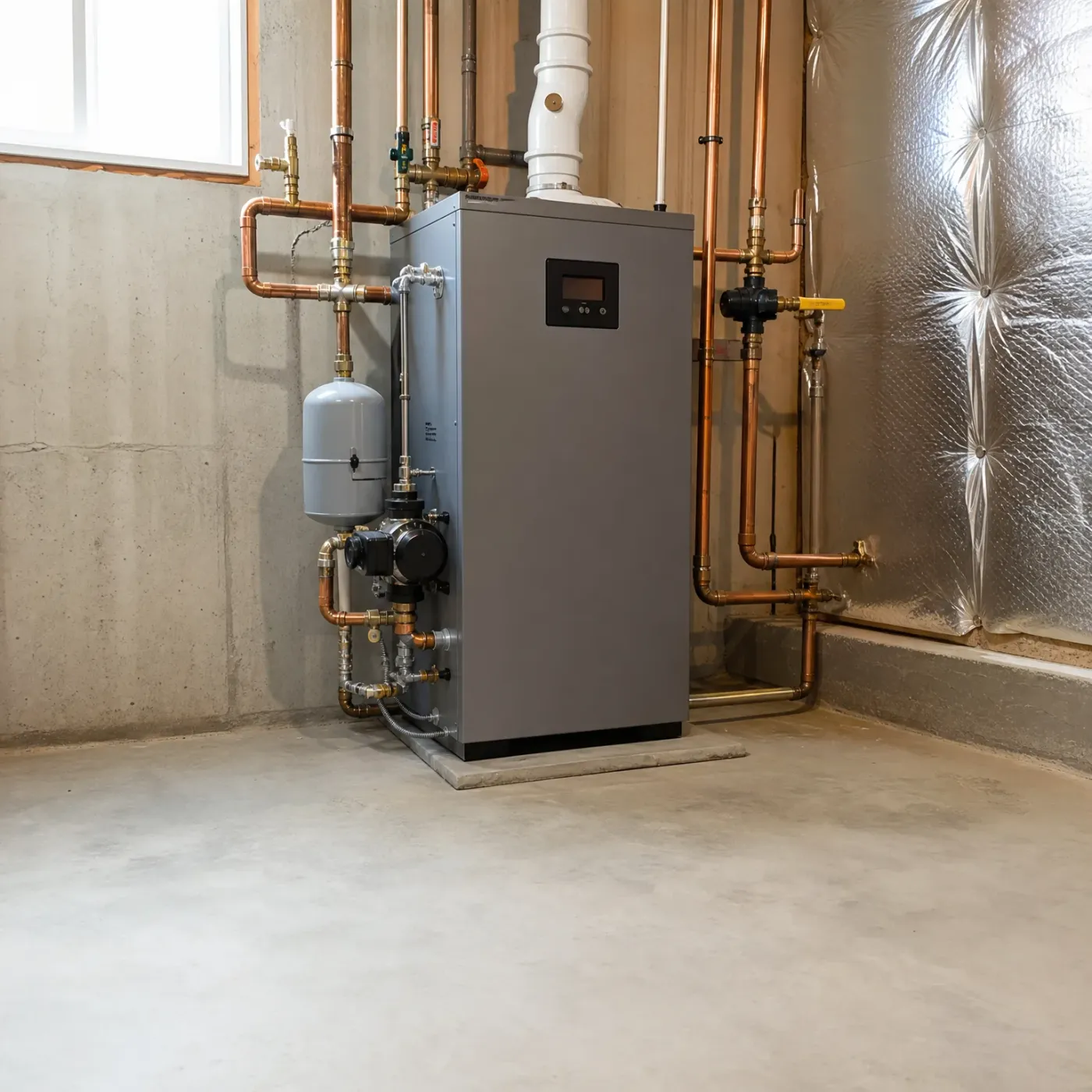
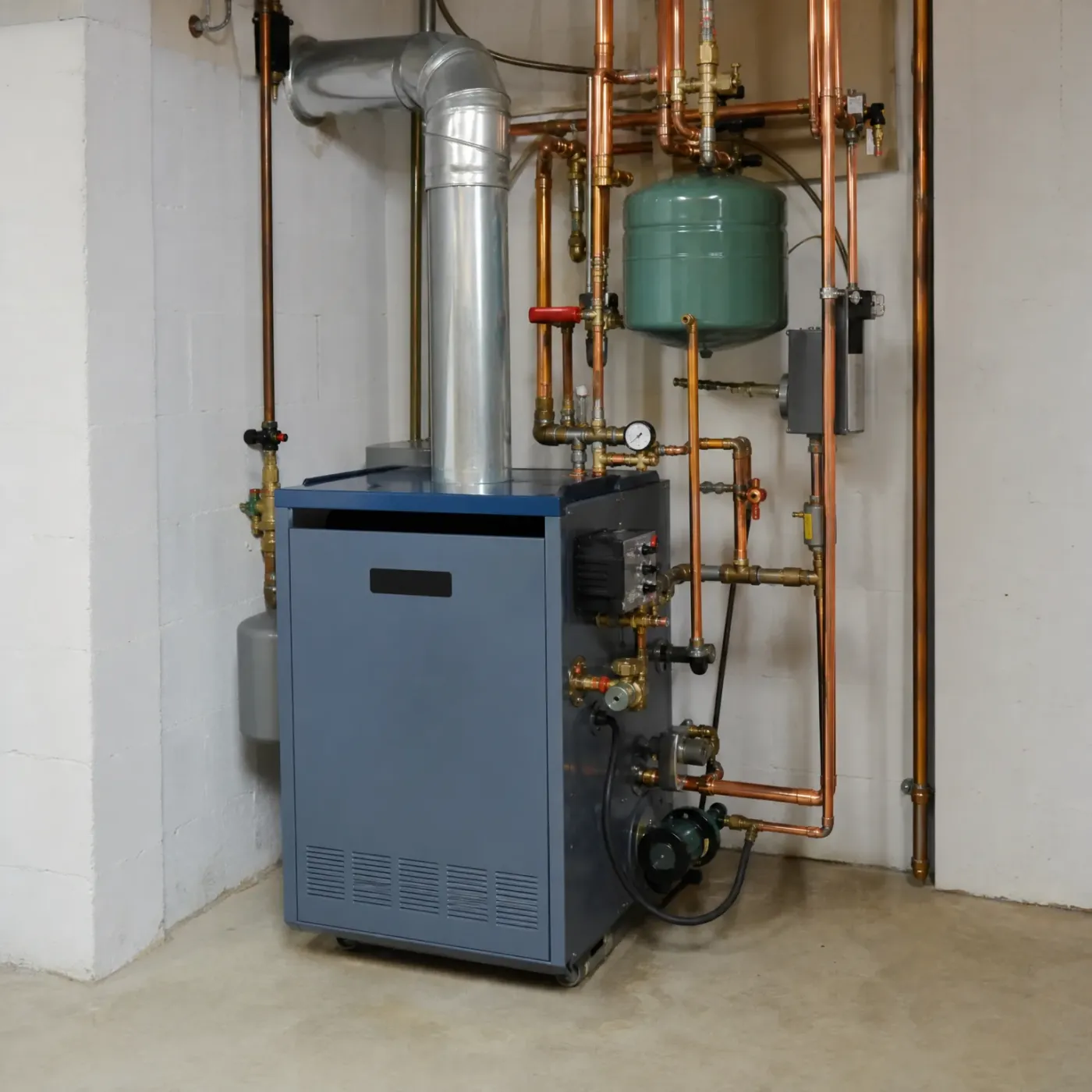
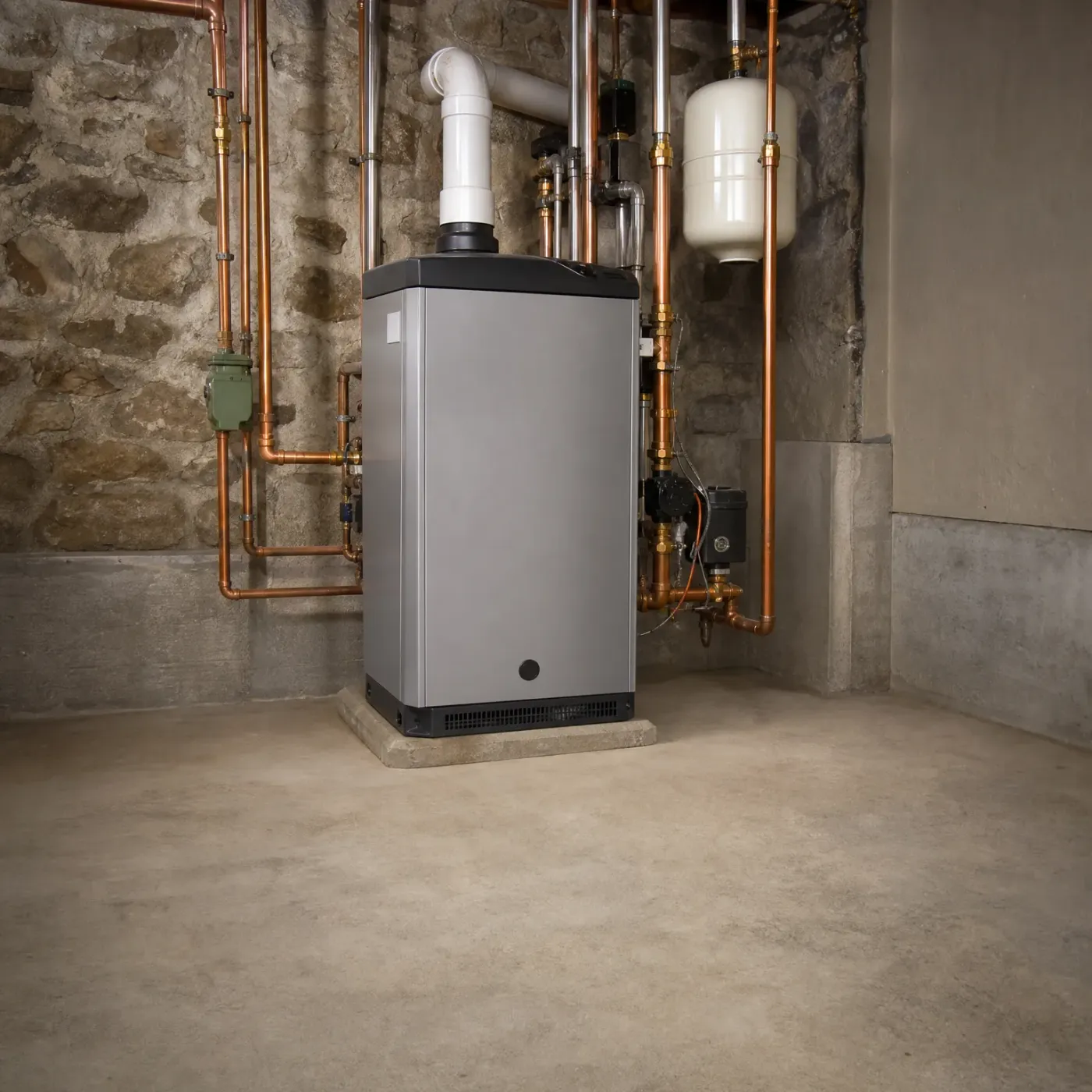
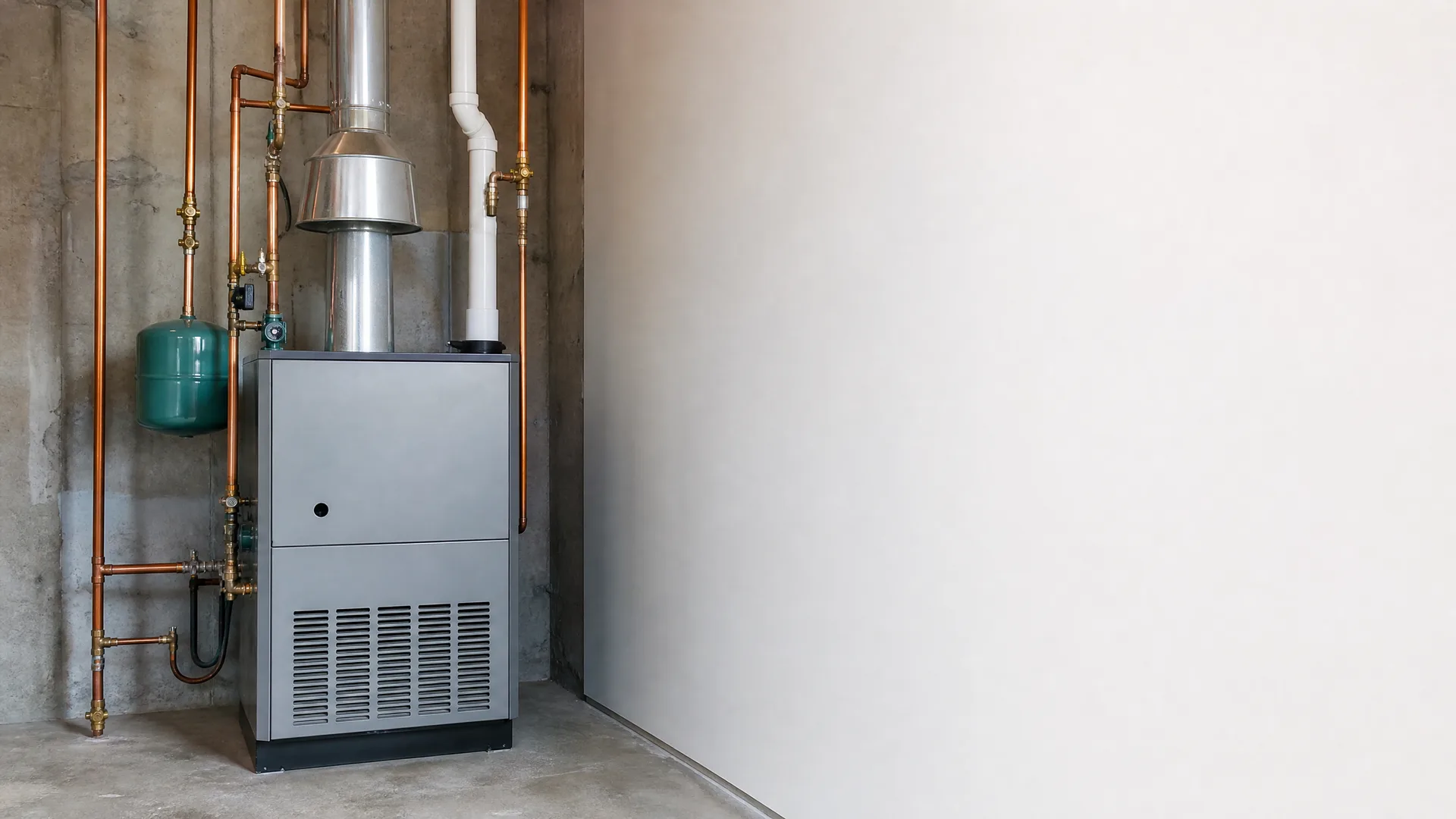
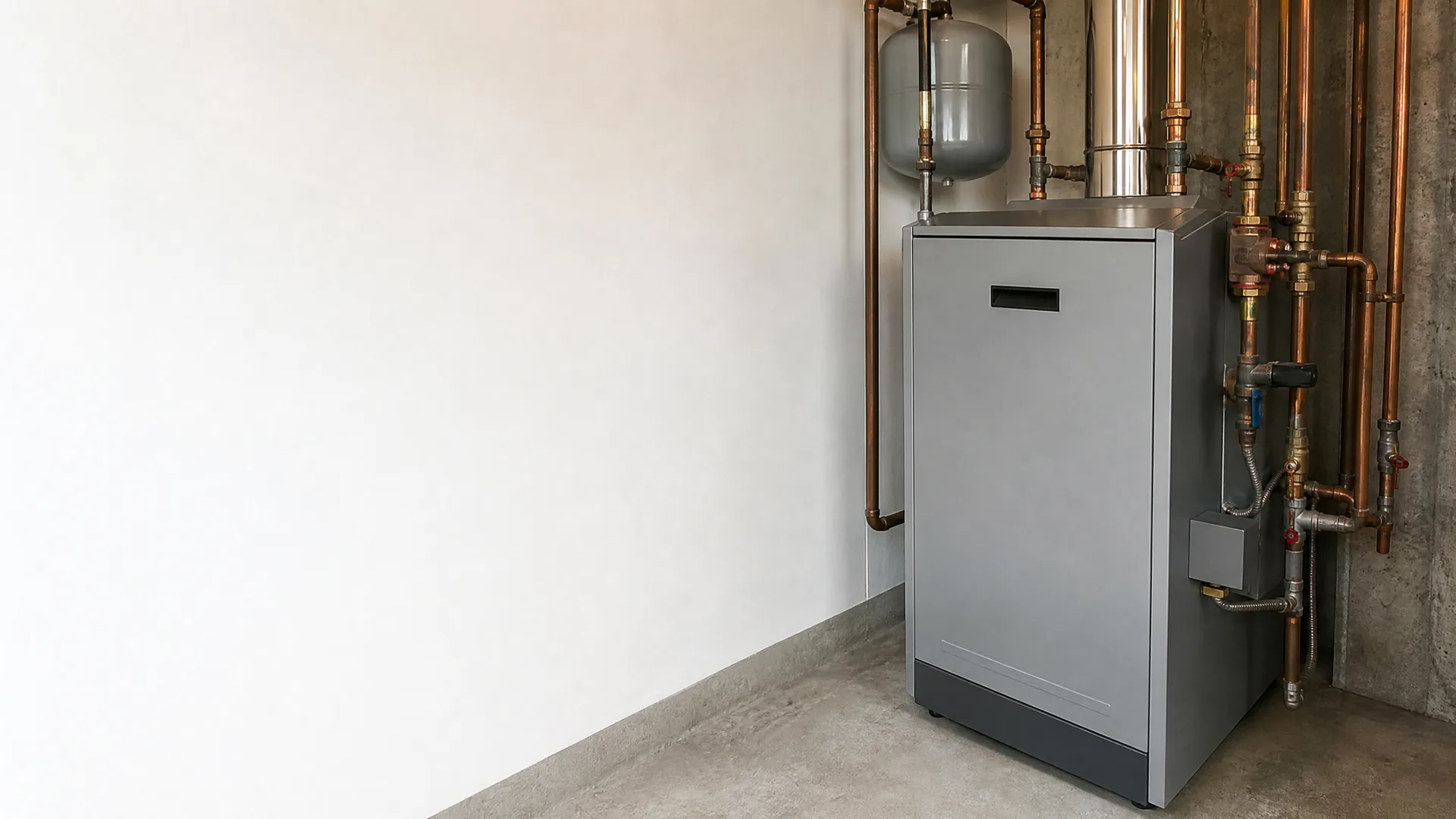
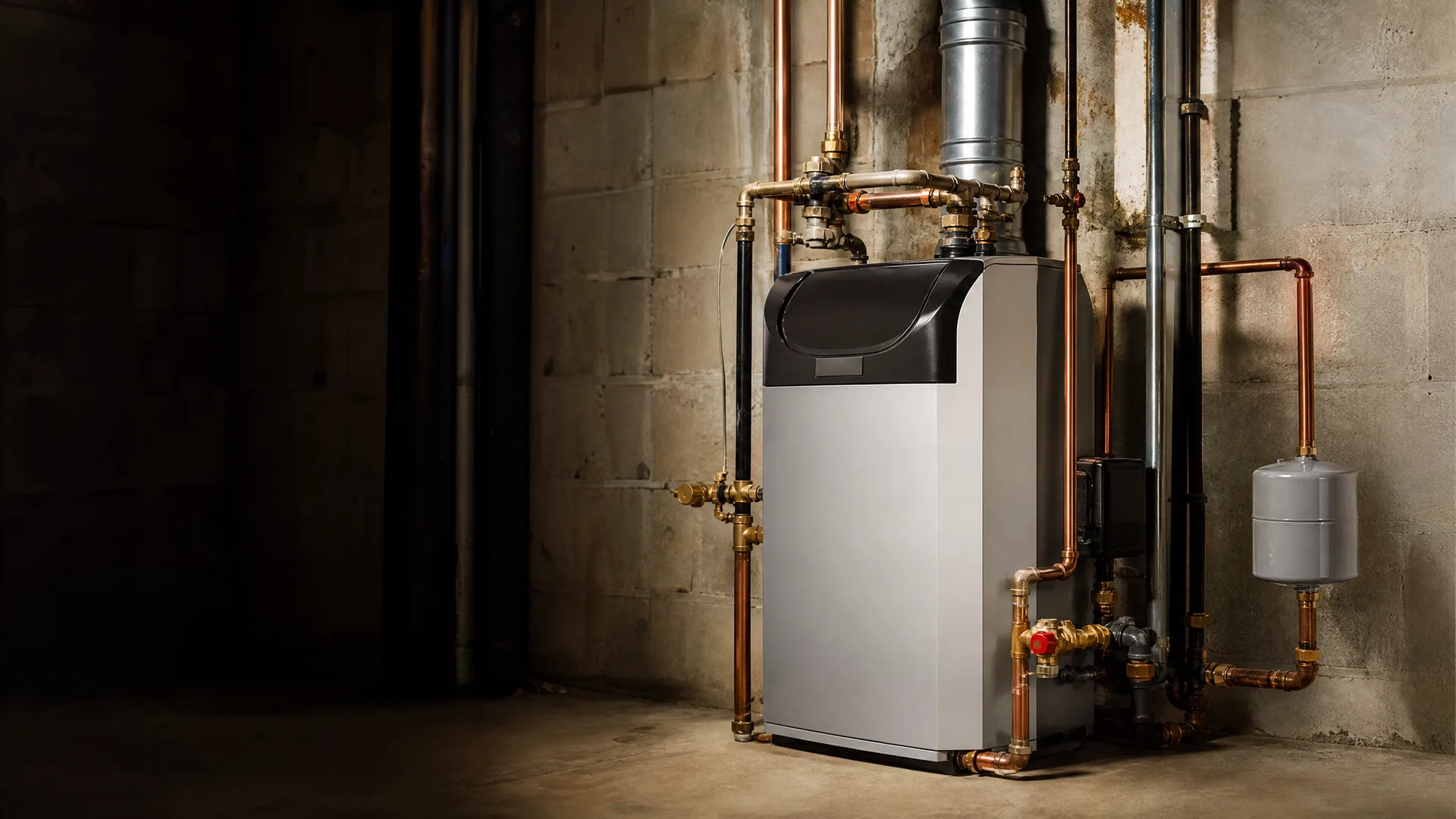
This is a pilot doing its job: a steady flame, copper lines intact, the system holding pressure through its expansion tank. A boiler like this heats on demand and gives you no reason to go check on it.
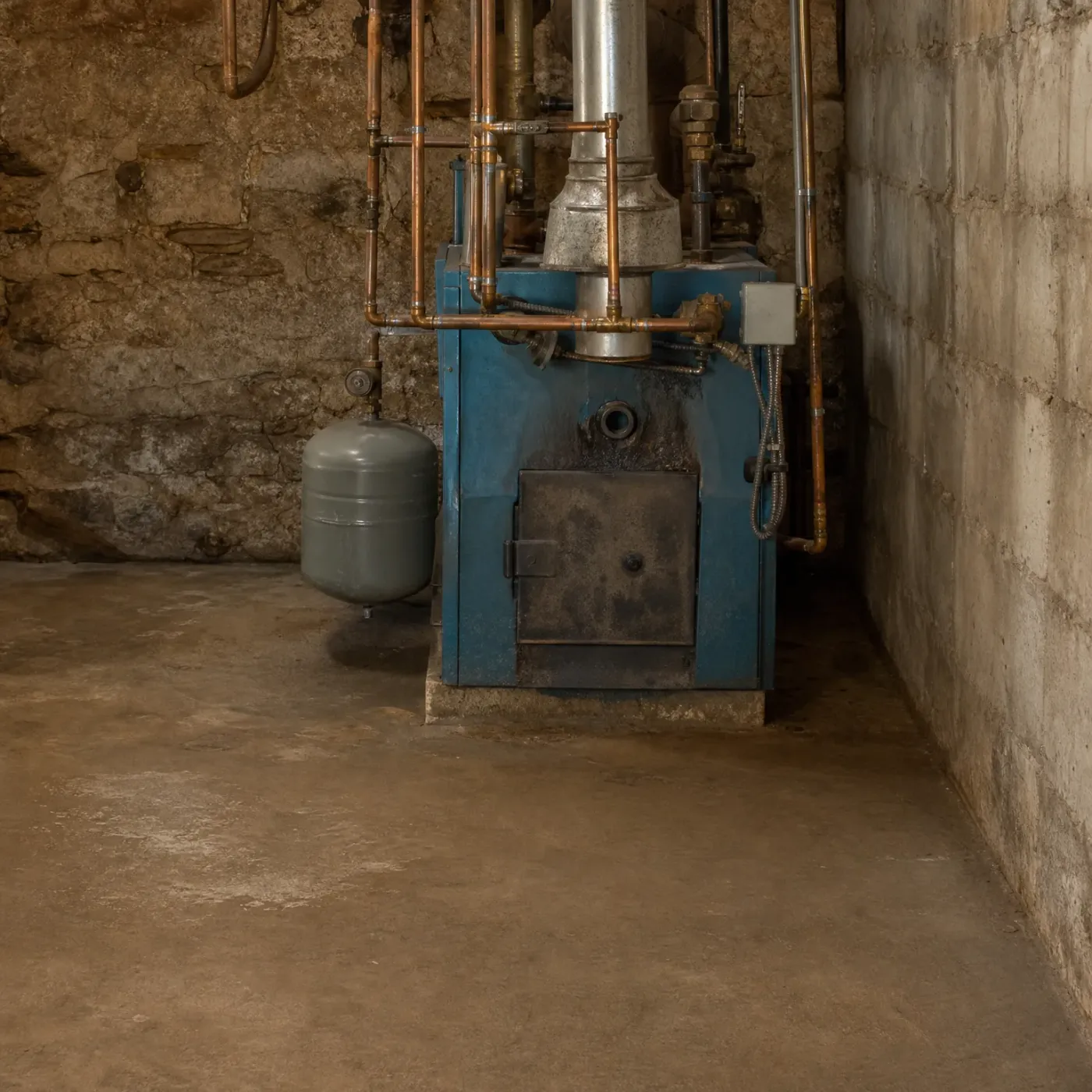
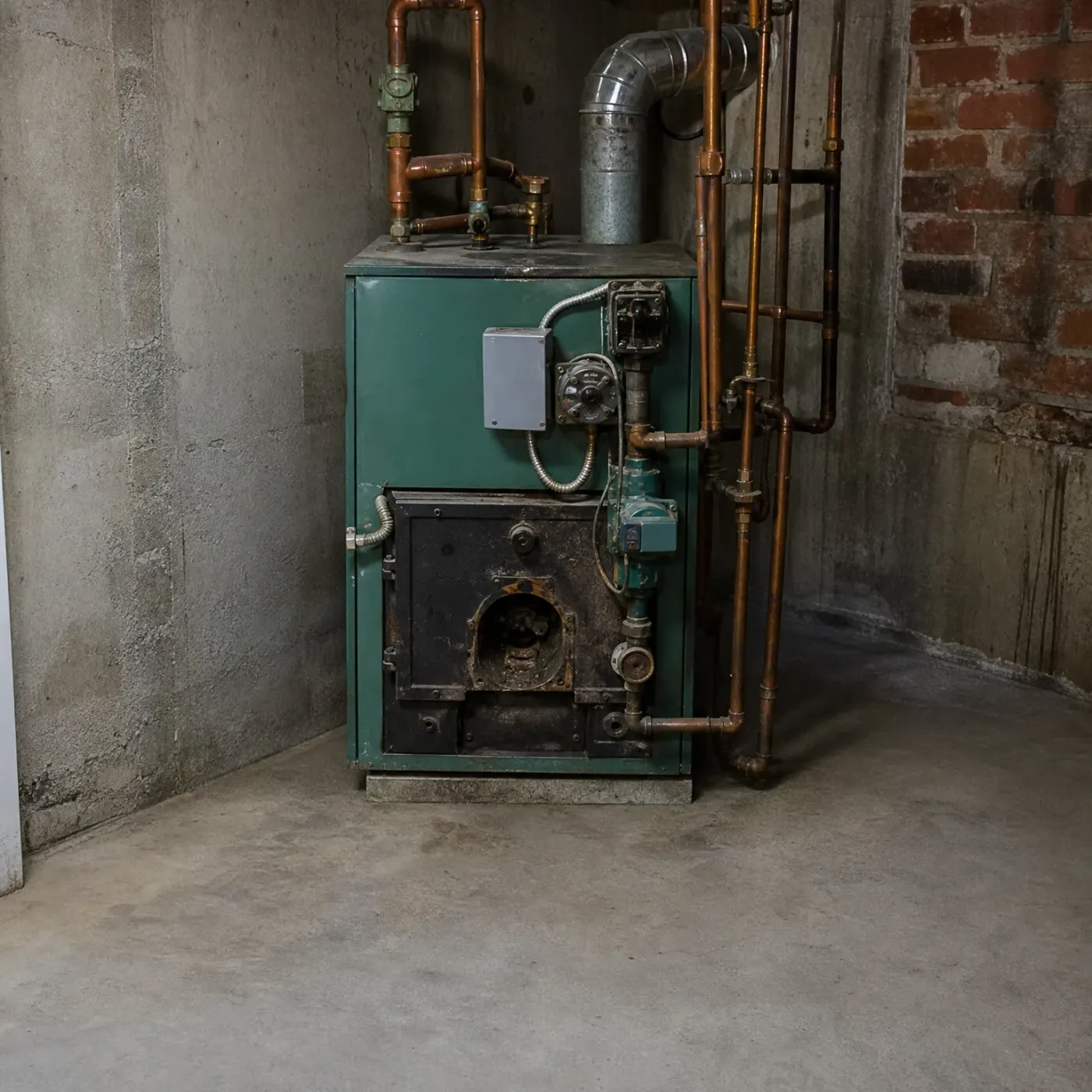
This is what brings on a service call: a dead pilot, a firebox scaled with corrosion, an access door that's seen too many years of heat. A unit in this shape needs a trained eye, not another match.
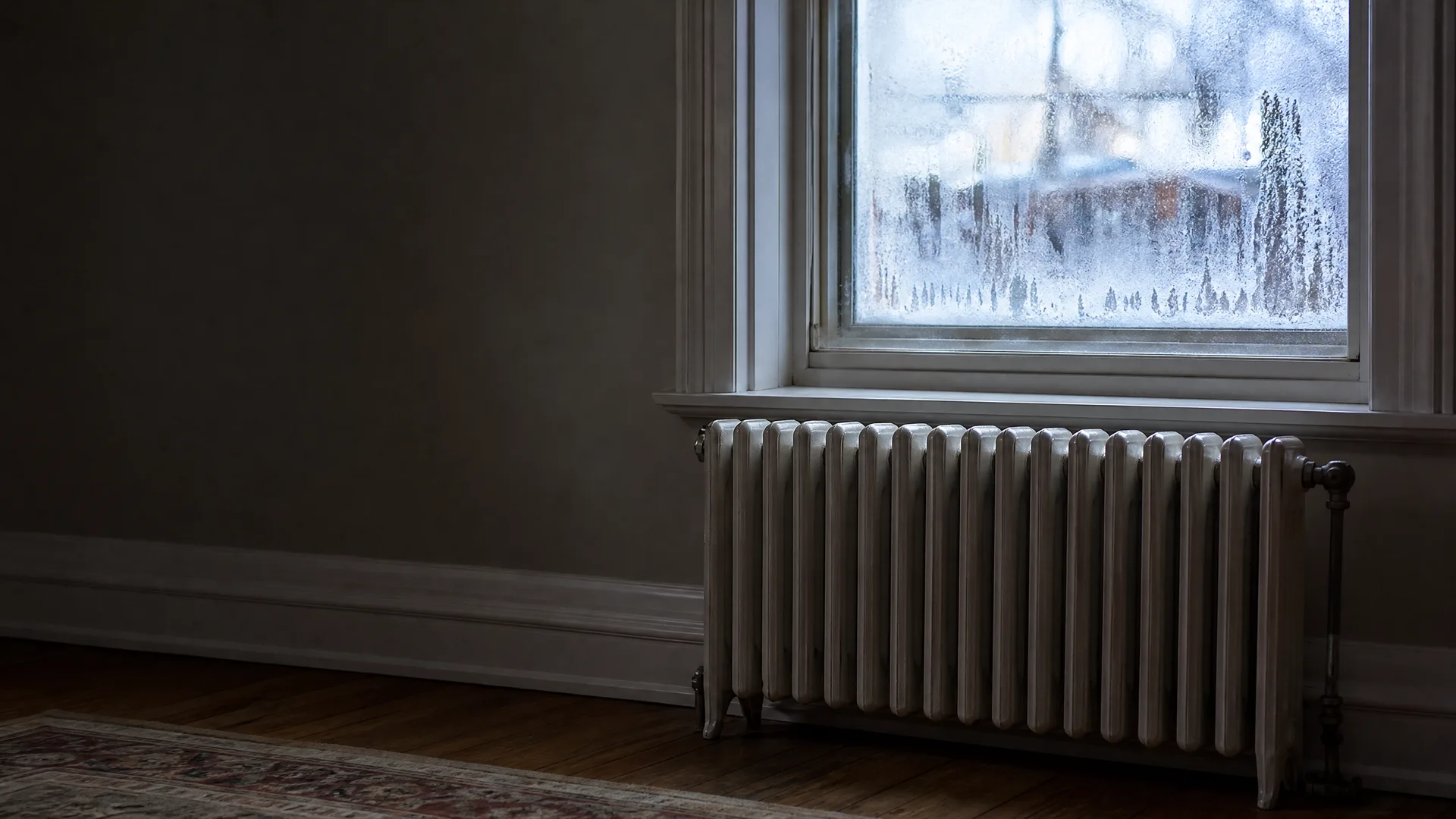
You come downstairs before the thermostat ever gets a chance to call for heat, and the living room already feels wrong. It's January, barely light out, and the radiator under the window sits cold to the touch. The glass has ice on the inside, just a thin skin of it in the corner where the pane meets the frame. You crouch down and check the sight glass on the boiler. No flame. You never had to think about this thing before. Outside, Montgomery County is doing what it does in January, sitting in the low 40s overnight, and the house has nothing else carrying the load.
43°F is a cold house by morning, not a cool one. Your boiler isn't working against a hard winter here, just a handful of chilly nights, so a dead pilot has an easy enough job to do once it's lit again.
NOAA nClimDiv 1991-2020
Finding a boiler tech in Montgomery County usually means searching, calling a few numbers, and explaining the same thing each time: pilot won't hold, you've already tried relighting it twice. Some won't call back. Some don't work on boilers at all, since most homes here run on electric heat and boiler techs are fewer. You end up sorting quotes and credentials yourself with a cold house while you wait.
You answer a few questions about the boiler and what it's doing, and a contractor who works on boilers in your area reaches out to you. No list of numbers to work through, no repeating the thermocouple story to a third dispatcher. Someone who already knows what a dead pilot on a Conroe boiler usually means gets in touch and takes it from there.
You check the sight glass and the flame's gone, or it lights and dies again within a few seconds no matter how long you hold the button down. The burner never kicks on when the thermostat calls for heat. Radiators that were warm yesterday are cold now, and the house has that flat, stale feel a house gets when nothing's been heating it. You might smell a faint trace of gas near the pilot assembly, or notice soot or a rust-colored stain around the opening where the flame sits. Left alone through a cold snap, a house with no working pilot can drop further than expected overnight, and pipes that run through an unheated space are the ones worth checking first.
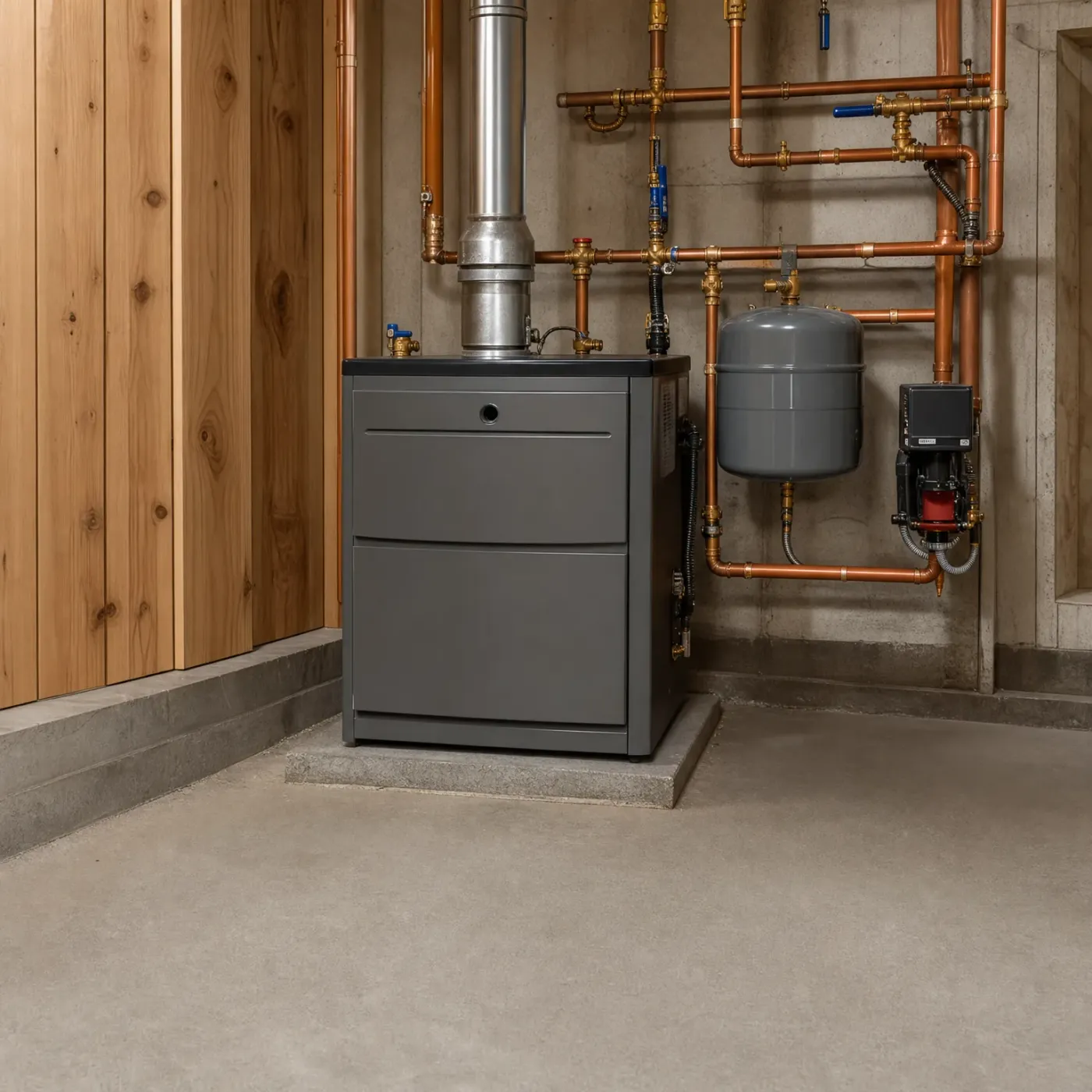
Copper pipes run clean overhead to the expansion tank and circulation pump. The flue sits straight and tight to the boiler. A setup like this holds pressure and heats on demand without you thinking about it.
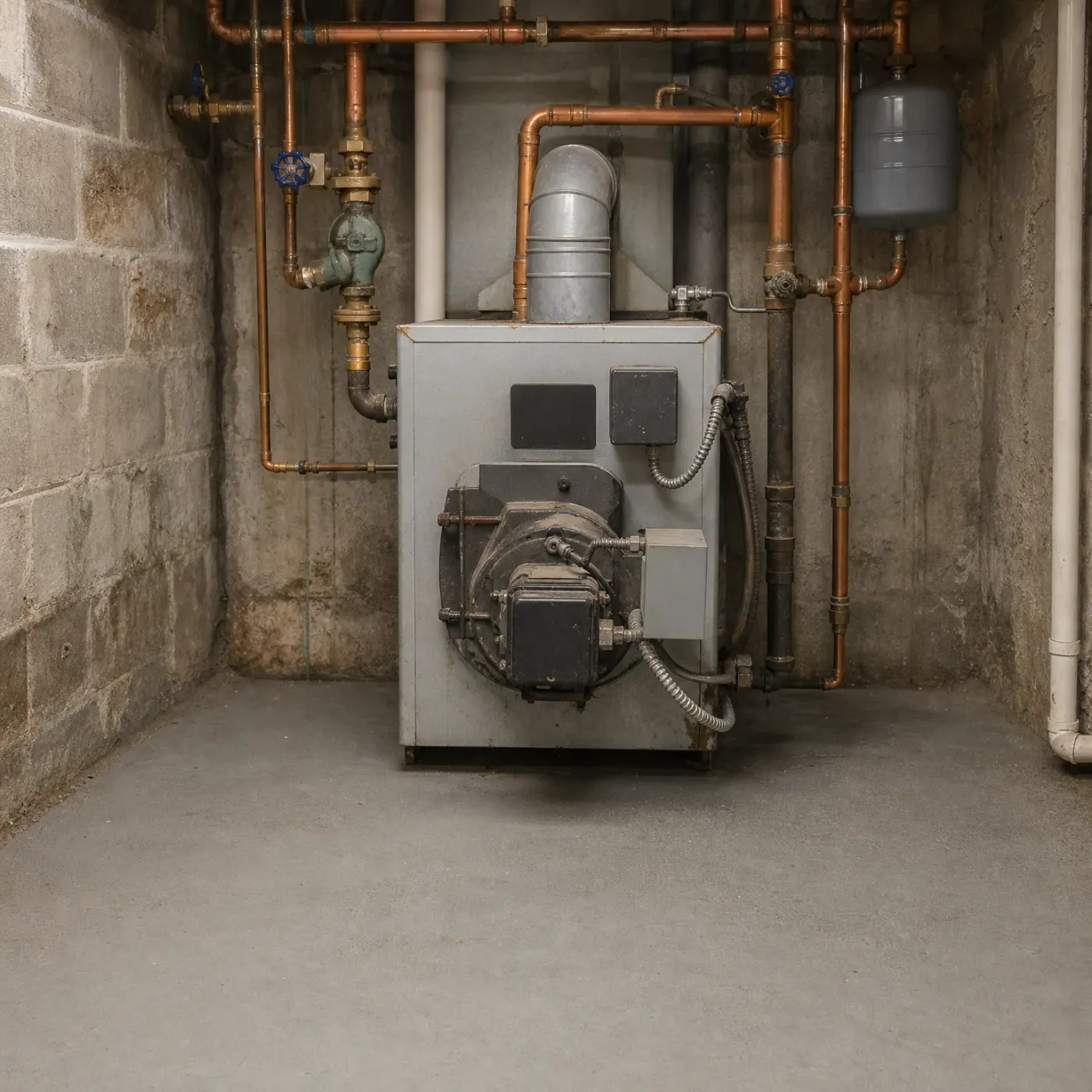
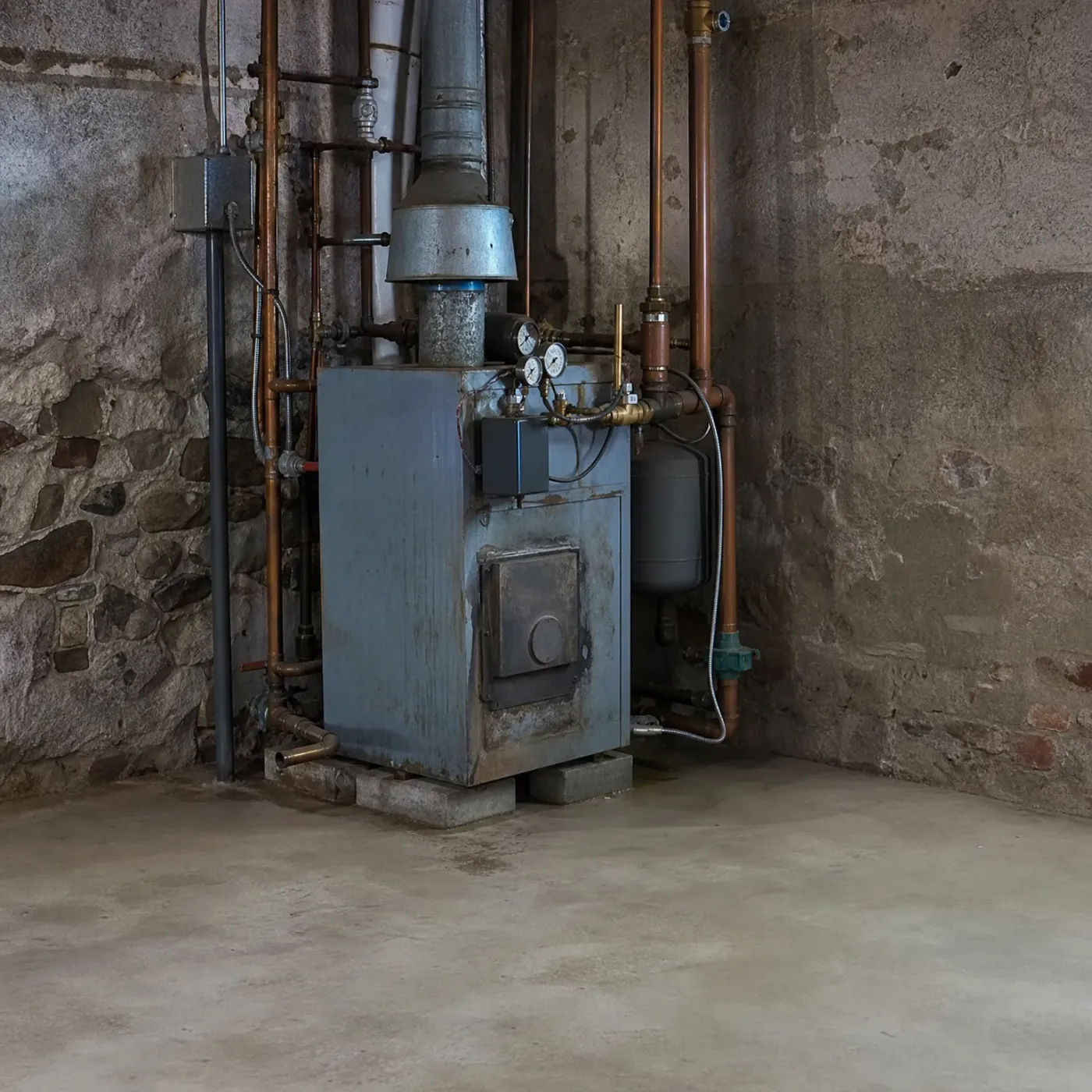
Shut-off valves and brass fittings sit under an unfinished block wall, and the flue rises from a boiler that isn't holding its pilot. Nothing here tells you why from a glance. That's the part worth having a trained eye look at.

A thermocouple that's worn out, a draft reaching the flame, or dirt in the pilot orifice. That's what's behind a pilot that won't stay lit, and it's true whether this is the first time it's happened or the third time this month. A trained eye can tell which of the three it is faster than another round of relighting ever will.
You don't have to figure out which one it is yourself, or spend an evening calling boiler techs around Montgomery County to find one who'll actually pick up and come out. Once you're matched with a contractor who works on boilers like yours, they'll reach out to you directly, and you can describe what you're seeing, the flame dying in a few seconds, the burner never kicking on, once instead of to every number you dial.

Find a boiler repair pro in Montgomery County