Boiler leaking water in Plano, TX

Get matched with a pro who works on boilers in Collin County.

Get my match

A leaking boiler usually means a failed pressure relief valve, a cracked heat exchanger, or a loose fitting somewhere in the pipework. The pressure relief valve is the most common culprit. It's built to open when pressure inside the system climbs too high, and once it opens it can keep dripping even after pressure drops back down. Corroded pipe joints and a worn pump seal are the other usual suspects, especially in a boiler that's been running for years without issue and then starts showing water around the base. Some leaks are minor and slow, just a damp spot that grows over weeks. Others show up fast, with water pooling under the unit within a day. Either way, a boiler shouldn't be running while it's leaking. Water near a gas line or electrical connection is a real hazard, and a boiler losing pressure from a leak can shut itself down or run poorly until it's fixed. Figuring out which part failed takes someone who can pressure test the system and look at where the water is actually coming from.

Why does a Plano boiler have to work so hard all winter?

  • Winter nights average 36°F

    Nights here average 36°F in December, January and February, so your boiler is cycling on and building pressure most of the night, not just now and then.

  • Heat runs November through March

    Heat runs about five months, November through March. That's a long stretch for a pressure relief valve or a fitting to hold up without a check.

  • 49.8% of homes heat with electricity

    Most homes in Collin County heat with electricity, not gas or oil. A boiler here is often the less common setup, so finding someone who knows the equipment matters.

NOAA nClimDiv 1991-2020 · ACS 2020-2024

A fitting or valve let go

If the water showed up fast, around a union, a drain valve, or where a pipe meets the boiler, you're probably looking at a loose or worn fitting rather than anything inside the boiler itself. These connections take a lot of heat cycling over the years, and the seals or washers in them wear out. A contractor can usually tighten or replace the fitting itself without opening up the boiler. It's the kind of repair that gets your heat back the same day, since the boiler's core components aren't involved.


The heat exchanger is cracked

If the leak is coming from inside the boiler's casing, low on the unit, with no single fitting to point to, that often means the heat exchanger itself has cracked. This happens as the metal expands and contracts through years of heating and cooling. It's a harder repair, and on an older boiler a contractor may tell you replacing the whole unit makes more sense than replacing just that part. Either way, a boiler shouldn't keep running with a cracked heat exchanger, since it can let combustion gases mix with your heating water.

A middle-aged man with grey hair and a beard, wearing a grey knit sweater, sits on a light sofa in a sunlit living room with a houseplant, wooden cabinet and framed landscape picture behind him.
A man with greying hair and a beard in an olive sweater sits on a sofa in a living room, looking to his left, with an armchair, round side table and large glass doors onto trees behind him.
A gray-haired bearded man in a dark blue shirt over a white t-shirt sits on a leather sofa in a living room with built-in shelves, a floor lamp, an armchair and large windows, looking off to the side.
A man with gray-brown hair and stubble in a dark sweater sits on a light-colored sofa in a living room, looking off to the side, with a houseplant, framed picture, shelving and a sunlit window behind him.

Where the water is actually coming from

  • Water pooling under the boiler often traces back to the pressure relief valve discharge pipe, not a crack in the unit itself.
  • A heat exchanger that's cracked usually leaks only when the boiler is firing, since the metal expands and opens the gap.
  • Condensate from a high-efficiency boiler can look like a leak but it's just the exhaust gases cooling into water and draining off.
  • Mineral buildup inside old fittings makes them brittle, and they can weep slowly for weeks before anyone notices.
  • A circulator pump with a bad seal will leak right at the pump housing, usually a steady drip rather than a puddle.
  • Rust-colored water points to corrosion working from the inside of a pipe or fitting, which tends to get worse, not better, with time.

Tracing a leak starts with figuring out which of these it is, because the fix is different for each one. The pressure relief valve sits near the top of the boiler with a small pipe running down toward the floor. If that pipe is wet or dripping, the valve opened because pressure built up past its limit, and the valve itself is often fine. A cracked heat exchanger is harder to catch since it only leaks under heat, when the metal has expanded enough to open the gap, and can look dry again once the boiler shuts off and cools. If your boiler is a newer high-efficiency model, some water draining off is normal. These units pull extra heat out of the exhaust, and that process turns part of the exhaust into water, which drains out through a condensate line. That's not a leak to worry about on its own, though the line itself can clog or come loose. Older fittings get brittle from years of mineral deposits building up inside them, and a joint like that can weep for weeks before it's bad enough to spot. A circulator pump leaking at the housing means the seal inside has worn out, and it'll usually show as a steady drip right at the pump rather than water spreading across the floor. Water with a rust tint means corrosion has already started eating through metal somewhere, and that's a problem that spreads rather than settles down.

A green metal boiler with pressure gauge stands in a concrete basement corner, surrounded by copper and black iron pipes and two tank-shaped vessels.
Before you get your boiler repair
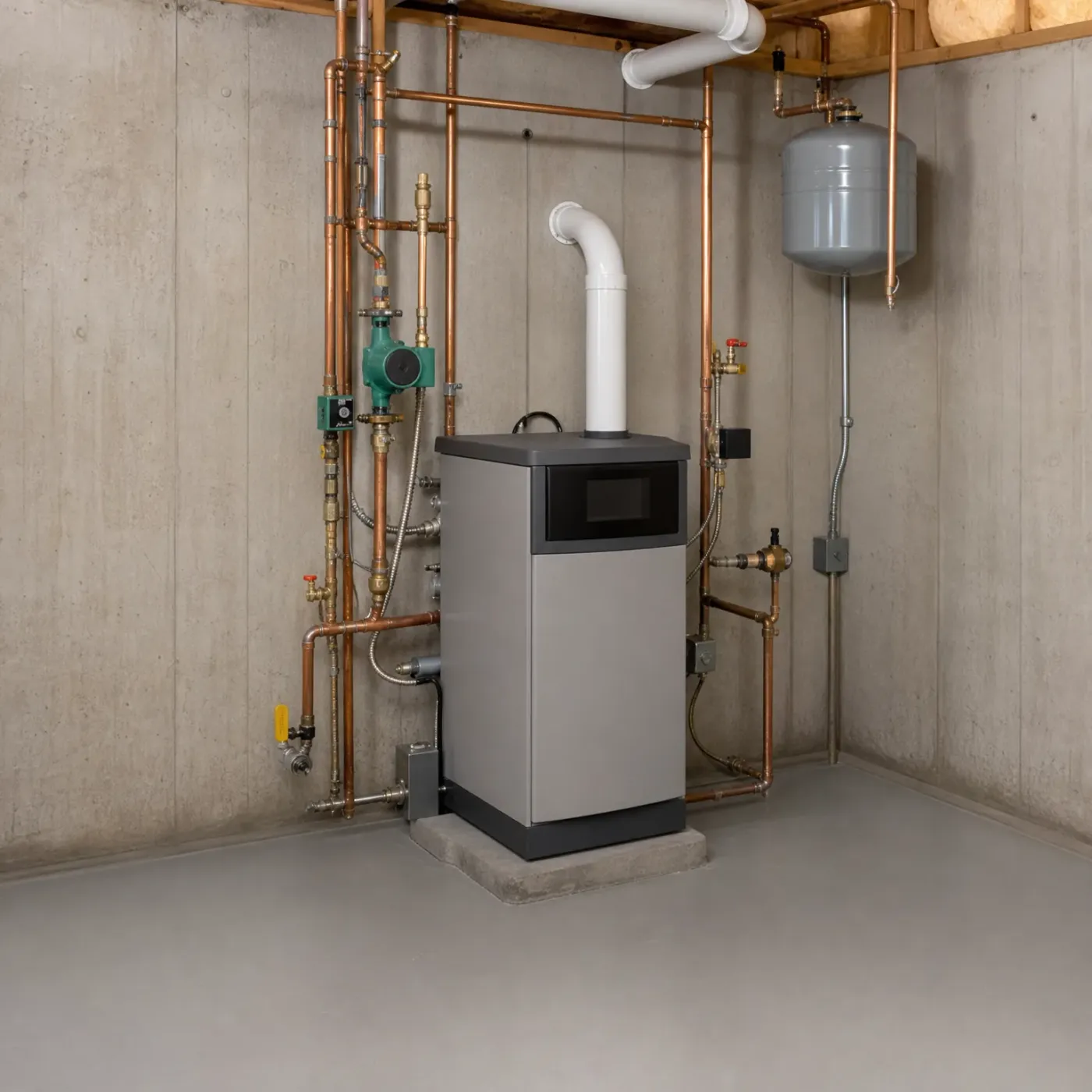
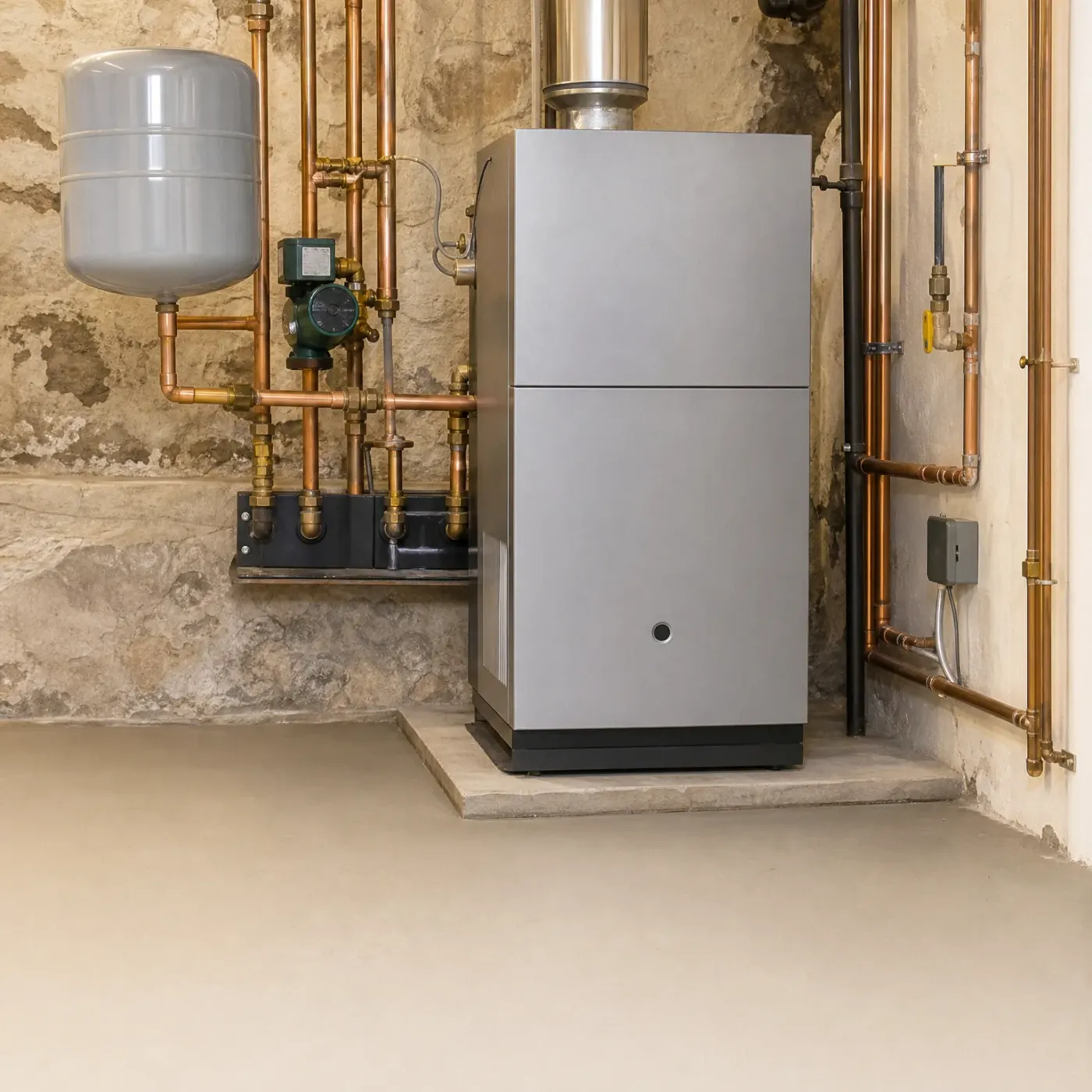
A gray floor-standing boiler on a concrete pad in a basement corner, with copper piping, a circulator pump, a white PVC flue, and a gray expansion tank mounted on the wall.
After you get your boiler repair

Get matched with a boiler pro in Collin County

A boiler that's leaking right now doesn't wait for a convenient week. Water pooling near the base can mean a few gallons a day soaking into the floor, or it can mean the pressure relief valve is doing exactly what it's supposed to do because something upstream is wrong. Either way, the longer it runs like that, the more it stresses the fittings and the heat exchanger around it. A local contractor who works on boilers through a Plano winter has likely seen your exact symptom on a dozen other systems and knows where to look first. Getting matched with one contractor means someone who actually services this equipment in Collin County homes looks at your situation directly, instead of your request getting passed around. With nights still cold enough to keep your boiler cycling, a leak you can catch and explain now is easier to deal with than one you discover after it's done more damage.

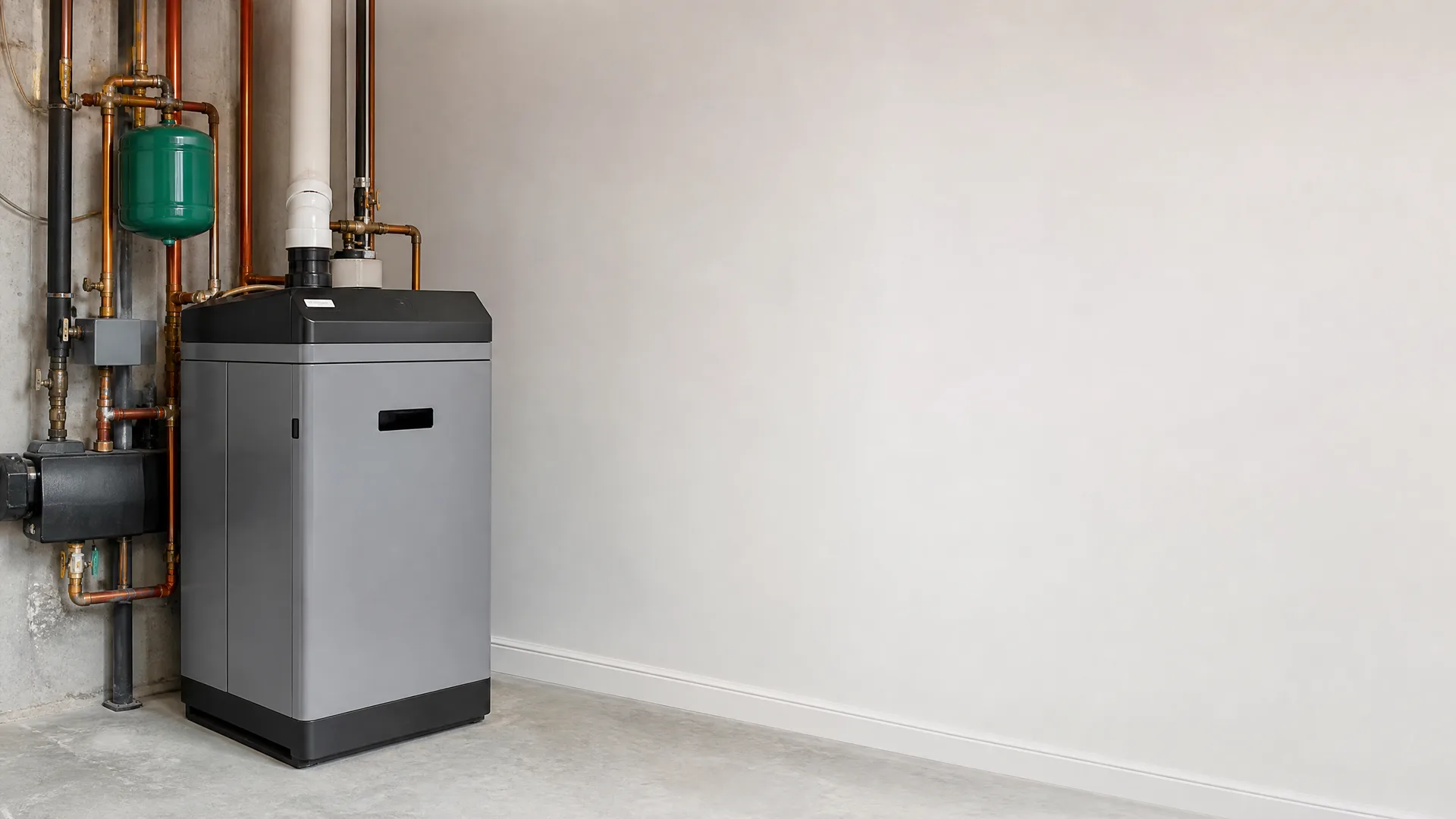
A gray and black floor-standing boiler in a corner of a room, connected to copper and plastic pipes and a green expansion tank on the wall, with a concrete floor and plain light wall.

Pressure builds overnight, not instantly

A boiler doesn't reach full pressure the moment it fires. Water has to heat, expand, and push against the system before the relief valve has any reason to open. On a cold December or January night, that climb happens over hours, which is why a leak often shows up as a puddle you find in the morning rather than something you catch while it's happening.

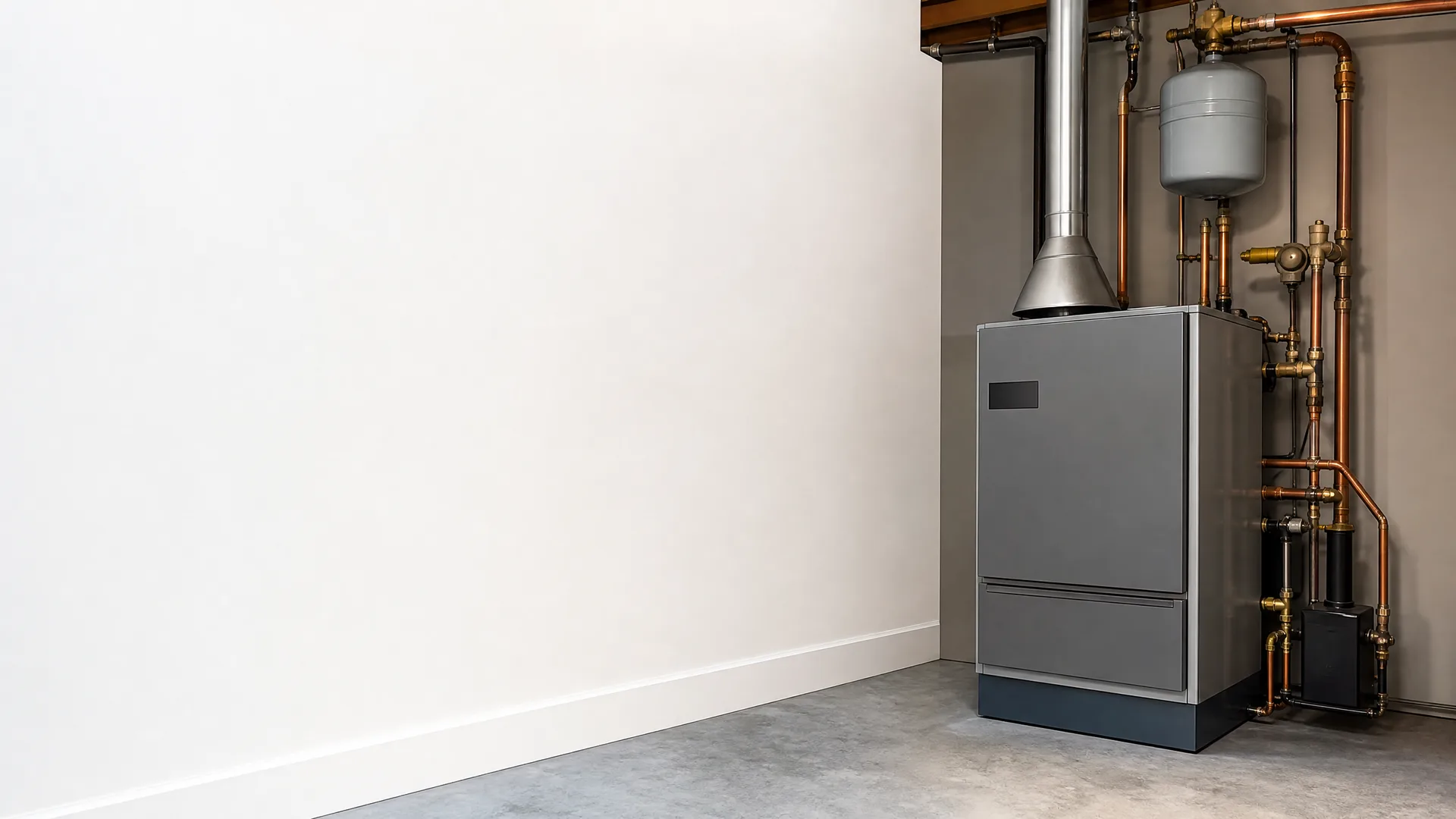
A gray floor-standing boiler with a metal flue pipe and copper piping with an expansion tank stands in the corner of a room with a bare white wall and concrete floor.

Steel and copper react differently to heat

A heat exchanger is usually steel or copper, and both expand when they heat up and contract as they cool. A hairline crack can close up tight when the boiler is off, then open again once it's firing and the metal swells. That's why some leaks only ever show up while the burner is running and seem to vanish the rest of the time.

Is it safe to run my boiler while it's leaking?

A boiler that's actively dripping or pooling water is unnerving, and shutting down heat in January doesn't feel like an option either. Before anyone touches a wrench, you want to know whether firing it up again is dangerous or just messy, and whether waiting a day or two for a repair visit will make things worse.

Turn it off until someone looks at it

Water near a boiler that's still running is a sign the system is under pressure it shouldn't be under, and running it longer doesn't resolve that, it just keeps pushing water through whatever gave way. If the leak is coming from the relief valve discharge pipe, the valve is doing its job correctly, but the cause behind it is still there every time the boiler fires. If it's a cracked heat exchanger, the leak will often show up only while running and stop once it cools, which can make it seem minor. Either way, shutting off the boiler and the water supply to it limits the damage until a licensed contractor can check the pressure, the valve and the exchanger itself.

A gray boiler unit with a flue pipe stands on a concrete pad in a basement, surrounded by copper piping, a circulator pump, an expansion tank mounted on a stone wall, and an electrical outlet.

A boiler that's holding pressure the way it should

No water on the pad, no rust streaks down the side, no drips off the relief valve or the fittings. The expansion tank and pump do their job quietly, and the gauge sits where it's supposed to.

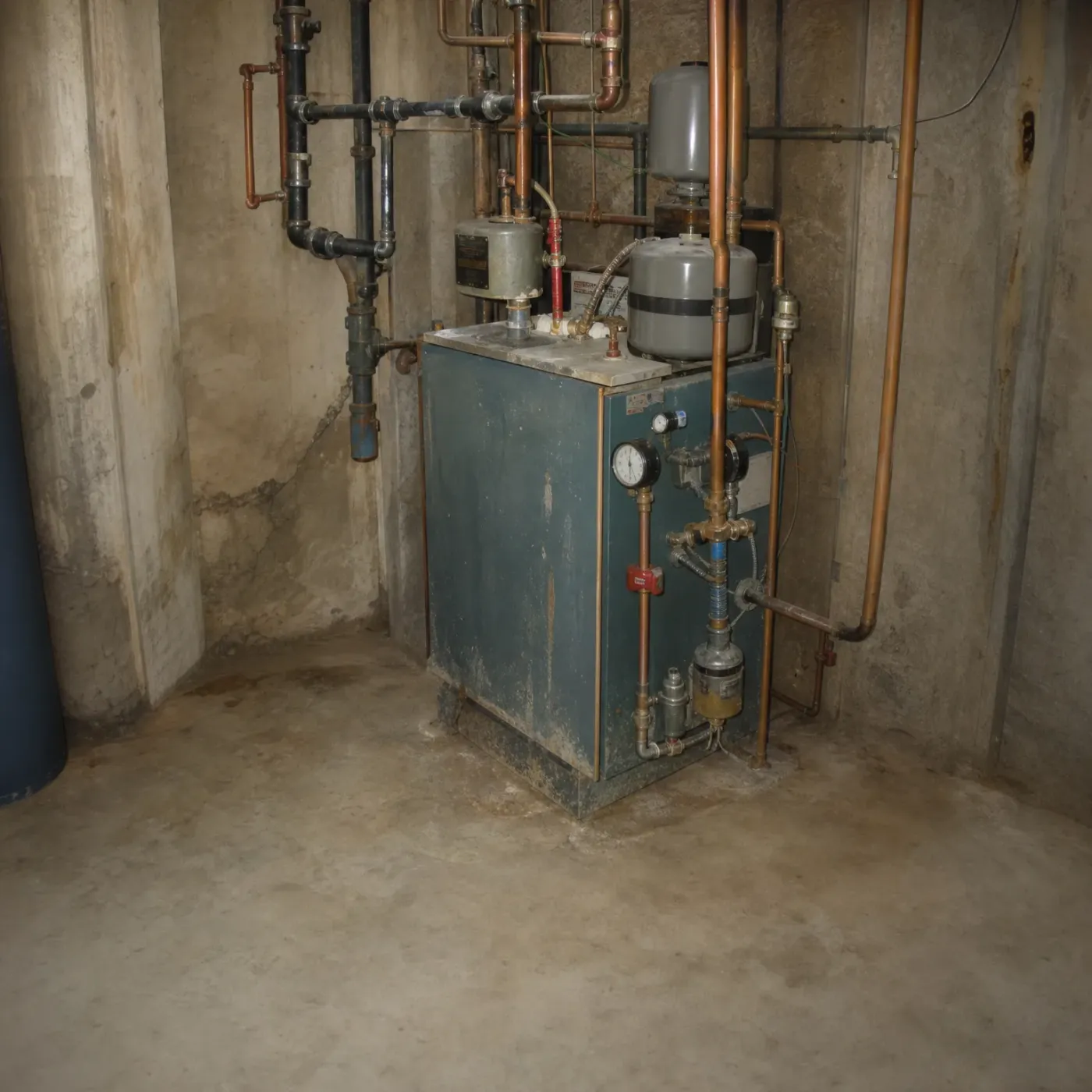
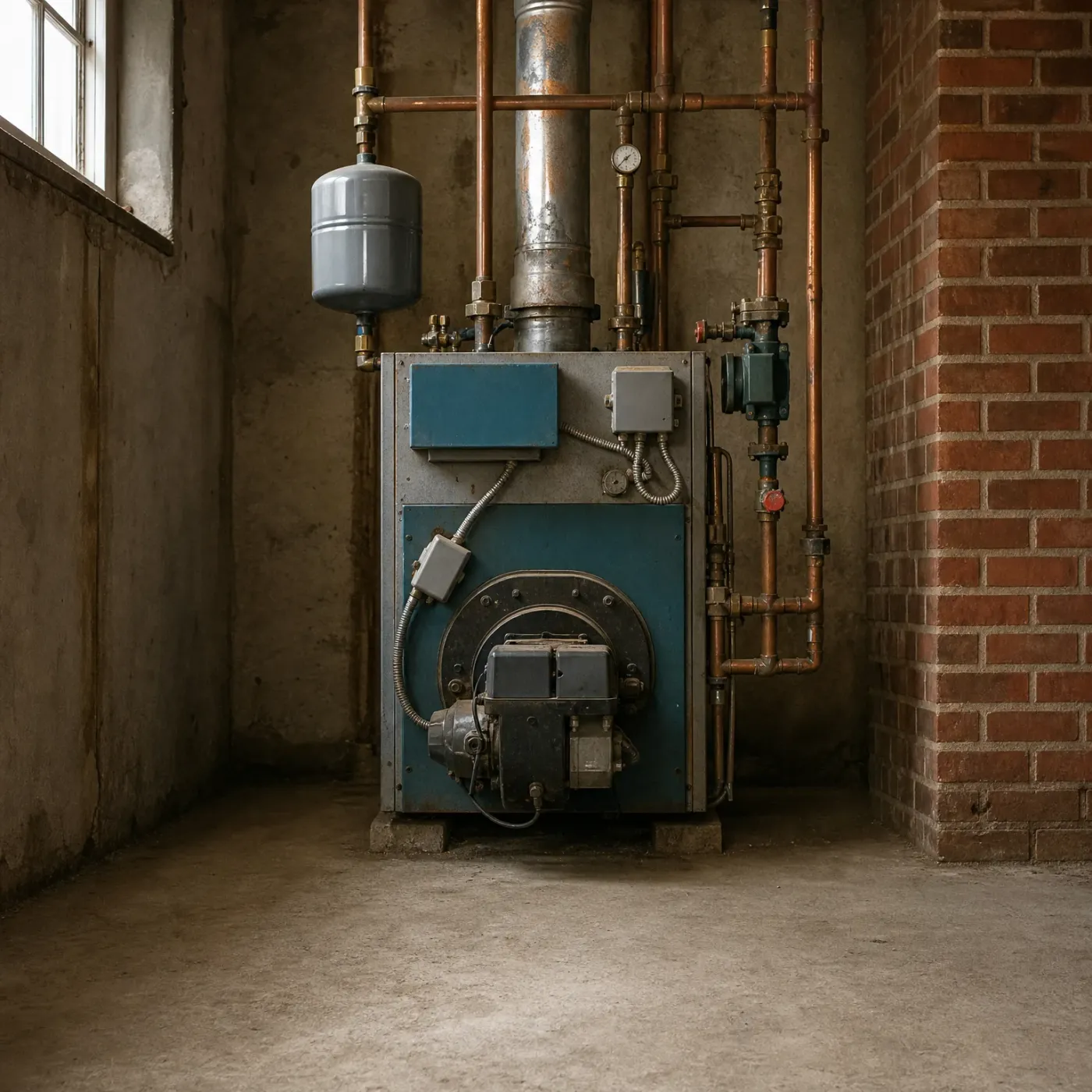
A blue cast-iron boiler with a burner unit, gauges and copper piping stands in a concrete-floored basement room beside a red brick pillar and a window.

A boiler that's telling you something's wrong

Bare walls, a painted-over tank, and a pressure gauge worth reading twice. On a unit this old, a weeping valve or a seam at a fitting is often the first sign of a problem underneath, not the whole story.

Winter nights average 36°F

At 36°F, your boiler holds pressure for hours at a stretch most winter nights, not just a quick cycle here and there. That's more time for a weak fitting or a tired relief valve to show a leak, which is why drips tend to show up overnight or early morning.

NOAA nClimDiv 1991-2020

A woman in a long cream cardigan and jeans stands at an open wooden front door of a gray shingled house with stone-based porch columns, with a second person visible inside, and potted flowers and shrubs beside the entry.

A leak doesn't fix itself

Whatever is behind the water on your floor, a relief valve letting go, a loose fitting, a cracked heat exchanger, it needs eyes on it before the next cold night builds pressure again. Guessing which one it is from the size of the puddle only gets you so far. Someone has to open the cabinet and look.

A licensed contractor near Plano who works on boilers all winter has seen these three causes more times than almost anything else, and knows where to look first. Answer a few questions about what you're seeing and you'll be matched with one contractor local to the area, not a handful of companies competing for your callback. They'll reach out to you directly and go from there.

A speckled beige ceramic vase holding thin dried branches sits on a round wooden table near a window with sheer curtains, with a dark upholstered chair and draped blanket blurred in the background.
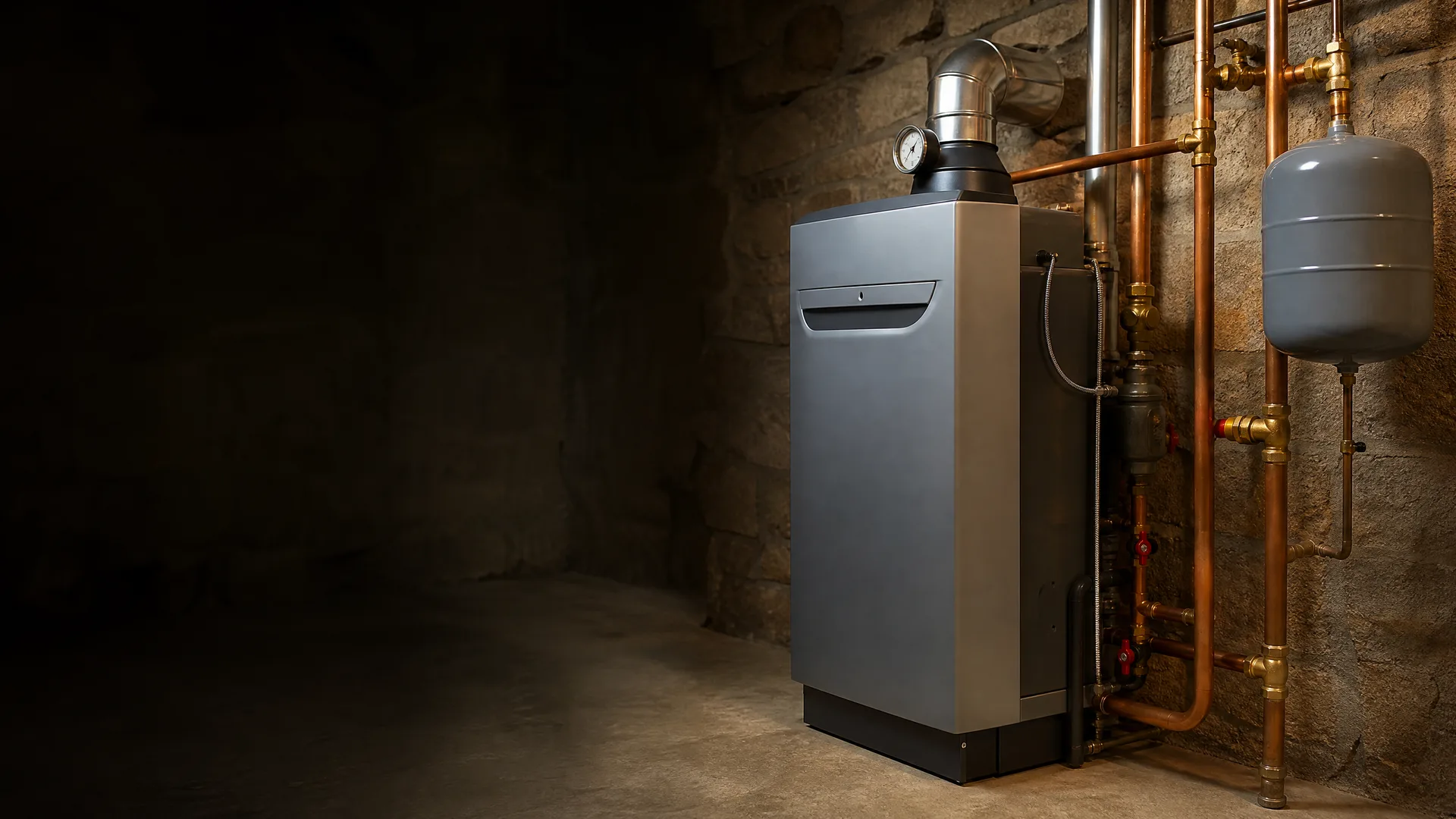
A gray floor-standing boiler with a flue pipe and pressure gauge stands against a stone basement wall, connected to copper and brass piping and a gray expansion tank.

Find a boiler repair pro in Collin County

Step 1 of 3: Equipment