30 PSI
That's the point most relief valves are set to open at. A reading that climbs toward it on your gauge, even without a leak yet, is worth having checked.
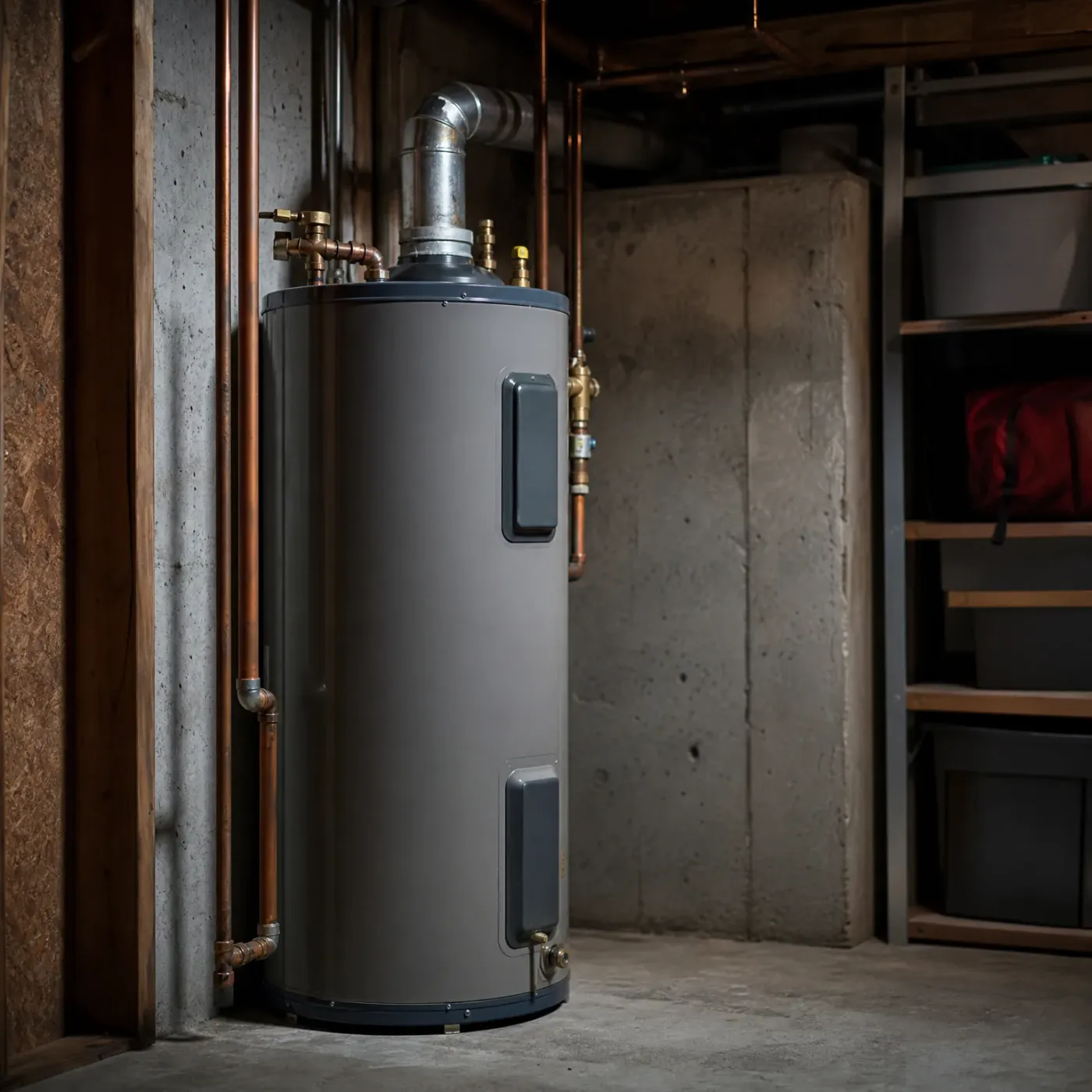
No calling every shop in Harris County
Water around the base of your boiler, or dripping from a valve or fitting, means something inside has failed or is about to. This page covers what's usually behind it and what to check before it gets worse. Skip the search for who handles this kind of repair in Houston and the back and forth of getting quotes. One licensed local contractor who works on boilers all year gets the call instead.
Start one formWater at the base of a boiler usually comes from one of a few places: a pressure relief valve letting go because the system is overpressurized, a corroded tank or fitting that has finally given way, or a loose connection at a union or circulator pump. If the leak is from the relief valve, it is doing its job, and the real problem is pressure building up somewhere upstream. If it is coming from the tank itself, that is corrosion from the inside out, and it does not stop or reverse on its own. A boiler that came with your house has had years of heating cycles to wear on its seals and fittings, so a slow weep today can turn into a steady drip within weeks. Houston winters are mild, so the boiler is not running constantly, but a leak does not care how often the system fires. Left alone, it corrodes nearby parts, trips safety switches, or leaves you without heat on the one cold night you need it.
Most leaks trace back to pressure. A boiler runs somewhere around 12 to 30 PSI, and the relief valve is built to open once it climbs past that. Once it opens and dumps water, it can stick just enough to keep dripping even after pressure settles back down. Behind that is often the expansion tank. It's supposed to absorb the water as it heats and expands, and when it waterlogs or fails, the relief valve ends up taking on that job instead, opening more than it should. Not every leak starts there. A circulator pump has a seal around its shaft, and once that seal wears, water shows up at the pump housing with no connection to the tank at all. On older cast iron boilers, the sections and steel tanks corrode from the inside, so what you see first is usually a seam weeping rather than anything sudden. Threaded fittings and unions loosen too, just from the boiler cycling on and off, and that's sometimes the whole story behind a slow drip.




That's the point most relief valves are set to open at. A reading that climbs toward it on your gauge, even without a leak yet, is worth having checked.
Boilers here run on and off all year for hot water, not just heat, so a fitting or valve gets more cycles of expansion and contraction than it would somewhere colder.
Winter nights average 45°F
Winter nights here only average 45°F, so the boiler isn't fighting hard freezes that would make a leak obvious fast through frozen, burst pipes.
Heat runs November through February
Heat runs here from November through February, so a slow drip during those months can go unnoticed under a system that's only cycling on part of the day.
55.4% of homes heat with electricity
Most homes in Harris County heat with electricity, so a leaking boiler is more often tied to the hot water side than to a furnace running constantly all winter.
NOAA nClimDiv 1991-2020 · ACS 2020-2024
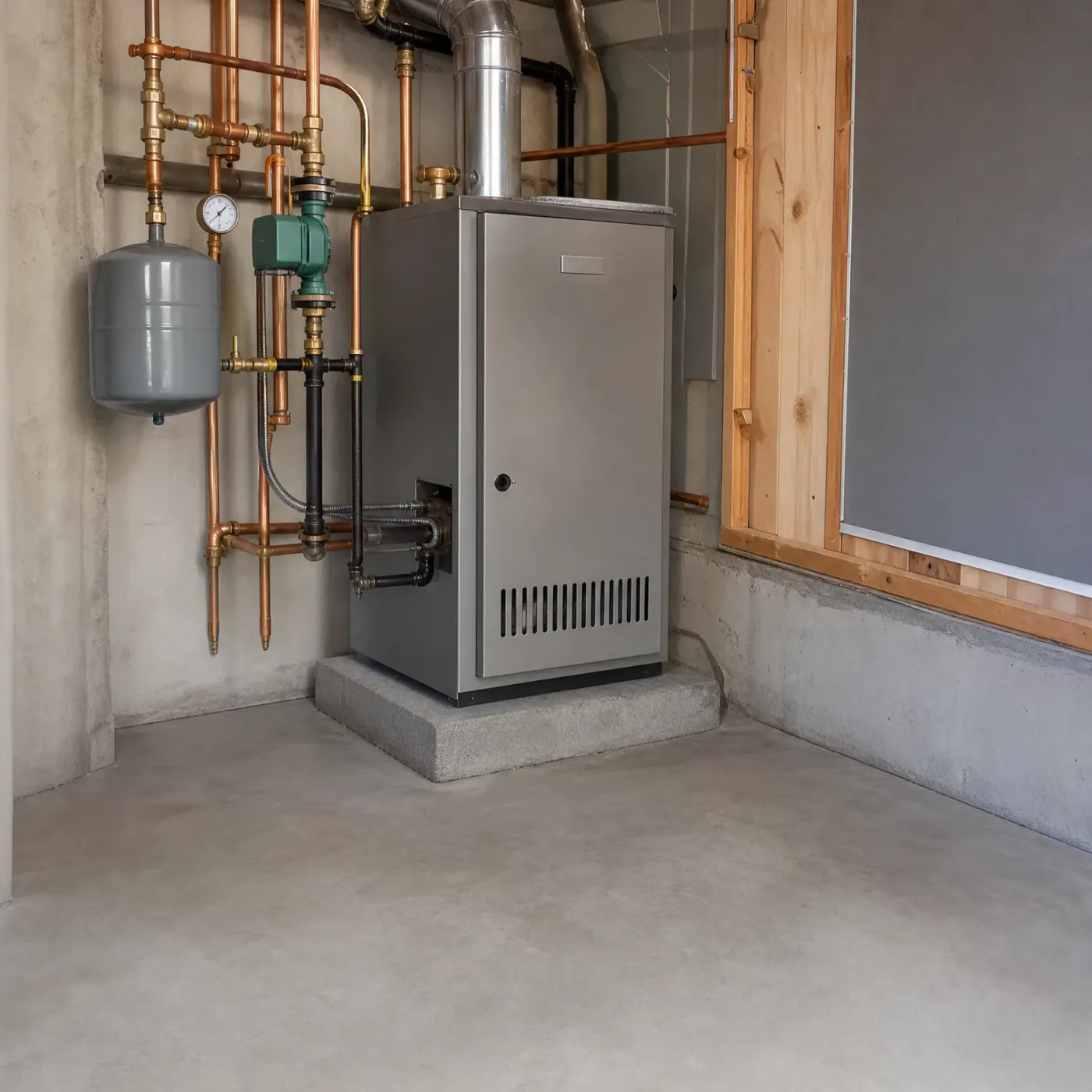
A damp patch on the floor near the base, a drip you can hear hitting the pan, or a rusty ring where water has already dried are the usual first signs. You might see mineral buildup crusted white or orange around a fitting, or notice the pressure gauge sitting lower than it used to. Some homeowners catch it by smell first, a musty or metallic smell near the utility closet. Left alone, a small leak keeps feeding corrosion at the same spot, and the fitting or tank seam that's weeping now is the one that eventually fails outright, often alongside a drop in hot water or heat when you need it.

It's just past six on a January morning and the house is still dark except for the streetlight coming through the window. You're in the living room because you heard the drip before you saw it, a small sound against the pan under the cast-iron radiator. The glass above it has fogged and iced on the inside, just a thin skin of it in the corner where the cold sits. You crouch down and find the water, a dark ring spreading slow across the floor from a fitting at the base. You already know the number to call isn't one you have saved, so you're doing this on your phone, still in last night's clothes, before anyone else is awake.
A leaking boiler doesn't wait for a convenient week. Water at the base means a part has already failed or is on its way there, and the longer it sits, the more it can take with it, from the floor underneath to the boiler itself. Finding someone who works on cast-iron and copper boiler systems in Houston isn't the same as finding an HVAC contractor who mostly does AC units, and sorting through that on your own means calls, voicemail, and explaining the same leak three different times before someone who actually knows this equipment picks up. A local contractor who works on boilers through every mild Houston winter has likely already seen whatever's causing yours, whether it's a relief valve letting go or a fitting that's finally given out. Getting that match made now, while the leak is still small, is worth more than getting it made later once the water's found somewhere else to go.
The relief valve opens once pressure climbs past its set point.
Water discharges through the pipe down to the floor or pan.
The valve should reseat, but a worn seat keeps it weeping.
That steady drip eats at the valve body and nearby fittings.
A 45°F night isn't cold enough to crack a pipe, so a boiler leak here doesn't announce itself the way it might further north. The drip just sits there, slow and easy to miss, while whatever's failing keeps failing underneath it.
NOAA nClimDiv 1991-2020
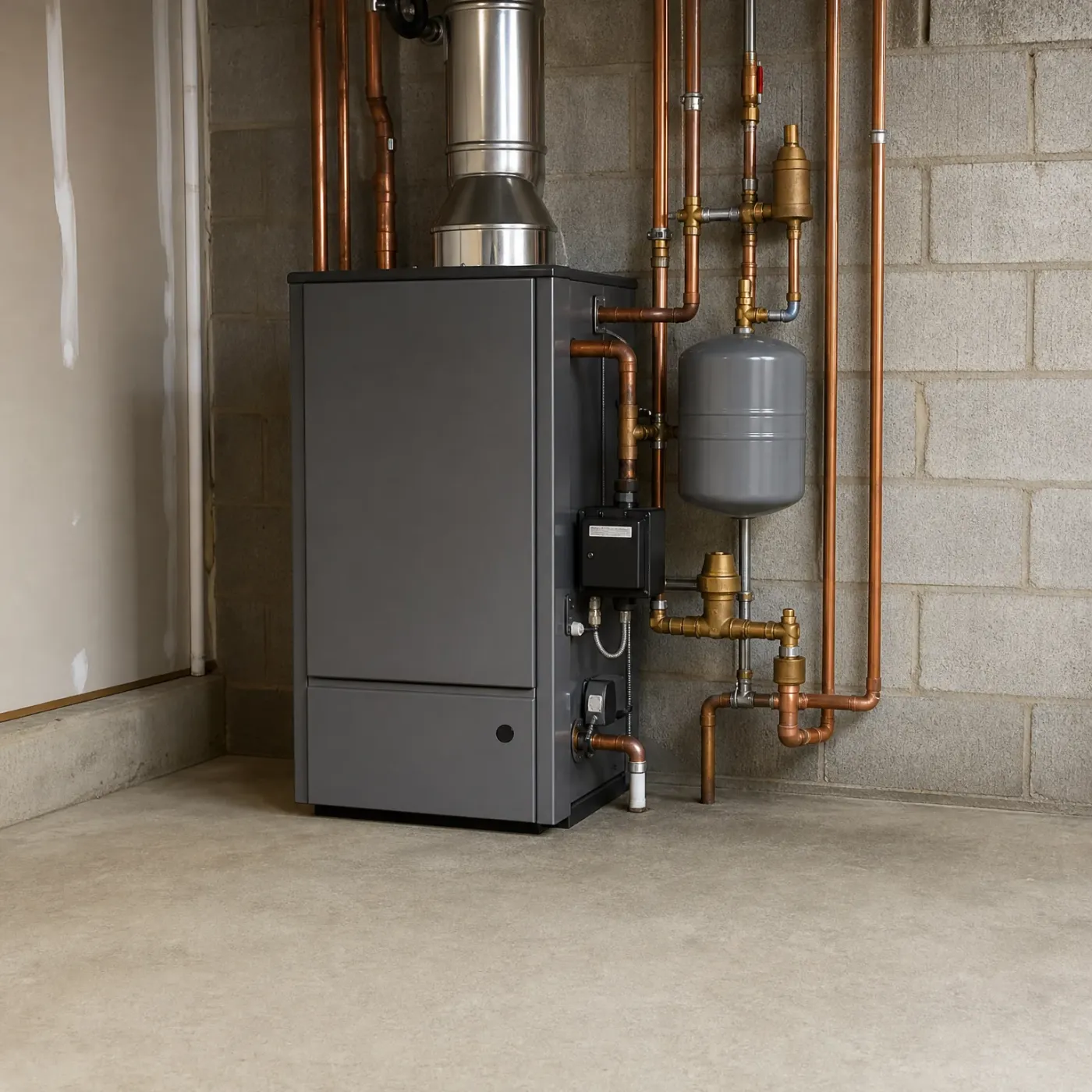
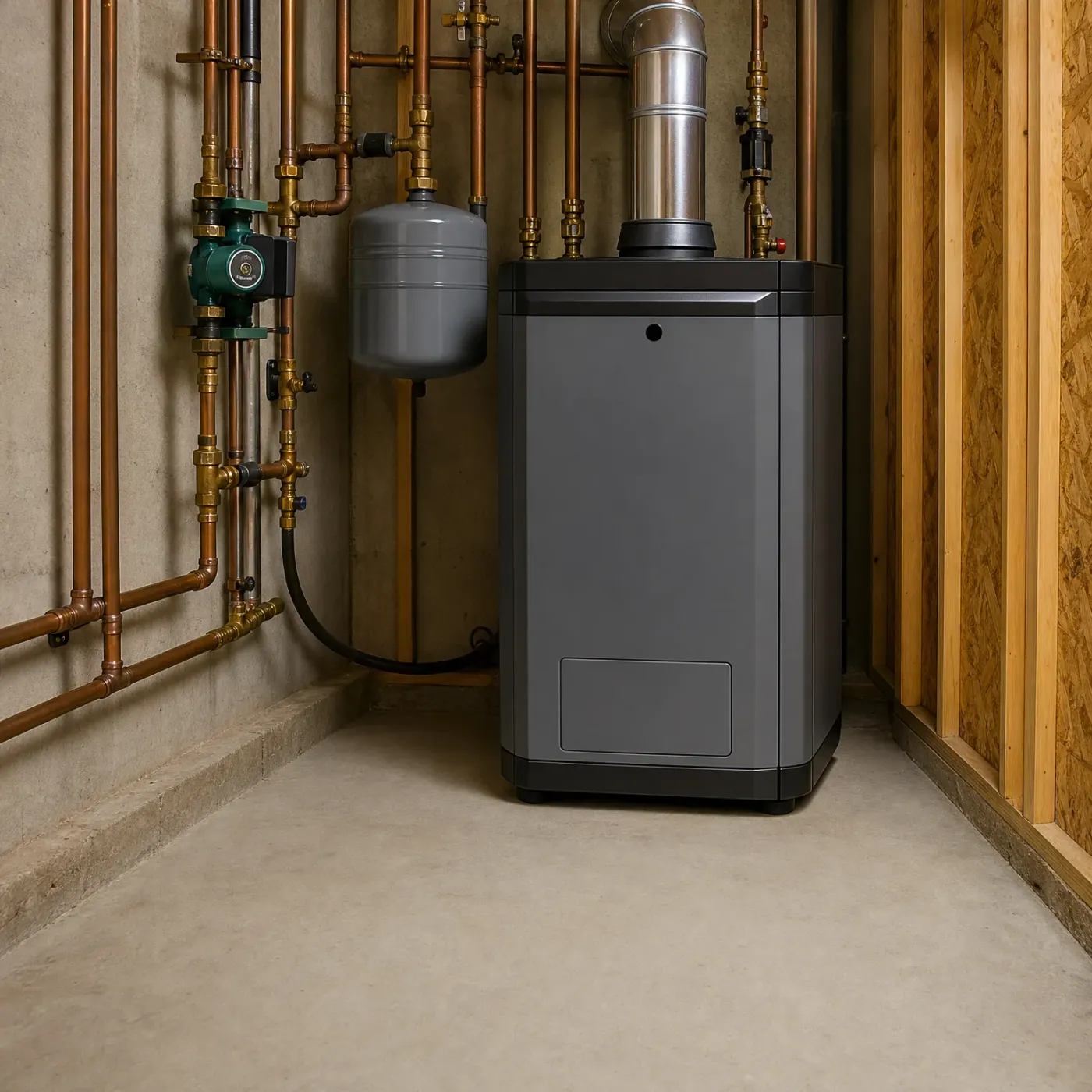
Copper lines run clean from the boiler to the fittings overhead, and the expansion tank mounted beside it holds steady. No water at the base, no staining on the floor, no crust at the joints. The flue draws clear out the top.
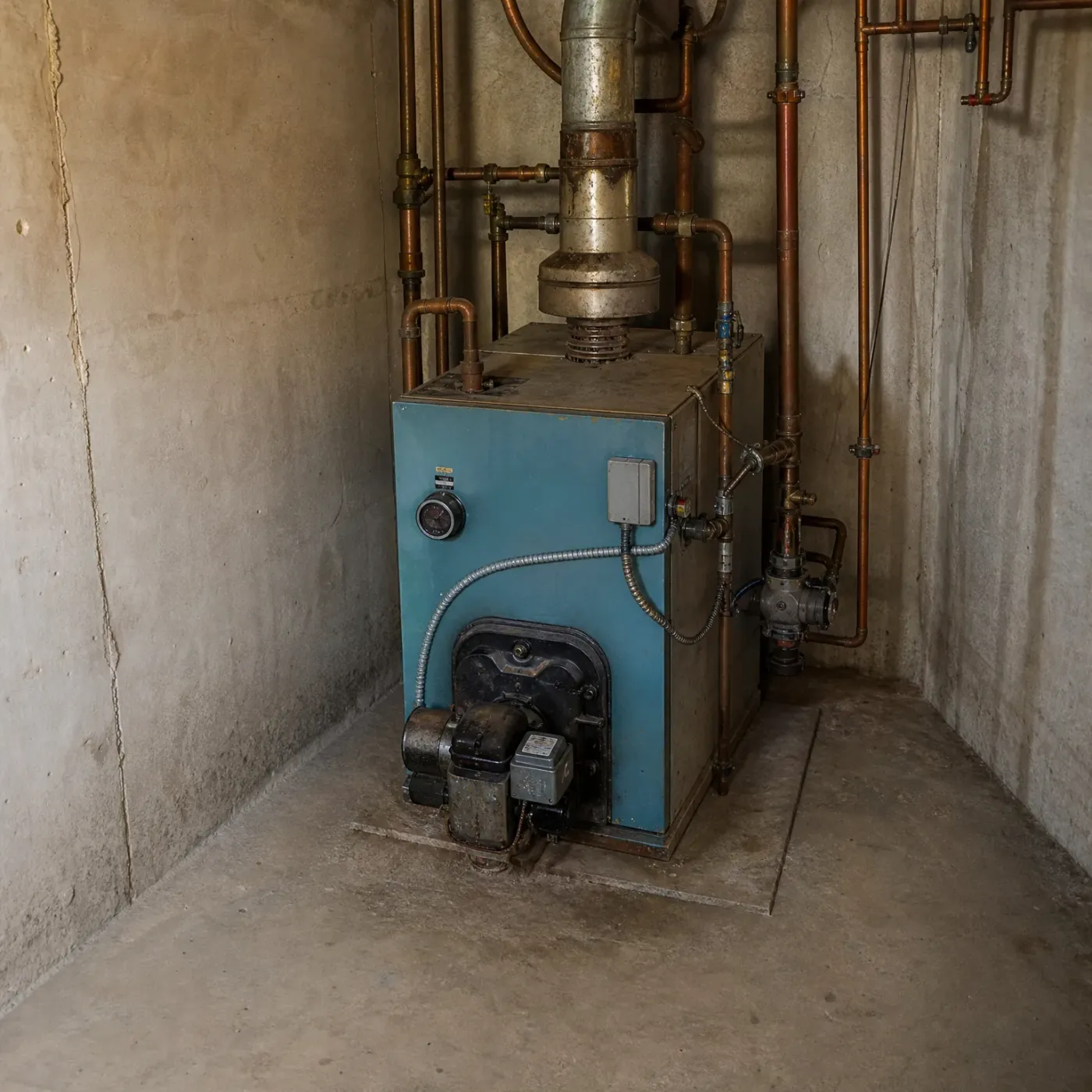
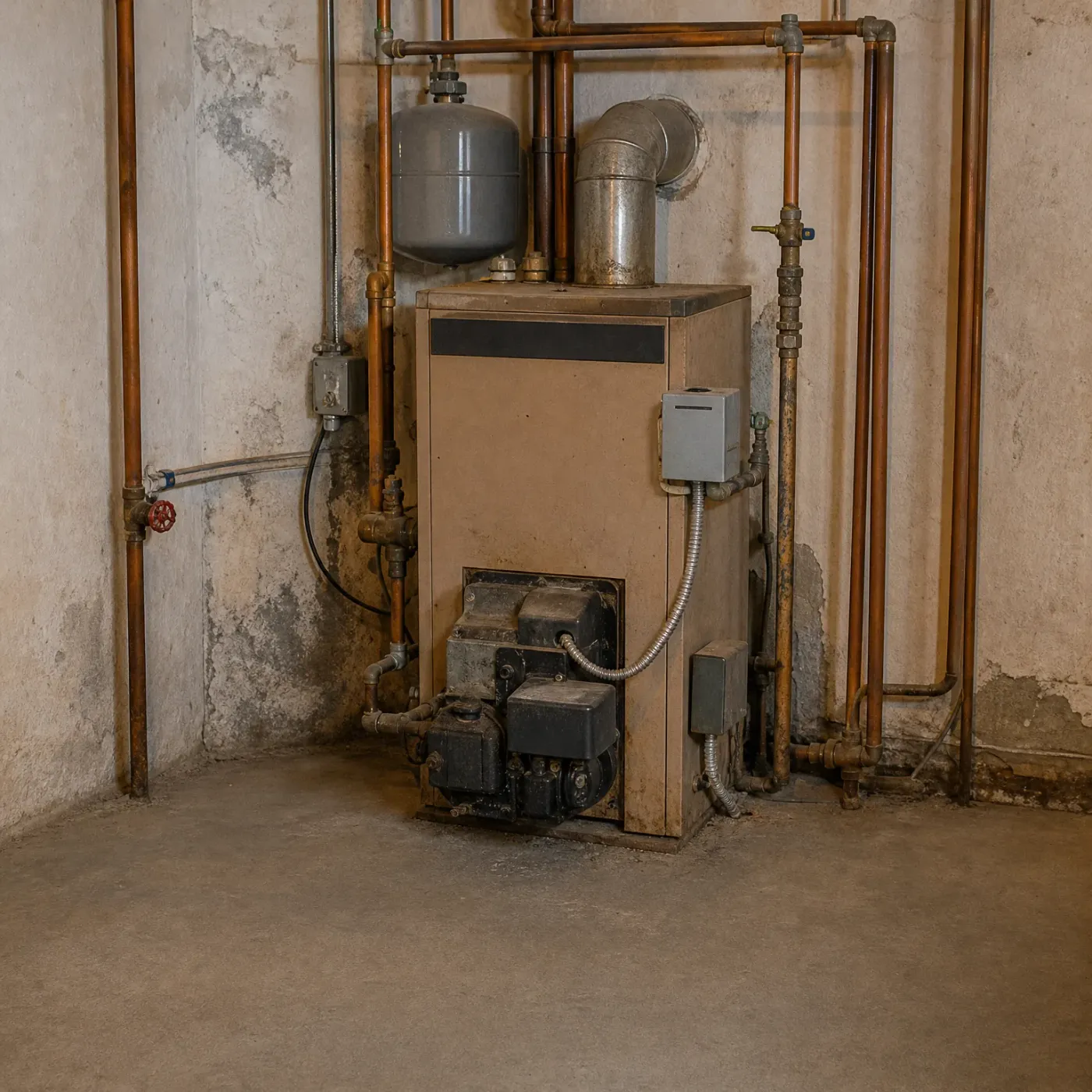
This older unit shows its age at the seams. Copper supply and return lines rise off the top, and the burner and fuel pump sit exposed at the front, right where a failing gasket or a cracked fitting tends to show up first as a drip.
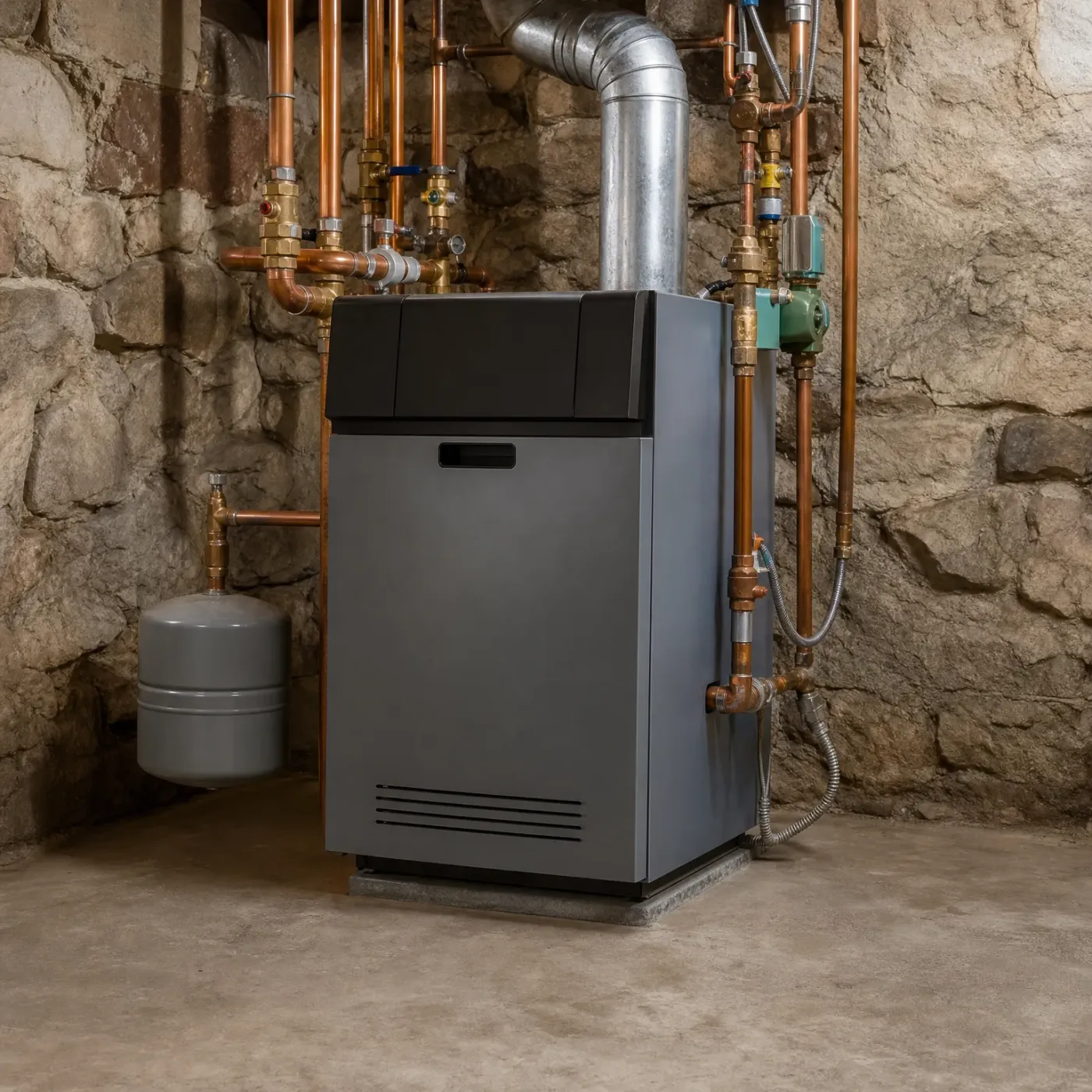
Copper lines run tight from the boiler to the fittings above, the brass valves hold without weeping, and the expansion tank mounted beside the unit does its job unnoticed. The pad underneath stays dry. That's what lets the system sit there quietly making hot water in July same as January.
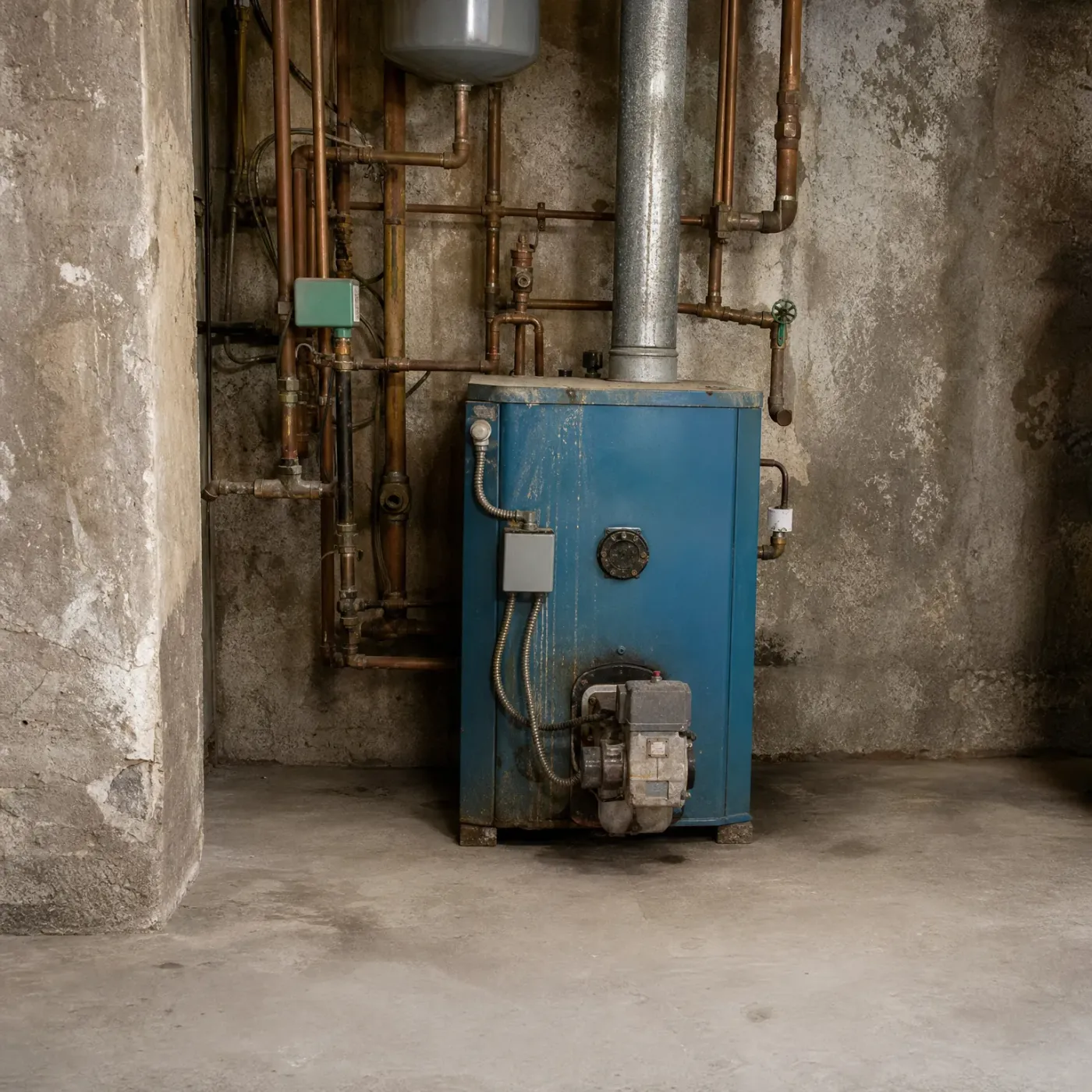
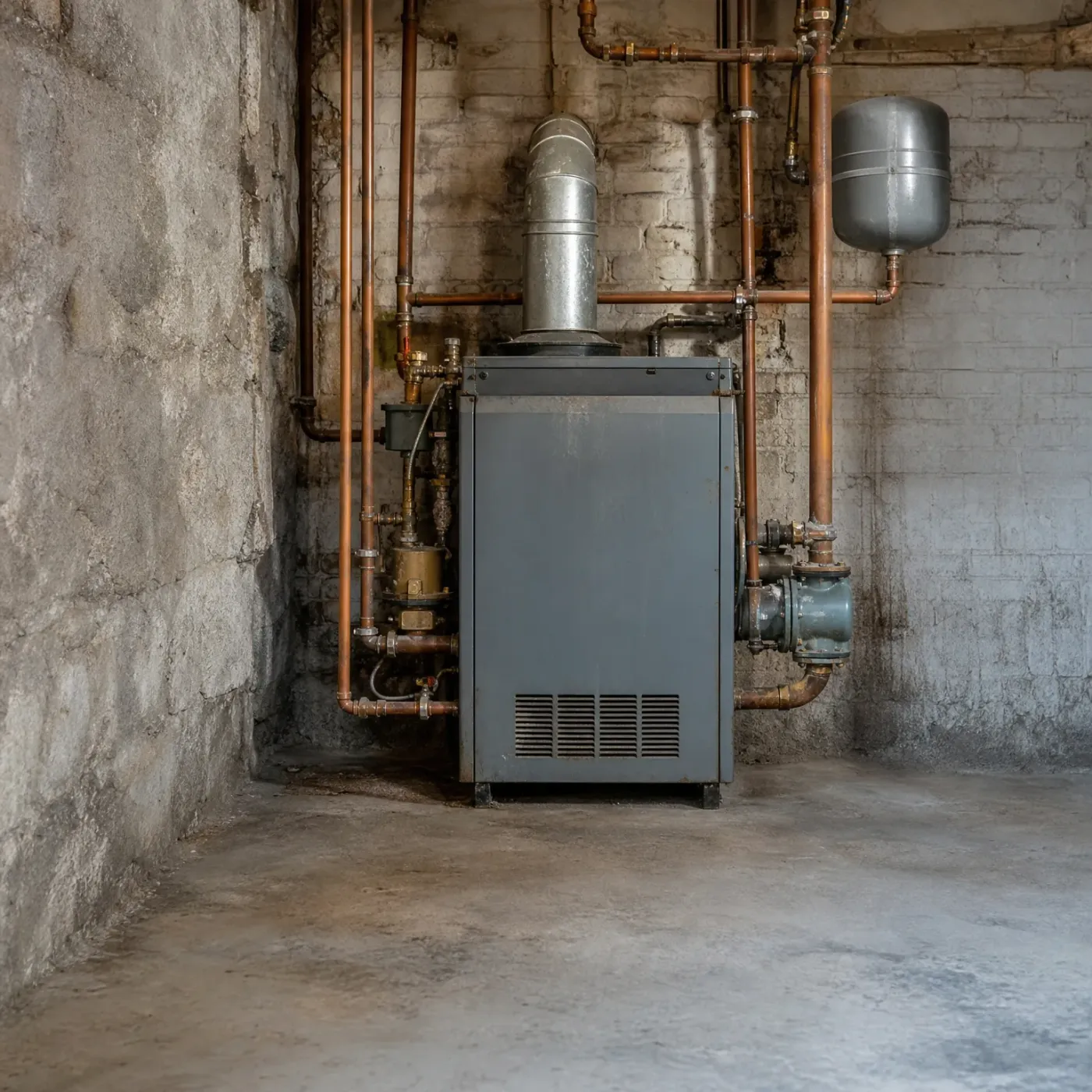
This blue boiler has been in that basement a long time, and the flue pipe and burner at its base show it. A galvanized flue like that and copper fittings this old are where a leak starts small, at a seam or a joint, long before anyone notices the floor underneath is wet.



A relief valve letting go, a corroded fitting, a loose union. Whatever started it, the drip doesn't stop on its own, and a cast-iron boiler losing water or pressure keeps failing quietly underneath whatever you've put down to catch it. You've seen what's leaking and roughly where. What's left is getting someone qualified to look at the actual valve or fitting and say what it needs.
That's usually the part that takes the evening. Finding a contractor who still services cast-iron systems instead of just tankless units and AC, calling a few, repeating the same pressure reading and the same drip to each one, then sitting with quotes that don't quite match because nobody saw the same thing. A local contractor who works on boilers through every mild winter here already knows what a weeping relief valve or a corroded union usually means before they get to your door, and you're only explaining it once.


Skip calling around