






Side profile of a bearded man wearing a dark faded baseball cap and a dark gray t-shirt against a plain light background.

Boiler keeps shutting off in Dallas, TX

Step 1 of 3: Equipment

A boiler that keeps shutting off is almost always protecting itself from something. Most often it's low water pressure, a flame sensor that's dirty or failing, or a pressure switch tripping before the system reaches the airflow or water flow it expects. If your boiler fires, runs for a short while, then cuts out, check the pressure gauge first. Many residential boilers want to sit between 12 and 15 psi when cold, and a reading below that will cause shutdowns on its own. If pressure looks fine, the next likely cause is ignition. A flame sensor coated with residue can't confirm a flame is burning, so the control board shuts the burner down as a safety measure, even though the boiler is working otherwise. Winters in Dallas are mild, so a boiler here usually runs in short bursts rather than for hours at a stretch, and that stop-start pattern puts more wear on the parts that start and sense the flame. A technician can test pressure, sensor, and switch to find which one is actually failing.

Why does a Dallas County boiler keep tripping out in winter?

  • Winter nights average 38°F

    Nights averaging 38°F mean the boiler runs long cycles to hold temperature, and a safety switch will cut it short before it gets there.

  • Heat runs November through March

    Five months of regular use, November through March, means worn parts like a flame sensor get more chances to act up each winter.

  • 61.8% of homes heat with electricity

    Most homes here run on electric heat, so a gas or propane boiler is often an older, secondary system more prone to this kind of trouble.

NOAA nClimDiv 1991-2020 · ACS 2020-2024

Why Your Boiler Keeps Tripping

  • A boiler shuts itself down through a safety switch, not by failing outright, because the control board sees a reading outside its set limits.
  • Low water pressure drops below about 12 psi on the gauge and the pressure switch cuts the burner before it runs dry.
  • A dirty flame sensor can't prove the flame is lit, so the control shuts the gas valve off within seconds of ignition.
  • A clogged condensate line backs up water into the pressure switch tubing and reads as a blocked flue even when the vent is clear.
  • Short cycling on a cold morning often traces back to a limit switch sensing water hotter than it should be, usually from poor circulation.
  • A failing igniter can light the burner inconsistently, and the control treats that hesitation the same as no flame at all.

A boiler doesn't just quit. It shuts itself down on purpose, through one of a handful of safety switches, because something it's reading falls outside the range the control board is set to accept. Water pressure is the most common one. Most residential boilers want to see somewhere around 12 to 15 psi on the gauge, and once it drops below that, the pressure switch cuts power to the burner rather than let it run against a half-empty system. A dirty flame sensor causes a different kind of shutdown. The sensor's job is to confirm a flame is actually burning after the gas valve opens, and if it's coated with residue, it can't prove that fast enough, so the control closes the valve again within seconds, even though the burner lit fine. Condensate drainage causes trouble that looks like something else entirely. When that line clogs, water backs up into the pressure switch tubing and the control reads it as a blocked flue, even with a perfectly clear vent outside. On cold mornings, a limit switch tripping usually means water somewhere in the system is hotter than it should be, often because it isn't circulating evenly past that sensor. And an igniter that's starting to fail doesn't always fail completely. It can light the burner inconsistently, and the control has no way to tell that apart from no flame at all, so it shuts down the same way either time.

A man with gray hair and a beard wearing a dark green shirt jacket over a navy top sits on a gray sofa in a living room, looking to the side, with a window, potted plant and shelving in the background.
A gray-haired man in a navy button-up shirt over a white tee sits on a light gray sofa in a living room, looking off to the side, with a window, houseplant, framed picture and shelving behind him.
A man with gray hair, a beard and glasses, wearing a dark green sweater, sits on a gray sofa in a sunlit living room with a potted plant, table lamp and wooden sideboard behind him.
A man with grey hair and stubble in a dark sweater sits on a grey sofa indoors, looking off to the side, with a potted plant and a sunlit window behind him.

A boiler that trips off isn't just an inconvenience. In a Dallas County home, it usually means the heat stops and stays stopped until someone resets it or a contractor finds why. Since most homes here back up the boiler with electric heat rather than a second furnace, a night of this can mean cold rooms until morning. Each time it short cycles, the igniter and the pressure switch take the hit, so a problem that starts as one shutoff a week can mean more than one repair before spring. You'll likely notice it first in the rooms farthest from the boiler, since the water never stays hot long enough to make the full loop. The tricky part is a pressure switch can fail only sometimes, passing a quick check right after a reset, which is why the problem seems to disappear and then comes right back a day or two later. Left alone through the rest of winter, that pattern adds wear a single cold snap wouldn't cause on its own.

What a Shutoff Costs Your House

  • A boiler that shuts off a few minutes into a cold snap can leave a Dallas County home without heat overnight since most run on electric backup, not a second furnace.
  • Repeated short cycling wears the igniter and the pressure switch faster, so a boiler that trips once a week in December can need two or three repairs by March.
  • A closed or stuck valve on the system can starve the boiler of water flow, and the safety switch will keep cutting it off instead of letting it run hot.
  • If the boiler won't stay lit for more than a few minutes, rooms farthest from it cool first, since the loop never holds heat long enough to circulate fully.
  • A pressure switch that trips intermittently can still pass a quick test, which is why the shutoff keeps coming back even after the boiler is reset.
  • Letting the short cycling continue through the rest of winter puts more wear on the ignition system than one cold month alone would cause.
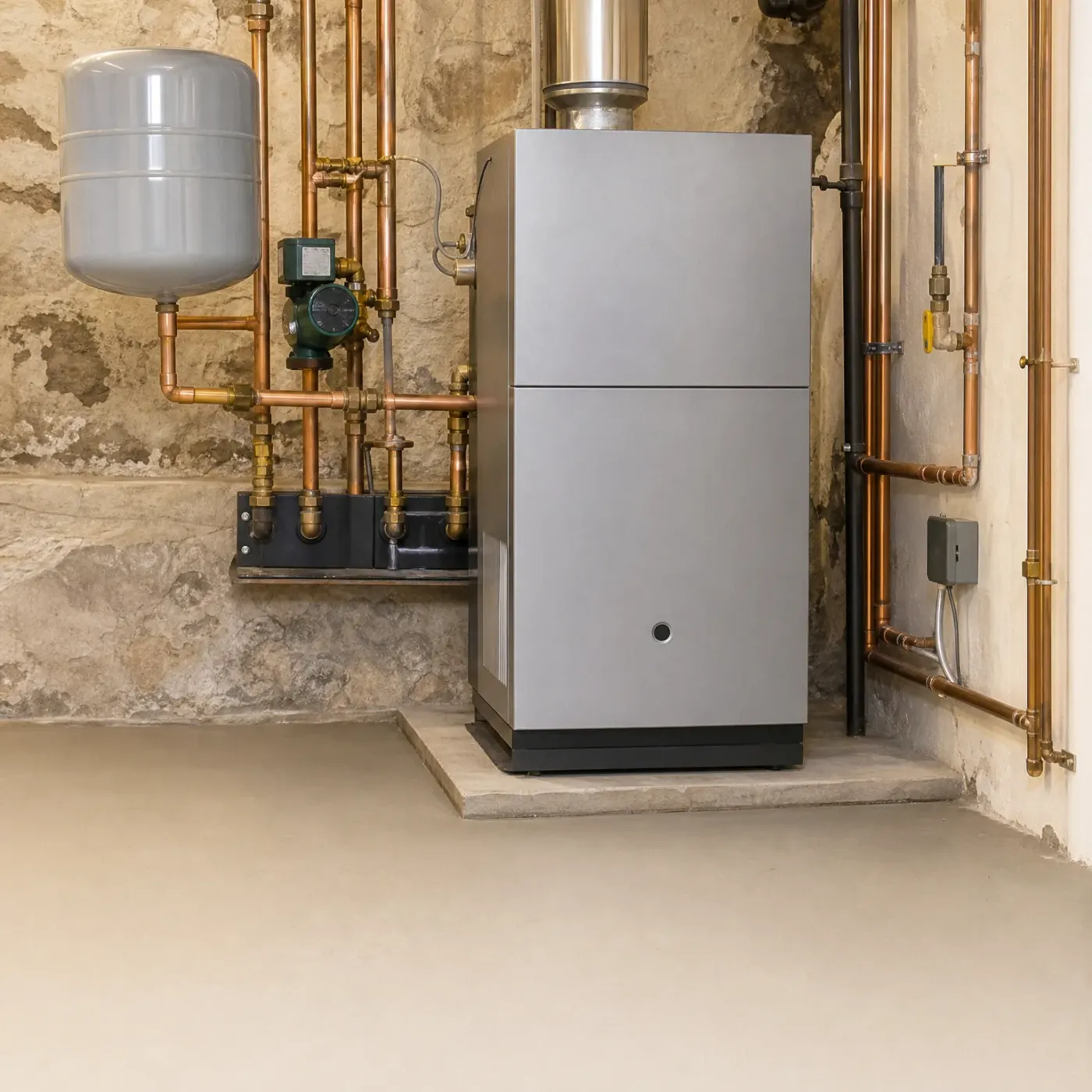
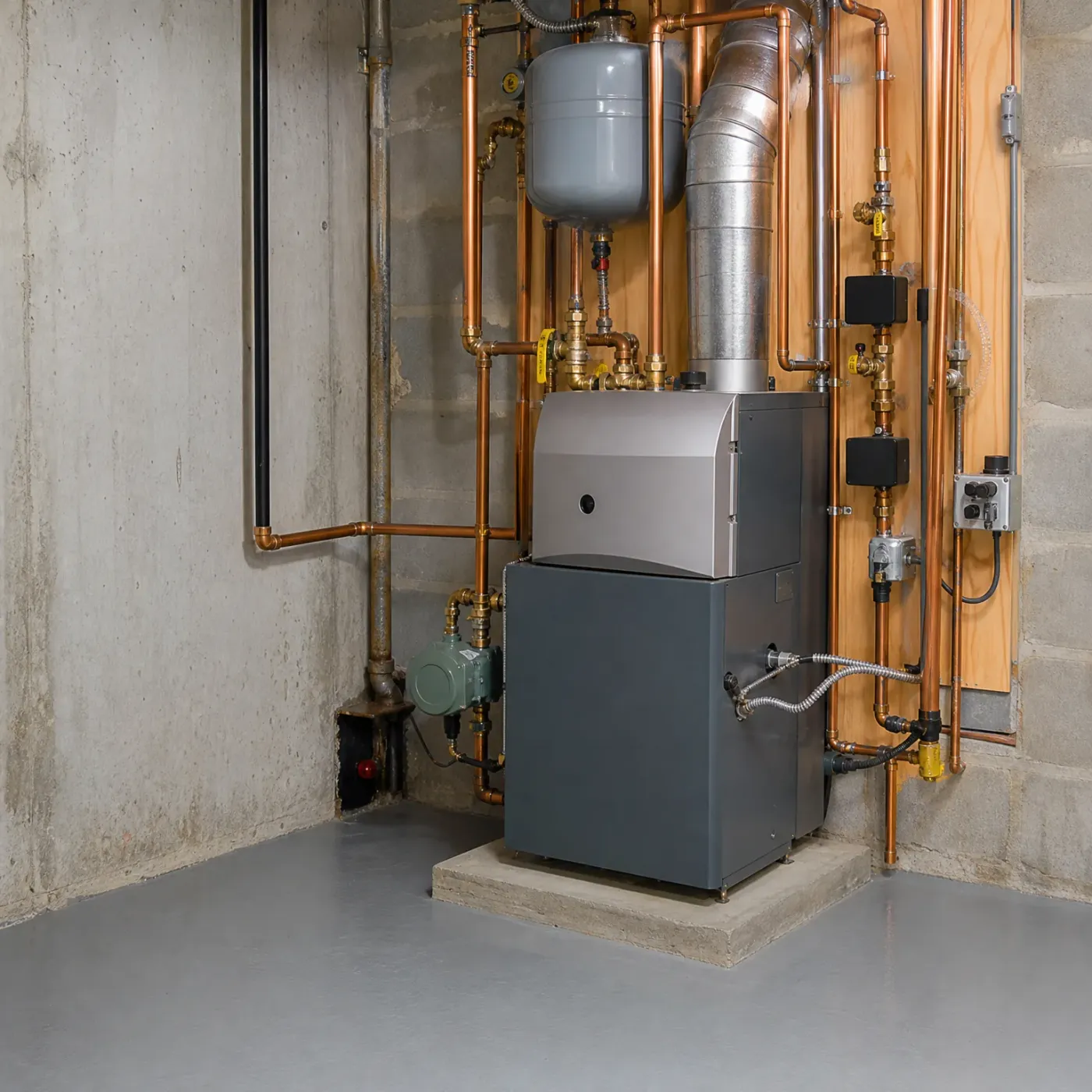
A gray residential boiler on a concrete pad in a basement corner, connected to copper piping, an expansion tank, circulator pumps and insulated flue ducting against concrete and plywood walls.
A boiler like this holds steady pressure and clean connections, so the safety switch stays satisfied and the burner runs full cycles.
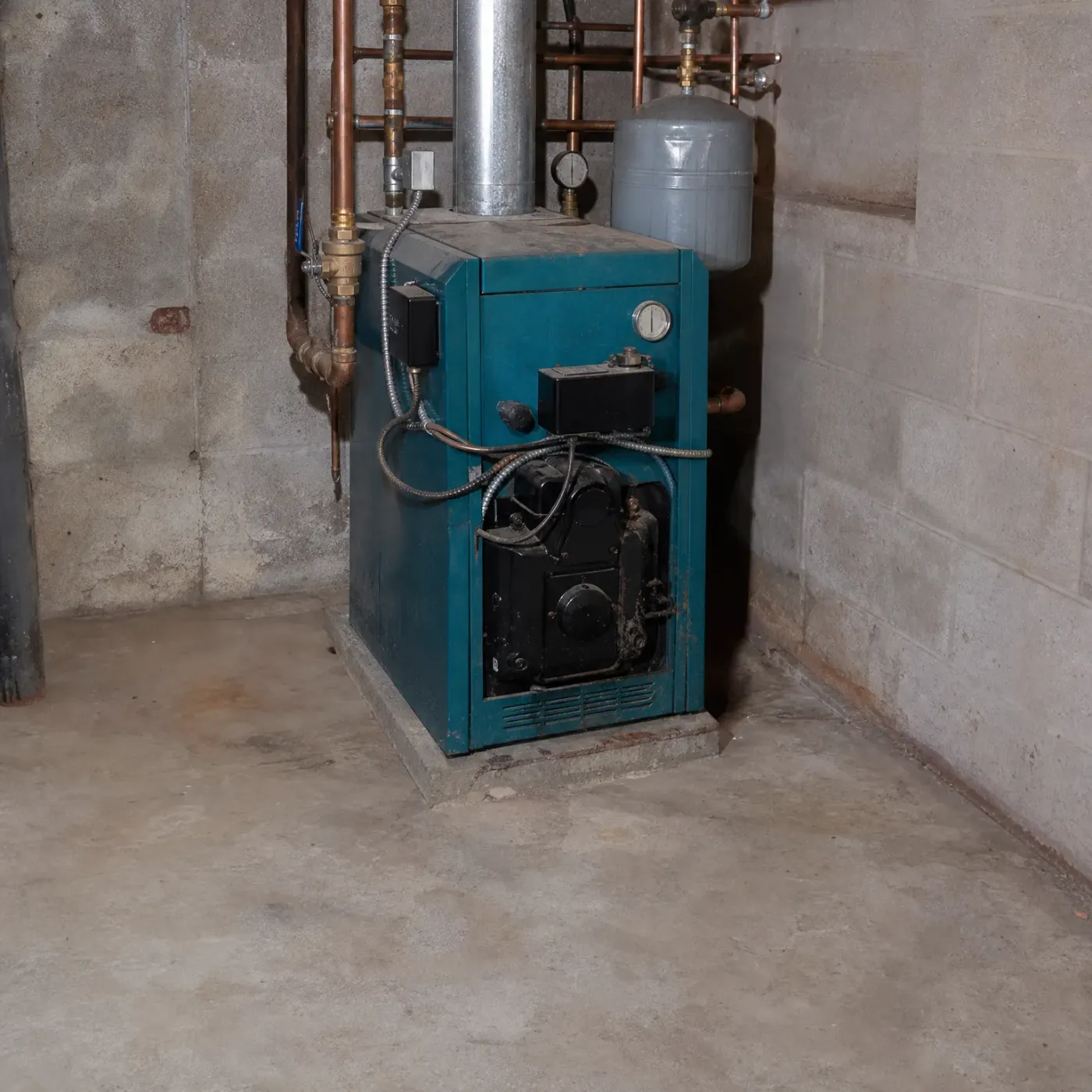
A teal boiler with a pressure gauge and black burner unit sits on a concrete pad in a basement corner, with copper pipes, a flue vent, and a gray expansion tank above against concrete block walls.
A boiler this old, with a gauge and fittings showing wear, trips its safety switch more often and needs a closer look each winter.
  1. Water pressure or airflow drops below what the control board expects.

  2. The pressure switch or flame sensor sends an out of range signal.

  3. The control board cuts power to the burner to prevent damage.

  4. The boiler shuts down and waits for a reset or repair.

A woman with shoulder-length graying hair, wearing a light knit cardigan over a striped shirt, sits in an upholstered armchair and looks off to the side, with a bookshelf and houseplant behind her.
A woman holds a sleeping boy wrapped in a gray knit blanket on a couch, with a lit table lamp and houseplant blurred in the background.
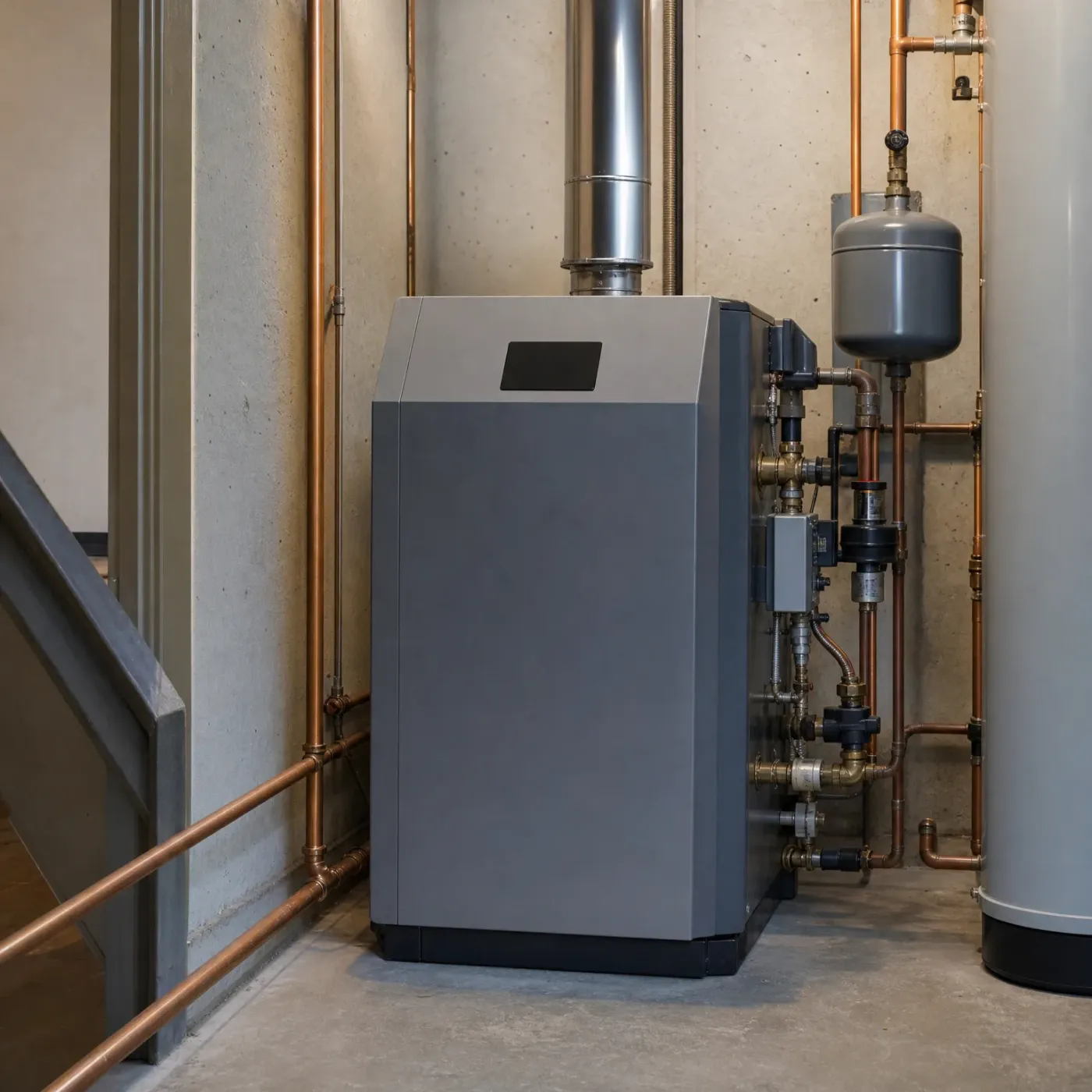
A gray floor-standing boiler with a metal flue pipe stands in a concrete mechanical room, connected to copper piping, valves, an expansion tank, and a large cylindrical tank at right.

Get the right pro for your boiler

A licensed pro who works in Dallas County gets your request.

A Dallas County pro who repairs boilers gets your request.

Connect with a pro

You're not committing to anything by asking.

Fix It Yourself or Call a Tech

DIY check

  • You can check the pressure gauge yourself and top it off if it reads below 12 psi using the boiler's fill valve.
  • Resetting the boiler after a shutdown is simple, but it will trip again if the underlying cause isn't fixed.
  • You can look at the flame sensor and igniter through the viewport, but cleaning or replacing them means opening the burner compartment.
  • Clearing a condensate line blockage yourself is possible if you can reach the line and see where it's clogged.
  • Without a multimeter and the boiler's wiring diagram, telling a bad pressure switch from a bad control board is guesswork.

Call a pro

  • A licensed tech reads the fault history on the control board to see which safety switch tripped and how often.
  • Testing the pressure switch, flame sensor and inducer motor under load finds the failing part instead of just the symptom.
  • A tech who works on boilers all winter in Dallas County has likely already seen this exact shutdown pattern this season.
  • Repairs on gas lines, venting or the control board need a licensed hand to stay safe and keep the boiler's warranty intact.
  • A proper fix addresses the part that's failing, not just the reset button, so the boiler holds a full cycle again.
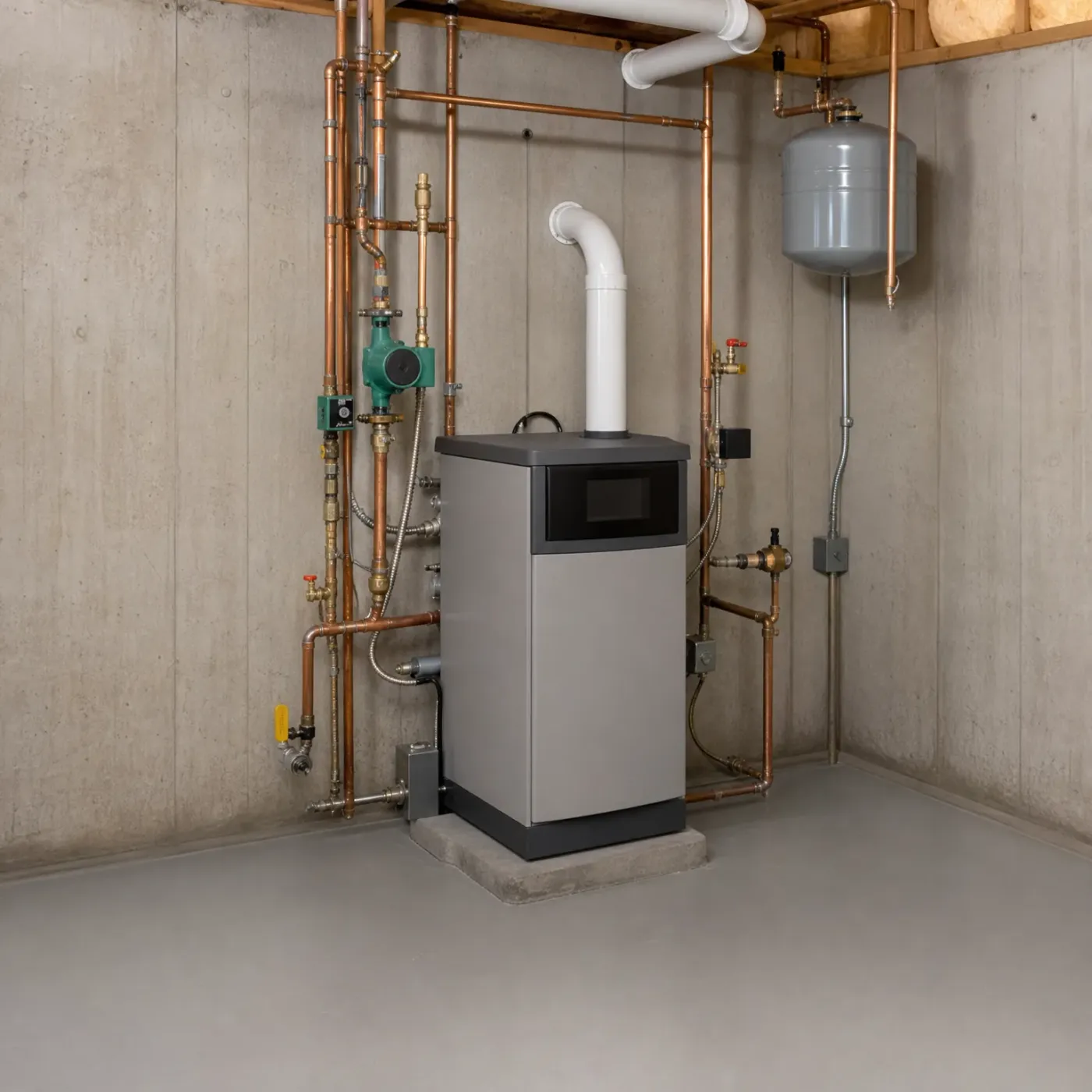
A gray floor-standing boiler on a concrete pad in a basement corner, with copper piping, a circulator pump, a white PVC flue, and a gray expansion tank mounted on the wall.

Running clean

Pressure holds steady on the gauge and the copper lines and fittings show no wear. The expansion tank and circulation pump are doing their job, so the safety switch stays satisfied and the burner completes full cycles without tripping out.
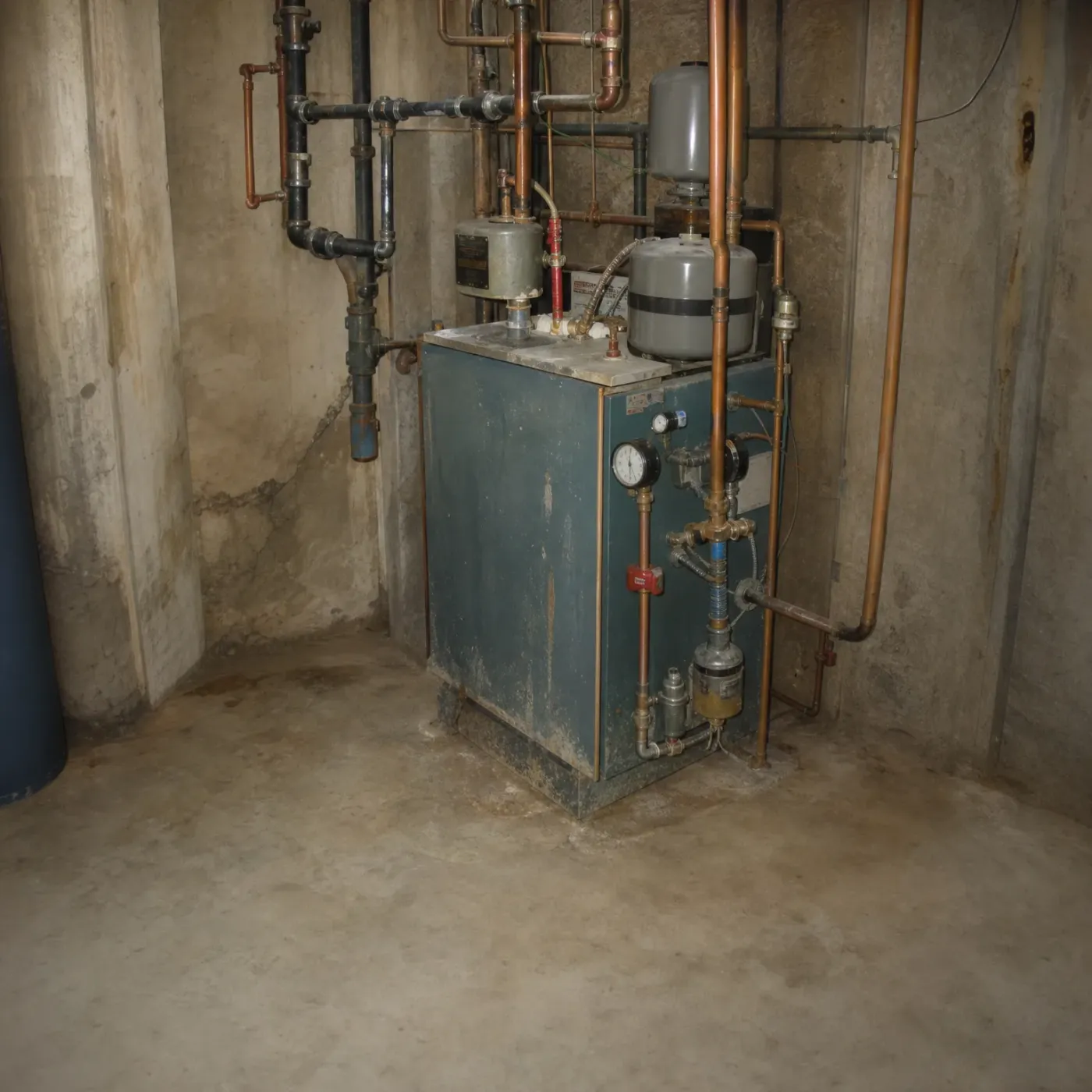
A green metal boiler with pressure gauge stands in a concrete basement corner, surrounded by copper and black iron pipes and two tank-shaped vessels.

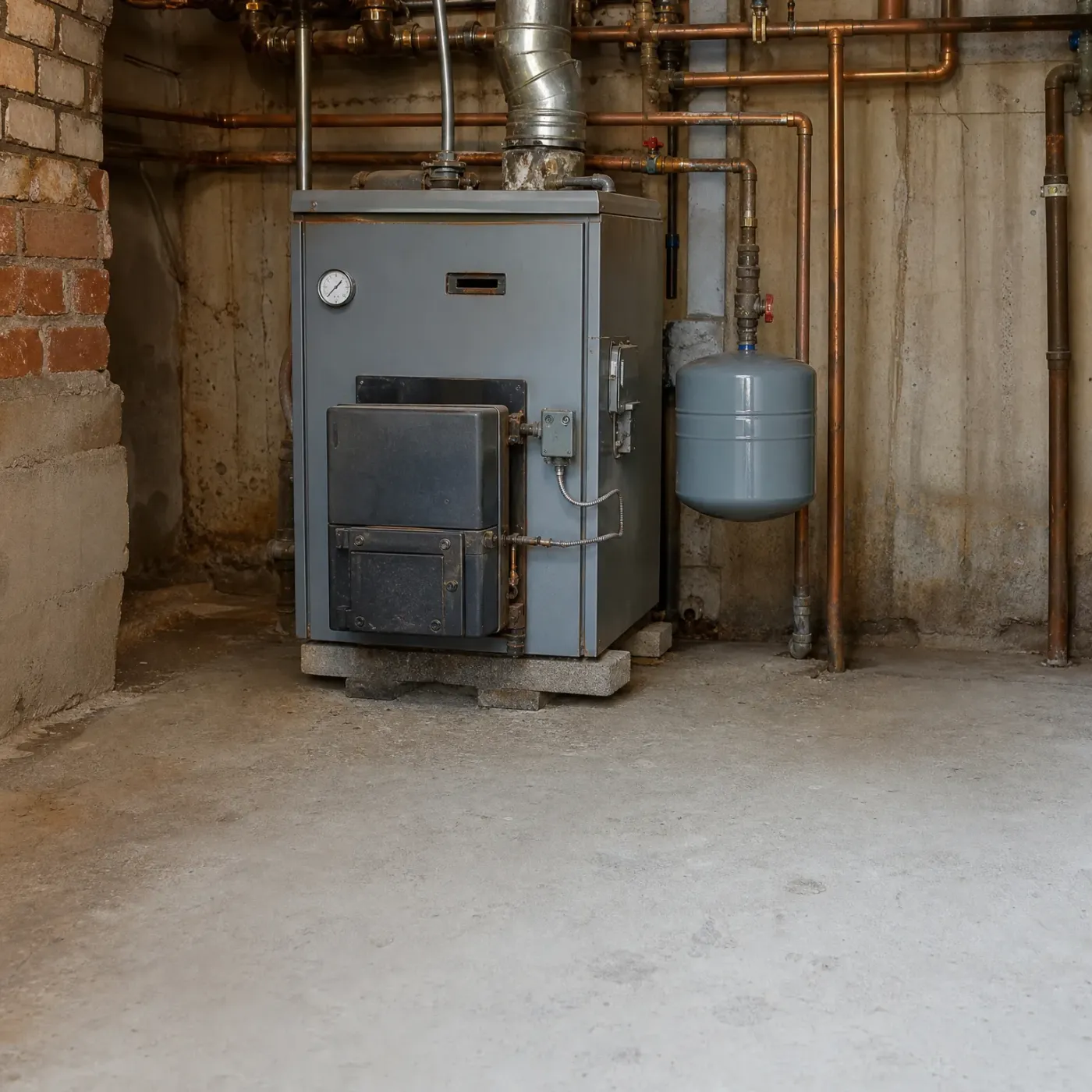
Running into trouble

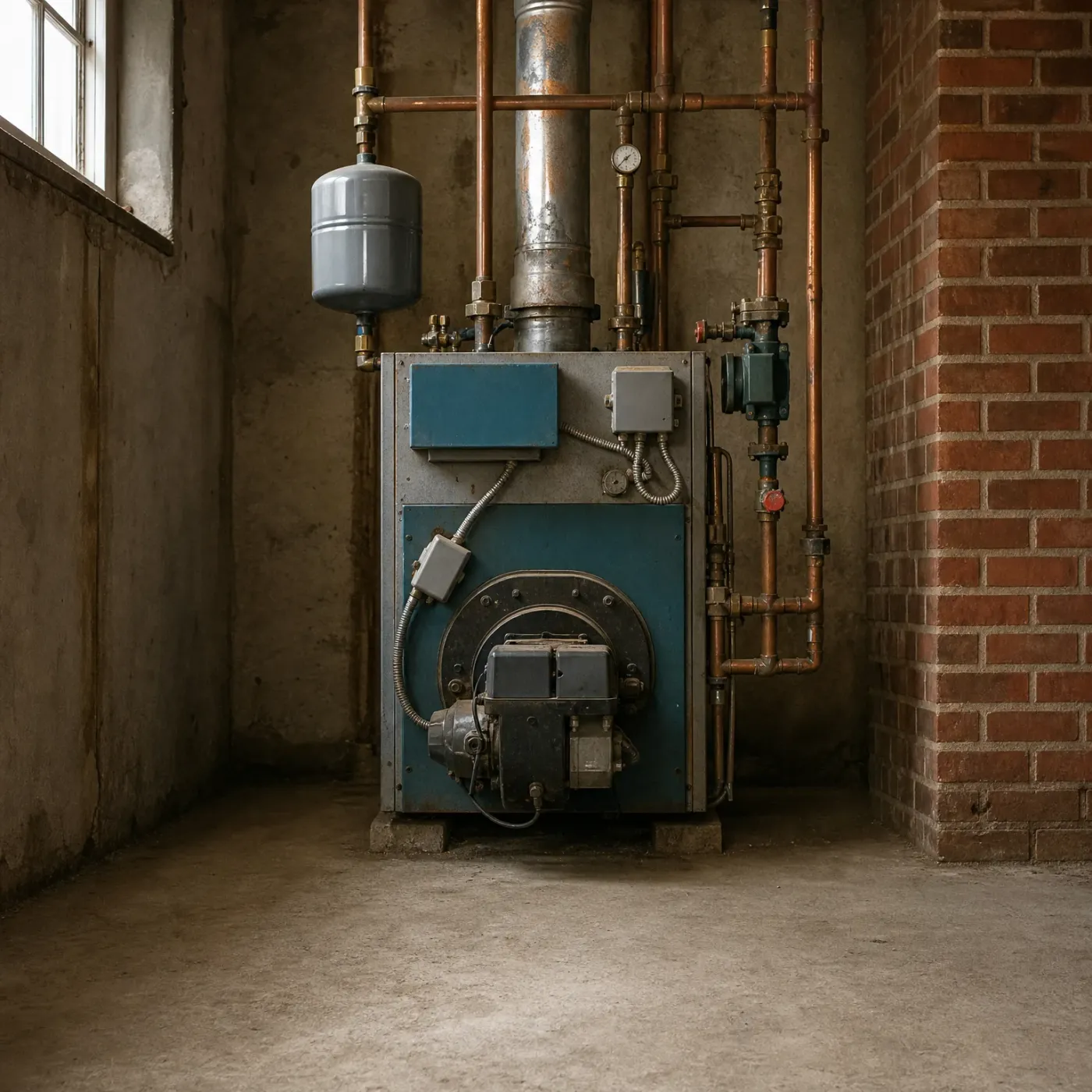
This cast-iron boiler has been through a lot of winters, and it shows in the valves and fittings around it. A unit this age drifts out of its pressure range more easily, and each shutdown is worth a closer look before it happens again.

A blue cast-iron boiler with a burner unit, gauges and copper piping stands in a concrete-floored basement room beside a red brick pillar and a window.
Before you get your boiler repair
A gray boiler unit with a flue pipe stands on a concrete pad in a basement, surrounded by copper piping, a circulator pump, an expansion tank mounted on a stone wall, and an electrical outlet.
After you get your boiler repair

What a reset actually fixes

Pressing reset clears the lockout and lets the control board try again. It does not change the water pressure, clean the flame sensor or free up a stuck pressure switch. If the boiler ran fine for weeks and then started tripping during this cold stretch, something shifted, often pressure easing down as the system cycled more. A reset gets you through the night. It does not tell you why the board cut power in the first place, and the same trip usually comes back once the water calls for heat again.

Why the timing isn't random

A boiler that trips on the coldest nights and runs fine on milder ones is usually working harder than the sensor or switch can tolerate. Longer burn cycles mean more time for a weak flame sensor to lose its signal, and more strain on a pressure switch already near its limit. A unit that shuts off at 38°F but not at 50°F isn't failing out of nowhere. It's hitting the same weak point every time the load goes up, which is why the pattern repeats on the coldest nights of the season.

Winter nights average 38°F

On a night that drops to 38°F, your boiler isn't cycling on and off a few times, it's running long stretches to keep up. That's more time for a weak pressure switch or a dirty flame sensor to trip before the cycle finishes.

NOAA nClimDiv 1991-2020

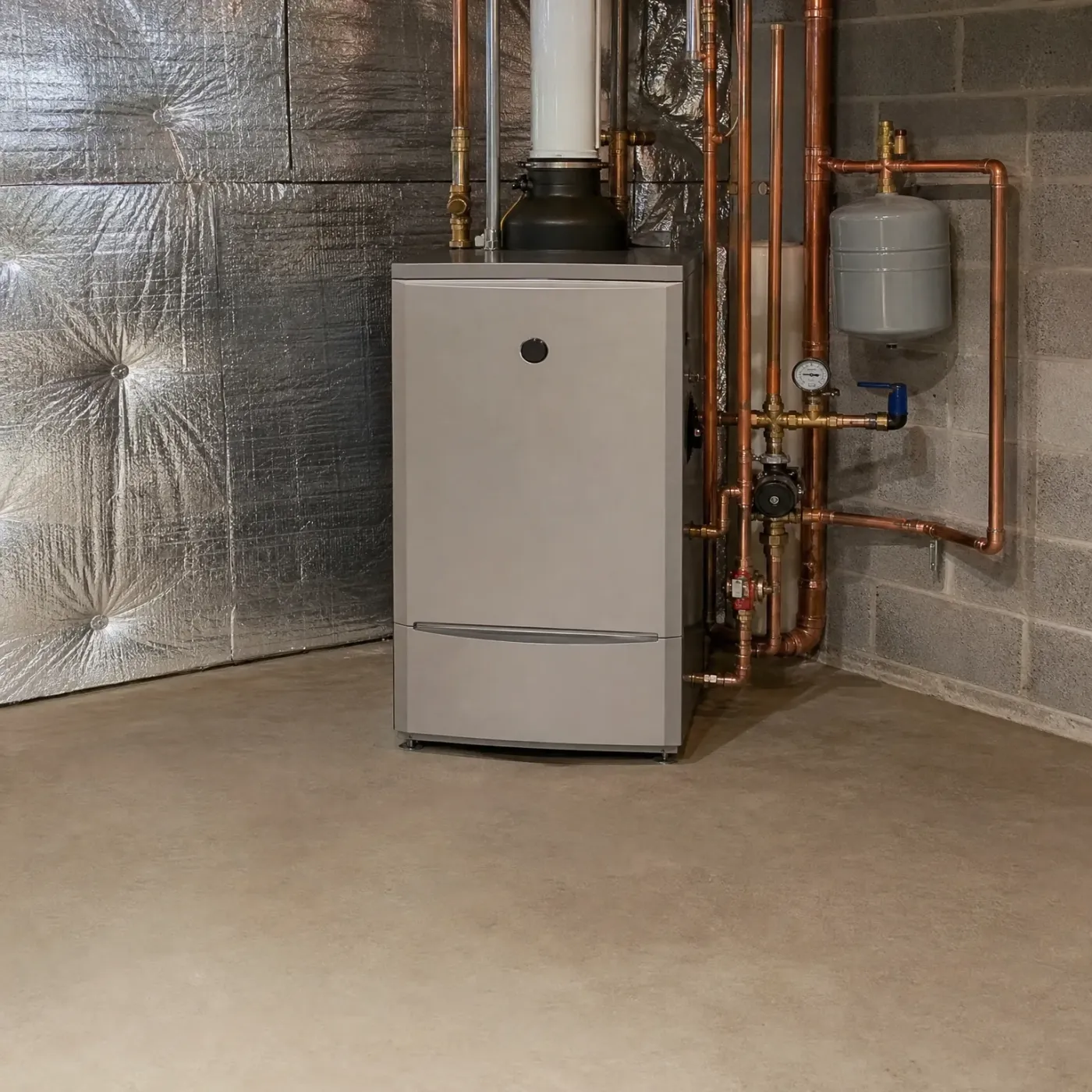
A gray residential boiler in a basement corner with copper piping, a circulator pump, pressure gauge, blue-handled valve and gray expansion tank against a concrete block wall, next to a foil-insulated wall.

Running as it should

Pressure holds in the normal range on the gauge, the copper fittings are tight, and the expansion tank is doing its job. The burner lights, runs its full cycle, and shuts off on its own timer instead of a safety switch cutting it short.

A gray boiler on a concrete block base in a basement, with copper piping, a metal flue, and a gray expansion tank mounted beside it against a concrete wall.

Tripping out early

An older boiler like this one loses pressure over time and the fittings start to show wear at the joints. The flue and valves still carry heat and water where they should, but a worn pressure switch or a dirty flame sensor trips before the cycle finishes.

A woman in a cream sweater and jeans stands in an open black front door of a white stucco house, viewed over the shoulder of a man in a navy jacket in the foreground.

A boiler that keeps shutting off has a reason, and it can be found

Low pressure, a dirty flame sensor, a pressure switch tripping early. One of these is behind the shutdowns in your boiler, and none of them get better on their own. Resetting it buys you heat for a while, not a fix.

A Dallas County contractor who works on boilers all winter has seen this exact pattern before, on nights in the high 30s when a system runs longer than usual and a weak part gives out partway through the cycle. Getting matched with one means someone looks at your pressure gauge, your flame sensor and your switch, not a stranger's guess about a different boiler in a different house. One contractor, local, licensed, reaching out to you directly about the system you actually have.

Living room interior with a light sofa holding a dark green cushion and a brown knit throw, a tall leafy plant by a black-framed window, a wooden coffee table with a round tray, and wooden shelves holding vases and books.
Interior corner showing a white painted column with paneled trim and chair rail meeting a wall with baseboard, beside light wood cabinetry with black bar pulls and a ceramic vase, over dark hardwood flooring.
Interior corner with a white-framed window showing green foliage, a pale wall with baseboard, light oak plank flooring, and a wooden cabinet with a dark ceramic vase on top.
A rustic wooden bench against a pale wall holds a weathered ceramic vase with leafy branches, below a black cone wall sconce, beside a window with sunlight falling on the wood floor.
A bathroom vanity with wood cabinets and a white marble countertop, black widespread faucet and undermount sink, a wood-framed mirror, a fabric-shaded wall sconce, a ceramic vase with green branches, and a window with white blinds.
Empty room corner with taupe walls, white wainscot paneling, crown molding, dark wood floor, and a double-hung window showing green foliage outside.

A pro who works on boilers

A licensed pro who repairs boilers in Dallas County gets your request.

Find a pro near me

It costs nothing to send, and you don't have to hire anyone.