Texas Boiler Works

Boiler keeps shutting off in Conroe, TX

Send the request and finding a pro stops being your problem.

Hand it over

Why does my boiler keep shutting off?

A boiler that shuts off partway through a cycle, or won't stay running long enough to heat the house, usually isn't a mystery to a technician, even if it feels like one to you. Boilers are built with safety switches that cut power the moment something reads wrong, whether that's pressure, water flow, or a flame that won't hold. The shutoff is the system protecting itself, not failing at random.

A safety switch is cutting power because something reads wrong

Most often it's low water pressure, a blocked flue, or a flame sensor that isn't detecting the pilot or burner properly. Each of these trips a limit switch built into the boiler, and the switch shuts the whole thing down rather than let it run unsafely. Winters here in Montgomery County are mild, so a boiler in Conroe runs far fewer hours than one up north, and that lighter use means these parts can sit unused for long stretches between calls, which is often when a sensor or switch starts acting up. The fix depends on which switch is tripping and why, but the shutoff itself is the boiler doing exactly what it's built to do when a reading falls outside safe range.

  1. Water flow drops, and the pressure switch cuts the burner off.

  2. A dirty flame sensor fails to detect the flame and shuts the gas valve.

  3. The limit switch trips because water temperature climbs too high.

  4. Trapped air or a stuck valve stops the pump from circulating water.

Why does a Conroe winter make a boiler shut off like this?

  • Winter nights average 43°F

    Winter nights here average 43°F, cold enough that a boiler has to run full cycles, not short bursts, to keep the house warm.

  • Heat runs November through March

    Heat runs November through March in Montgomery County, so a boiler that short-cycles has months of hard use ahead of it, not just a few cold snaps.

  • 51.7% of homes heat with electricity

    51.7% of homes in Montgomery County heat with electricity, and a gas or oil boiler in one of the others is carrying the job alone, with no backup when it trips off.

NOAA nClimDiv 1991-2020 · ACS 2020-2024

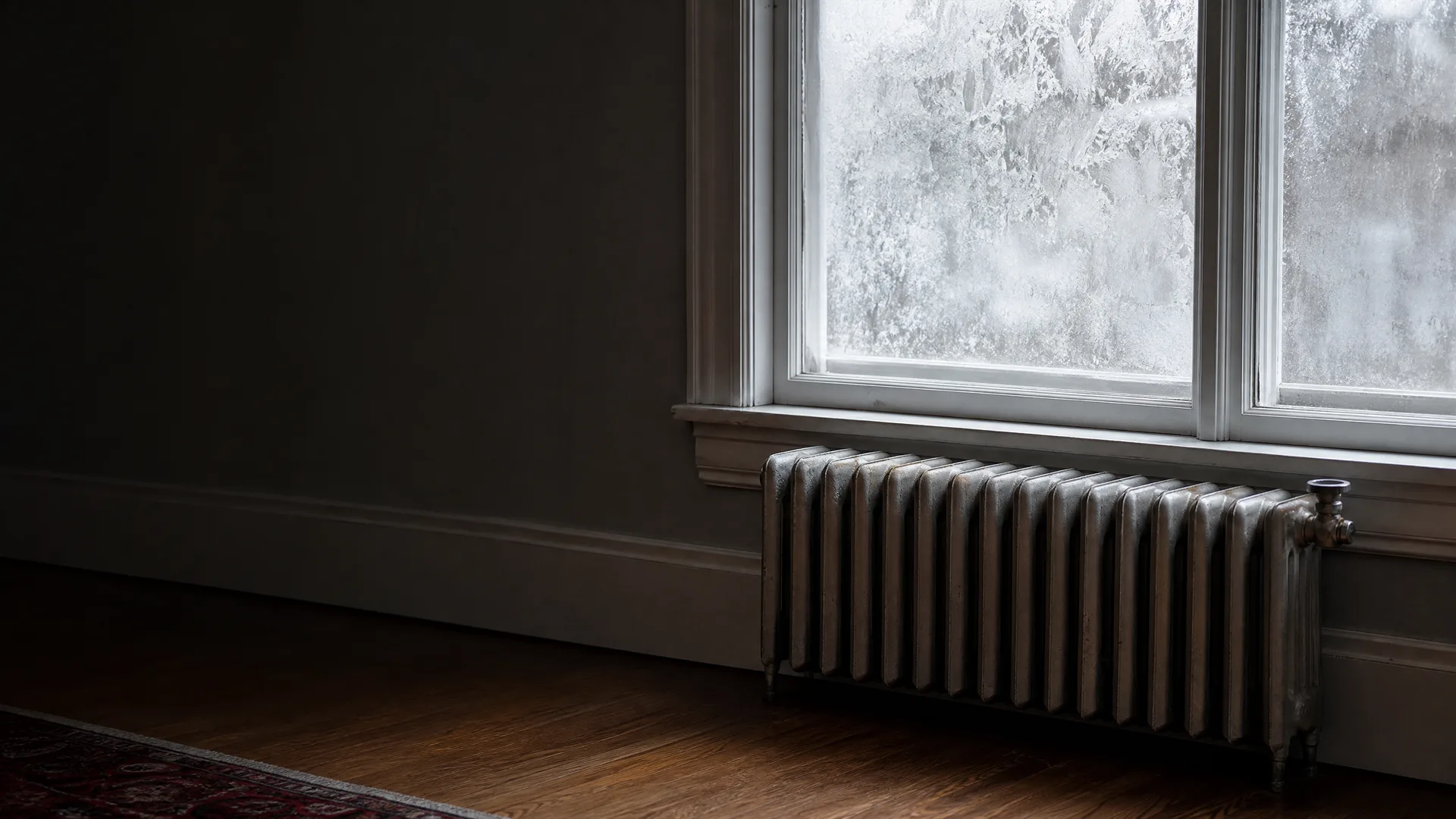
A cast-iron column radiator beneath a frosted window in a dim room with dark walls, white trim and a wood floor with a patterned rug at lower left.

It's a little past six on a January morning, still dark outside. The cast-iron radiator under the living room window ticks twice, then goes quiet. You notice the quiet before anything else. The glass has fogged over and a thin skin of ice has formed on the inside pane, and when you touch the radiator it's barely warm at the bottom, cold at the top. Someone's already up, pulling a blanket off the couch and over their shoulders, waiting to see if the burner kicks back on by itself. It doesn't. Outside, Montgomery County is somewhere in the low 40s, the kind of morning that needs the whole system working, not half of it.


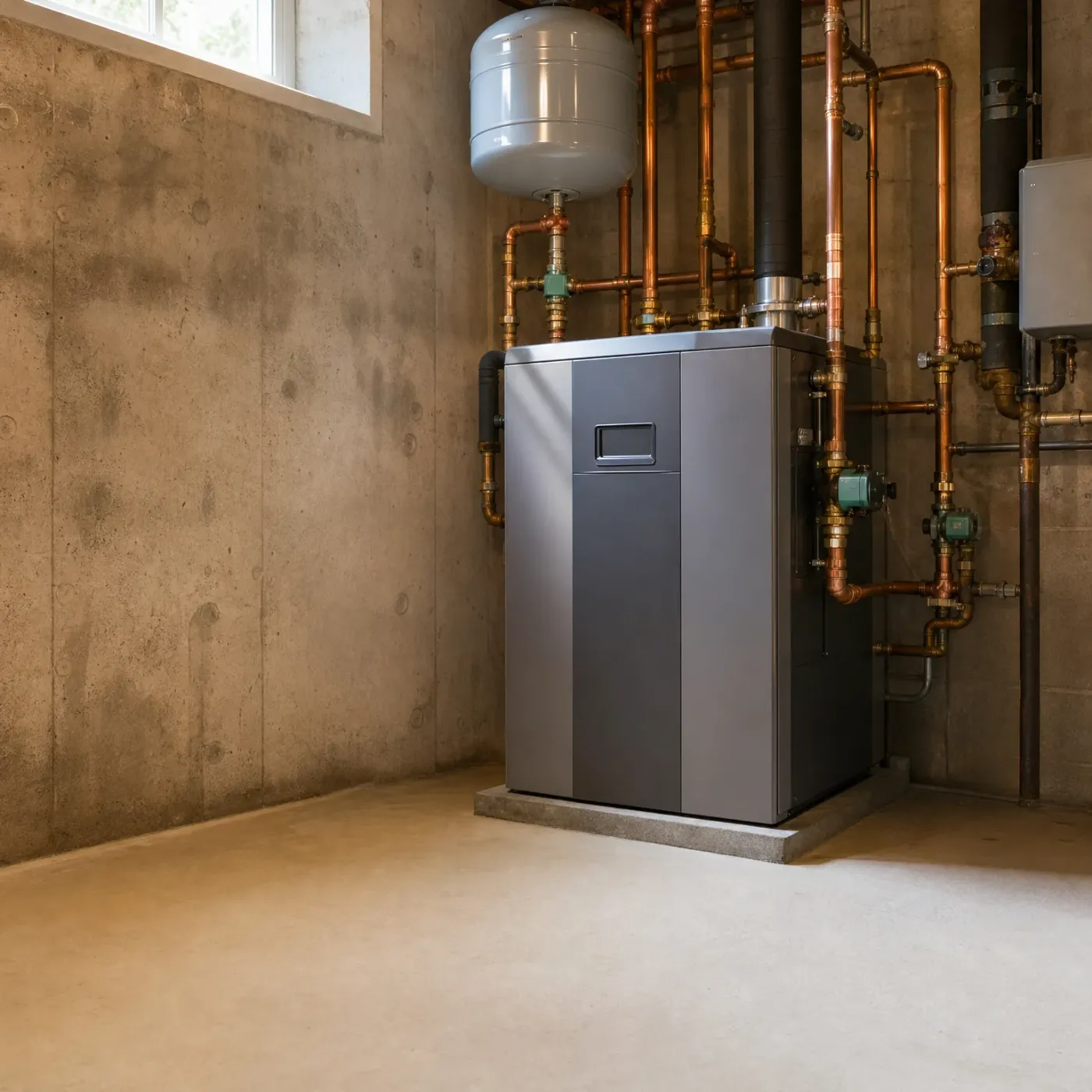
A gray boiler unit on a concrete pad in a basement corner, connected to copper piping, circulator pumps, and a ceiling-mounted expansion tank against bare concrete walls.
Clean water flow and steady pressure let a boiler run full cycles without a switch cutting it short.
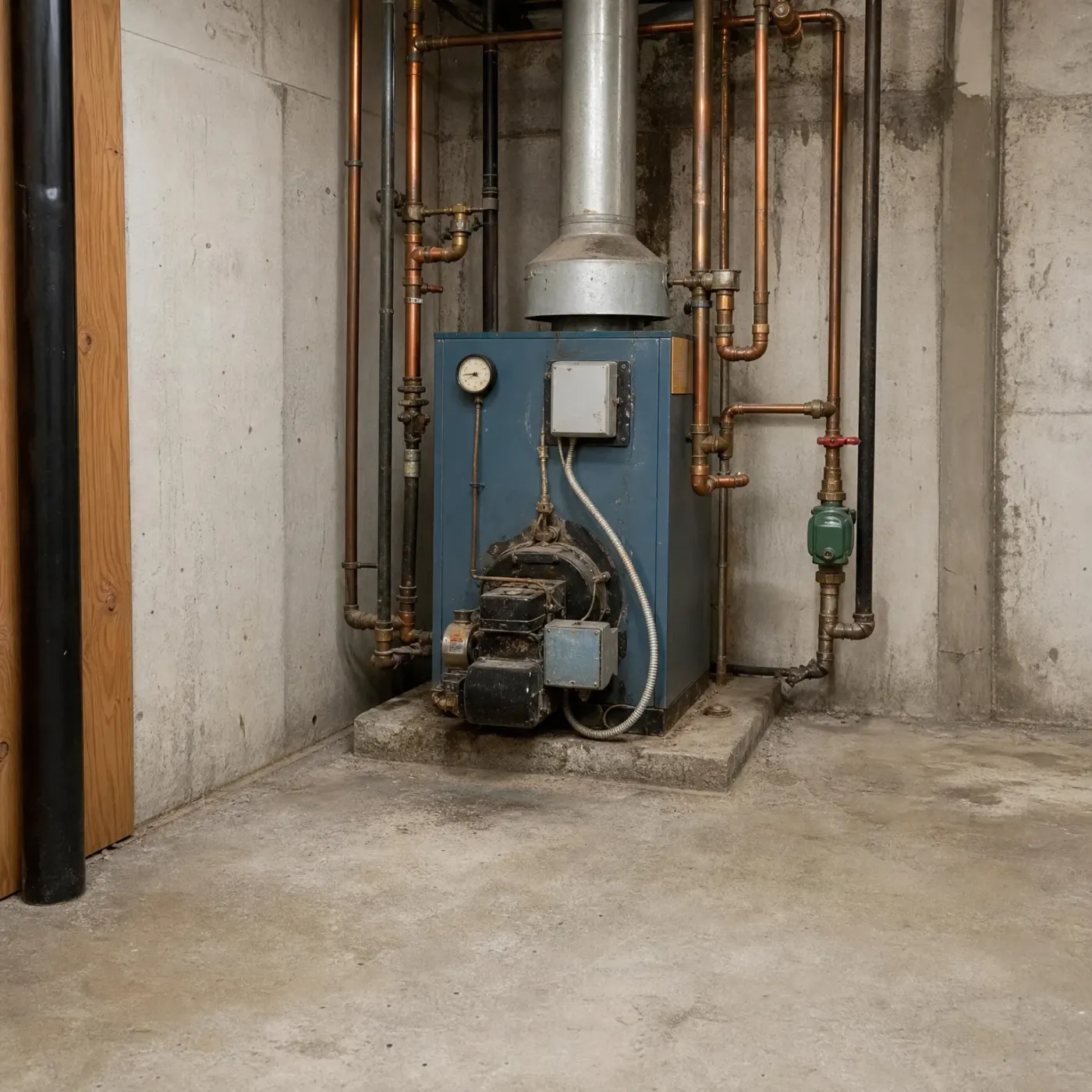
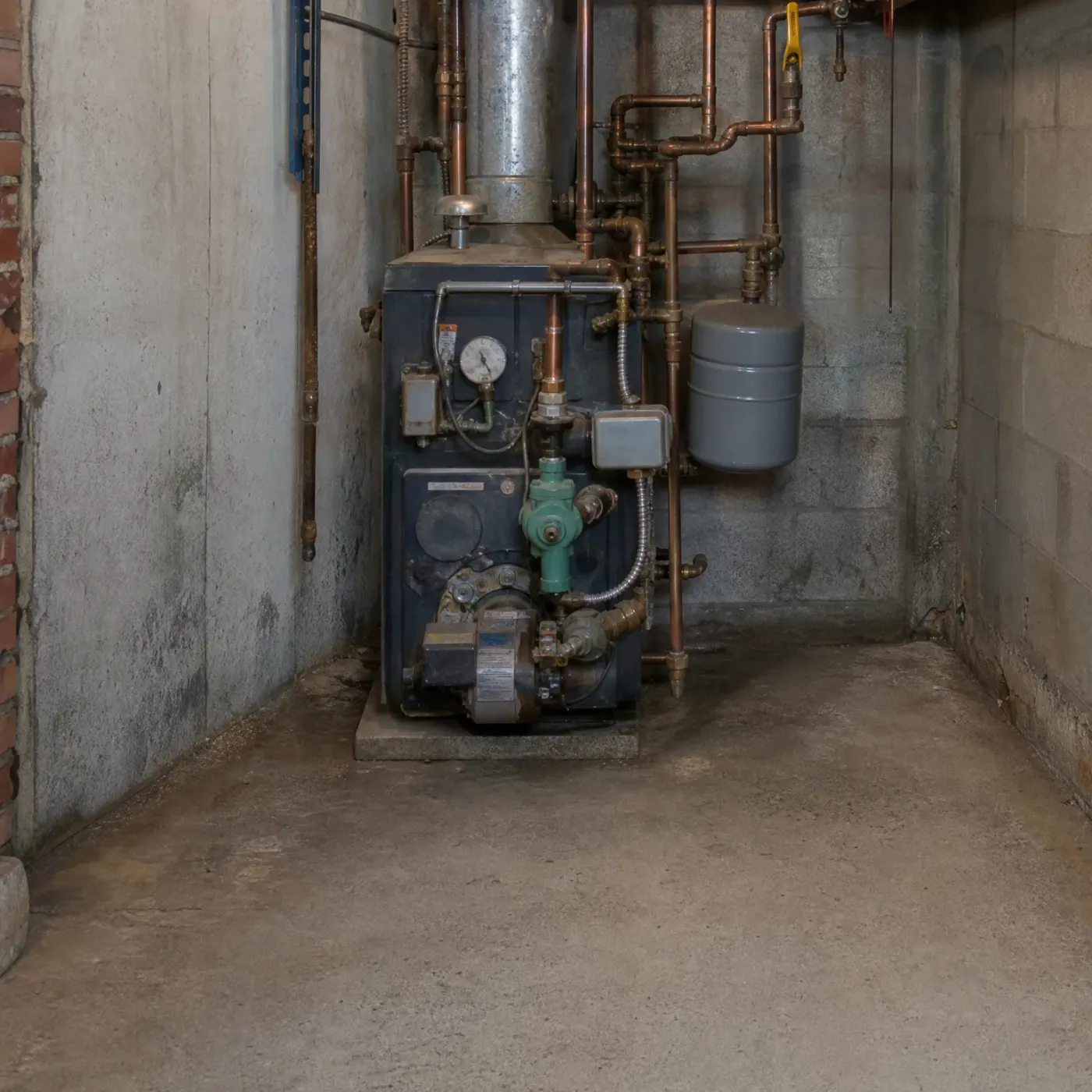
A blue oil-fired boiler with a pressure gauge, burner unit and metal flue sits on a concrete pad in a basement corner, surrounded by copper and black pipes against bare concrete walls.
A worn burner, a stuck valve, or a cracked flue connection gives a boiler reason to shut itself off.

A boiler that keeps cutting off does more than leave a room cold. It runs its cycle, trips, sits, and starts again, and that start-stop pattern burns more gas than a full run would, so the bill climbs even though the house never gets properly warm. Short cycling also puts wear on the ignition system and the pump, the parts that take the hardest hit every time the unit restarts. Mornings are where you'll feel it most, since Conroe winter nights sit around 43°F and that's enough cold to need a full, steady cycle to bring the house back up to temperature. If the boiler only manages a few minutes before shutting down, the house loses ground faster than it gains it, and whoever's home during the day, kids, older parents, anyone who can't just put on another layer and wait, feels that cold first. Left alone, a switch that trips once can start tripping sooner each time, until the boiler won't hold a cycle at all.

A woman with long light-brown hair in a gray knit sweater sits in a living room looking off to the side, with a sectional sofa, houseplant, lamp, wooden table and large windows behind her.
A woman in a chunky gray turtleneck sweater sits indoors looking off to the side, with a blurred dining table, chairs, pendant lamp and window behind her.
A woman in a cream knit sweater with her hair in a bun stands near a window, looking off to the side, with a gray sofa, houseplant and open kitchen with pendant lights blurred behind her.
A woman with long brown hair in a cream knit sweater stands near a window, looking to the side, with a white sofa, shelving, and a hallway visible behind her.
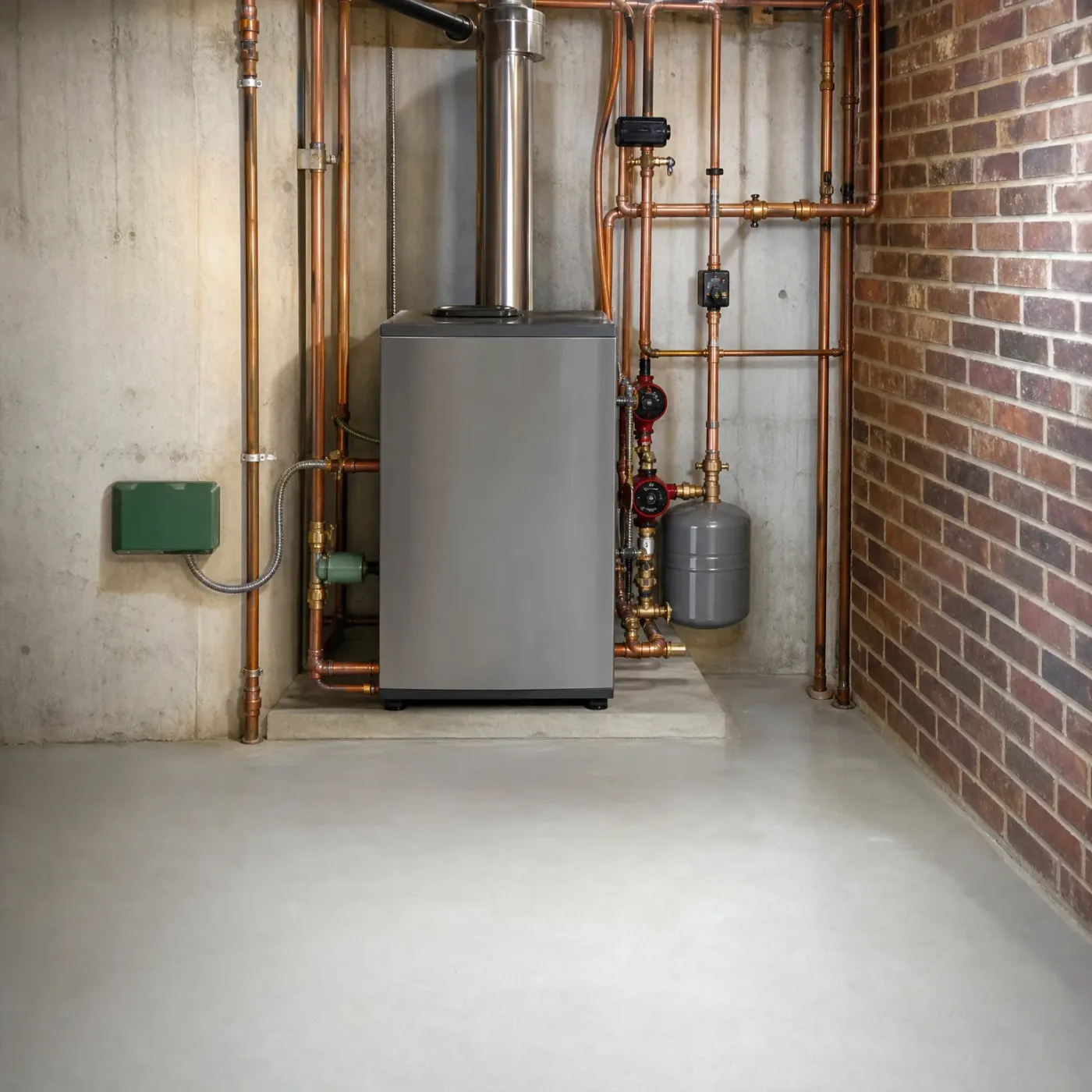
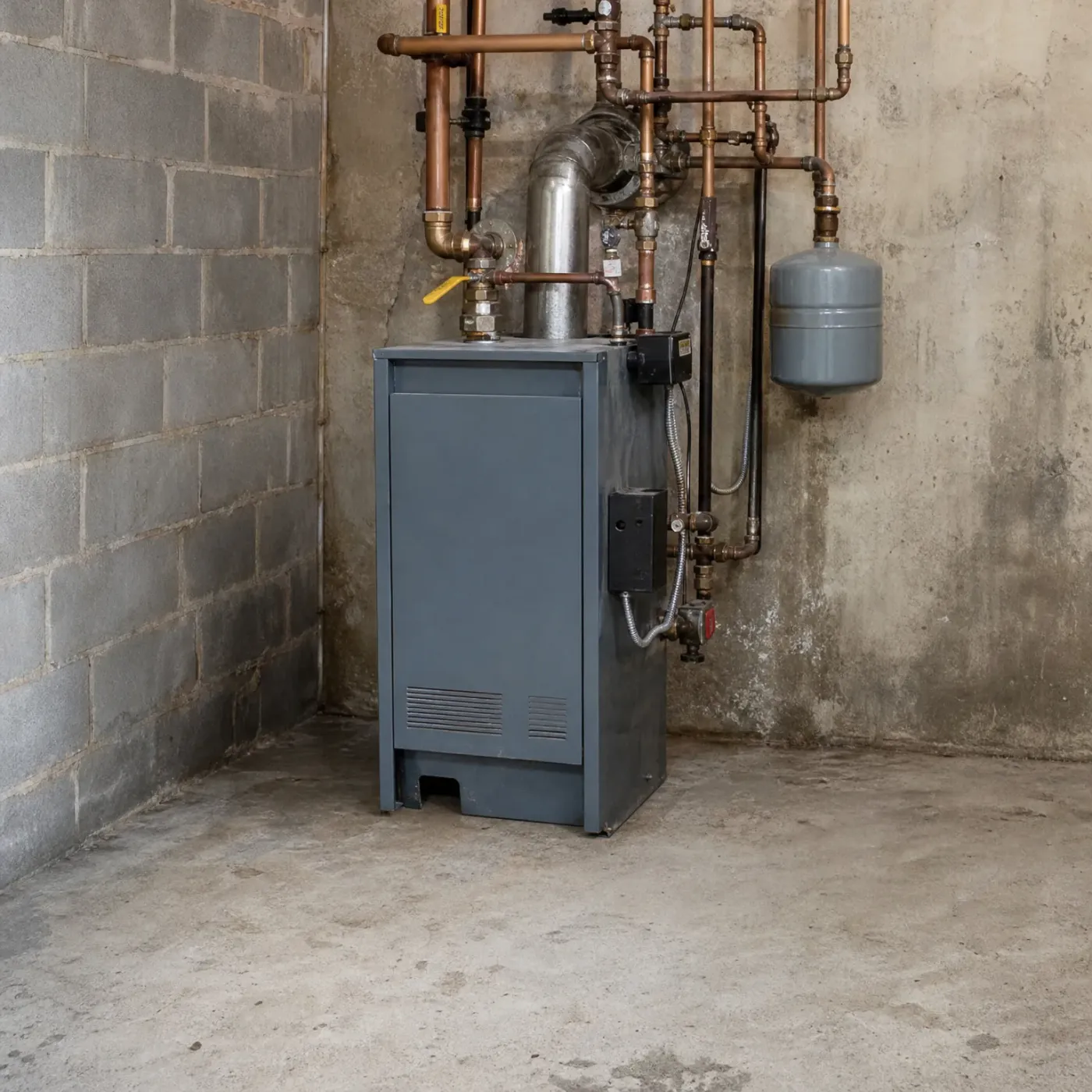
A gray boiler on a concrete pad in a basement, connected to copper piping, valves, pumps and a gray expansion tank, with a concrete wall on the left and a brick wall on the right.

Running a full cycle

This is a boiler heating the way it should. Water moves through the pipes, the pumps push it along steady, and the burner stays lit until the house reaches temperature. No switch trips, no restart, just one clean run from cold to warm.

A dark cast-iron boiler with copper piping, pressure gauge, and a gray expansion tank sits on a concrete pad in a basement corner with concrete block and brick walls.

Shutting off early

This is the same job going wrong. The burner fires, then quits before the water gets hot enough, and the pressure gauge or flue pipe is often where the trouble starts. A technician checking this unit would look at the gauge first, then trace it back to the valve or the flame.

Repair the Shutdown or Replace the Boiler

Keep calling for repair

  • A technician who already knows the pressure switch, the flame sensor, and the limit switch can often get the boiler running the same visit.
  • Repair costs less up front, which matters if the shutdowns are new and haven't damaged other parts yet.
  • If the boiler is cutting off because of trapped air or a stuck valve, clearing that fixes the problem without touching the rest of the system.
  • Keeping the boiler you have means no changes to the pipes, radiators, or venting already in place.
  • A boiler that's shut down once or twice from a single bad part usually isn't telling you the whole system is failing.

Replace the boiler

  • A boiler that trips its switches repeatedly, season after season, is usually wearing out rather than suffering one bad part.
  • Short cycling itself burns more gas than a full run, so an aging boiler that keeps cutting off is costing you with every restart.
  • A cracked flue connection or a worn burner found during a repair call can mean the next failure is closer than the last one.
  • A new boiler matched to the house runs full cycles without tripping the same switches that keep cutting the old one off.
  • If the same safety switch keeps tripping no matter what gets replaced, the boiler itself has likely reached the end of what repair can fix.
A gray floor-standing boiler in a basement corner with copper and black piping above it, a flue vent, and a gray expansion tank mounted on the concrete wall beside a concrete block wall.
Before you get your boiler repair
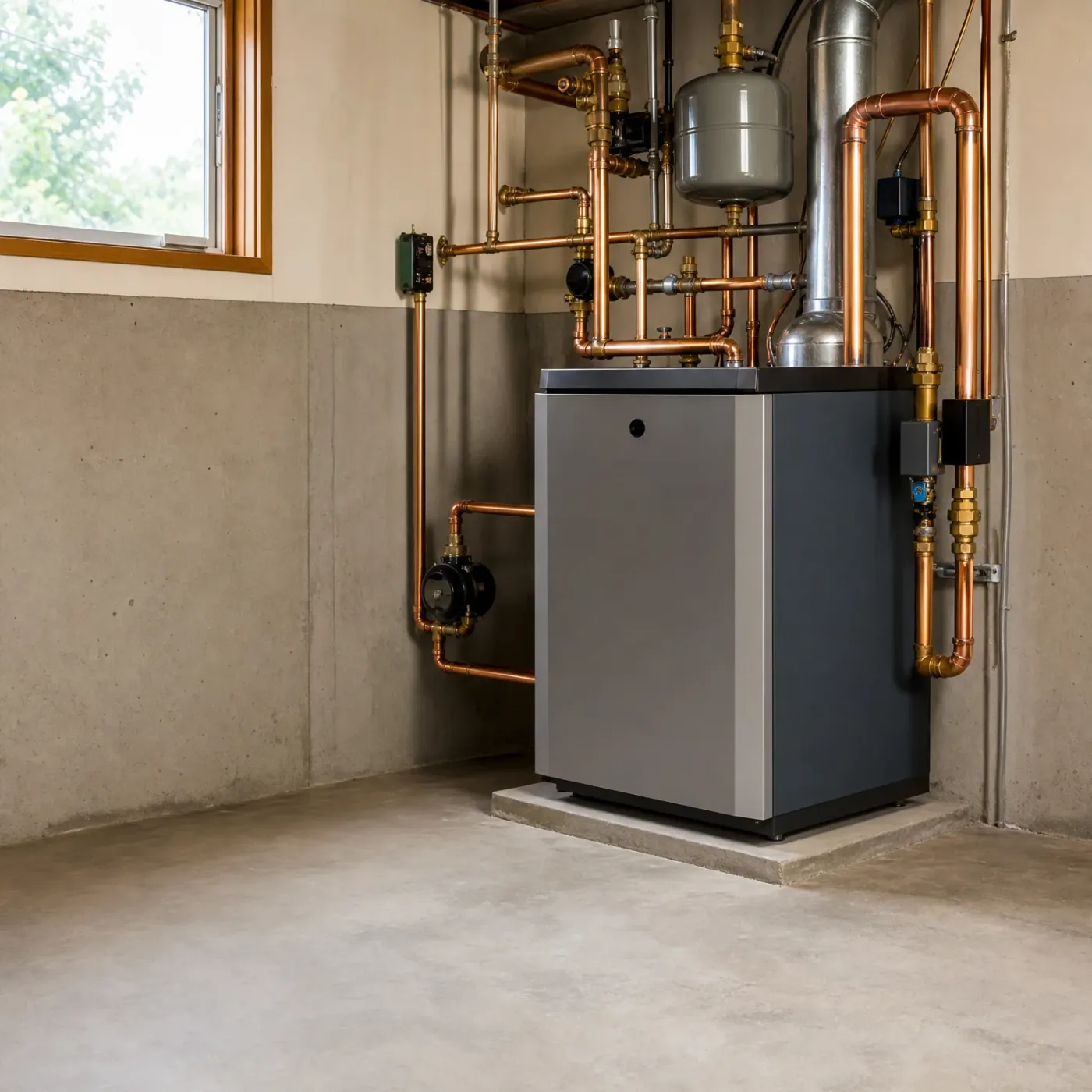
A gray floor-standing boiler on a concrete pad in a basement corner, connected to copper piping, brass valves, a circulator pump, an expansion tank, and a metal flue, with a window at upper left.
After you get your boiler repair
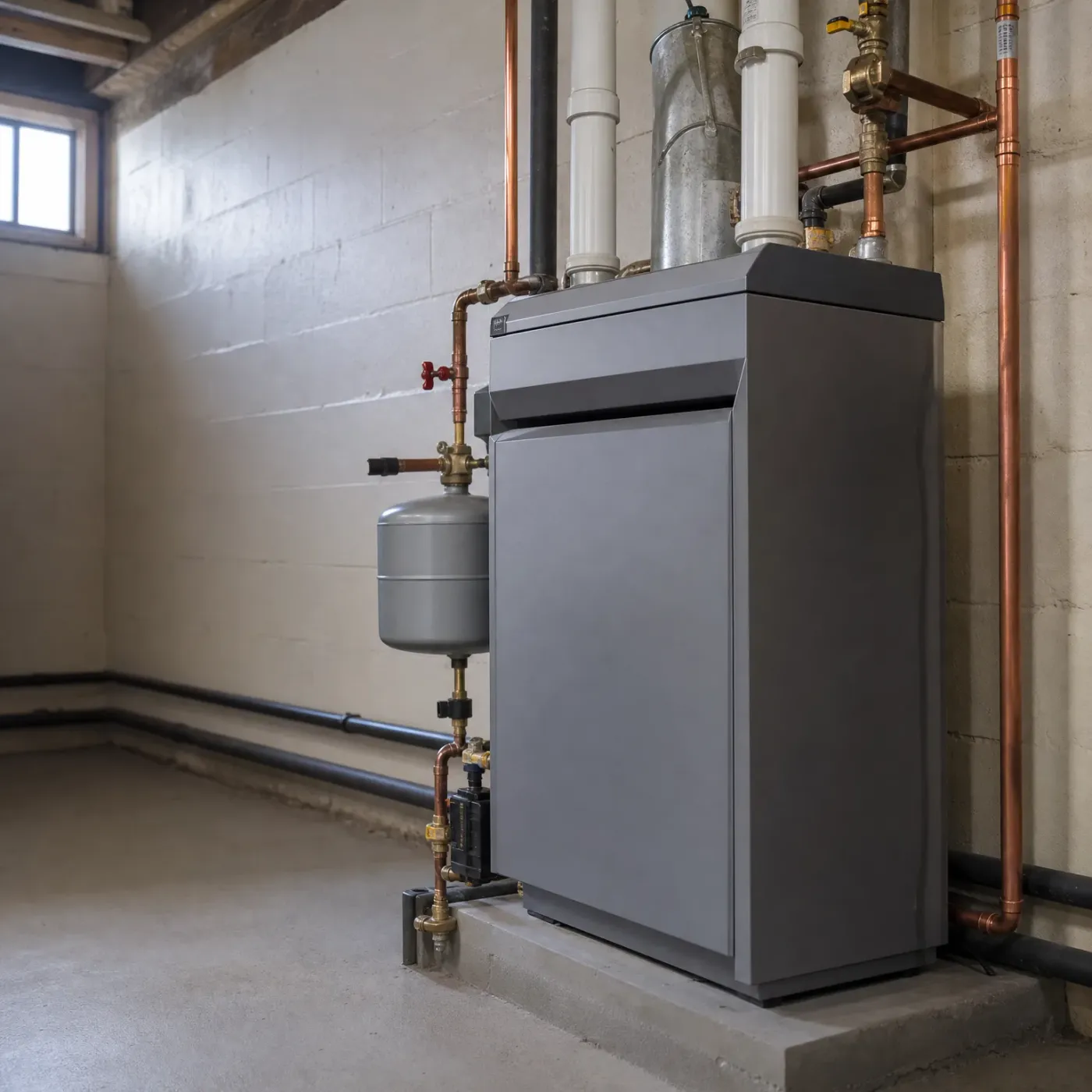
A gray boiler unit on a concrete pad in a basement, connected to copper and PVC pipes, with an expansion tank and valves beside painted block walls.

Finding a pro stops being your job

A licensed pro who repairs boilers in Montgomery County gets your request.

After this form, you can stop searching for a boiler pro.

Hand off my repair

You only hire the pro if you want to.

What are you noticing around the house right now

A room that won't hold heat even with the thermostat turned up. A radiator or baseboard that's warm at one end and cold at the other. A faint burning smell when the burner first kicks on, or a knocking sound from the pipes before it cuts out. Some households notice the boiler cycling on and off every few minutes instead of running through. If this has been going on for weeks, the gas use climbs even as the house stays cold, because the boiler is working without finishing a cycle. Left alone long enough, the same switch that's tripping to protect the system can wear out from tripping so often, and that turns a repair into a replacement.

A woman with her hair in a bun sits wrapped in a beige knitted blanket on a couch, holding a sleeping child against her chest in a warmly lit room with a lamp and houseplant in the background.
A smiling older woman with gray hair in a loose bun wearing a ribbed beige sweater stands in a dimly lit kitchen beside a window showing darkness outside, with a loaf of crusty bread on a wooden board in the foreground.

43°F average low, November through March

That's cold enough for a boiler to run long, steady cycles all winter. A switch that trips early never lets it finish one.

Send it today

Three switches, one job each

The pressure switch, the flame sensor, and the limit switch each watch for a different problem. A technician checks all three before touching anything else.

Send it today

Winter nights average 43°F

At 43°F, your boiler isn't just taking the edge off a room, it's running the full cycle those cast-iron radiators or baseboards need to actually heat the house. A switch that trips early leaves you with a system that never finishes the job it started.

NOAA nClimDiv 1991-2020

What this comes down to

  • A boiler that shuts off mid-cycle is almost always one of three switches doing its job: pressure, flame sensor, or limit.
  • Finding which one is tripping and why is a same-visit job for someone who works on these systems all winter.
  • A local technician licensed to work in Montgomery County sees this pattern on cast-iron radiators and baseboards every cold snap.
  • One contractor takes the call, so you're not fielding quotes from three different companies while the house sits cold.
  • Once the switch and its cause are found, the boiler goes back to running full cycles instead of restarting itself all night.
  • The house holds heat the way it's supposed to once the shutdowns stop.

A boiler that shuts off partway through its cycle is doing what it was built to do. Something trips a switch, pressure, flame sensor, or limit, and the burner cuts out before the house gets warm. That's the whole answer. The work is finding which switch and why, and that part goes faster with someone who sees this exact pattern every winter in Montgomery County, on the same kind of cast-iron radiators and baseboards that run through homes here.

You'll get matched with one contractor, licensed and local, not a batch of quotes to sort through while the house sits cold. That matters more than it sounds like it should. A technician who already knows these systems isn't starting from zero when they walk in. They know a pressure switch problem looks different from a flame sensor fault, and they know a limit switch that keeps tripping usually means something upstream is making the water run hotter than it should. They've likely seen your exact setup before, on a house not far from yours, in weather not far from this.

Once the switch and its cause are sorted, the boiler stops restarting itself through the night and goes back to running one clean cycle, cold to warm, the way it's supposed to. The radiators heat evenly again. The thermostat setting and the room temperature start matching up. That's the point of all of this, a house that holds its heat without you thinking about it.

A shingled two-story house with lit windows and stone accents at dusk, with a stone paver walkway and landscape lighting leading past ornamental grasses toward a calm bay under an orange and blue sky.

Boiler Repair

One request and it's handed off

Step 1 of 3: Equipment
  • A cream chunky cable-knit throw draped over a beige upholstered armchair beside a bright window, with a wooden side table holding a book and a vase of leafy branches at left.
    • A Montgomery County pro who repairs boilers gets your request.
    • Get matched with a pro who fixes boilers in Montgomery County.
  • Living room corner with a gray sofa holding beige pillows and a knit throw, a round wooden coffee table with a dark planter and shallow bowl, a jute rug, a floor lamp, a framed landscape print on the wall, and a window showing trees.
    • Send the request today and let a boiler pro reach out to you.
    • Get the boiler repair search off your mind today.
  • A living room corner with a cream sofa and cushion, knit throw, wooden coffee table holding a shallow bowl and dark ceramic vase with green foliage, a floor lamp, potted plant in a woven basket, and linen curtains at a window.
    • Explain the boiler problem once instead of to every shop in Montgomery County.
    • Skip calling shops to ask who repairs boilers in Montgomery County.
  • A round reclaimed-wood coffee table with a black metal base sits on a woven rug in front of a cream sofa with cushions, with a lit built-in fireplace and a tall indoor tree in the background.
    • Your request stays with one local pro.
    • Your request goes to one pro, not a list of companies.