Tell us about the job
Takes about a minute. No obligation.
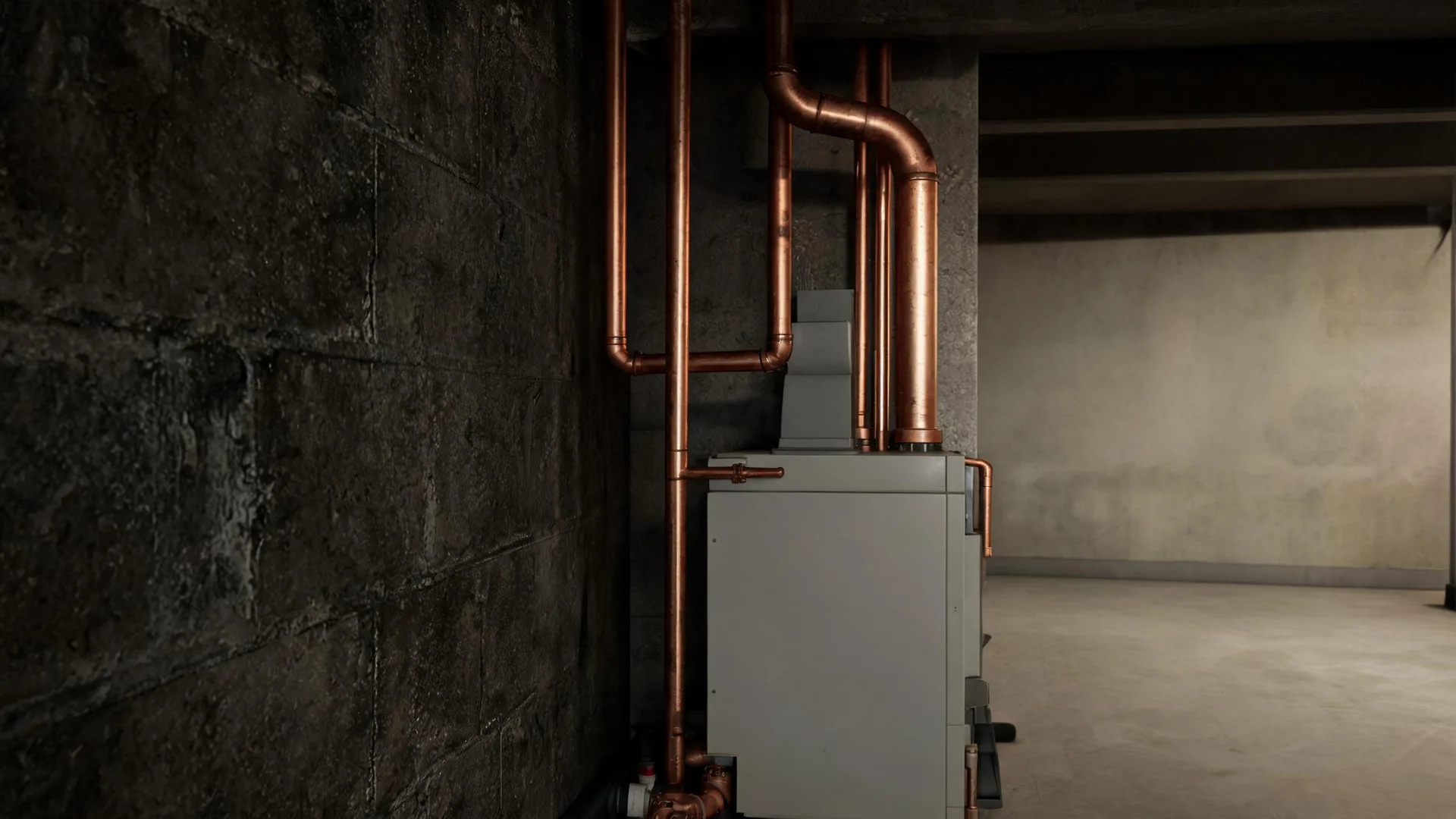
A boiler installation in this part of Texas starts with a question about what the equipment will be asked to carry, not just what the house needs on a mild day. 229 severe weather events were recorded in Deaf Smith County, Texas between 2015 and 2024. At that rate, severe weather is a standing condition here, and a contractor sizing a boiler for this county has to account for it in the load calculation, the flue configuration, and how the unit is secured. A system installed to catalog defaults rather than local conditions will run harder than it should from the start.
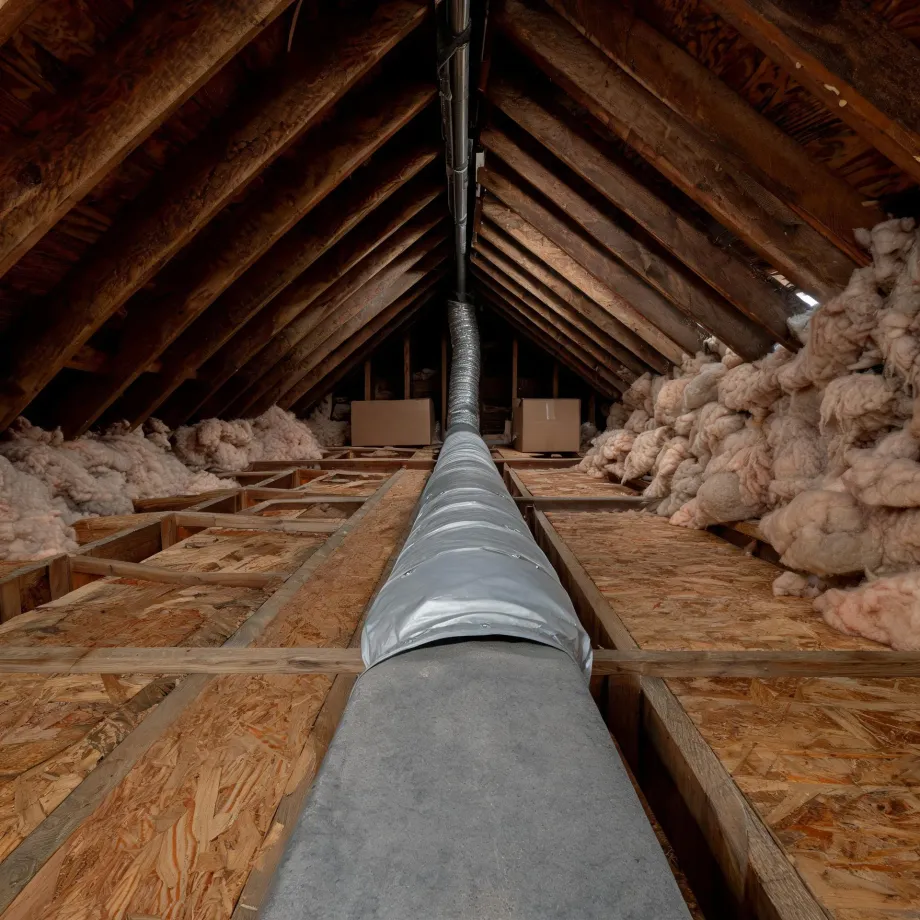
Ductwork laid for an older heating system was sized, routed, and connected for different equipment, and a boiler installation in this county runs directly into that mismatch. Half the homes in Deaf Smith County, Texas were built in 1971 or earlier (2020-2024 ACS 5-year). What a contractor finds behind the walls and under the floors determines whether existing runs carry the new system or have to be modified to do it. The electrical picture follows the same logic: service installed decades before today's equipment was built for different loads, and what the panel actually supplies has to be confirmed before anything is quoted.
What a Boiler Installation Puts in Your Home
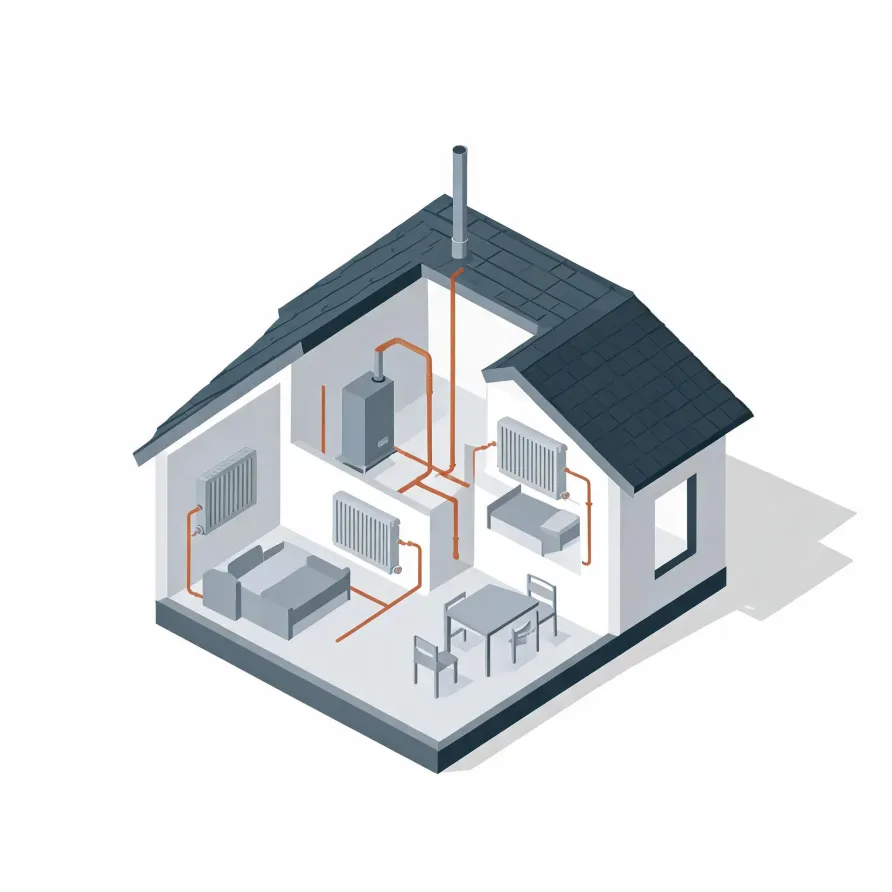
The boiler itself sits in a mechanical room, basement, or utility closet and is the unit that heats water and pushes it through the system. Paired with it is the expansion tank, which mounts nearby and absorbs pressure changes as the water heats and cools. Together these two pieces form the core of what a contractor installs.
From the boiler, supply and return pipes run through the house to the heat emitters, whether those are baseboard radiators, panel radiators, or radiant floor loops embedded in the slab or subfloor. A circulator pump, mounted on the piping near the boiler, moves heated water through those runs. A thermostat on the wall ties it all together by telling the system when to fire.
The drawing shows a typical boiler layout, and a licensed contractor determines exactly which components and configurations apply to your home.
Get matched in Deaf Smith CountyDeaf Smith County, by the numbers
229 severe weather events were recorded in Deaf Smith County, Texas between 2015 and 2024.
NOAA National Centers for Environmental Information, Storm Events Database, bulk CSV export, events 2015-01-01 through 2024-12-31.Half the homes in Deaf Smith County, Texas were built in 1971 or earlier (2020-2024 ACS 5-year).
U.S. Census Bureau, 2020-2024 American Community Survey 5-Year EstimatesDeaf Smith County, Texas holds 6,984 housing units (2020-2024 ACS 5-year).
U.S. Census Bureau, 2020-2024 American Community Survey 5-Year EstimatesOwners occupy 66.8% of the occupied homes in Deaf Smith County, Texas (2020-2024 ACS 5-year).
U.S. Census Bureau, 2020-2024 American Community Survey 5-Year EstimatesBoiler Installation Rules on the Books for Deaf Smith County, Texas1 sourced codes and standards
Licensing Rules for HVAC Work in Deaf Smith County, Texas
In Texas a person may not engage in air conditioning and refrigeration contracting unless that person holds a license issued under the state air conditioning and refrigeration contractor law.
Severe Weather Events in Deaf Smith County
Boiler systems work hardest when the weather pushes hardest, and Deaf Smith County's climate sets the baseline for what a boiler here has to handle year after year. That workload shapes which equipment a contractor will recommend and how it gets sized for the building.
229 severe weather events, 2015–2024. Source: NOAA National Centers for Environmental Information, Storm Events Database.