Running clean
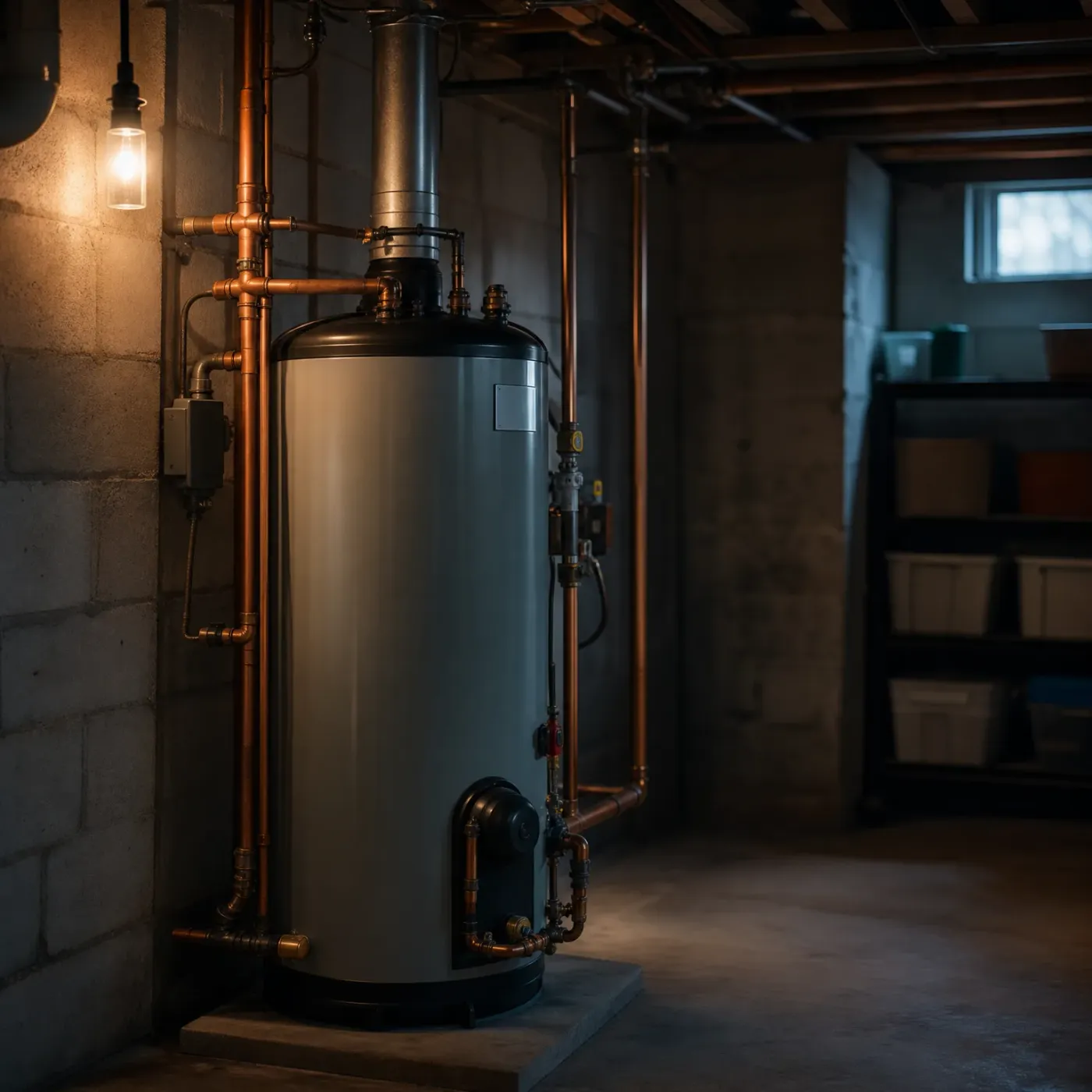
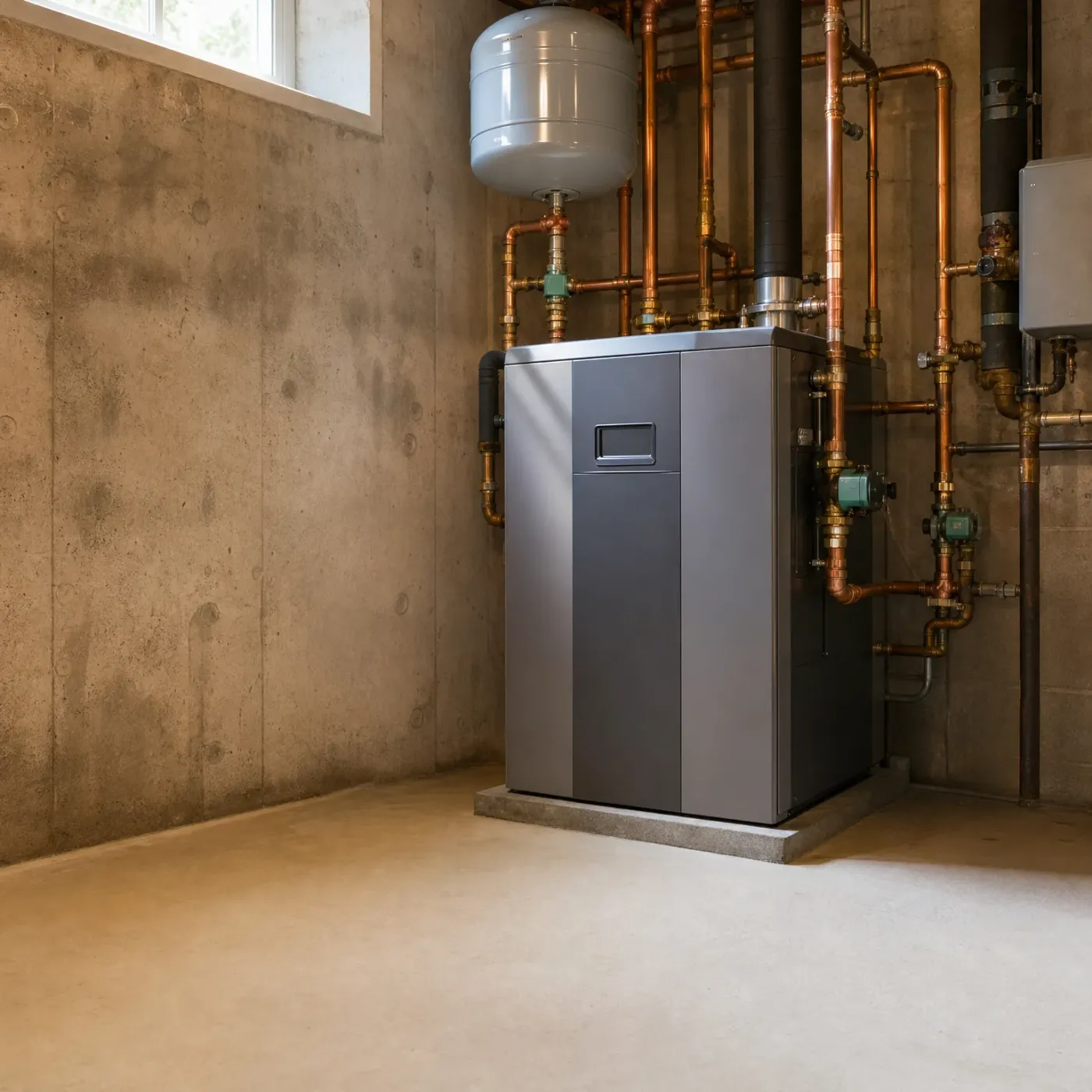
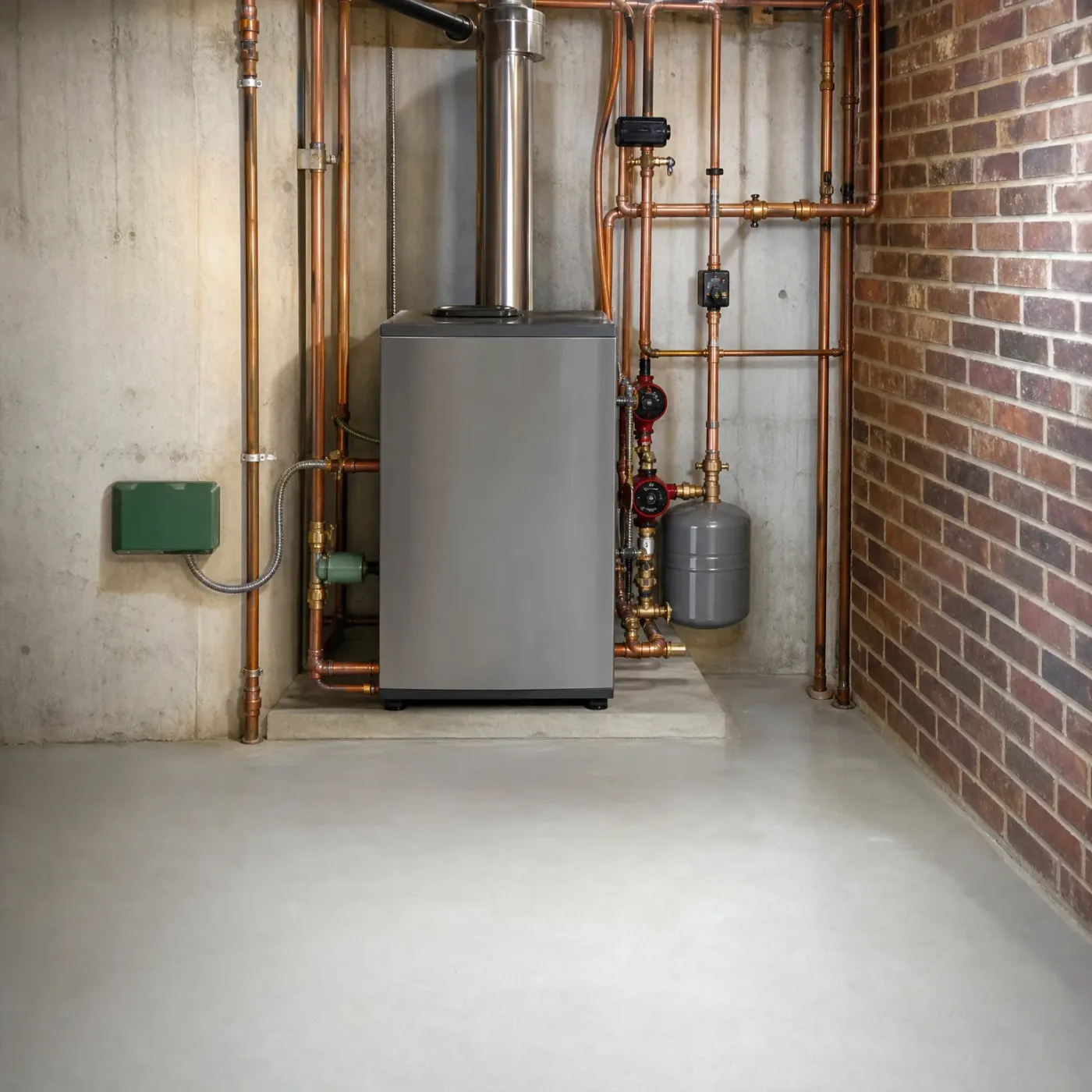
Copper lines, fittings and the circulator pump all do their job without strain. The expansion tank holds steady pressure and the flue vents properly. At the right setpoint, this is what a winter of normal cycling looks like.
Let someone else find the pro
A boiler that's set wrong runs longer than it should and still leaves rooms uneven. This page covers what water temperature makes sense for a Texas winter, since most homes here lean on electric heat and a boiler's settings matter more than people think. If you'd rather have someone check the setup and the system itself, a local contractor who works on boilers all season can take that off your hands.
I'm done searchingSet your boiler's water temperature to around 150 to 160 degrees for a Texas winter. Winters here are mild compared to colder states, so your boiler doesn't need to run as hot as the factory default, which is often set closer to 180. Running it that hot heats your home faster than it needs to and cycles the burner on and off more than necessary, which adds wear on the igniter and the pump over a season that doesn't ask much of the system to begin with. Dial it down and the water takes a little longer to heat a room, but the system runs steadier and holds temperature more evenly between floors. If your home has radiators or baseboard units, 150 is often enough on all but the coldest nights. If you're on radiant floor heat, you can usually run several degrees cooler still. Check the setting against how your home actually feels this winter, not just once at the start of the season.




Your boiler isn't running all day at one steady heat. It fires until the water loop reaches the setpoint, then shuts off and waits for the temperature to drop before it fires again. The aquastat is what makes that call. It reads the water temperature and tells the burner when to start and stop, and it's the part a tech turns to when your setpoint needs to change. If your home has an outdoor reset control, the system backs the water temperature down on warmer days on its own, so it isn't pushing 160 degree water through the pipes on an afternoon that barely needs heat. Turn the setpoint down too far, though, and your radiators or baseboard units may not put out enough heat to catch up, since they're sized to perform at a given temperature. And a setpoint that's too aggressive the other way can cause short cycling, where the boiler fires, hits temperature fast, shuts off, then fires again soon after. That pattern wears the ignition system faster than a system that runs longer, steadier cycles. Even once the burner stops, the water sitting in the loop keeps giving off heat, which is why rooms often keep warming for a bit after the boiler goes quiet.
The thermostat calls for heat and signals the boiler.
The boiler fires its burner and starts heating the water.
Hot water circulates through pipes to each radiator.
The boiler shuts off once the water hits setpoint.
A licensed local pro takes the request for your boiler tune-up.
Send the form and the boiler tune-up stops being something to remember.
You're not committing to anything by asking.
On a 41°F night, a boiler set at 150 to 160 only has to lift the water loop a little to keep rooms even. It won't run long, and it won't need to work as hard as the factory setting assumes.
NOAA nClimDiv 1991-2020 county normals weighted by homes
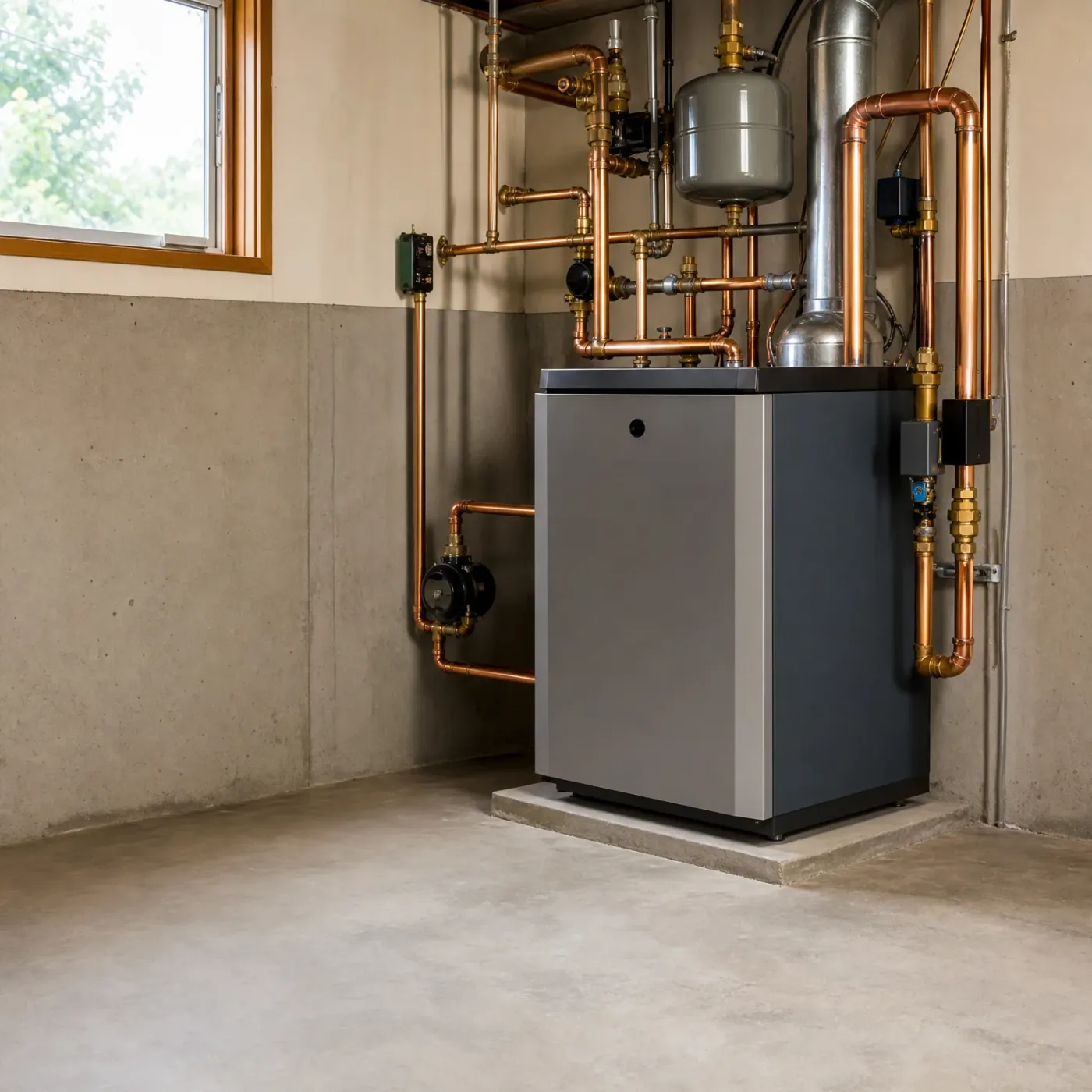
Copper lines, fittings and the circulator pump all do their job without strain. The expansion tank holds steady pressure and the flue vents properly. At the right setpoint, this is what a winter of normal cycling looks like.
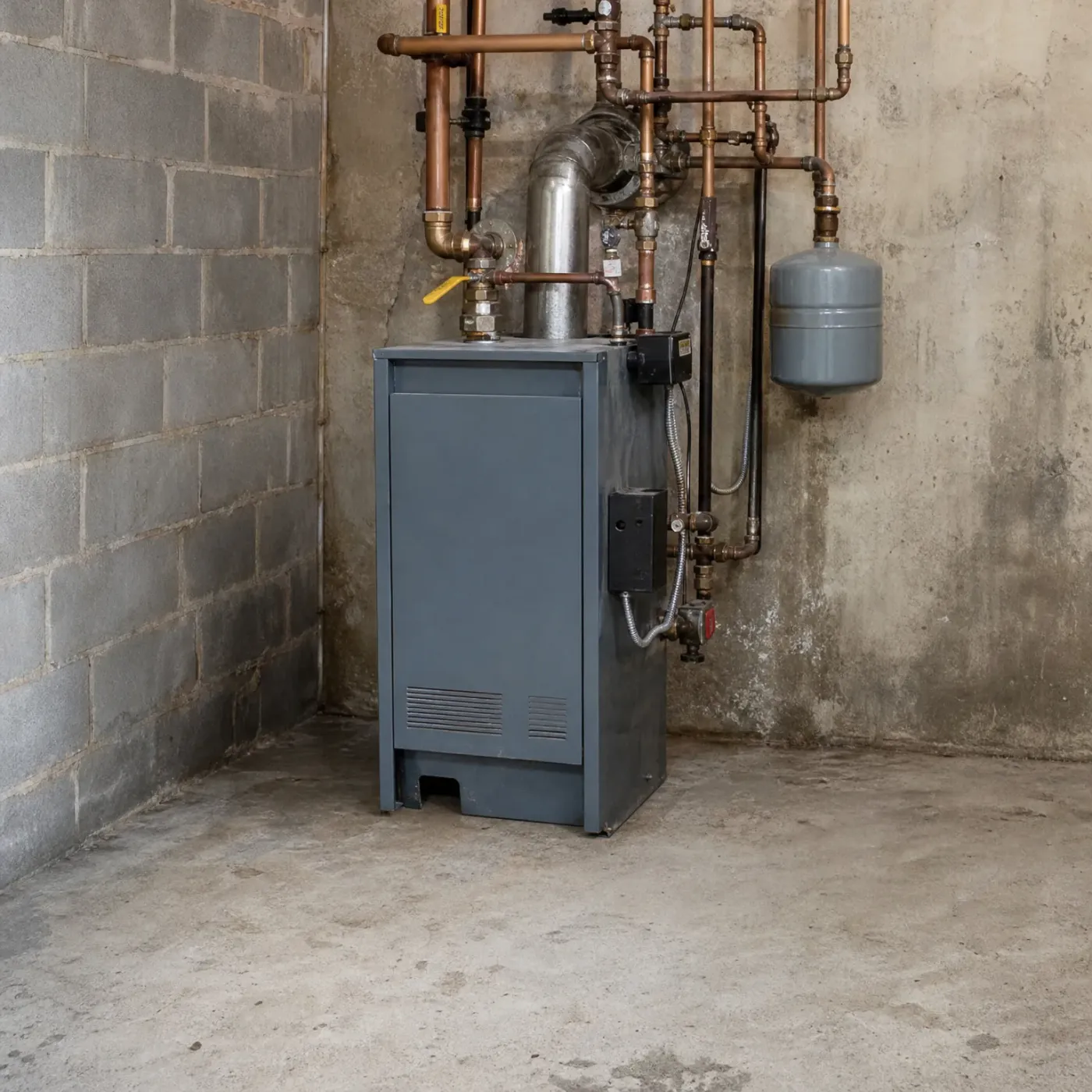
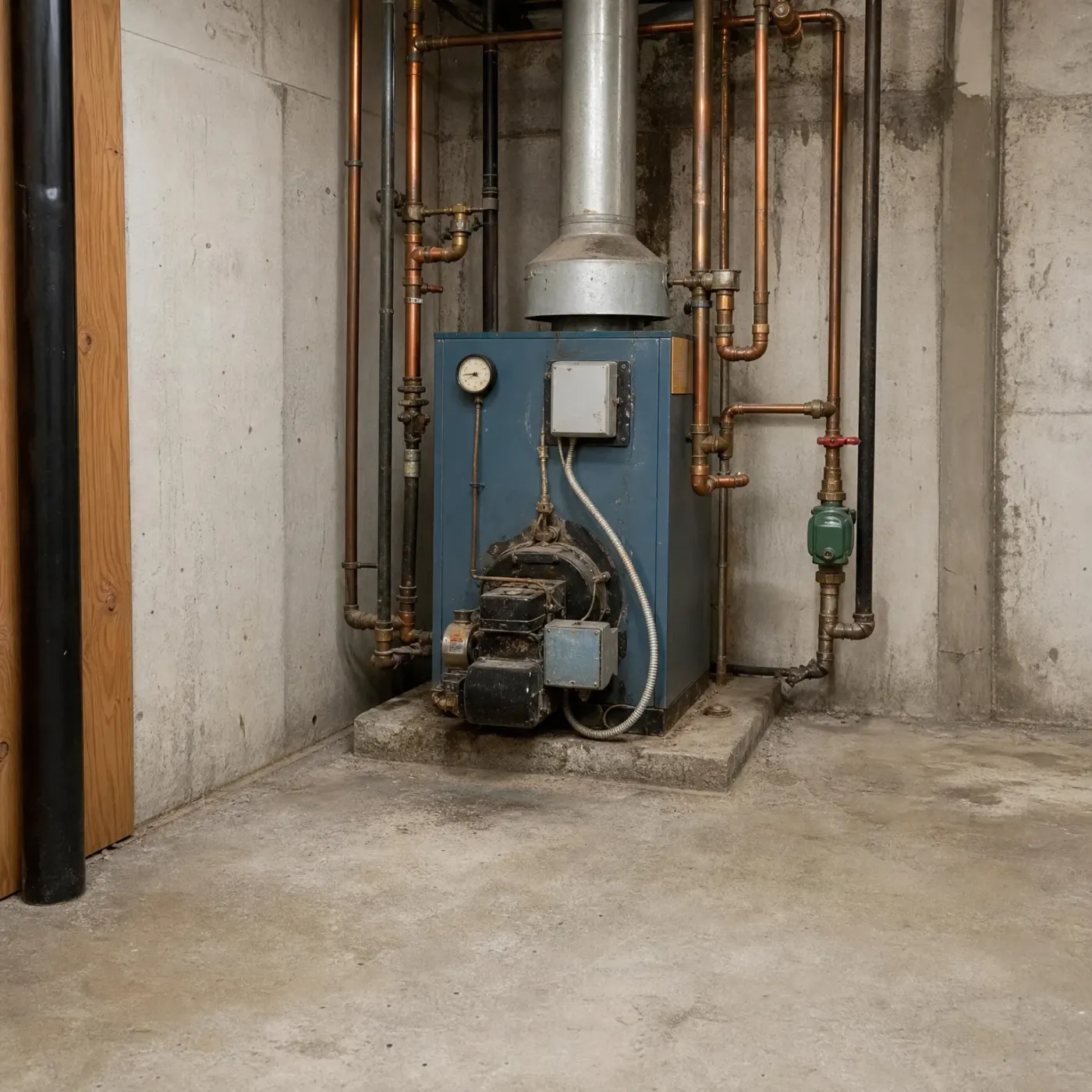
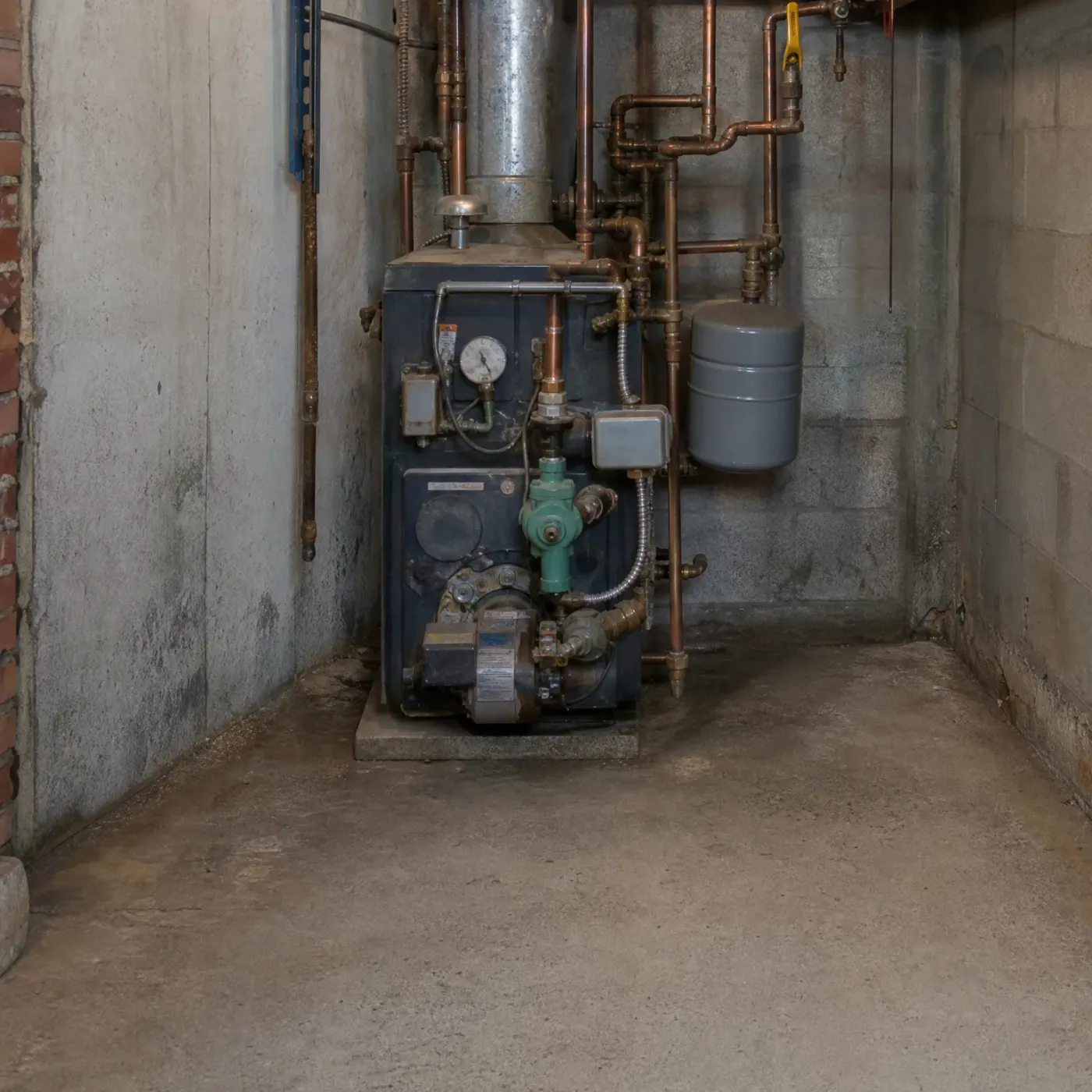
The same layout, but pressure has dropped and the expansion tank isn't doing its job. Left too hot or unchecked, a boiler like this scales up inside and runs longer for less heat at the radiators.


That's the setting for a Texas winter, and once it's set, it doesn't need touching again until spring. The factory default near 180 is built for colder states, not for a winter where a 41°F night is about as hard as the loop has to work. Left that high, the boiler fights its own setpoint all season, scaling up at the heat exchanger and pushing heat out unevenly, hot near the boiler and weak at the far radiator. Set correctly, it fires, satisfies the loop, and shuts off clean every time, which is what keeps the circulator pump and expansion tank running the way they're supposed to for years instead of months.
Getting there, and keeping it there, is maintenance work, and it matters who does it. A boiler tech who works on these systems every winter in Texas has seen which setpoints cause scaling here and which ones don't, because the mild winters change what the equipment actually needs compared to a house in Ohio or Minnesota. That's local knowledge, not a guess from a manual written for a different climate.
Sending a request through this page puts it in front of one licensed local contractor, not a handful of companies competing for the job. No sorting through quotes, no fielding calls from three directions. Just one contractor, already familiar with how boilers behave in Texas homes, taking it from here.
Done looking for a boiler pro